Bird's Nest Fern
Asplenium nidus
Family · Aspleniaceae
Bird's nest fern grows from one central crown, not roots you can divide. Water around it, keep the rosette dry, and it outlasts most other ferns indoors.
Asplenium nidus
Plant profile
- WateringModerateWater every 7 days
- Light exposurePartial shade
- Hardiness zoneUSDA 10–11
Growth
- Family
- Aspleniaceae
- Life cycle
- Perennial
- Growth speed
- 2/10
- Mature size
- 100–150 cm
- Spread
- 50–100 cm
- Flowering
- None; a fern that reproduces by spores, not flowers
- Propagation
- Spores
DormancyEvergreen with no true dormancy; growth slows over winter
Time to maturitySlow growing; reaches full size over 5 to 10 years (RHS)
Soil & climate
- Saline soil
- Not tolerated
- Drought tolerance
- No
Soil typesChunky, peat-free, fast-draining mix, Multipurpose compost with added bark, grit or perlite
Light & Placement
- Origin
- Malesia to northern and north-eastern Queensland (POWO)
- Where to place it
- North or east-facing room, out of direct sun
- Humid bathroom or kitchen shelf
- Interior desk or shelf under grow lights
- Shaded, frost-free greenhouse or conservatory (RHS H1B)
- Wide, shallow pot that lets fronds arch outward
- Mounted on bark or in a hanging basket, echoing its epiphytic habit
Safety
- Toxicity
- Not specifically listed by the ASPCA; keep away from pets as a precaution
- Pet safe
- No
Data fromAsplenium nidus L., GBIF Backbone TaxonoAsplenium nidus L., Plants of the World Asplenium nidus, bird's nest fern, RHS PAsplenium nidus, Missouri Botanical Gard
Where it grows
World distribution
Bird's Nest Fern is native to 8 countries: Australia, Christmas Island, Indonesia, Malaysia, Micronesia, Papua New Guinea, Philippines, and Solomon Islands.GBIF records 8,950 documented identifications across 95 countries, with the largest concentrations in Taiwan, Indonesia, and Malaysia.
- Australia
- Christmas Island
- Indonesia
- Malaysia
- Micronesia
- Papua New Guinea
- Philippines
- Solomon Islands
Yellow to orange dots: concentration of documented identifications per country. Green countries: sourced native range. Source: GBIFNative range from POWO (Kew).
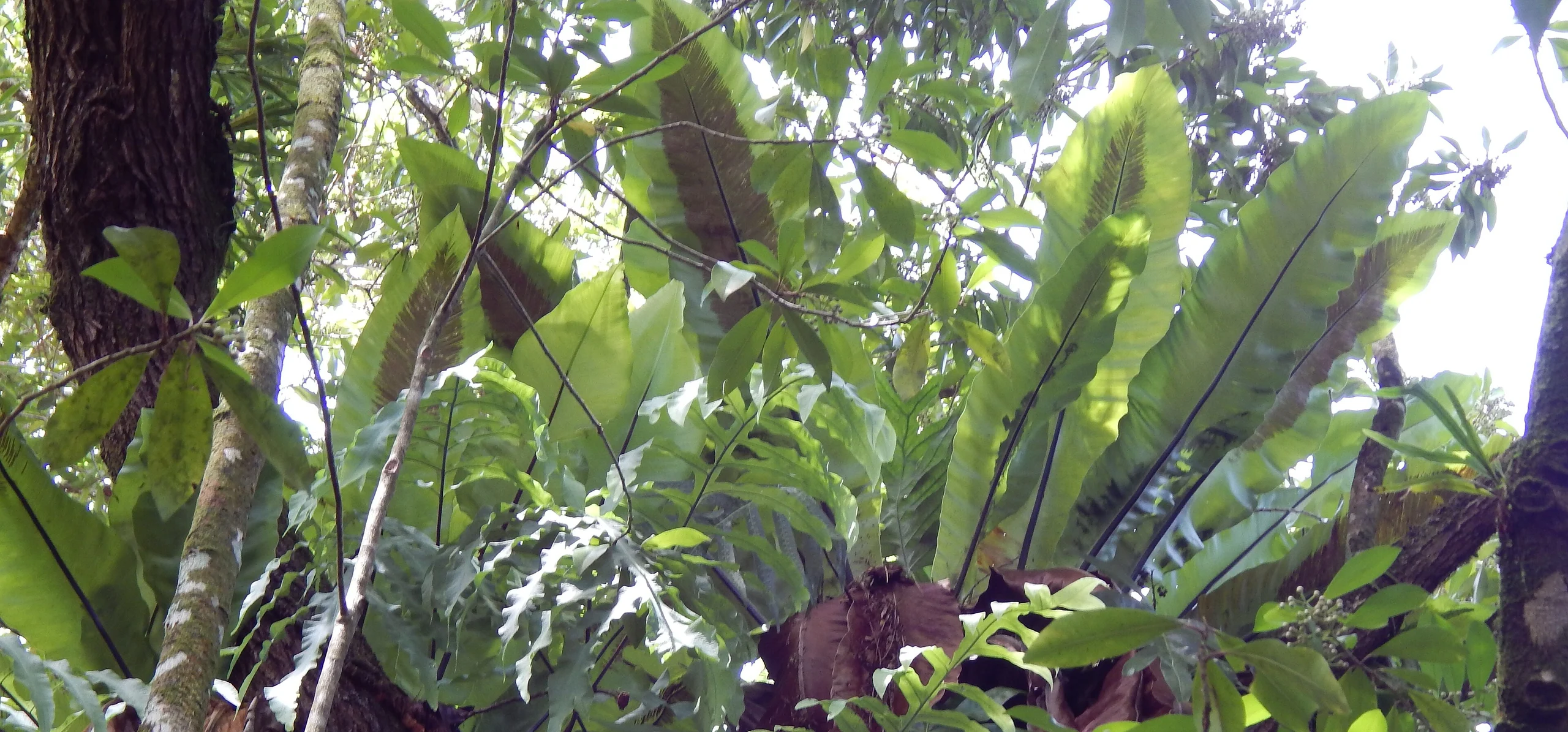
Asplenium nidus gets its name from the rosette of broad, glossy fronds that fans out from a single central point, cupped just enough to look like a nest. That shape is also the plant's one real hazard in cultivation: water left sitting in the crown at the base of the fronds turns the growing point soft and brown, and because this fern has only one growing point, a rotten crown kills the entire plant rather than one leaf. Everything else about it is comparatively forgiving. It tolerates the kind of medium to low light that frustrates most houseplants, shrugs off a missed watering better than the average fern, and asks for almost nothing in the way of feeding.
The nest at the centre, and the one habit that kills it
In the wild, that funnel-shaped rosette is a feeding strategy: falling leaves, bark and rainwater collect in the middle and slowly rot down, feeding roots that wrap around the host tree rather than digging into soil. Indoors the same shape becomes a trap for careless watering. Pour water straight into the crown the way you might soak a pot of soil, and it sits there without draining, softening the tightly packed new growth at the centre until it browns and collapses. Unlike a pothos or a snake plant, which can lose a stem or a leaf and keep growing from elsewhere, Asplenium nidus has a single growing point at the base of the rosette; once that point rots, there is no side shoot or offset to take over; the whole plant is finished.
Light: shade tolerant, not sun tolerant
This species grows on tree trunks and rock faces under a closed rainforest canopy, so it is built for shade rather than direct sun. Bright, indirect light suits it best, and it copes with genuinely low light, a north-facing room or an interior office desk, better than most ferns sold as houseplants, only growing more slowly and producing slightly smaller fronds. What it does not tolerate is a sunny windowsill: the broad, glossy fronds scorch fast under direct sun, turning pale, bleached and papery in patches within a day, damage that never turns green again.
Watering: soak the mix, keep the crown dry
Water the potting mix until it is evenly moist but not soggy, then let the surface dry slightly before watering again, aiming the water around the base of the fronds rather than into the funnel itself. A pot that stays waterlogged rots the coarse, cord-like roots just as surely as a flooded crown rots the growing point, so drainage matters as much as moisture. Tilting the pot slightly to pour water in from one side, or watering from below and letting the mix wick it up, keeps the centre of the rosette dry while still soaking the roots that actually need it.


Humidity and the crispy edges everyone eventually sees
Coming from wet tropical forest, this fern expects humidity well above what a heated or air-conditioned room usually holds, and the fronds show the gap quickly: edges and tips turn brown, dry and crisp while the rest of the leaf stays green, a pattern that points to dry air rather than a watering mistake or a pest. A bathroom, a kitchen with a kettle running daily, a pebble tray kept topped up with water, or a nearby humidifier all narrow that gap; occasional misting helps far less, since it dries within minutes and does nothing for the hours in between.
Easier than it looks, next to other ferns
Compared with a maidenhair fern or a Boston fern, both of which drop leaflets by the dozen and wilt hard within a day of drying out, Asplenium nidus is markedly low maintenance once the crown-watering habit is learned. The thick, leathery fronds hold moisture far longer than finely divided fern foliage, so a dry weekend rarely does lasting damage, and there is no daily mess of shed pinnae to sweep up. That relative toughness is why it turns up in offices and shaded entryways where a maidenhair fern would fail within a month.
Crispy Wave and Osaka: the cultivars worth knowing
Most bird's nest ferns sold as houseplants are not the plain species but a ruffled cultivar bred for a more dramatic frond edge. 'Crispy Wave', registered by the RHS under this species, and 'Osaka' both carry deeply undulating, wavy margins in place of the flat, smooth-edged fronds of the wild plant, giving a more compact, textured rosette that fits a shelf better than the species' longer, plainer leaves. Both are grown exactly like the straight species; the wavy margin is cosmetic, not a sign of different light or water needs.
Origins as an epiphyte, and the mix that respects it
Plants of the World Online lists the native range of Asplenium nidus as Malesia through to northern and north-eastern Queensland, where it grows as an epiphyte or lithophyte in wet tropical forest, perched in tree forks or on rock faces rather than rooted in the ground. That habit is the reason a dense, moisture-retentive garden soil suffocates it: the coarse roots evolved to grip bark and pull moisture from air and leaf litter, not to sit in packed, fine-grained compost. The RHS recommends a chunky, fast-draining mix, roughly three parts peat-free multipurpose compost to one part John Innes No. 3 with added horticultural grit, which drains quickly while still holding enough moisture around the roots.
Feeding, propagation by spore, and the one pest to watch
Feeding needs are minimal: a half-strength general liquid fertiliser once a month between roughly May and August, the RHS's own schedule for this species, is enough, and skipping it for a season does far less harm than overfeeding, which burns the fine roots quickly. Propagation by division is not an option, since the plant grows from that single central crown rather than a spreading rhizome or basal offsets; the only route to new plants is spores, produced on the underside of mature fronds and sown fresh at around 21 degrees Celsius, a slow process usually left to specialist growers rather than attempted at home. The pest most likely to show up is scale insects, small, immobile brown domes that cluster along the midrib and frond undersides and are otherwise easy to miss; the RHS notes the plant is largely free of other pests and diseases. On toxicity, the ASPCA does not carry a listing for Asplenium nidus itself, so no official verdict either way exists; treat it with ordinary caution around pets rather than assuming safety.
Test your plant knowledge
Tap a card to flip it and reveal the answer.
Watering directly into the central rosette of Asplenium nidus helps it absorb moisture faster. Tap to reveal ✕ False
Asplenium nidus tolerates medium to low indirect light better than most houseplant ferns. Tap to reveal ✓ True
Brown, crispy leaf edges on this fern usually mean the surrounding air is too dry. Tap to reveal ✓ True
This fern is commonly propagated by dividing the plant into sections. Tap to reveal ✕ False
Scale insects, small brown domes on the fronds, are the pest most likely to appear on this species. Tap to reveal ✓ True
Sources
References consulted for this guide
- Asplenium nidus L., GBIF Backbone Taxonomygbif.org
- Asplenium nidus L., Plants of the World Online (Kew)powo.science.kew.org
- Asplenium nidus, bird's nest fern, RHS Plantsrhs.org.uk
- Asplenium nidus, Missouri Botanical Garden Plant Findermissouribotanicalgarden.org
- Reference entity : Wikipédiaen.wikipedia.org