Japanese Astilbe
Astilbe japonica
Family · Saxifragaceae
Astilbe japonica scorches within days if the soil dries out. Covers shade placement, watering, feeding, dividing the clump and leaving seed heads for winter.
Astilbe japonica
Plant profile
- WateringHighWater every 4 days
- Light exposurePartial shade
- Hardiness zoneUSDA 4–9
Growth
- Family
- Saxifragaceae
- Life cycle
- Perennial
- Growth speed
- 4/10
- Mature size
- 50–100 cm
- Spread
- 50–100 cm
- Flowering
- Early summer, feathery plumes up to 20 cm long
- Propagation
- Division
- Seed
Dormancydies back in winter; cut to ground level in December-January before spring growth
Time to maturity2-5 years
Soil & climate
- Soil types
- clay, loam
- Drought tolerance
- No
Light & Placement
- Origin
- Japan, rocky mountain ravines from Shizuoka Prefecture west to Kyushu
- Where to place it
- woodland garden
- shaded border
- pond edge
- bog garden
Safety
- Toxicity
- Not listed by the ASPCA as toxic to cats, dogs or horses
- Pet safe
- Yes
Invasive speciesself-seeds sparingly where conditions suit it; seedlings take about three years to reach flowering size
Data fromAstilbe japonica, GBIF Backbone TaxonomyAstilbe japonica, Plants of the World OnRHS: Astilbe japonica (false buck's-bearRHS: How to grow astilbeMissouri Botanical Garden: Astilbe japon
Where it grows
World distribution
Japanese Astilbe is native to a single country: Japan.GBIF records 1,464 documented identifications across 20 countries, with the largest concentrations in Japan, United States, and United Kingdom.
- Japan
Yellow to orange dots: concentration of documented identifications per country. Green countries: sourced native range. Source: GBIFNative range from POWO (Kew).
What You're Growing: Japanese Astilbe from Mountain Ravines
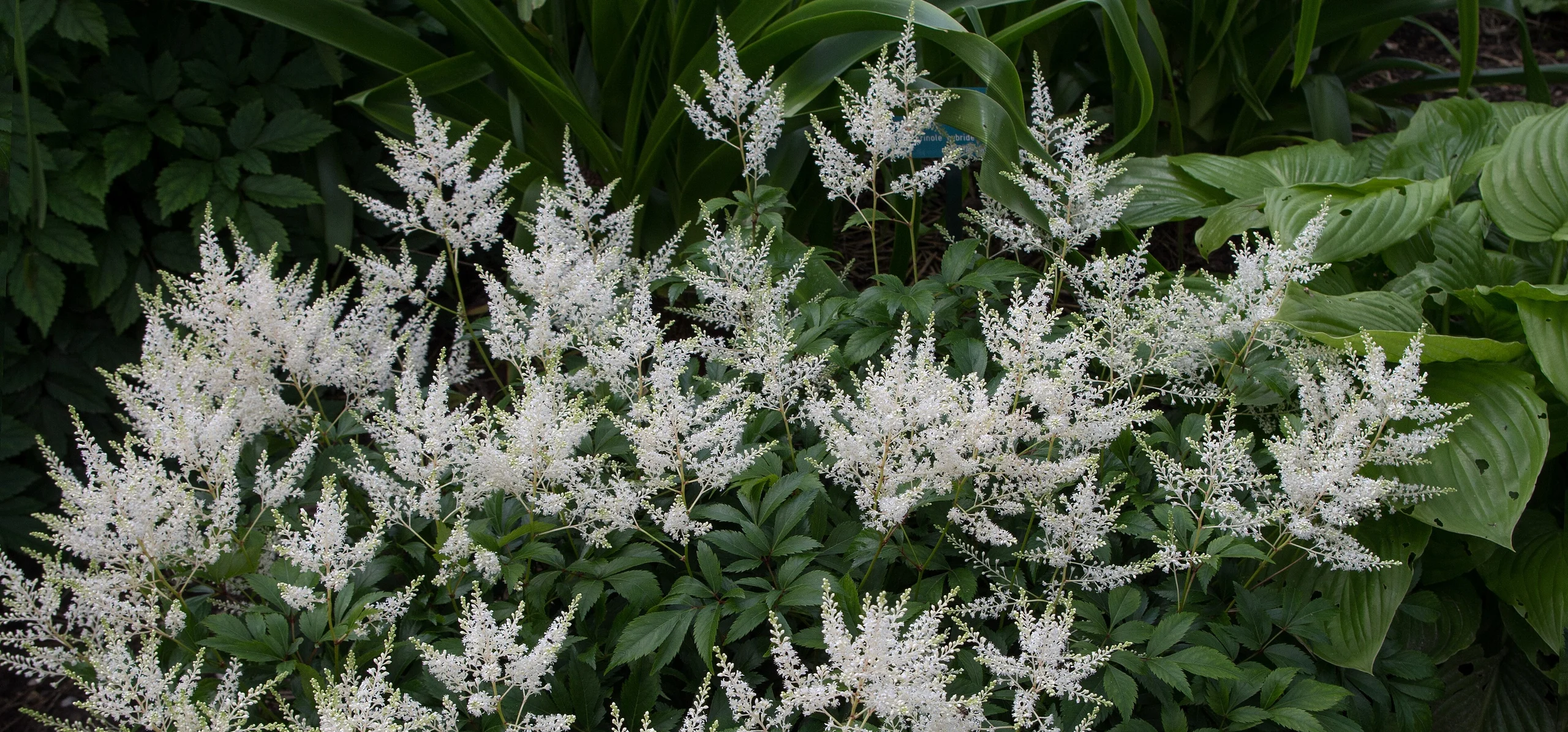
Astilbe japonica is a clump-forming herbaceous perennial in the saxifrage family, Saxifragaceae, native to rocky mountain ravines in Japan from Shizuoka Prefecture west to Kyushu, according to Missouri Botanical Garden. Dark green leaves divide into roughly nine diamond-shaped, toothed leaflets, and from early summer the plant sends up branching, feathery plumes of white flowers up to 20 cm long, per the RHS. The single fact that decides whether this plant thrives or scorches is moisture: it comes from streambanks and damp woodland floor, and it has no meaningful drought tolerance at any age. If the soil dries out between waterings, expect trouble within days, not weeks.
Astilbe japonica is one of the parent species behind the more common Arendsii hybrid astilbes sold at garden centers; if your plant was labelled simply "astilbe" without a cultivar name, or came from a specialist nursery as a straight species, this profile applies directly. It carries the RHS's H7 hardiness rating, tolerating winters below -20 degrees C, and Missouri Botanical Garden places it in USDA zones 4 to 9.
Shade That Doesn't Mean Dry Shade
Give Japanese astilbe partial to full shade; an east, west or north-facing spot works well per the RHS, and keep it out of exposed, windy corners, since the RHS lists a sheltered position among its preferences. Gardeners in cool-summer climates can push it toward more sun, Missouri Botanical Garden notes the species tolerates brighter light where summers stay mild, but that only works if the soil underneath never dries out.
Shade on its own does not protect this plant. A bed that bakes dry by midafternoon will scorch the foliage just as fast as one in full sun; the variable that decides the outcome is moisture at the root, not light reaching the leaf.
Watering: The Rule That Overrides Everything Else
New divisions and nursery plants need generous watering: the RHS recommends two or three sessions a week through the first growing season while roots establish. Once settled, water whenever the top 2.5 cm of soil feels dry, giving one long, deep soak rather than frequent light sprinkles, and use rainwater over hard tap water where you can.
The tell-tale sign of a plant that has gone too long without water is leaf scorch: margins turn brown and crisp within days of the soil drying out, and established clumps show no meaningful drought tolerance even after years in the ground. Astilbe japonica also dislikes the opposite extreme; the RHS is explicit that it dislikes waterlogged conditions, so a rich, moisture-retentive soil that still drains, rather than a solid clay pan that stays sodden, is what the roots actually want. Bog gardens and pond edges suit it precisely because the water table stays high without the roots sitting in stagnant water.


Soil and Feeding
The RHS lists clay and loam as suitable soil types and rates the species tolerant of acid, neutral or alkaline pH, so soil chemistry is rarely the limiting factor here; structure and moisture retention are. Work plenty of well-rotted organic matter into the planting hole and keep a mulch layer on the surface, which feeds the soil and slows evaporation from the root zone at the same time.
On feeding specifically, the RHS is direct: astilbes planted in the rich, moist soil they prefer need no supplementary fertilizer at all. If your soil is thin or sandy rather than naturally rich, an annual spring topdressing of compost or well-rotted manure substitutes for a feeding program and improves the moisture retention that matters more than any nutrient.
Dividing the Clump
Astilbe japonica forms an expanding clump from a woody rhizome, and by the RHS's schedule it benefits from division roughly every four years in spring, lifted and split with a spade or two forks the way you would divide any fibrous-rooted perennial. Division also refreshes a clump that has started flowering less freely as the centre becomes congested and woody.
Seed is the other route: the plant self-seeds where conditions suit it, though the RHS notes seedlings take about three years to reach flowering size, considerably slower than a spring division, which can flower the same year if planted early enough.
Leave the Seed Heads Standing Through Winter
Resist the urge to deadhead or tidy astilbe in autumn. The spent flower plumes dry to a warm russet brown and hold their branching structure through frost and snow, giving the border winter interest that few other shade perennials offer at that time of year, while the seed heads feed birds through the colder months.
The RHS recommends leaving this top growth in place through autumn and winter and cutting the whole plant back to ground level only in December or January, just ahead of the following season's new growth pushing through. Cut earlier and you lose months of structure for no horticultural benefit; the old stems are not sheltering pests or disease that need removing sooner.
Pests, Common Mistakes and Pet Safety
The RHS documents vine weevils as the main pest to watch for on astilbe: adult beetles chew semi-circular notches along the leaf margins at night, while their grubs can damage roots below ground, so check the base of the crown and surrounding compost if a clump suddenly looks unthrifty. Powdery mildew and other foliar diseases are not flagged as significant problems for this species in the RHS guidance.
The single most common mistake with Astilbe japonica is planting it in a hot, dry spot and treating it like a typical drought-tolerant perennial once established; it never becomes one, and a summer of missed watering shows up immediately as crisped, brown leaf margins that will not green up again that season. Astilbe does not appear on the ASPCA's toxic plant lists for dogs, cats or horses, making it a reasonable choice for a shaded border where pets have access, though as with any unfamiliar plant it is still sensible to discourage chewing.
Test your plant knowledge
Tap a card to flip it and reveal the answer.
Astilbe japonica has no meaningful drought tolerance even once fully established. Tap to reveal ✓ True
The RHS recommends feeding astilbe with fertilizer regularly through the growing season. Tap to reveal ✕ False
The RHS recommends dividing established astilbe clumps roughly every four years in spring. Tap to reveal ✓ True
Astilbe seed heads should be cut down as soon as the flowers fade in summer. Tap to reveal ✕ False
The ASPCA lists astilbe as toxic to dogs and cats. Tap to reveal ✕ False
Sources
References consulted for this guide
- Astilbe japonica, GBIF Backbone Taxonomygbif.org
- Astilbe japonica, Plants of the World Online (Kew)powo.science.kew.org
- RHS: Astilbe japonica (false buck's-beard)rhs.org.uk
- RHS: How to grow astilberhs.org.uk
- Missouri Botanical Garden: Astilbe japonica, Plant Findermissouribotanicalgarden.org
- Reference entity : Wikipédiaen.wikipedia.org