Scarlet Star
Guzmania lingulata
Family · Bromeliaceae
Guzmania lingulata needs bright filtered light, a topped-up central cup, warmth above 15°C, and a bit of patience once its star-shaped bloom fades.
Guzmania lingulata
Plant profile
- WateringHighWater every 7 days
- Light exposureIndirect light
Growth
- Family
- Bromeliaceae
- Life cycle
- Perennial
- Growth speed
- 3/10
- Mature size
- 10–50 cm
- Spread
- 10–50 cm
- Flowering
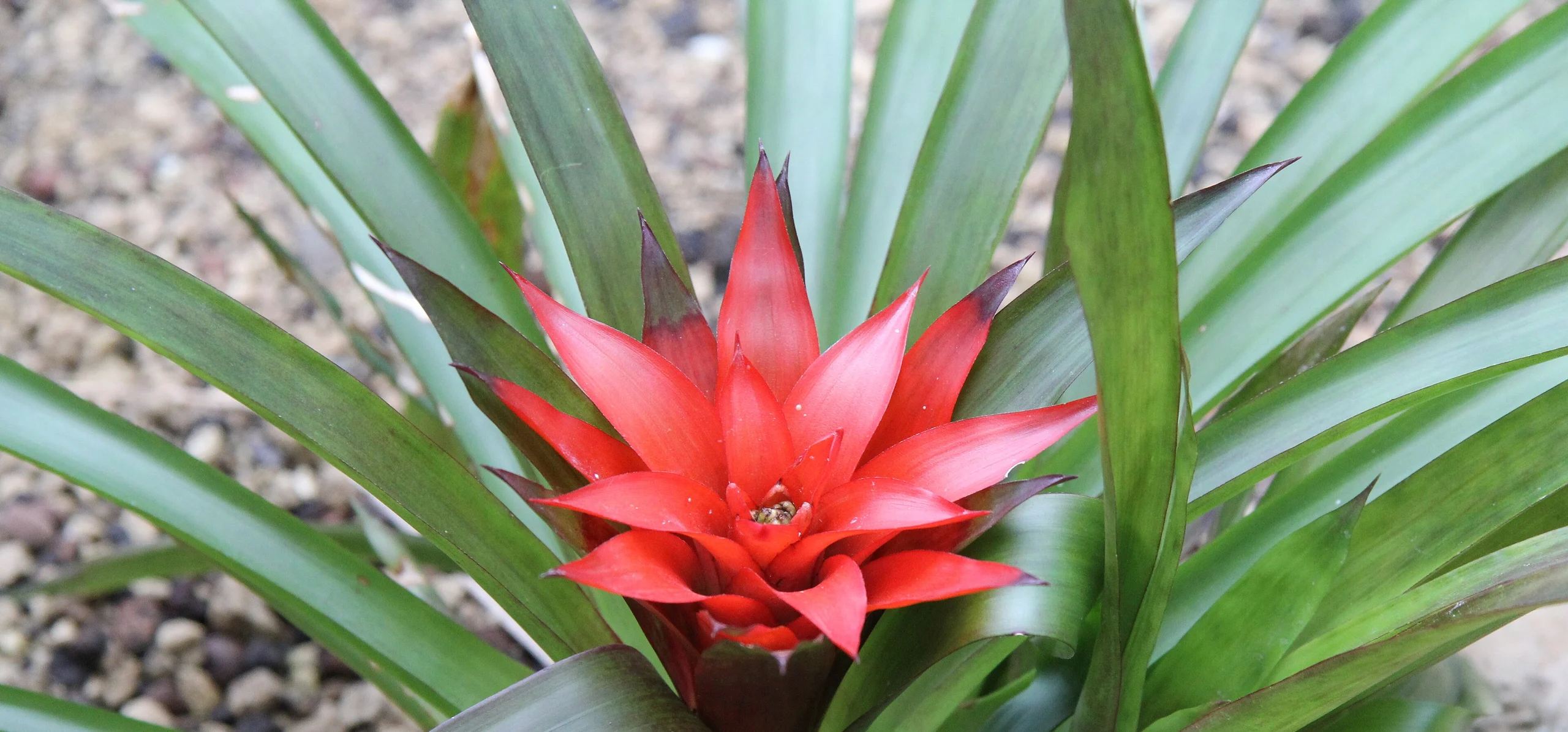
- Star-shaped red or orange bracts, summer, lasting months; each rosette blooms once
- Propagation
- Seed
- Offsets
DormancyGrowth slows in winter; stop misting and keep the cup only lightly filled
Time to maturity2 to 5 years to full rosette size (RHS)
Soil & climate
- Soil types
- Epiphytic bromeliad compost, Loam-and-sand mix
- Drought tolerance
- No
Light & Placement
- Origin
- SE Mexico to tropical America (POWO)
- Where to place it
- East or west window behind a sheer curtain
- Bright bathroom or greenhouse bench
- Shaded, humid patio in frost-free tropical climates
- Terracotta or plastic pot with bromeliad mix
- Mounted on cork or driftwood as an epiphyte
Safety
- Toxicity
- CatsSafe
- DogsSafe
- HorsesSafe
Invasive speciesNaturalised outside its native range in Bermuda (POWO)
Data fromGuzmania lingulata (L.) Mez, GBIF BackboGuzmania lingulata (L.) Mez, Plants of tGuzmania lingulata, RHSOrange Star, ASPCA Animal Poison Control
Where it grows
World distribution
Scarlet Star is native to 24 countries: Antigua & Barbuda, Belize, Bolivia, Brazil, Colombia, Costa Rica, Cuba, and Dominican Republic….GBIF records 4,670 documented identifications across 42 countries, with the largest concentrations in Colombia, Brazil, and Costa Rica.
- Antigua & Barbuda
- Belize
- Bolivia
- Brazil
- Colombia
- Costa Rica
- Cuba
- Dominican Republic
- Ecuador
- French Guiana
- Guatemala
- Guyana
Show 12 more countriesShow fewer countries
- Haiti
- Honduras
- Jamaica
- Mexico
- Nicaragua
- Panama
- Peru
- Puerto Rico
- St. Lucia
- Suriname
- Trinidad & Tobago
- Venezuela
Yellow to orange dots: concentration of documented identifications per country. Green countries: sourced native range. Source: GBIFNative range from POWO (Kew).
The colour on a Guzmania lingulata is not a flower at all, it is a rosette of bracts, modified leaves that stay bright red, orange or pink for months while the true flowers, small spikes of yellow and white, sit almost hidden at its centre. That long-lasting display is why the plant is sold everywhere from supermarkets to garden centres under the name Scarlet Star, and it is also why new owners are often confused about how to keep it going: this is a plant that drinks from a cup at its centre rather than through its roots, and once that colourful rosette fades it will not bloom again. Understanding both of those points early avoids most of the disappointment people report with this species.
Origin and Growth Habit
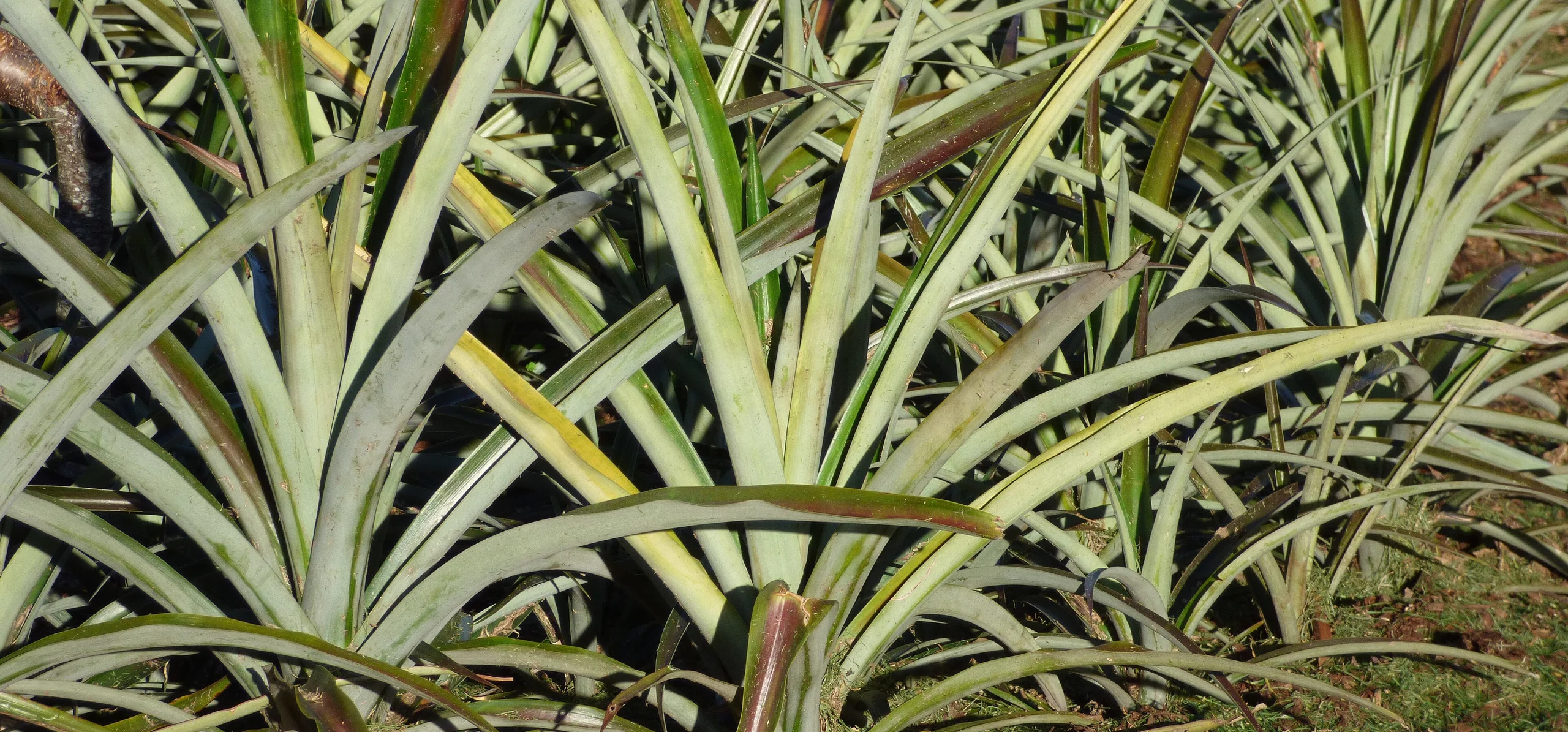
Plants of the World Online (Kew) lists the native range of Guzmania lingulata as SE Mexico to tropical America, spanning Central America, the Caribbean and much of tropical South America, with the species also naturalised outside that range in Bermuda. In the wild it grows as an epiphyte, wedged into the crooks of rainforest trees rather than rooted in soil, using its short roots mainly to anchor itself while the tightly overlapping leaf bases form a small reservoir, the tank, that collects rainwater and falling leaf litter for nutrients. GBIF places the species in the bromeliad family, Bromeliaceae, alongside pineapple and Spanish moss, a family defined by exactly this tank habit. A single rosette of strap-shaped leaves reaches its full size, roughly 10 to 50 cm tall and wide, over two to five years according to the RHS, then flowers once before slowing down for good.
Light and Placement
The RHS recommends partial shade in bright, filtered light for Guzmania lingulata, the same dappled canopy conditions it would get growing under taller trees in the wild. An east or west-facing window with a sheer curtain, or a spot a metre or so back from a brighter south-facing pane, suits it well; direct midday sun through glass concentrates heat and can scorch the leaves and fade the bract colour faster than it should. Too little light is the more common indoor failure, though, showing up as a rosette that stays green and never produces the coloured bracts that make the plant worth growing in the first place.
Watering the Central Cup
This is the detail that trips up most new owners: water the cup at the centre of the rosette, not just the potting mix. Keep a shallow reserve of water sitting in that central well, and let the mix around the roots dry out between waterings rather than staying wet, since Guzmania lingulata takes up very little moisture through its roots and a permanently soggy mix invites rot at the base. Soft water matters here too, rainwater or filtered water avoids the mineral scale that hard tap water leaves as a crust on the leaves and inside the cup over time. Empty and refresh the cup every week or two rather than topping up old water indefinitely, stagnant water in the tank can turn cloudy and encourage rot right at the growing point.
How often to water your Scarlet Star
Soil, Potting and Humidity
Because the roots exist mainly to anchor the plant rather than feed it, Guzmania lingulata does best in an open, fast-draining mix, the RHS specifies epiphytic bromeliad compost, or a loam-and-sand mix with a neutral pH, never a dense, moisture-holding potting soil. A pot only slightly larger than the root ball is enough; oversized pots hold excess moisture around roots that were never built to sit in it. The RHS also calls for daily misting with soft water while the plant is actively growing, tapering off to no misting and only a barely moist mix through winter, which mirrors the humid understorey air of its native range far better than dry, centrally heated rooms manage on their own.
Temperature and the Bloom Cycle
The RHS rates Guzmania lingulata H1A, meaning it needs a minimum temperature above 15°C (59°F) year-round and cannot tolerate any cold outdoor exposure, so in temperate climates it stays as a houseplant or greenhouse specimen rather than a patio plant. Flowering happens in summer, and the coloured bracts are unusually persistent, often holding their colour for several months before slowly fading to green. That fade is not a sign of neglect: each rosette flowers exactly once in its life, then goes into a slow decline over the following months as it channels its remaining energy into offsets, small plantlets called pups that emerge at the base around the parent's leaves.
Propagation and What Happens After Flowering
Once the parent rosette has faded and the pups reach roughly a third of its size, the RHS lists two propagation routes, removing offsets in mid-spring to pot up separately, or raising new plants from seed at a warm 27°C (81°F). Offsets are by far the more practical choice for a home grower: cut a pup away with a clean, sharp knife once it has a few of its own roots, taking a small piece of the parent's base attached if possible, and pot it into the same free-draining bromeliad mix. It will take another one to two years to reach flowering size itself. There is no reason to keep the spent parent rosette once its pups are removed and established, though leaving it in place while the offsets are still small does no harm and can even help support them.
Pests and Problems
The RHS lists mealybugs as the main pest to watch for, small white cottony clusters that tend to settle into the leaf axils and around the base of the rosette; wipe them off with a cotton swab dipped in rubbing alcohol or treat with insecticidal soap before numbers build up. Beyond that the species is described as generally disease-free, and most of the problems reported by growers trace back to watering habits rather than pests: a mix kept constantly wet leads to basal rot, while hard tap water left sitting in the cup for weeks tends to leave a visible white crust and can dull the bract colour.
Is Guzmania Lingulata Safe Around Pets?
The ASPCA does not carry a separate entry for the straight species, but its listing for the closely related Guzmania lingulata var. minor, sold under the name Orange Star, records it as non-toxic to dogs, non-toxic to cats and non-toxic to horses, consistent with the ASPCA's treatment of other commonly grown Guzmania varieties. That makes it one of the more worry-free flowering houseplants to keep within reach of curious pets, though standing water in the central cup is still worth keeping fresh if a cat or dog is inclined to drink from it.

Test your plant knowledge
Tap a card to flip it and reveal the answer.
Guzmania lingulata should be watered by keeping its central cup topped up, not just by soaking the potting mix. Tap to reveal ✓ True
Guzmania lingulata is toxic to cats and dogs. Tap to reveal ✕ False
The same rosette will produce a new colourful bloom again next year. Tap to reveal ✕ False
Guzmania lingulata is native to Southeast Asia. Tap to reveal ✕ False
This plant needs a minimum temperature above 15°C (59°F) to avoid cold damage. Tap to reveal ✓ True
Sources
References consulted for this guide
- Guzmania lingulata (L.) Mez, GBIF Backbone Taxonomygbif.org
- Guzmania lingulata (L.) Mez, Plants of the World Online (Kew)powo.science.kew.org
- Guzmania lingulata, RHSrhs.org.uk
- Orange Star, ASPCA Animal Poison Controlaspca.org
- Reference entity : Wikipédiaen.wikipedia.org