White Bird of Paradise
Strelitzia nicolai
Family · Strelitziaceae
Strelitzia nicolai care: RHS H1B hardiness, why the big banana-style leaves split, why it rarely flowers as a houseplant, and repotting a top-heavy clump.
Strelitzia nicolai
Plant profile
- WateringModerateWater every 8 days
- Light exposurePartial sun
- Ideal temperature10–30 °C
- Hardiness zoneUSDA 10–11
Growth
- Family
- Strelitziaceae
- Life cycle
- Perennial
- Growth speed
- 5/10
- Mature size
- 600–900 cm
- Spread
- 180–350 cm
- Flowering
- Rare indoors, needs years and size to mature
- Propagation
- Division
- Seed
DormancyLittle true dormancy, slows in cool winters
Time to maturityFlowers after several years and size
Soil & climate
- Soil pH
- pH 6–8
- Soil types
- chalk, clay, loam, sand
- Saline soil
- Tolerated
- Drought tolerance
- Yes
Light & Placement
- Origin
- Eastern Zimbabwe to KwaZulu-Natal, eastern Botswana
- Where to place it
- South or west window with bright light
- Bright conservatory or heated greenhouse
- Sheltered, sunny courtyard or patio
- South- or east-facing border in frost-free climates
- Heavy terracotta or ceramic container
- Large loam-based potting mix
Safety
- Toxicity
- HumansToxic
Data fromStrelitzia nicolai, GBIF Backbone TaxonoStrelitzia nicolai Regel & Korn., PlantsRHS: Strelitzia nicolai (white bird of pNC State Extension Gardener Plant Toolbo
Where it grows
World distribution
White Bird of Paradise is native to 4 countries: Botswana, Mozambique, South Africa, and Zimbabwe.GBIF records 4,091 documented identifications across 49 countries, with the largest concentrations in South Africa, Australia, and United States.
- Botswana
- Mozambique
- South Africa
- Zimbabwe
Yellow to orange dots: concentration of documented identifications per country. Green countries: sourced native range. Source: GBIFNative range from POWO (Kew).
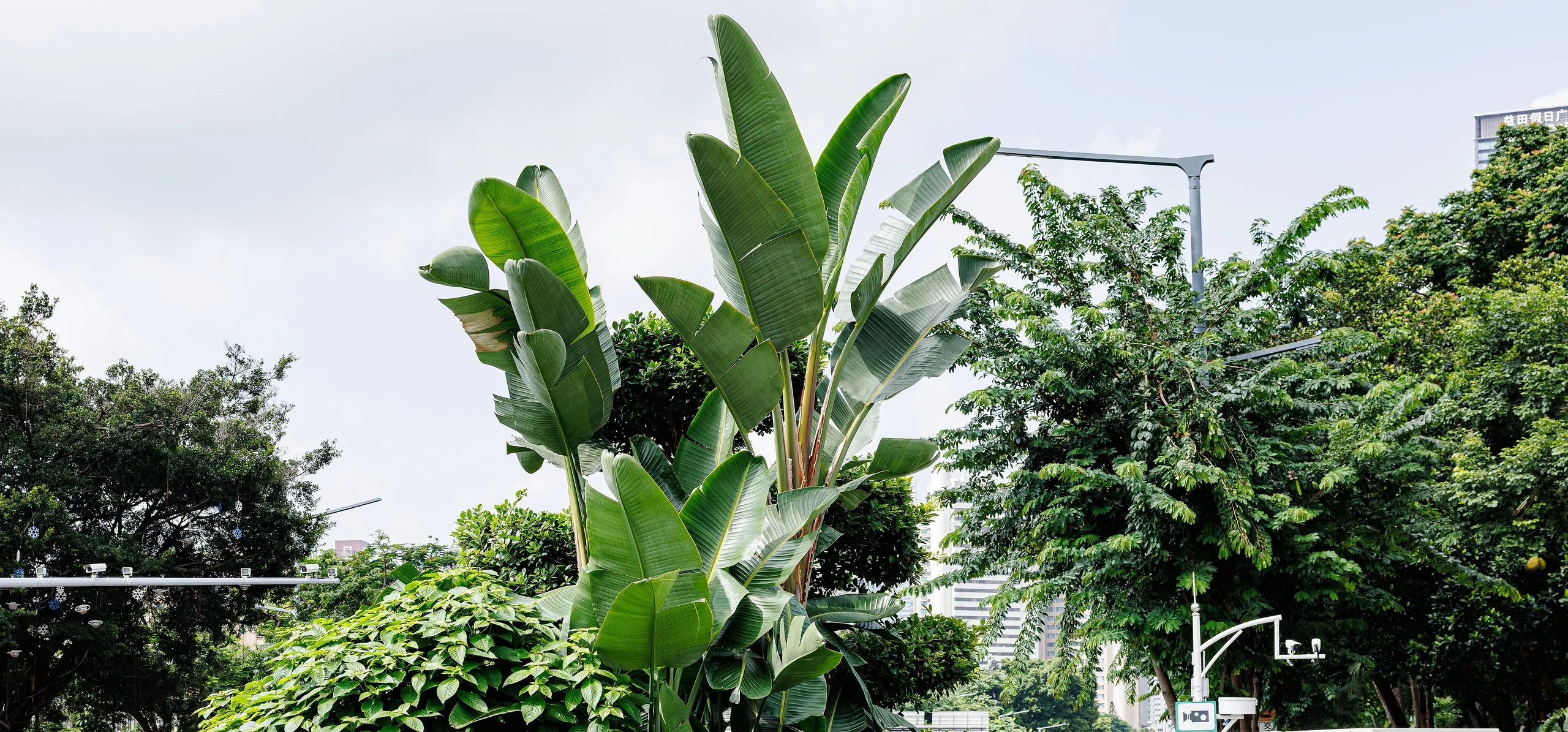
Strelitzia nicolai arrives as a stand of glossy, paddle-shaped leaves on thick fan-shaped stems, and the first thing to understand is that it is not the compact florist's bird of paradise, Strelitzia reginae. This is the tree-forming relative from the forests of eastern South Africa, grown almost entirely for its architectural foliage, since a potted specimen rarely flowers indoors before it reaches several metres and a mature clump of suckers. Give it a big pot, strong light and protection from anything near freezing, and the main job is managing its size rather than fussing over the plant itself.
Origin and Growth Habit
The species grows wild from eastern Zimbabwe through KwaZulu-Natal to eastern Botswana, where it forms multi-stemmed clumps along forest margins and riverbanks, eventually reaching several metres on woody, banana-like stems. Unlike Strelitzia reginae, which stays low and clumps tightly at ground level, Strelitzia nicolai builds a visible trunk from overlapping leaf bases and keeps producing new basal suckers, so a single plant slowly becomes a small grove. Indoors or in a container this habit is the same, just slower and smaller, expect a young plant to gain one new leaf every four to eight weeks in the growing season and a new sucker every year or two once established.
Light and Placement
In the ground this species tolerates full sun to light shade. As a potted specimen it does best with several hours of direct or very bright light a day, a south- or west-facing window with some protection from the harshest midday sun works well; too little light produces thin, floppy leaves that split less cleanly and lean hard toward the glass. Outdoors in warm climates, plant it in a sheltered spot such as a south- or east-facing courtyard, since the huge leaves act like sails and shred badly in exposed wind, even though the splitting itself is normal. Under glass, RHS guidance is full light with shade from the hottest summer sun on a conservatory specimen.
Watering and Humidity
Keep the soil moist but never waterlogged through spring and summer, watering generously and letting the top few centimetres dry before the next round. Once established, the plant tolerates short dry spells better than most houseplants its size, but a chronically soggy pot is the more common failure, since the thick rhizomatous roots rot quickly without drainage. Cut back sharply in winter, watering only enough to keep the rootball from fully drying out, especially if the plant is overwintering somewhere cool. Average room humidity is tolerated without complaint; this is not a plant that needs misting or a pebble tray.


Soil, Potting and Feeding
A loam-based mix that drains well but holds some structure suits it better than a light, fluffy houseplant blend, the plant is naturally top-heavy and benefits from real weight in the pot. It tolerates a wide pH range from about 6.0 to 8.0 and grows in chalk, loam, clay or sandy soils outdoors, provided drainage is adequate. Choose a heavy terracotta or ceramic container over lightweight plastic, a large specimen in a light pot tips over in a draught. Feed with a balanced liquid fertiliser monthly through the growing season, top-dress the surface annually, and repot only every two years, since this species actually performs better when its roots are slightly congested rather than swimming in fresh compost.
Winter Care and Hardiness
RHS rates Strelitzia nicolai H1B, meaning it can spend summer outdoors but needs a minimum of roughly 10 to 15 degrees C over winter, colder than that and leaf damage starts, well below it the plant dies outright. In the ground it survives outdoors year-round only in the warmest, frost-free gardens, broadly USDA zones 10a to 11b, and even there a sharp unseasonal cold snap browns the leaf tips. Everywhere else, treat it as a large container plant that moves under cover, a bright conservatory, porch or heated greenhouse, from autumn through late spring, watering sparingly and ventilating whenever indoor temperatures climb above about 20 degrees C on a sunny winter day.
Why It Rarely Flowers Indoors
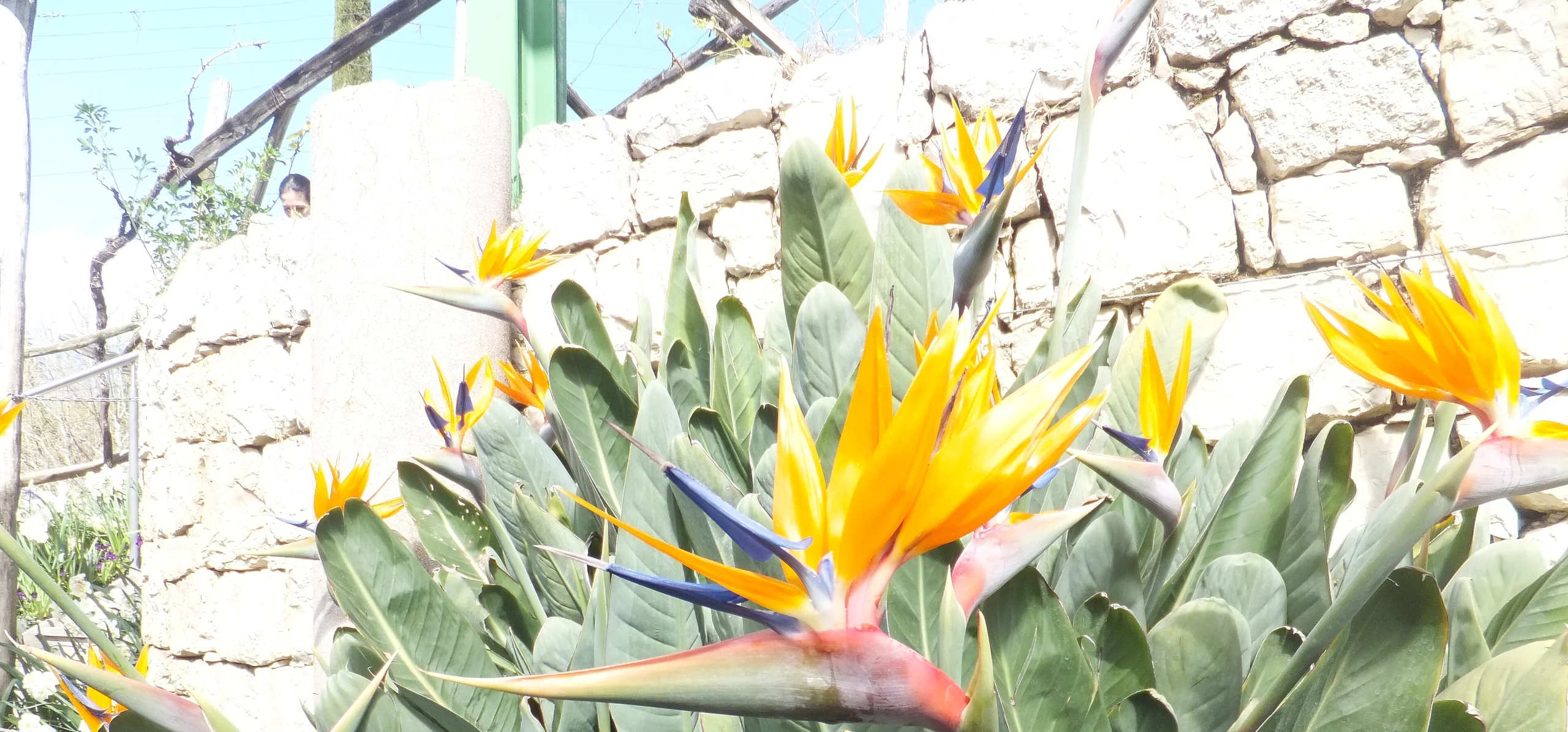
The white, blue-tongued flowers that give this plant its name only appear on stems that have matured for several years, and in a container that usually means the plant has to reach a substantial size, several metres in many cases, before it has the reserves to bloom. Most indoor specimens are bought and grown purely for the foliage and never flower at all, which is normal rather than a sign anything is wrong. Outdoors in a warm climate with root space to mature fully, established clumps flower on and off through the year. If a potted plant is otherwise healthy, pushing it toward flower is mostly a matter of time and size, not a fertiliser trick.
Leaf Splitting and Propagation
New leaves unfurl as a tight, pale green cylinder that slowly opens over one to two weeks, hardening to its mature colour as it does. Once open, mature leaves split along the side veins on their own, especially outdoors in wind, this is a built-in adaptation that lets air pass through the blade instead of tearing the whole leaf or toppling the stem, not a symptom of pest damage or underwatering. Propagate by dividing rooted basal suckers away from the main clump in spring, each division needs its own roots to establish, or by sowing fresh seed after soaking it for a day or two, seedlings are slow and can take a decade or more to reach flowering size.
Pests, Problems and Toxicity
Scale insects, spider mites and mealybugs are the pests most likely to show up, usually on the undersides of leaves or along the leaf sheaths where stems overlap; wipe scale and mealybugs off by hand or treat with insecticidal soap, and raise humidity slightly to discourage spider mites in hot, dry rooms. The species is otherwise close to disease-free when drainage is adequate. Brown, papery leaf tips usually trace back to a cold draught, dry air combined with underwatering, or leftover fertiliser salts in the compost, flush the pot with plain water if a white crust builds up on the soil surface. On toxicity, Strelitzia nicolai is not individually listed in the ASPCA's toxic and non-toxic plant database, only its smaller relative Strelitzia reginae carries a specific ASPCA entry, rated harmful to cats, dogs and horses from mild nausea, vomiting and drowsiness mainly linked to the fruit and seeds. University extension sources note that the fruit and seeds of Strelitzia nicolai can cause similar mild stomach upset in people if eaten, and that the sap can irritate skin on contact, so it is sensible to treat this species with the same caution as its relative and keep pets and children from chewing the fruit, while recognising it has not been independently ASPCA-assessed.
Test your plant knowledge
Tap a card to flip it and reveal the answer.
Strelitzia nicolai is the same plant as the compact florist's bird of paradise, Strelitzia reginae. Tap to reveal ✕ False
A Strelitzia nicolai leaf splitting along its veins in the wind is a normal adaptation, not a sign of disease. Tap to reveal ✓ True
RHS rates Strelitzia nicolai H1B, meaning it needs a minimum of roughly 10 to 15 degrees C over winter. Tap to reveal ✓ True
A young potted Strelitzia nicolai typically flowers within its first year of growth. Tap to reveal ✕ False
The ASPCA specifically lists Strelitzia nicolai as toxic to cats, dogs and horses. Tap to reveal ✕ False
Sources
References consulted for this guide
- Strelitzia nicolai, GBIF Backbone Taxonomygbif.org
- Strelitzia nicolai Regel & Korn., Plants of the World Online (Kew)powo.science.kew.org
- RHS: Strelitzia nicolai (white bird of paradise)rhs.org.uk
- NC State Extension Gardener Plant Toolbox: Strelitzia nicolaiplants.ces.ncsu.edu
- Reference entity : Wikipédiaen.wikipedia.org