Garden Tulip
Tulipa gesneriana
Family · Liliaceae
Tulipa gesneriana needs an autumn planting depth of 10 to 15 cm, full sun and free draining soil; how to water it, choose a variety, and avoid bulb rot.
Tulipa gesneriana
Plant profile
- WateringLittleWater every 10 days
- Light exposureFull sun
- Hardiness zoneUSDA 4–7
Growth
- Family
- Liliaceae
- Life cycle
- Perennial
- Mature size
- 10–50 cm
- Spread
- 10–50 cm
- Propagation
- Bulb
- Offsets
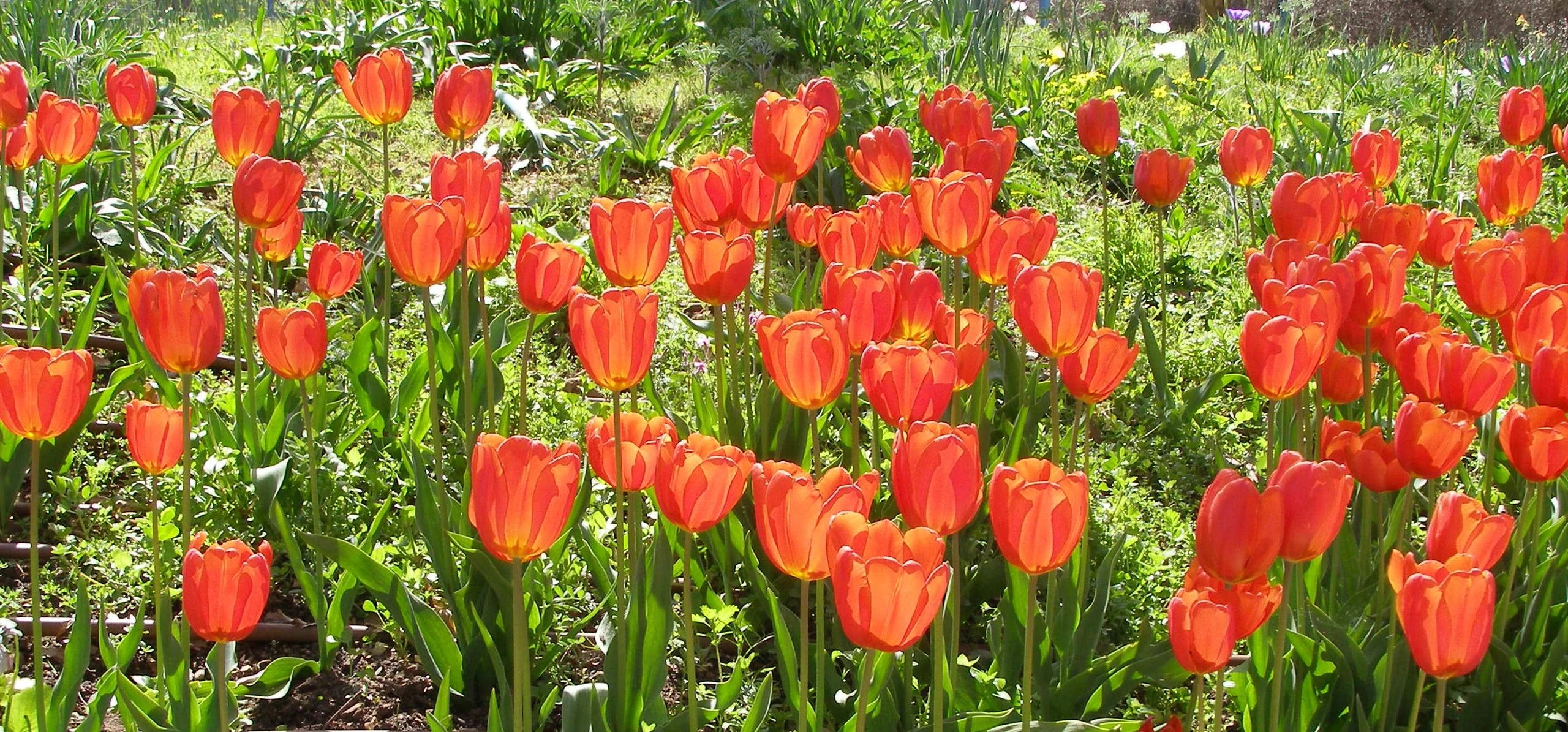
FloweringSpring, mid April through May in Iowa (Iowa State University Extension); single flowers in red, orange, yellow or purplish red (RHS)
DormancySummer dormant bulb
Time to maturity1 year to flowering (RHS)
Soil & climate
- Soil types
- chalk, clay, loam, sand
- Drought tolerance
- Yes
Light & Placement
- Origin
- Cultigen native to Turkiye (POWO)
- Where to place it
- South or west facing border in full sun (RHS)
- Sheltered site protected from strong wind (RHS)
- Deep container with drainage holes, planted at the same 10 to 15 cm depth as the garden (RHS)
Safety
- Toxicity
- CatsToxic
- DogsToxic
- HorsesToxic
- HumansToxic
Data fromTulipa gesneriana L., GBIF Backbone TaxoTulipa gesneriana L., Plants of the WorlASPCA: Toxic and Non-Toxic Plants, TulipRHS: Tulipa gesneriana (15), common gardIowa State University Extension, Yard an
Where it grows
World distribution
Garden Tulip is native to a single country: Türkiye.GBIF records 15,570 documented identifications across 49 countries, with the largest concentrations in Sweden, United Kingdom, and Germany.
- Türkiye
Yellow to orange dots: concentration of documented identifications per country. Green countries: sourced native range. Source: GBIFNative range from POWO (Kew).
A bag of firm, dry bulbs bought for autumn planting, or a clump of tulips left behind by a previous gardener, both trace back to Tulipa gesneriana, the garden tulip that gave rise to nearly every hybrid sold today. GBIF records the accepted name as Tulipa gesneriana L., in the lily family Liliaceae, and POWO lists its native range as a cultigen from Turkiye, meaning the plant grown worldwide is a garden creation refined over centuries rather than a wild species collected from one place. The bulb already holds everything needed for the first spring: get it into well drained soil at the right depth before the ground freezes, and the flower inside is simply waiting on winter cold and rising daylight to break dormancy. Get planting depth, sun and drainage right and a tulip asks for very little else.
Choosing a Type of Tulip
"Tulip" on a bulb bag usually means one of many cultivars bred from Tulipa gesneriana, and Iowa State University Extension groups them into divisions by bloom season and flower form. Single Early and Double Early types open first, the Double Early producing "semi-double to double, peony-like flowers" up to 4 inches across on stems 10 to 18 inches tall. Triumph tulips bloom mid-season and carry, in Iowa State's own words, the "widest range of flower colors" of any division, while Darwin Hybrids reach up to 30 inches and, unusually for the genus, "often bloom well for several years" instead of fading after one season. Late in the season, Single Late and Lily-Flowering types climb to 20 to 30 inches, the second recognisable by "long pointed petals arching outward", while Parrot tulips carry frilled, twisted petals but, per the same source, "don't withstand harsh weather" and need a sheltered spot.
For a bed that comes back reliably instead of one replanted every autumn, species and miscellaneous types are worth seeking out: Iowa State Extension notes they "perennialize well" compared with the large flowered hybrids, and points to dwarf early species such as T. tarda, only 4 to 6 inches tall and, in the same source's words, "easy to grow".
Planting Tulip Bulbs
Plant in autumn, in fertile, well drained soil, at the RHS's own recommended depth for Tulipa gesneriana: 10 to 15 cm (4 to 6 inches). Choose a sheltered site in full sun, ideally with a south or west facing aspect; the RHS's growing notes flag protection from strong wind and excess winter wet as the two conditions worth planning around. Set each bulb pointed end up before firming the soil back over it.
Cold matters as much as depth. The bulb needs a period of winter chill before it can flower, which is why tulips go in during autumn rather than spring: by the time the ground freezes, the roots are already established and the bud is primed to break dormancy as temperatures rise. Iowa State University Extension notes that in Iowa, tulips "typically bloom from mid April through May", with species types and Single Early divisions opening first and Darwin Hybrids and Single Late divisions finishing the season.
Light and Soil
Tulipa gesneriana wants full sun and tolerates a wide range of soil textures. The RHS lists chalk, clay, loam and sand as all acceptable, across acid, neutral or alkaline pH, provided the ground is moist but well drained or well drained outright. Drainage, more than fertility, decides whether a bulb survives to a second season: soil that stays wet through winter is the fastest route to rot, so heavy ground benefits from grit or coarse sand worked in before planting, and a raised bed or mounded border solves the problem outright.
The species itself, per POWO, is treated as a cultigen native to Turkiye rather than a wild plant with one clearly mapped range, the product of centuries of selection rather than a species gathered from a single mountainside. That garden origin explains why modern tulips tolerate such a broad span of soils and sun exposures across temperate gardens worldwide: they were bred for performance in cultivation, not adapted to one native habitat.


Watering Tulips
Water in well after autumn planting to settle the soil around the bulb, then largely leave the bed alone through winter; rainfall is normally enough. Growth resumes as temperatures rise in spring, and a bulb building its flower stem benefits from consistent moisture while the buds swell, so water during a dry spell rather than let a bud open small or abort. Once flowering finishes and the foliage starts to yellow, stop watering: the bulb is drying down for its summer dormancy, and constant moisture at that stage is a common way to invite rot rather than help the plant.
Growing Tulips in Containers
Pots solve the drainage question that ruins so many tulips in open ground. Use a container with drainage holes, a free draining potting mix, and the same 10 to 15 cm planting depth as in the garden, with bulbs set closer together than in a border for a fuller display. Parrot and Double Late types, which Iowa State Extension flags as vulnerable to wind and rain damage outdoors, suit a container that can be moved to shelter once buds start to show colour.
Potted bulbs still need their winter chill, so leave the pot outdoors or in an unheated space through the cold months rather than bringing it inside early. Container tulips tend to use up their reserves in one strong season, so many gardeners treat them as a one year display and plant fresh bulbs the following autumn.
Pests and Diseases
The RHS lists slugs, aphids, stem and bulb eelworm, and squirrels among the pests that trouble Tulipa gesneriana, with squirrels able to dig up and eat a newly planted bed of bulbs before winter sets in. On the disease side, tulip fire and bulb rot in poorly drained soil are the two problems named directly in the RHS's own growing notes for the species. Tulip fire shows up as distorted, scorched young leaves and a grey mould on foliage and flowers in cool, wet weather; affected plants are best lifted and removed rather than left to spread spores through the bed. Bulb rot is a drainage problem in disguise, which is why the planting advice above returns to drainage so often.
After Flowering: Deadheading and Saving Bulbs
The RHS's own care note for Tulipa gesneriana is short: deadhead after flowering and remove fallen petals, which stops the plant putting energy into seed instead of next year's bulb and clears away petal debris that can harbour tulip fire spores. Leave the foliage in place until it yellows and dies back on its own; those leaves are still feeding the bulb underground even after the flower is gone, and cutting them early is one of the more common ways a strong first year tulip fails to return.
To increase a planting rather than just maintain it, the RHS recommends propagating by dividing the offsets that form around a mature bulb, done in summer once the foliage has fully died back and the bulb is dormant and easy to lift and separate.
Toxicity and Common Mistakes
The ASPCA lists tulip among plants toxic to dogs, cats and horses, with the bulb carrying the highest concentration of toxin and vomiting, depression, diarrhoea and hypersalivation as the typical signs of ingestion; bulbs in storage or waiting to be planted should be kept out of reach of pets. The RHS separately notes the plant is harmful if eaten by people too and can cause a skin allergic reaction, so gloves are worth wearing when handling a large batch of bulbs at planting time.
Beyond toxicity, the most common mistake is planting too shallow: bulbs set closer to the surface than the RHS's 10 to 15 cm figure often flower once and then fail to return, or come up as leaves with no flower the following year. The second is skipping the post flowering die back period out of tidiness, cutting yellowing leaves that are still actively feeding the bulb. The third is planting into ground that stays wet all winter and expecting a strong show anyway: given the choice between a shadier spot with better drainage and full sun over heavy, waterlogged soil, the well drained spot produces the better tulip.
Test your plant knowledge
Tap a card to flip it and reveal the answer.
Tulip bulbs are planted in autumn, before the ground freezes. Tap to reveal ✓ True
Tulipa gesneriana grows best in full shade. Tap to reveal ✕ False
Tulip foliage should be cut back immediately after the flowers fade. Tap to reveal ✕ False
Waterlogged, poorly drained soil is a common cause of tulip bulb rot. Tap to reveal ✓ True
The ASPCA lists tulips as toxic to cats, dogs and horses. Tap to reveal ✓ True
Sources
References consulted for this guide
- Tulipa gesneriana L., GBIF Backbone Taxonomygbif.org
- Tulipa gesneriana L., Plants of the World Online, Kew Sciencepowo.science.kew.org
- ASPCA: Toxic and Non-Toxic Plants, Tulipaspca.org
- RHS: Tulipa gesneriana (15), common garden tuliprhs.org.uk
- Iowa State University Extension, Yard and Garden: Types of Tulips for Home Gardensyardandgarden.extension.iastate.edu
- Reference entity : Wikipédiaen.wikipedia.org