Thorny Olive
Elaeagnus pungens
Family · Elaeagnaceae
Thorny olive (Elaeagnus pungens) care: full sun to part shade, RHS H5 hardiness, autumn flowers, pruning after bloom, and stopping self-seeding into the wild.
Elaeagnus pungens
Plant profile
- WateringLittleWater every 10 days
- Light exposurePartial sun
- Ideal temperature-15–35 °C
- Hardiness zoneUSDA 7–9
Growth
- Family
- Elaeagnaceae
- Life cycle
- Perennial
- Growth speed
- 7/10
- Mature size
- 400–800 cm
- Spread
- 400–800 cm
- Flowering
- Fragrant flowers in autumn, fruit ripening the following spring
- Propagation
- Seed
- Cutting
Dormancyevergreen, no true winter dormancy
Time to maturity10-20 years to ultimate size
Soil & climate
- Soil types
- sand, loam, clay, chalk
- Saline soil
- Tolerated
- Drought tolerance
- Yes
Light & Placement
- Origin
- East Central and South-East China, South Korea, South Central and South Japan
- Where to place it
- sunny or lightly shaded border
- coastal hedge or screen
- sheltered or exposed fence line
- free-draining, loam-based compost in a large container while young
Safety
- Toxicity
- Not listed by ASPCA; extension sources describe it as non-toxic
- Pet safe
- Yes
Invasive speciesNaturalized and listed as invasive in parts of the southeastern United States (Alabama, Florida, Georgia, South Carolina, Virginia); birds spread the seed, so avoid planting near woodland edges and remove fruiting stems if it self-sows.
Data fromElaeagnus pungens Thunb., GBIF Backbone Elaeagnus pungens Thunb., Plants of the RHS: Elaeagnus pungens (silverthorn)Elaeagnus pungens (Silverthorn, Thorny E
Where it grows
World distribution
Thorny Olive is native to 4 countries: China, Japan, South Korea, and Tajikistan.GBIF records 8,837 documented identifications across 34 countries, with the largest concentrations in United States, Japan, and China.
- China
- Japan
- South Korea
- Tajikistan
Yellow to orange dots: concentration of documented identifications per country. Green countries: sourced native range. Source: GBIFNative range from POWO (Kew).
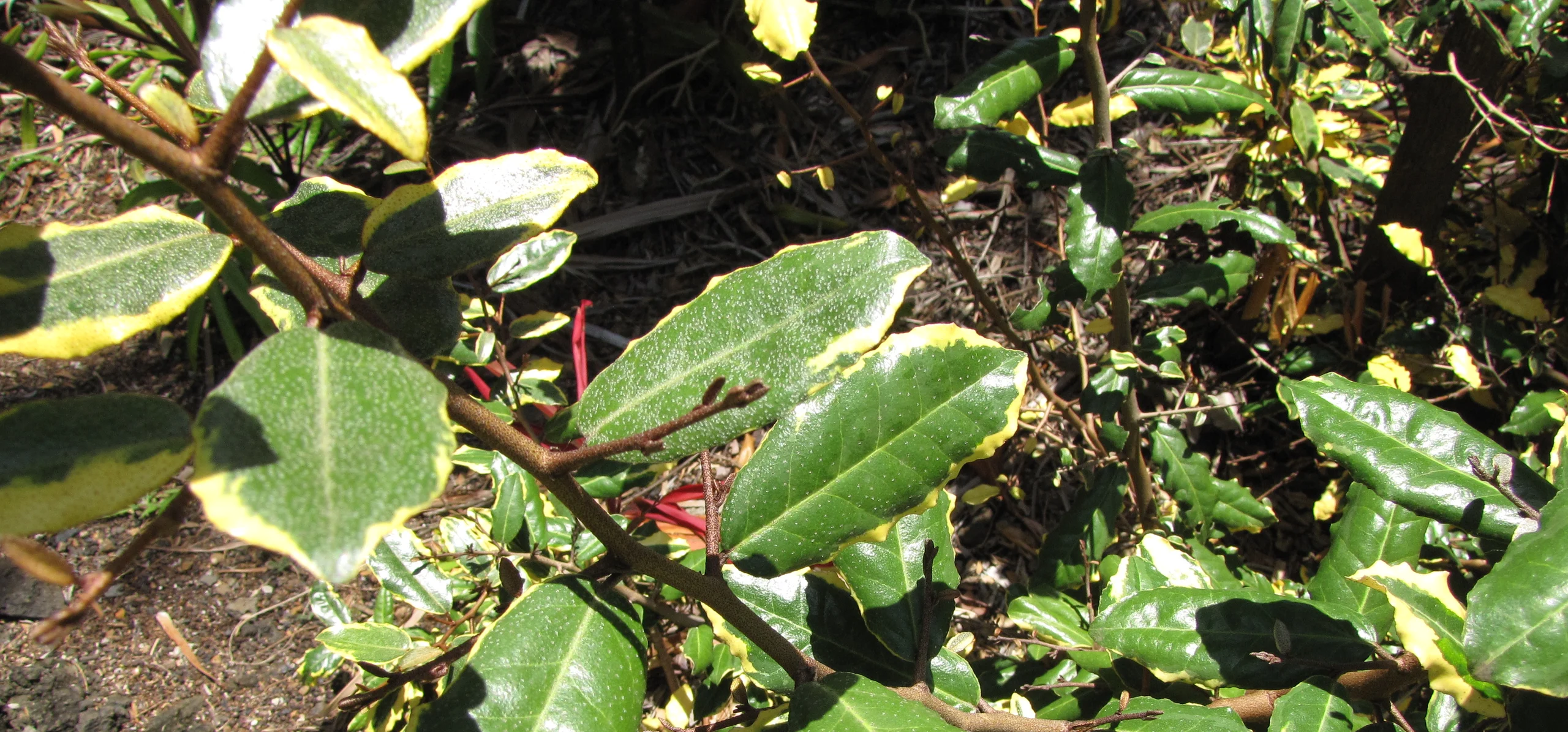
Elaeagnus pungens, sold as thorny olive or silverthorn, is the evergreen shrub you inherited already dense with glossy, leathery leaves speckled silvery-brown on the underside, or the one whose stiff branches ended in a sharp thorn the moment you reached in to prune it. Native to East Central and South-East China, South Korea, and South Central and South Japan, it earned a place in Western gardens for its toughness: full sun or part shade, almost any soil, salt spray and coastal wind all tolerated without complaint. That same toughness is why it has jumped garden fences into wild land in parts of the United States, so the first real decision with this plant is not how to keep it alive, it is how to keep it where you planted it.
Origin and an Invasive Streak
Elaeagnus pungens is native to East Central and South-East China, South Korea's Mount Miruk, and South Central and South Japan, where it grows as an understory and thicket shrub along forest edges. Nineteenth-century gardens took to it for the same traits that now trouble wild ecosystems: it roots easily, tolerates deep shade as readily as full sun, and produces fruit that birds eat and carry widely. In the southeastern United States it has naturalized and is listed as invasive in states including Alabama, Florida, Georgia, South Carolina, and Virginia, and it has turned up in at least three national parks. If you are planting it fresh, keep it away from woodland edges and hedgerows a bird could seed into, and on an old, unpruned specimen, check the ground beneath it each spring for seedlings before they get a taproot.
Light: Full Sun to Surprisingly Deep Shade
This is one of the few evergreen shrubs that flowers reliably in full sun and still performs, just more sparsely, in shade deep enough to stunt most broadleaf evergreens. The RHS rates it fully hardy, H5, to about -15 to -10 degrees C, and happy in any aspect, north, south, east or west facing, sheltered or exposed to wind. That shade tolerance is a convenience against a north wall or in a mixed border, but it is also the trait that lets thorny olive slip under a forest canopy and outcompete native shrubs that need more light. For a garden specimen or hedge, full sun to part shade gives the densest growth and the most flowers; deep shade suits a screening role where flowering barely matters.
Soil and Coastal Planting
Soil is close to a non-issue: sand, loam, clay or chalk, acid, neutral or alkaline, all work, and the RHS lists it as tolerant of both moist-but-well-drained and well-drained conditions. The one caveat from growers is chlorosis on very shallow chalk, where leaves can yellow between the veins if roots cannot get past the chalk layer. Because it shrugs off salt-laden wind, thorny olive is a standard choice for coastal hedging and screening in exposed gardens where more delicate evergreens burn back every winter. Give a new plant an open hole twice the width of its rootball and backfill with the existing soil rather than enriched compost, which only encourages roots to stay shallow and circle the planting pit.


Watering: Establish It, Then Leave It Alone
A newly planted thorny olive needs a deep soak once or twice a week through its first growing season while roots spread beyond the original rootball. After that, the RHS lists it among shrubs tolerant of dry soil, and established plants get by on rainfall alone in most temperate climates, needing supplemental water only during an extended summer drought or in a container, where the free-draining compost this plant prefers also dries out faster. Overwatering an established plant does more harm than skipping a week, since waterlogged roots in heavy, poorly drained soil are what open the door to honey fungus.
Autumn Flowers and Spring Fruit
Unlike most shrubs, thorny olive flowers in autumn, not spring: small, bell-shaped, silvery-cream flowers cluster in the leaf axils and carry a fragrance disproportionate to their size, noticeable from several metres away on a still day. They are followed by oval, reddish-brown to red drupes that ripen the following spring, from late March into May, hanging under the silvery foliage. Birds strip the fruit quickly, which is both the plant's main appeal for wildlife gardeners and the mechanism behind its spread into wild land. The stems carry stiff thorns roughly 5 to 7 cm long, a detail worth remembering before reaching bare-handed into an overgrown specimen.
Pruning Without Cutting Off Next Year's Flowers
Thorny olive sets its autumn flower buds on wood that matured over the current growing season, so pruning falls into the RHS's evergreen shrub group 9: cut back right after flowering finishes, in late winter, rather than in spring or summer when you would remove the very growth about to carry next year's blooms. Because this is a vigorous, fast-growing shrub capable of reaching 4 to 8 metres in height and spread over 10 to 20 years, an annual prune is less about shaping and more about keeping the plant to the size a hedge or border actually needs. Wear thick gloves and long sleeves; the thorns are stiff enough to puncture ordinary garden gloves.
Propagation from Semi-Ripe Cuttings
The RHS recommends semi-ripe cuttings taken in summer as the reliable way to propagate a named variegated cultivar, such as 'Maculata' or 'Goldrim', true to type; seed germinates readily too, but seedlings of variegated parents usually revert to plain green leaves. Take a 10 to 15 cm cutting from this year's growth once it has started to firm at the base, strip the lower leaves, and root it in a free-draining cutting mix under cover. Rooted cuttings are slow to build a vigorous root system, so pot them on gradually rather than moving straight to a final position.
Pests, Diseases, and Keeping It Contained
Thorny olive is close to trouble-free: the main pest is the elaeagnus sucker, a sap-feeding psyllid that distorts new growth, and stressed plants can pick up fungal leaf spot, rust or spider mites. In poorly drained soil, honey fungus and coral spot are the more serious risks, both signs that the site is too wet rather than a fault in the plant itself. The longer-term task is keeping it from becoming a problem outside the garden: deadhead or remove fruiting stems if birds visit heavily, do not let it seed into an adjoining wood or hedgerow, and check regularly for volunteer seedlings nearby, since its high shade tolerance lets them establish even under other shrubs. The species is not listed on the ASPCA's toxic and non-toxic plant database, so no verified rating exists for cats, dogs or horses; university extension sources describe it as non-toxic, but treat that as unconfirmed rather than official.
Test your plant knowledge
Tap a card to flip it and reveal the answer.
Thorny olive produces its fragrant flowers in autumn rather than spring. Tap to reveal ✓ True
Because it flowers on new spring growth, thorny olive should be pruned hard in spring or summer. Tap to reveal ✕ False
Birds eating and spreading its fruit have helped thorny olive become invasive in parts of the southeastern United States. Tap to reveal ✓ True
Thorny olive needs regular watering year-round and cannot handle dry soil once established. Tap to reveal ✕ False
Thorny olive tolerates coastal wind and salt spray well enough to be used as a seaside hedge. Tap to reveal ✓ True
Sources
References consulted for this guide
- Elaeagnus pungens Thunb., GBIF Backbone Taxonomygbif.org
- Elaeagnus pungens Thunb., Plants of the World Online (Kew)powo.science.kew.org
- RHS: Elaeagnus pungens (silverthorn)rhs.org.uk
- Elaeagnus pungens (Silverthorn, Thorny Elaeagnus, Thorny Olive), NC State Extension Gardener Plant Toolboxplants.ces.ncsu.edu
- Reference entity : Wikipédiaen.wikipedia.org