Polka Dot Plant
Hypoestes phyllostachya
Family · Acanthaceae
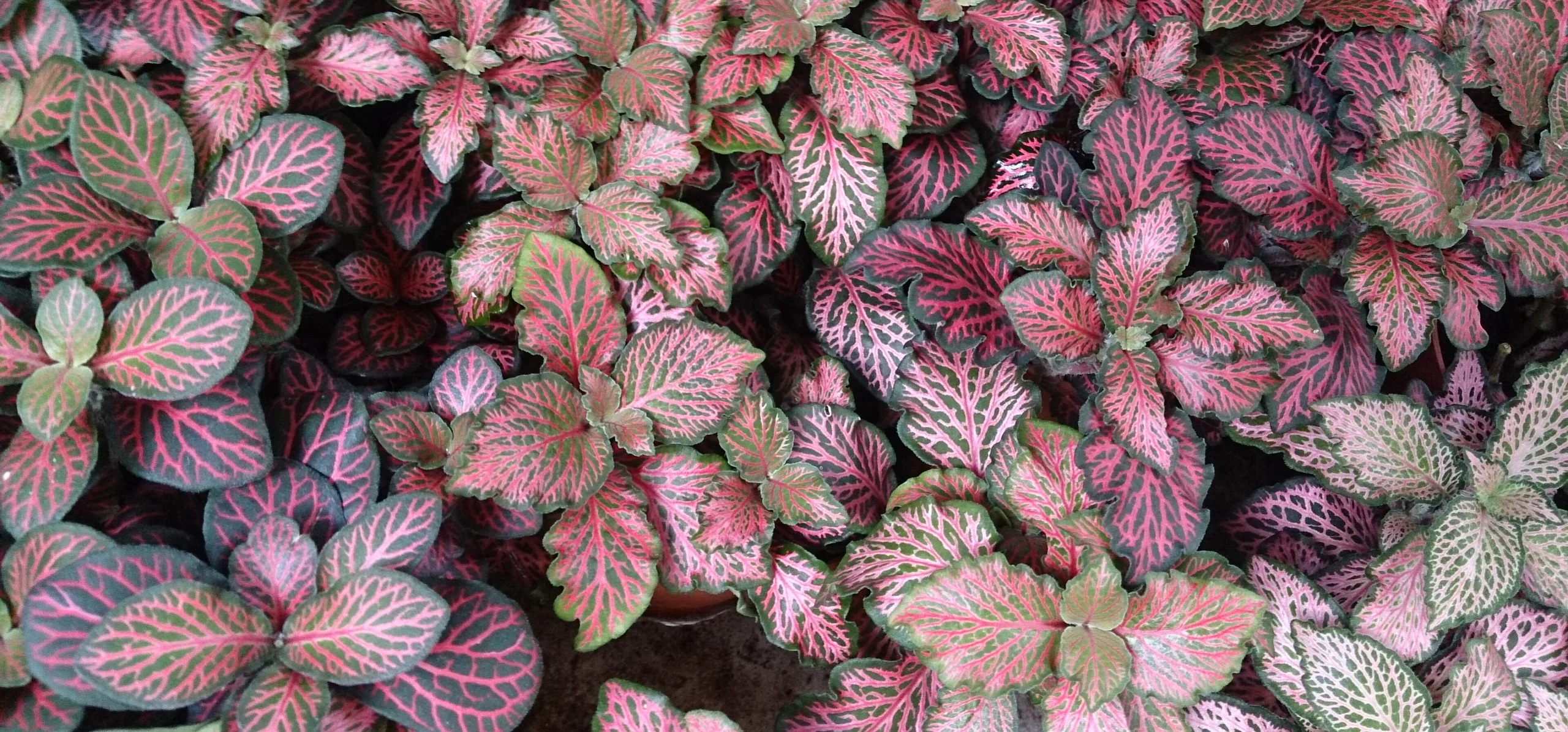
Hypoestes phyllostachya keeps its pink, white or red leaf spots only in bright, filtered light with steady moisture, grown indoors or as a bedding annual.
Hypoestes phyllostachya
Plant profile
- WateringHighWater every 5 days
- Light exposureIndirect light
- Hardiness zoneUSDA 10–11
Growth
- Family
- Acanthaceae
- Life cycle
- Perennial
- Growth speed
- 8/10
- Mature size
- 30–61 cm
- Spread
- 23–30 cm
- Flowering
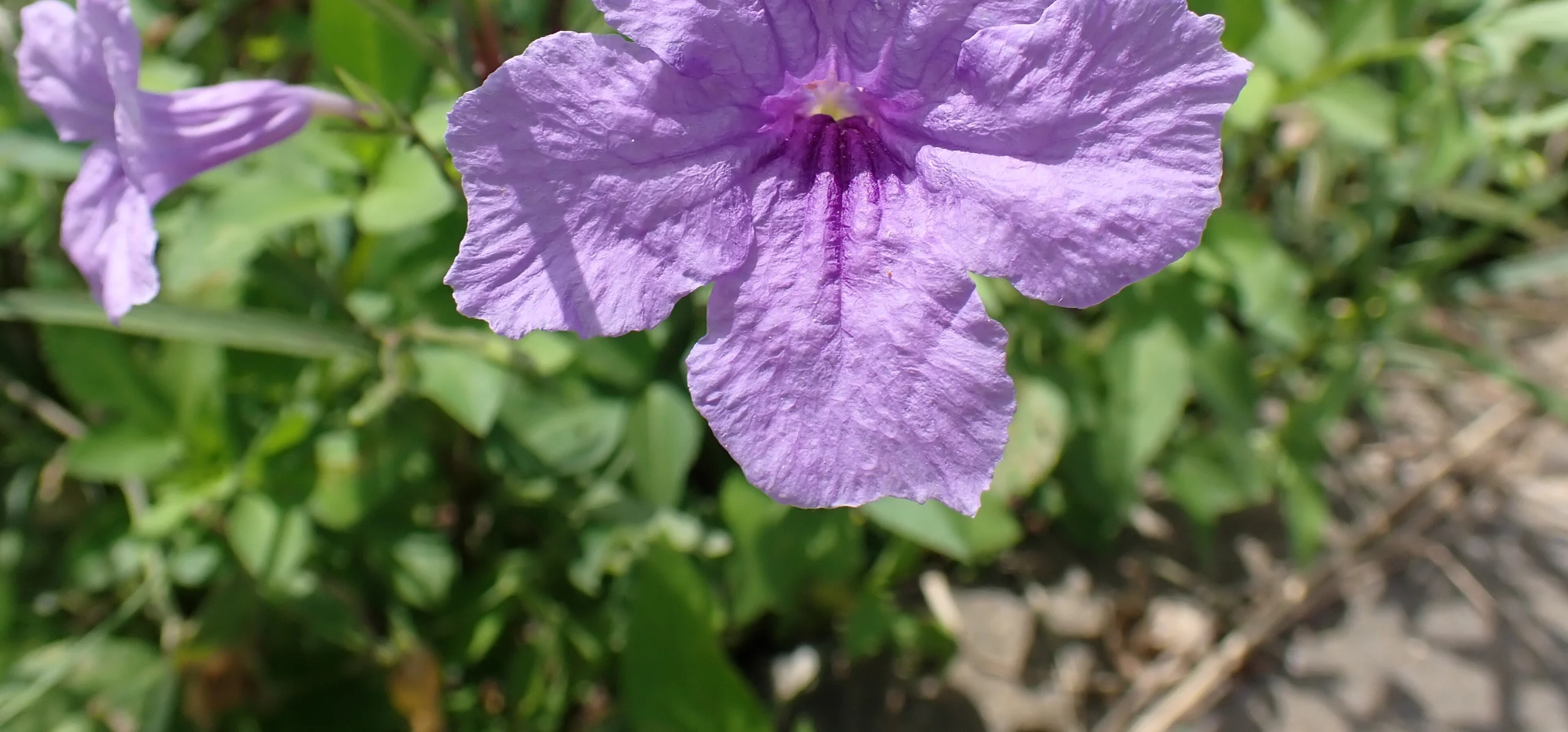
- Small pink or purple flower spikes in late spring and summer, usually pinched off
- Propagation
- Seed
- Cutting
Dormancyno true dormancy; growth slows in low light and cool winter temperatures indoors, killed by frost outdoors
Time to maturityreaches full size within a few months of planting
Soil & climate
- Soil types
- loam
- Drought tolerance
- No
Light & Placement
- Origin
- Madagascar
- Where to place it
- east-facing windowsill
- a spot a few steps back from a bright south or west window
- shaded or dappled border bed
- container on a porch with morning sun only
- small pot with drainage holes, only slightly larger than the root ball
- hanging basket
Safety
- Toxicity
- CatsSafe
- DogsSafe
- HorsesSafe
Data fromGBIF Backbone Taxonomy: Hypoestes phylloPlants of the World Online (Kew): HypoesNC State Extension Gardener Plant ToolboRHS: Hypoestes phyllostachyaASPCA: Polka Dot Plant
Where it grows
World distribution
Polka Dot Plant is native to a single country: Madagascar.GBIF records 4,362 documented identifications across 62 countries, with the largest concentrations in Mexico, Australia, and Colombia.
- Madagascar
Yellow to orange dots: concentration of documented identifications per country. Green countries: sourced native range. Source: GBIFNative range from POWO (Kew).
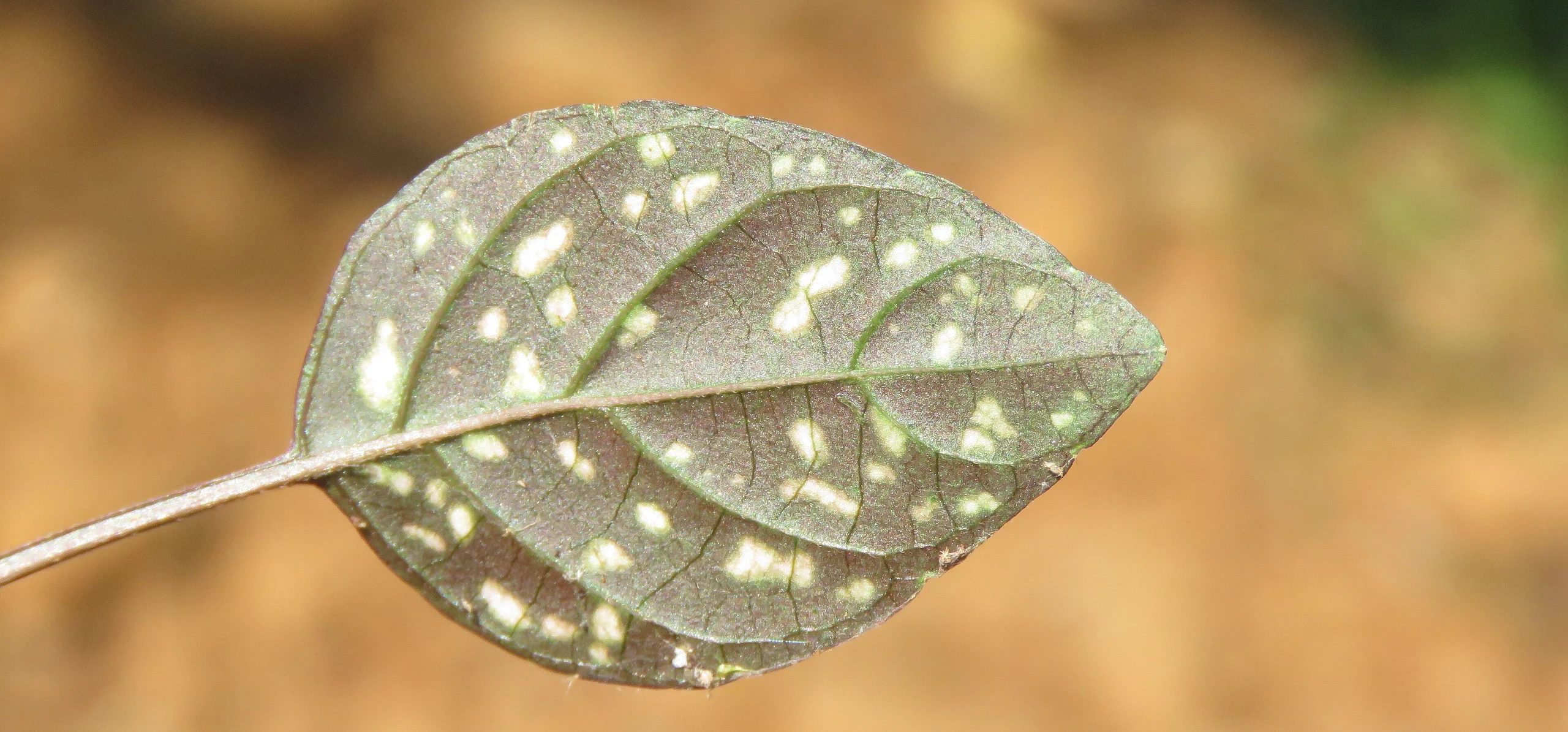
The plant on the shelf with pink, white or red freckled leaves is Hypoestes phyllostachya, an understory subshrub from the forests of Madagascar that nurseries sell almost entirely for that speckled pattern rather than for flowers. The colour is not fixed: it responds to light within days, fading toward plain green in a dim corner and washing out pale in direct sun, so the first two weeks after bringing it home are really a calibration period for where in the room it will keep its contrast. It is short-lived by houseplant standards, usually declining after twelve to eighteen months even with good care, which is normal and not a sign that something was done wrong. Most growers treat it as a plant to enjoy intensely for a season and propagate before it fades, rather than a permanent fixture.
A Madagascar Forest-Floor Plant Sold for Its Spotted Leaves
Kew's Plants of the World Online lists the native range of Hypoestes phyllostachya Baker as Madagascar, where it grows as a low, bushy subshrub in the dappled light under taller vegetation, close to the light level many growers try to recreate on a windowsill. The Royal Horticultural Society classifies it as a bushy evergreen sub-shrub, and North Carolina State University Extension notes it behaves as an annual or a perennial depending on climate: it survives outdoors year-round only in USDA zones 10 and 11, and is frost tender everywhere else, which is why most gardeners outside the tropics grow it as a container houseplant or replace it each spring as a bedding annual. Left alone it does flower, small tubular pink or purple spikes in late spring and summer, but the flowers are not the point and, as covered below, most growers remove them.
Light: The One Variable That Decides the Colour
North Carolina State University Extension places this species in the dappled sunlight and partial shade categories, meaning it wants bright light filtered through something rather than either a dark corner or an unshaded window. The RHS is specific about both failure modes: too much direct sun crinkles and curls the leaves and fades the pattern, while too little light lets the plant lean back toward solid green as it prioritises chlorophyll over pigment. In practice, an east-facing sill with a few hours of gentle morning sun, or a spot two or three steps back from a south or west window, works better than the brightest spot in the house. Watch new growth rather than old leaves for feedback: if the newest leaves come in pale and washed out, pull it back from the glass; if they come in mostly green with faint spotting, move it closer.
Watering and Humidity
This is a drought-intolerant plant. North Carolina State University Extension flags low drought tolerance directly, and the RHS instruction is to water freely through the growing season and only sparingly in winter, which in practice means checking the pot every two or three days in summer, since a plant this size in a small pot can dry out and wilt within a day of bright heat. A wilted Hypoestes usually recovers within an hour of a thorough watering if caught early, but repeated wilting sets the older leaves yellowing and dropping even after the plant bounces back. The RHS also calls for moderate to high humidity, which matters more indoors in winter with the heating running: standing the pot on a tray of damp pebbles or grouping it with other houseplants raises the air moisture around the leaves without wetting the foliage the way misting does.


Soil, Potting and Feeding
North Carolina State University Extension lists the preferred soil as a high-organic-matter loam that drains well, with a pH from acid up to neutral, below 8.0. A standard peat-free houseplant compost, per the RHS, with a handful of perlite worked in to keep it open, reproduces that structure. Choose a pot only slightly larger than the root ball: this species grows fast and fills a container quickly, but an oversized pot holds wet soil far longer than the roots can use, which is the most common route to root rot in a plant that already dislikes drying out. The RHS recommends a balanced liquid fertiliser every two to three weeks through the growing season and none in winter, when growth slows and excess feed just accumulates as salts in the compost.
Pinching: Stopping Legginess and the Flower Spikes
Left alone, Hypoestes phyllostachya stretches upward on thin stems and looks sparse within a couple of months, so the RHS lists no formal pruning for this species and instead advises pinching out the growing tips to encourage bushier growth. Pinching the tip of each stem every few weeks, just above a pair of leaves, forces two side shoots to break where there was one growing point, and is the single most effective way to keep the plant full rather than straggly. The small purple flower spikes are worth pinching off too as they appear: they are not showy, and letting a stem flower and set seed tends to pull energy away from leaf colour and can leave that stem looking tired afterward. A plant pinched hard in its first month, before it has a chance to get tall and thin, ends up noticeably fuller by midsummer than one left alone.
Propagation by Stem Cuttings
The RHS lists three propagation routes: seed, softwood cuttings taken in late spring, and semi-ripe cuttings taken in summer, and North Carolina State University Extension adds that stem cuttings root easily. In practice, a 7 to 10 cm tip cutting with the lower leaves stripped off roots within one to two weeks standing in a glass of water on a bright windowsill, faster than almost any other common houseplant cutting. Because the parent plant is short-lived and fades after a year or so, taking a round of cuttings partway through its life, rather than waiting until it is already declining, is the reliable way to keep the colour going without buying a replacement.
Pests, Common Problems and Pet Safety
North Carolina State University Extension lists aphids, mealybugs and whiteflies as the pests to watch for, all of which show up as small clusters on stems and the undersides of leaves and respond to insecticidal soap or a strong jet of water. The same source names root rot and powdery mildew as the main disease risks, both tied to the same underlying problem: soil that stays wet for too long, whether from overwatering or a pot without drainage. On safety, the ASPCA lists the polka dot plant as non-toxic to cats, dogs and horses, so an accidental nibble is not a poisoning emergency, though eating a large amount of any houseplant can still cause mild stomach upset in a pet. Fading colour, yellowing lower leaves and a leggy silhouette are almost always light, water or pinching issues rather than pests, so rule those out before reaching for a spray.
Test your plant knowledge
Tap a card to flip it and reveal the answer.
Hypoestes phyllostachya keeps its brightest leaf colour in bright, filtered light rather than direct sun or deep shade. Tap to reveal ✓ True
This plant can go a week or two without watering with no ill effects. Tap to reveal ✕ False
Pinching out the growing tips makes the plant fuller instead of leggy. Tap to reveal ✓ True
The ASPCA lists Hypoestes phyllostachya as toxic to cats and dogs. Tap to reveal ✕ False
Stem cuttings are a fast and reliable way to propagate this plant. Tap to reveal ✓ True
Sources
References consulted for this guide
- GBIF Backbone Taxonomy: Hypoestes phyllostachya Bakergbif.org
- Plants of the World Online (Kew): Hypoestes phyllostachya Bakerpowo.science.kew.org
- NC State Extension Gardener Plant Toolbox: Hypoestes phyllostachyaplants.ces.ncsu.edu
- RHS: Hypoestes phyllostachyarhs.org.uk
- ASPCA: Polka Dot Plantaspca.org
- Reference entity : Wikipédiaen.wikipedia.org