Emerald Ripple Peperomia
Peperomia caperata
Family · Piperaceae
Peperomia caperata wants bright indirect light, soil that dries slightly between waterings, and steady humidity, not the bone-dry regime of a true succulent.
Peperomia caperata
Plant profile
- WateringModerateWater every 10 days
- Light exposureIndirect light
Growth
- Family
- Piperaceae
- Life cycle
- Perennial
- Growth speed
- 3/10
- Mature size
- 15–20 cm
- Spread
- 15–25 cm
- Flowering
- Cream flower spikes in summer and early autumn
- Propagation
- Seed
- Cutting
DormancyNo true dormancy indoors; growth and watering needs slow over winter (RHS)
Time to maturityReaches its full mound, about 20 cm across, in 2 to 5 years (RHS)
Soil & climate
- Soil types
- loam, sand, well-drained potting mix, perlite or orchid bark for drainage
- Drought tolerance
- No
Light & Placement
- Origin
- Southeastern Brazil
- Where to place it
- north- or east-facing windowsill
- a metre or two back from a bright south or west window
- terrarium or bottle garden
- sheltered, shaded spot outdoors in summer only
- small pots and dish gardens
- unglazed terracotta over plastic
Safety
- Toxicity
- CatsSafe
- DogsSafe
Invasive speciesNo invasive listings found; grown almost exclusively as a compact houseplant
Data fromGBIF: Peperomia caperata Ruiz & Pav. ex ASPCA: Little Fantasy Peperomia (PeperomRHS: Peperomia caperata (emerald ripple Missouri Botanical Garden Plant Finder: University of Missouri Extension IPM: Pe
Where it grows
World distribution
Emerald Ripple Peperomia is native to a single country: Brazil.GBIF records 108 documented identifications across 16 countries, with the largest concentrations in Brazil, United States, and Belgium.
- Brazil
Yellow to orange dots: concentration of documented identifications per country. Green countries: sourced native range. Source: GBIFNative range from POWO (Kew).
A newly bought Emerald Ripple Peperomia looks like it belongs with the succulents: thick, deeply corrugated, heart-shaped leaves packed into a tight rosette. Treating it like one is the fastest way to lose it. Peperomia caperata is a shallow-rooted rainforest plant from southeastern Brazil that wants its soil to dry slightly between waterings, never bone dry for weeks and never left sitting wet. Give it bright, filtered light, a fast-draining mix, and a pot that lets excess moisture escape, and the clump of glossy, quilted leaves slowly thickens into the dense mound seen on nursery shelves. Get either extreme wrong and it sulks fast: underwatered leaves go limp and papery, overwatered ones turn yellow before the crown rots at the base.
A rainforest plant, not a succulent
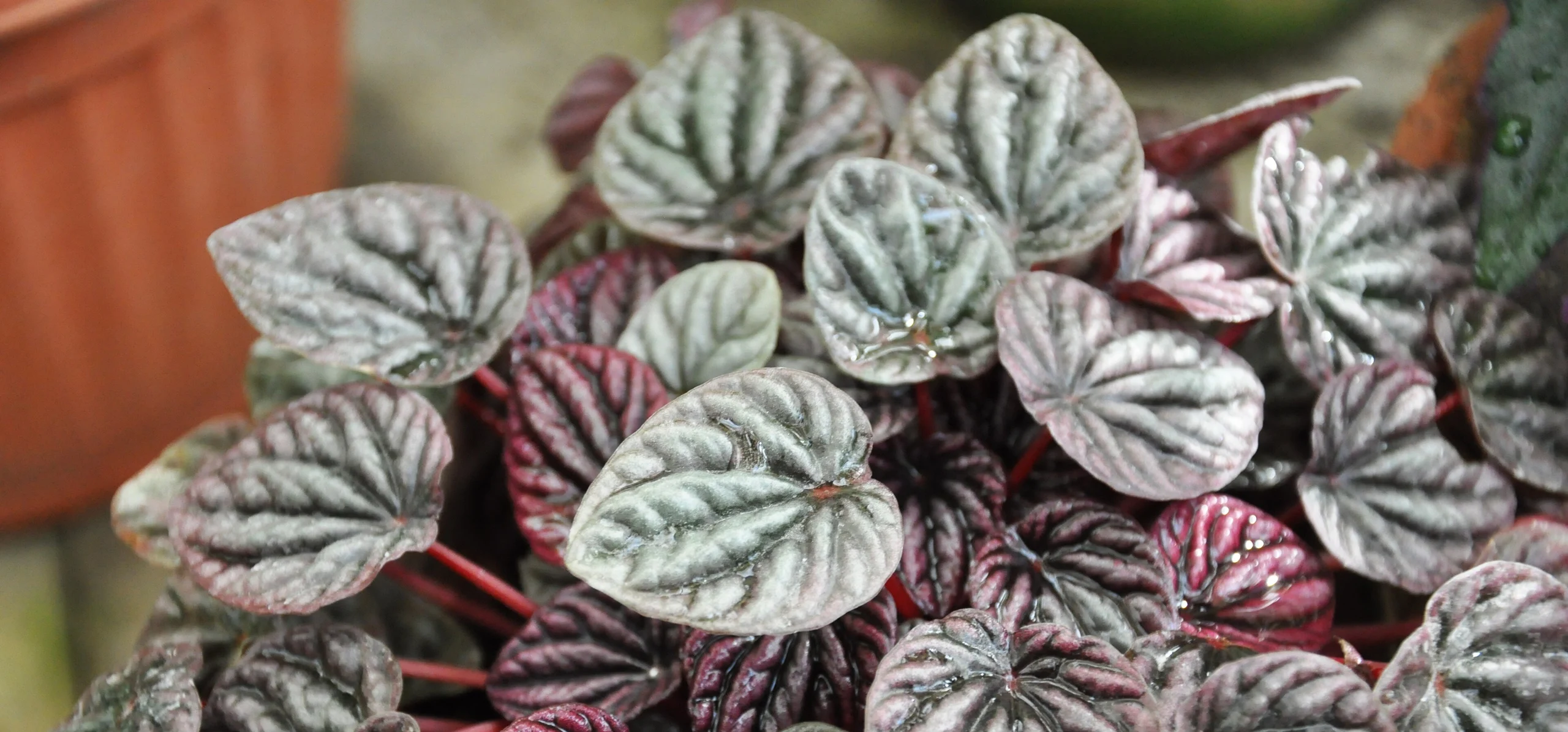
Peperomia caperata belongs to the pepper family, Piperaceae, and in the wild it grows as an epiphyte on the humid forest floor and tree bases of southeastern Brazil, according to Plants of the World Online. That origin explains the leaves: rosettes of long-stalked, wrinkled, deeply corrugated, heart-shaped foliage on red-tinged stems, reaching around 4 cm long, topped in summer and early autumn by thin, whitish-green flower spikes that rise above the leaves (Missouri Botanical Garden). It is a genuinely slow grower, usually taking two to five years to fill out its full mound of around 20 cm tall and wide (RHS), so a plant that looks the same from one season to the next is behaving normally, not stalling.
Choosing a variety
The species itself is sold as plain Emerald Ripple, with silvery-green, heavily quilted leaves and dark veining. Breeders have since selected several compact cultivars from the same species that share its care needs but differ in colour: 'Rosso' and 'Luna Red' carry deep burgundy undersides and red-flushed foliage, 'Abricos' leans more coppery-orange, and 'Variegata' adds a cream leaf margin around the standard green. All of them stay small enough for a windowsill pot and are propagated and watered the same way, so pick on looks rather than on any difference in difficulty.
Light and placement
This peperomia wants bright to medium light and tolerates low light for a few months without real stress, but direct midday sun scorches the thin leaf surface, according to University of Missouri Extension. A north- or east-facing windowsill suits it well; in a brighter south- or west-facing room, keep it a metre or two back from the glass, or filter the light with a sheer curtain. Its compact size and tolerance of still, enclosed air also make it one of the better peperomias for a closed terrarium or bottle garden (RHS). If the rosette starts stretching with longer gaps between leaves, that is a request for more light, not more water.


Watering without rotting the roots
Water moderately through the growing season and sparingly in winter, ideally with tepid, soft water rather than cold water straight from the tap (RHS). Before watering, check the top two or three centimetres of mix with a finger; if it is still damp, wait. Peperomia caperata sits in an awkward middle ground: it cannot dry out completely for long stretches like a true succulent, but it suffers far more from soil kept constantly wet, which is the single most common cause of failure in this species (Missouri Botanical Garden). Yellowing lower leaves are usually the first visible sign of overwatering, and if root and stem rot has already set in, most plants do not recover.
Soil and potting
Use a light, porous mix rather than dense, moisture-retentive potting soil. RHS lists loam- or sand-based composts as suitable, and University of Missouri Extension recommends boosting a standard houseplant mix with added perlite or orchid bark to keep it free-draining while still holding some moisture. A shallow, wide pot suits the plant's spreading, shallow root system better than a deep one, and unglazed terracotta is a better choice than plastic or glazed ceramic, since its porous walls let some moisture evaporate through the sides rather than staying trapped around the roots.
Humidity, temperature and feeding
Mist the foliage daily from spring through summer to maintain the moderate to high humidity this plant prefers, easing off as growth slows in autumn and winter (RHS). Keep it warm year-round: University of Missouri Extension advises staying above 10°C (50°F), and RHS rates it H1B, meaning it needs protection whenever indoor or greenhouse temperatures drop toward that threshold. Feed with a balanced liquid fertiliser at the label rate once a month during the growing season, and stop altogether in winter when the plant is barely using nutrients (RHS).
Propagation from leaf cuttings
The easiest way to make more plants is from a leaf. Take a leaf stalk or a whole leaf blade with a short piece of stem attached during spring or summer, let the cut end dry for an hour, then set it into a small pot of moist, free-draining mix (RHS). Keep it warm and out of direct sun until new growth appears at the base, which confirms roots have formed. Seed can also be sown when freshly ripe, kept at 19 to 24°C (RHS), though leaf cuttings are the far more practical route for a houseplant grower working with one or two established plants.
Common problems and pests
Peperomia caperata is usually trouble-free and largely pest-resistant (RHS), which is part of why it has stayed a mainstay of dish gardens and windowsills for decades. The recurring issue is moisture-related: soggy soil brings on yellowing leaves and, left unchecked, root or stem rot that is often fatal (Missouri Botanical Garden). In cool, still, over-humid conditions the plant can also be susceptible to grey mould on stems or leaves (RHS); improving airflow around the pot and easing off misting usually resolves it. If leaves feel thin, papery and slightly shrivelled instead, the more likely cause is the opposite problem: the mix has been allowed to dry out for too long between waterings.
Test your plant knowledge
Tap a card to flip it and reveal the answer.
Peperomia caperata can be left to dry out completely for weeks at a time, just like a true succulent. Tap to reveal ✕ False
Yellowing leaves on this plant most often signal overwatering rather than underwatering. Tap to reveal ✓ True
Peperomia caperata is toxic to cats and dogs if chewed. Tap to reveal ✕ False
New plants can be started from a single leaf cut in spring or summer. Tap to reveal ✓ True
This peperomia needs several hours of direct, full sun each day to grow well. Tap to reveal ✕ False
Sources
References consulted for this guide
- GBIF: Peperomia caperata Ruiz & Pav. ex Yunck.gbif.org
- ASPCA: Little Fantasy Peperomia (Peperomia caperata)aspca.org
- RHS: Peperomia caperata (emerald ripple pepper)rhs.org.uk
- Missouri Botanical Garden Plant Finder: Peperomia caperatamissouribotanicalgarden.org
- University of Missouri Extension IPM: Peperomia, the Plant, not the Pizzaipm.missouri.edu
- Reference entity : Wikipédiaen.wikipedia.org