Eastern Cottonwood
Populus deltoides
Family · Salicaceae
Eastern cottonwood tolerates flood and drought, grows up to six feet a year, and reaches 100 feet tall: what that means for siting, roots, and cotton fluff.
Populus deltoides
Plant profile
- WateringModerateWater every 7 days
- Light exposureFull sun
- Hardiness zoneUSDA 3–9
Growth
- Family
- Salicaceae
- Life cycle
- Perennial
- Growth speed
- 9/10
- Mature size
- 2286–3048 cm
- Spread
- 1067–1829 cm
- Flowering
- Catkins in March to April; cottony seed release in late spring
- Propagation
- Seed
- Cutting
DormancyDeciduous, winter dormant
Soil & climate
- Soil pH
- pH 4.5–8
- Soil types
- clay, loam, sand
- Saline soil
- Tolerated
- Drought tolerance
- Yes
Light & Placement
- Origin
- Central and eastern Canada to Mexico
- Where to place it
- Streamside or pond edge
- Large open area or floodplain
- Windbreak or restoration planting
Safety
- Toxicity
- Not listed by ASPCA; no documented pet toxicity
- Pet safe
- Yes
Invasive speciesSelf-seeds readily on bare, moist ground and produces abundant root sprouts; considered weedy in some managed landscapes.
Data fromPopulus deltoides W.Bartram ex Marshall,NC State Extension Gardener Plant Toolbo
Where it grows
World distribution
Eastern Cottonwood is native to 3 countries: Canada, Mexico, and United States.GBIF records 43,968 documented identifications across 56 countries, with the largest concentrations in United States, Canada, and France.
- Canada
- Mexico
- United States
Yellow to orange dots: concentration of documented identifications per country. Green countries: sourced native range. Source: GBIFNative range from POWO (Kew).
If you are looking at a young tree with shiny, triangular leaves that flutter constantly even in barely any breeze, and it showed up on its own near a ditch, riverbank, or vacant lot rather than from a nursery pot, there is a good chance it is Populus deltoides, eastern cottonwood. It is one of the fastest growing trees native to North America, capable of adding several feet of height in a single season, and within a few decades it can tower well past most rooftops. That speed comes at a cost: the wood stays soft and brittle for life, the roots spread aggressively in search of water, and female trees release a snowstorm of cottony seed fluff every late spring. None of that makes it a bad tree, cottonwoods anchor riverbanks and feed a long list of wildlife, but the decision to keep one growing where it is deserves more thought than most trees ask for.
Native Range and How to Identify It
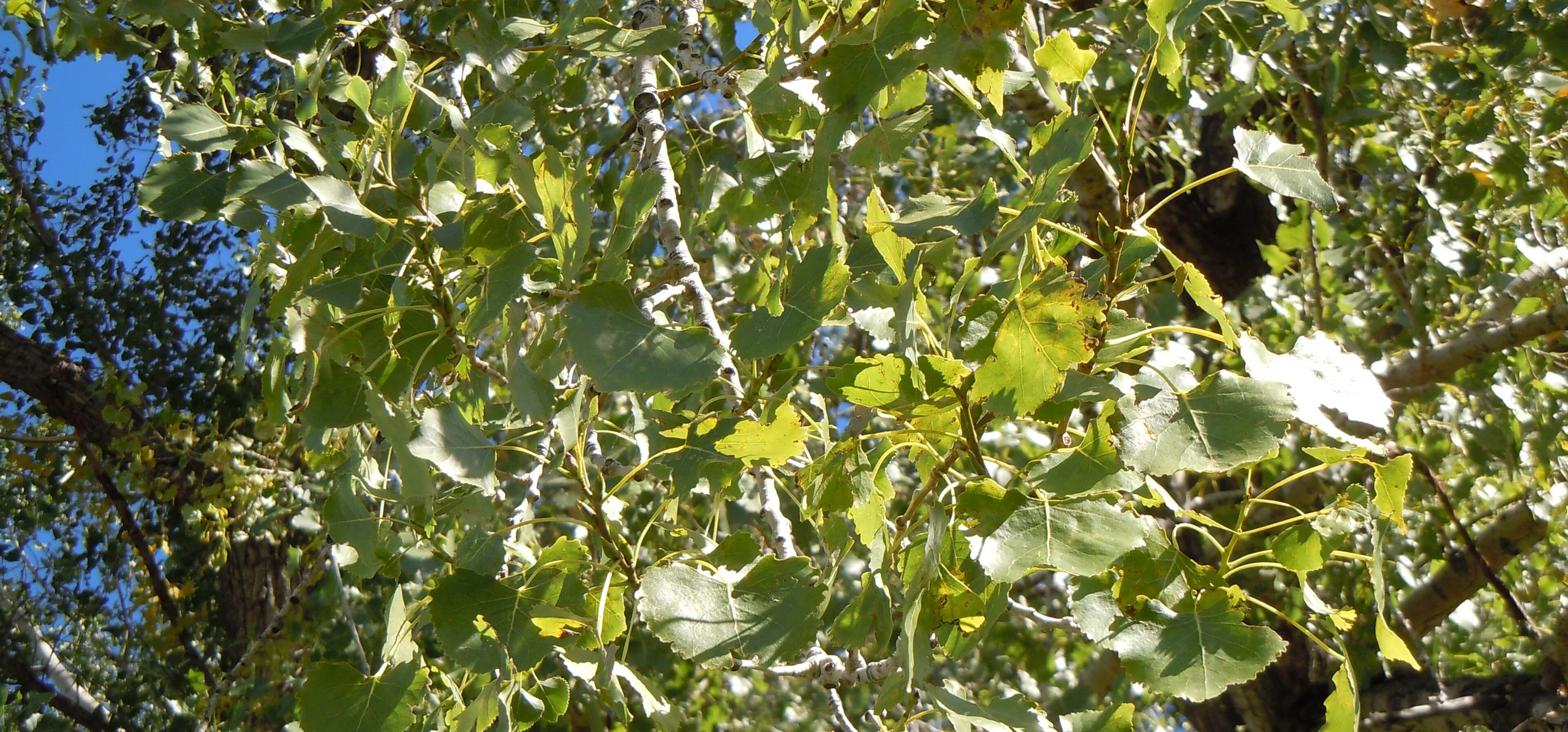
Eastern cottonwood is native from central and eastern Canada south to Mexico, according to Plants of the World Online, and it belongs to the willow family, Salicaceae, alongside willows and aspens. The species name deltoides describes the leaf shape: broadly triangular, three to six inches long, with a coarsely toothed margin and a glossy, light to medium green surface that turns yellow in autumn. Look closely at the leaf stalk, or petiole: it is flattened sideways rather than round, which is why the leaves tremble and flash in the lightest breeze, a trait cottonwood shares with its aspen relatives. Bark starts smooth and greenish gray on young trees and, within a couple of decades, turns ashy gray and splits into deep, thick furrows and ridges.
Site Selection: Why Most Yards Are Too Small
A mature eastern cottonwood reaches 75 to 100 feet in height with a spread of 35 to 60 feet, according to the NC State Extension Gardener Plant Toolbox, and open-grown specimens can go taller still. That size, combined with wood that extension horticulturists describe outright as weak and brittle, is why cottonwood rarely appears on residential planting lists despite being a genuinely valuable native tree. It belongs along a pond edge, a stream corridor, a farm windbreak, or a large park, not a few meters from a roofline. The root system is just as ambitious as the canopy, producing abundant root sprouts and seedlings that spread far from the trunk, so water and sewer lines, septic fields, and foundations are all at risk if the tree goes in too close. If a cottonwood is already growing near a structure on a property you have inherited, the safer long-term plan is usually removal, not pruning it into submission.
Soil and Water: A Tree Built for Floodplains
Cottonwood evolved on river floodplains, and its tolerances reflect that origin. NC State Extension lists it as tolerant of clay, loam, and sandy soils across a wide pH range of 4.5 to 8.0, and as one of the few landscape trees that shrugs off both occasional drought and outright flooding. In the wild, seeds germinate almost exclusively on bare, moist, sun-exposed mud left behind after spring floods recede, which is why cottonwood groves line so many river bends rather than turning up under an established forest canopy. For a planted or self-seeded tree, this translates into very little required maintenance: full sun and access to groundwater or periodic moisture are the main requirements, and there is rarely a need to irrigate an established tree except through extended drought.


Male and Female Trees, and the Cotton Everyone Complains About
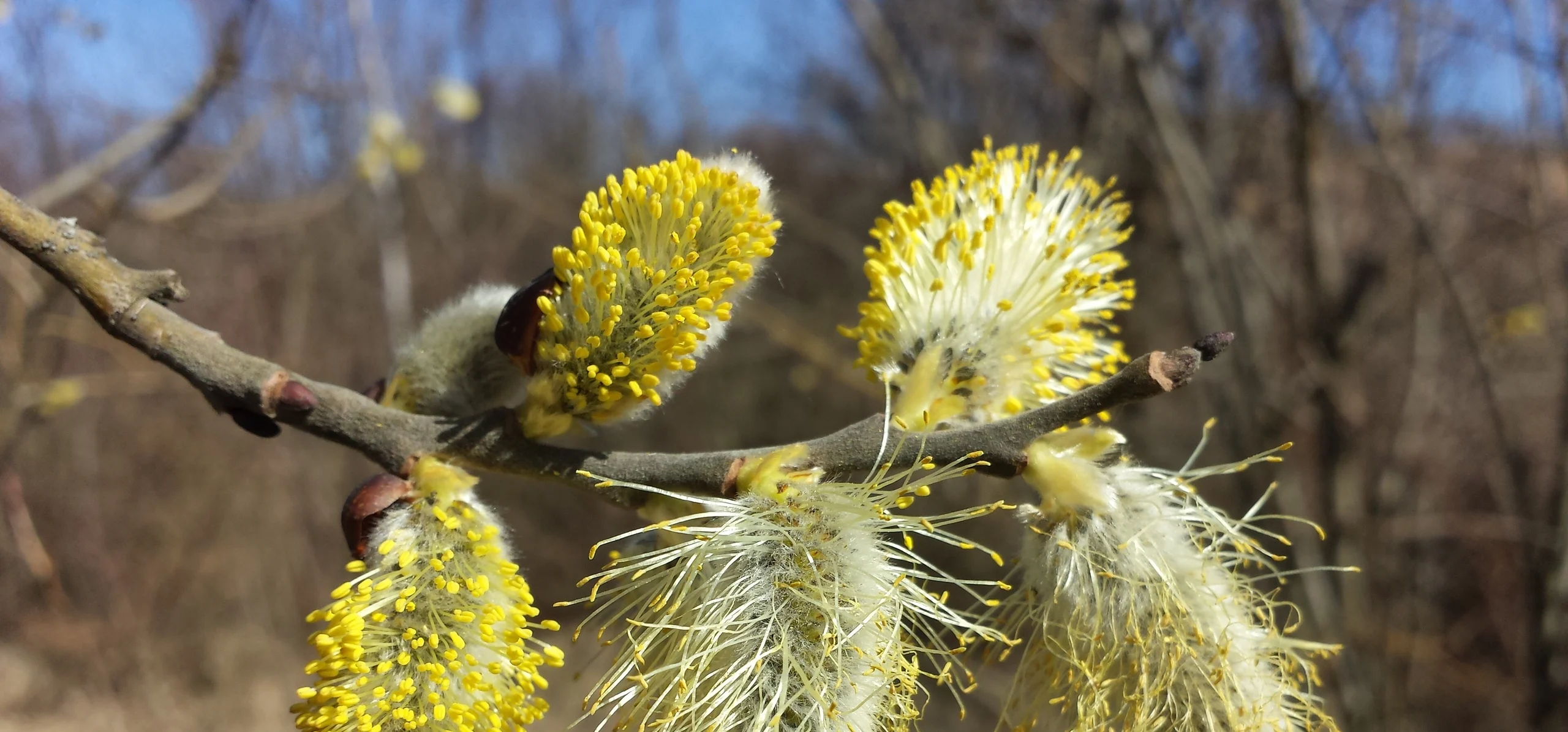
Eastern cottonwood is dioecious: every tree is either male or female, never both. Both sexes flower in reddish or yellowish catkins two to four and a half inches long before the leaves emerge in March or April, male catkins carrying red stamens and female catkins carrying pale yellow stigmas. Only female trees produce the seed capsules that split open in late spring, releasing masses of tiny seeds on white cottony fibers that drift for two to three weeks and pile up against curbs and gutters, the trait that gives the tree its name. If the fluff is a dealbreaker, the fix is not avoiding cottonwood altogether: nurseries sell male clones bred specifically to be cotton-free.
Growth Rate, Weak Wood, and a Short Lifespan
Few North American trees grow faster than a young cottonwood: extension sources report seedlings and saplings adding up to six feet of height in a single growing season under good conditions. That speed is the reason cottonwood was historically planted for quick shade and windbreaks, and it is also the reason the wood stays soft and prone to failure throughout the tree's life. Large limbs shed in wind and ice storms far more readily than on a slower growing oak or maple, so a cottonwood near a driveway or roofline is a recurring storm damage risk, not a one time concern. The tradeoff for all that speed is a short life for a tree this size: NC State Extension lists it as relatively short lived, around 70 years, against the centuries a well sited oak can reach. Budget for pruning and eventual removal if you are keeping one near anything you would mind losing.
Pests and Diseases to Watch For
Cottonwood tolerates urban stress well, but it is not pest free. NC State Extension lists borers, aphids, caterpillars, and scale insects as common insect problems, alongside dieback, canker, leaf spot, rust, and powdery mildew. None of these typically kill a healthy, well sited tree outright, but canker and dieback are worth watching on stressed trees, since they can hollow out limbs already structurally weak. Routine care is mostly about removing dead or hanging wood promptly rather than spraying preventively.
Wildlife Value
Despite its reputation as a messy, oversized yard tree, eastern cottonwood earns its keep in the wider landscape. NC State Extension notes it serves as a larval host plant for the Eastern Tiger Swallowtail and Red-spotted Purple butterflies, and that deer, rabbits, and beavers browse it readily. Its canopy and seasonal seed and insect activity also draw birds and small mammals, and along the riverbanks where it grows naturally, its extensive roots help stabilize soil that would otherwise wash out in every flood. In a restoration planting or streamside buffer, cottonwood does exactly the job it evolved for; in a small front yard, it fights its own biology the whole time.
Propagation and Common Mistakes
Cottonwood is not a tree most people grow from seed on purpose: the seed stays viable only briefly and needs bare, constantly moist soil to germinate, conditions few gardens offer. NC State Extension recommends stem cuttings instead, dormant hardwood sections taken in late winter that root readily when pushed directly into moist soil, which is how most male, cotton-free cultivars are propagated and sold true to type. The most common mistake with this species is not a care error at all, it is a siting error: planting or leaving a cottonwood within reach of a house, driveway, or septic line because it looked small and manageable as a young sapling. Given how fast it grows and how brittle the wood stays for life, the only real fix once a cottonwood is badly sited is removal while the tree and its roots are still small enough to make that easy.
Test your plant knowledge
Tap a card to flip it and reveal the answer.
Eastern cottonwood roots can spread aggressively enough to threaten foundations and sewer lines. Tap to reveal ✓ True
Both male and female eastern cottonwood trees produce the cottony seed fluff. Tap to reveal ✕ False
Eastern cottonwood is one of the slowest-growing trees native to North America. Tap to reveal ✕ False
Eastern cottonwood tolerates both periodic flooding and drought once established. Tap to reveal ✓ True
The ASPCA lists eastern cottonwood as toxic to cats and dogs. Tap to reveal ✕ False
Sources
References consulted for this guide
- Populus deltoides W.Bartram ex Marshall, GBIF Backbone Taxonomygbif.org
- Populus deltoides W.Bartram ex Marshall, Plants of the World Online (Kew)powo.science.kew.org
- NC State Extension Gardener Plant Toolbox: Populus deltoidesplants.ces.ncsu.edu
- Reference entity : Wikipédiaen.wikipedia.org