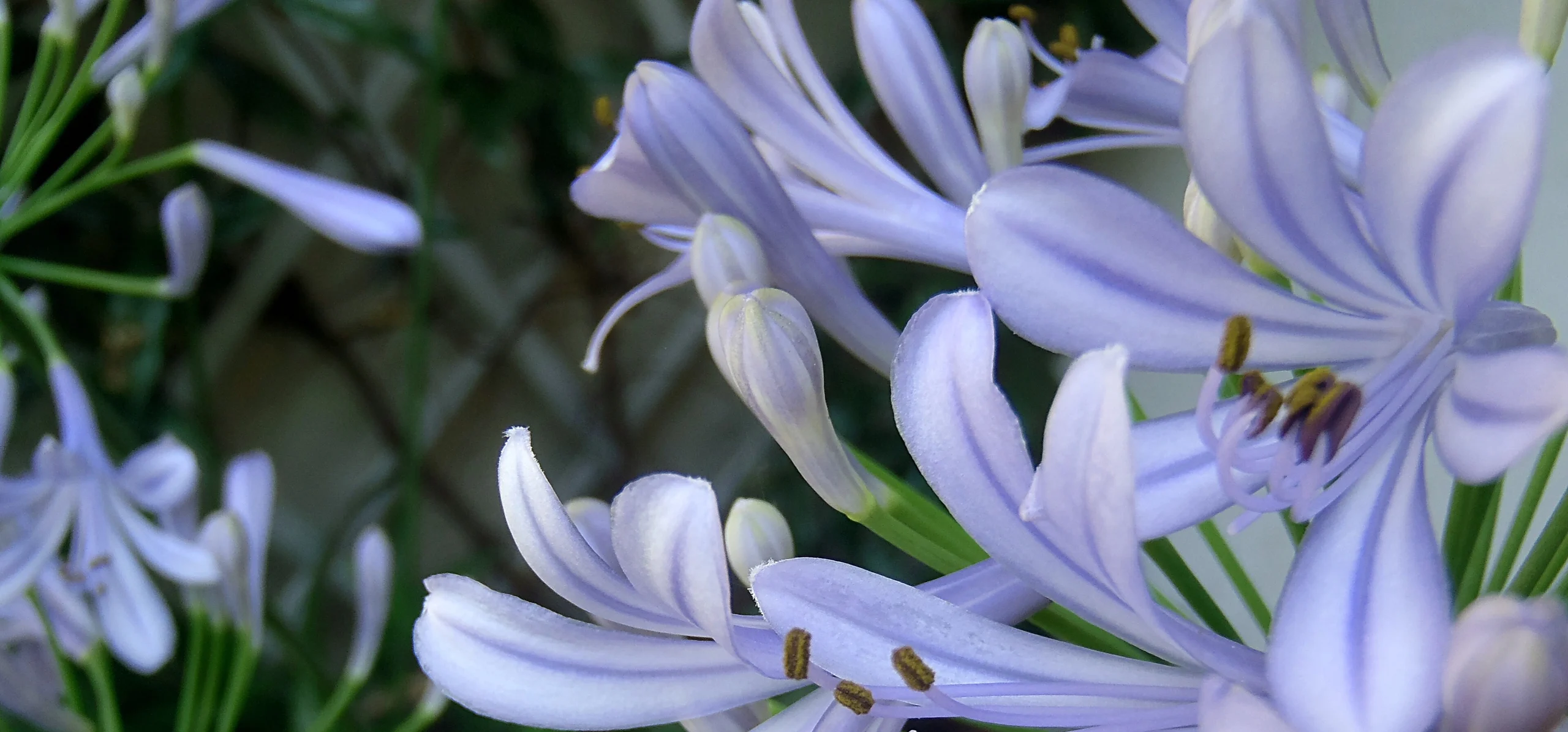
African Lily
Agapanthus praecox
Family · Amaryllidaceae
Agapanthus praecox care: full sun, RHS H2 hardiness, pot-bound flowering, winter fleece protection, division timing, and sap that irritates skin.
Agapanthus praecox
Plant profile
- WateringModerateWater every 10 days
- Light exposureFull sun
- Ideal temperature1–35 °C
- Humidity30–70 %
- Hardiness zoneUSDA 8–11
Growth
- Family
- Amaryllidaceae
- Life cycle
- Perennial
- Growth speed
- 5/10
- Mature size
- 30–150 cm
- Spread
- 30–100 cm
- Flowering
- Late summer
- Propagation
- Seed
- Division
- Offsets
Dormancyevergreen, little true dormancy in mild climates
Time to maturity2-5 years
Soil & climate
- Soil types
- chalk, loam, sand, silt
- Drought tolerance
- No
Light & Placement
- Origin
- South Africa, Cape provinces to south-west KwaZulu-Natal
- Where to place it
- frost-free greenhouse or conservatory for winter
- sheltered south- or west-facing border
- sunny patio
- free-draining loam-based compost in a snug container
Safety
- Toxicity
- HumansToxic
Invasive speciescan self-seed and naturalise in mild, frost-free climates
Data fromAgapanthus praecox, GBIF Backbone TaxonoAgapanthus praecox Willd., Plants of theRHS: Agapanthus praecox (precocious AfriRHS Growing Guide: How to grow agapanthuNC State Extension Gardener Plant Toolbo
Where it grows
World distribution
African Lily is native to a single country: South Africa.GBIF records 10,083 documented identifications across 69 countries, with the largest concentrations in Australia, New Zealand, and Portugal.
- South Africa
Yellow to orange dots: concentration of documented identifications per country. Green countries: sourced native range. Source: GBIFNative range from POWO (Kew).
Agapanthus praecox, the African lily, usually arrives as a dense clump of strap-shaped evergreen leaves with no flowers yet, and that is normal: this South African perennial from the Cape provinces to south-west KwaZulu-Natal blooms on stems that need a season or two to build up before they show. It is not frost-hardy the way deciduous garden agapanthus hybrids are, the RHS rates it H2, meaning it tolerates cool conditions but is killed by a hard freeze and needs protection below about 1 to 5 degrees C. The rounded flower heads open in late summer on stems well above the foliage, and a plant that looks crowded in its pot is usually closer to flowering, not further from it. Get the light and the winter protection right and the rest of the care is routine.
Evergreen or Deciduous: Check Which One You Have
Agapanthus sold in garden centres falls into two groups that are cared for differently. Agapanthus praecox and its varieties keep their leaves year-round and are the more tender group, best treated as container plants that move under cover for winter. Deciduous agapanthus, mostly the Headbourne Hybrids bred from crosses with hardier species, drop their foliage in autumn and can stay in the open ground through much colder winters. If the tag just says "Agapanthus" with no species name and the plant loses its leaves in autumn, it is a deciduous hybrid and this guide's winter section is more cautious than it needs to be for that plant.
Light, Position and Hardiness
Full sun is not negotiable, agapanthus praecox needs six or more hours of direct light a day to build the flower stems, and a south- or west-facing spot sheltered from wind suits it best. In the ground, choose well-drained loam, sand or chalky soil, poor drainage in winter is a faster way to lose the plant than cold air. The RHS H2 rating means the top growth and roots survive down to roughly 1 to 5 degrees C without damage but will not reliably survive a freeze, so gardeners in USDA zones 8b to 11, the range where the species naturalises outdoors, still lose plants in an unusually sharp winter if they are left unprotected. Everywhere else, treat it as a container plant that spends summer outdoors and winter somewhere frost-free.


Container or Border
A pot at least 20 to 23 cm across, filled with a free-draining, loam-based compost, is the standard start. Agapanthus actually flowers better when its roots fill the container, so resist the urge to size up every year, moving to a pot only one size larger every two or three years keeps the plant productive rather than diverting energy into root growth. In a border, mass three or five plants together for the hemispherical flower heads to read as a group, and mulch 15 to 23 cm deep in autumn if the clump stays outside over winter. Containers win in cold, wet climates simply because they can be moved; borders win where summers are reliably warm and winters mild.
Watering and Feeding
From spring through early autumn, keep the compost or soil consistently moist, agapanthus is not a succulent and a dry spell during bud formation is one of the most common reasons a clump skips flowering for a year. Reduce watering sharply once the foliage stops actively growing in autumn and keep the plant on the dry side through winter, especially if it is under cover, since cold, wet compost rots the fleshy roots. Feed container plants through the growing season with a liquid seaweed or balanced feed every two to three weeks, plants in the ground need less, a single spring feeding is usually enough in reasonably fertile soil.
Why It Won't Flower
Four causes account for most flowerless agapanthus. Not enough light is the most common, a spot that gets four hours of direct sun instead of six produces leaves but few or no stems. Underfeeding starves container plants that have used up the nutrients in their original compost after a year or two. A pot that is too large, not too small, dilutes the plant's energy into root growth instead of flower buds, this is the one instinct most new growers get backwards. Last, a stressful winter, either too cold with foliage damage or unusually warm and wet, disrupts the bud initiation that happens in late winter and early spring, so a clump can look perfectly healthy all summer and still produce no flower stems that year.
Winter Protection
Because agapanthus praecox is evergreen and more tender than the deciduous hybrids, plan its winter home before the first frost. Move containers into a cool, frost-free greenhouse, conservatory or unheated porch and water only enough to keep the compost from fully drying out. If a plant has to stay outside, wrap the whole pot, foliage included, in two or three layers of biodegradable fleece from November through early April in temperate climates, and raise the pot off the ground on feet so it drains and does not sit in freezing water. Plants left in open ground in borderline climates benefit from a thick mulch over the crown, but expect foliage dieback in a hard winter even with protection, the roots are more cold-tolerant than the leaves.
Dividing and Propagating
Divide congested clumps in March or April, just as new growth resumes, by lifting the whole rootball and cutting or pulling it into sections that each keep several fans of leaves and a portion of the fleshy roots. Divided sections often skip flowering for a year while they re-establish, which is another reason not to divide more often than every four or five years. Seed is the other propagation route but seedlings vary and take several years to reach flowering size, division is the only way to guarantee an identical copy of a named variety.
Toxicity and Handling
All parts of Agapanthus praecox are harmful if eaten, and the sap can irritate skin and eyes on contact, wear gloves when dividing or cutting back the foliage and wash exposed skin afterward. Agapanthus is not individually listed on the ASPCA's toxic and non-toxic plant database, so no verified cat, dog or horse-specific rating exists, but the same sap irritation applies to a curious pet that chews the leaves, expect drooling and mouth irritation rather than a medical emergency, and contact a vet if symptoms persist.
Test your plant knowledge
Tap a card to flip it and reveal the answer.
Agapanthus praecox keeps its leaves year-round and is more frost-tender than deciduous agapanthus hybrids. Tap to reveal ✓ True
Moving agapanthus to a bigger pot every year makes it flower more. Tap to reveal ✕ False
Agapanthus praecox needs full sun, at least six hours of direct light a day, to flower well. Tap to reveal ✓ True
The sap of Agapanthus praecox can irritate skin and eyes on contact. Tap to reveal ✓ True
Agapanthus praecox should be divided every year to stay healthy. Tap to reveal ✕ False
Sources
References consulted for this guide
- Agapanthus praecox, GBIF Backbone Taxonomygbif.org
- Agapanthus praecox Willd., Plants of the World Online (Kew)powo.science.kew.org
- RHS: Agapanthus praecox (precocious African lily)rhs.org.uk
- RHS Growing Guide: How to grow agapanthusrhs.org.uk
- NC State Extension Gardener Plant Toolbox: Agapanthus praecoxplants.ces.ncsu.edu
- Reference entity : Wikipédiaen.wikipedia.org