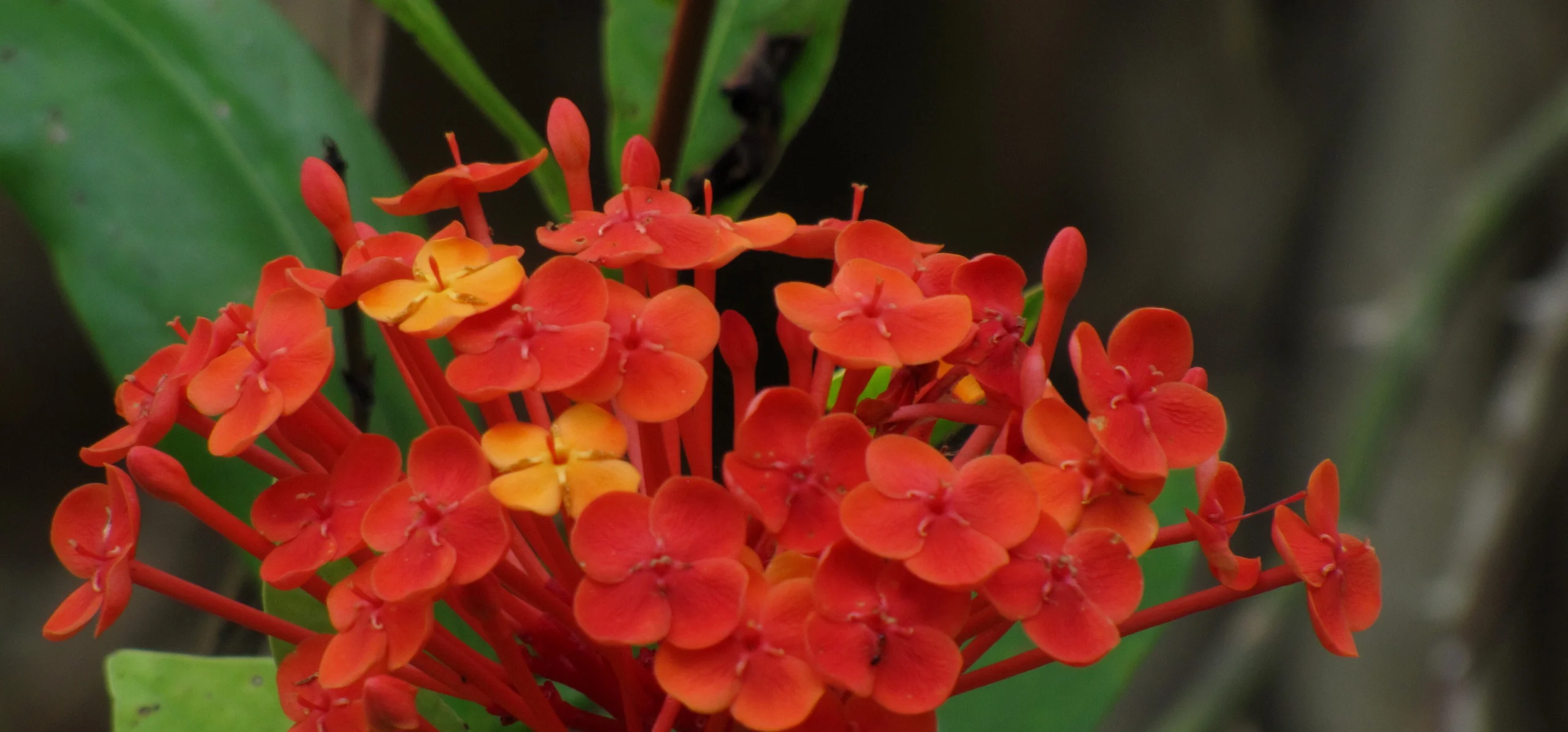
Jungle Geranium
Ixora coccinea
Family · Rubiaceae
Ixora coccinea flowers best in full sun and acid soil. Above pH 6.5 the leaves turn yellow from iron chlorosis, and cold below 10°C stops it in its tracks.
Ixora coccinea
Plant profile
- WateringModerateWater every 5 days
- Light exposureFull sun
- Ideal temperature10–35 °C
- Humidity50–70 %
- Hardiness zoneUSDA 9–11
Growth
- Family
- Rubiaceae
- Life cycle
- Perennial
- Growth speed
- 3/10
- Mature size
- 120–300 cm
- Spread
- 90–150 cm
- Flowering
- Dense rounded clusters of tubular red-orange flowers to about 12cm (5in) across
- Propagation
- Cutting
DormancyEvergreen; growth slows and leaves may drop below about 10°C
Time to maturityA rooted cutting can flower within its first year or two; full shrub size takes several years given the slow growth rate
Soil & climate
- Soil pH
- pH 4.5–6.5
- Soil types
- loam
- Saline soil
- Not tolerated
- Drought tolerance
- Yes
Light & Placement
- Origin
- W. and S. India, Sri Lanka, Bangladesh to Indo-China (POWO)
- Where to place it
- Brightest window with several hours of direct sun
- Warm room away from cold drafts
- Full sun for heaviest flowering
- A little afternoon shade tolerated in intense heat
- Free-draining container with an acidic, loam-based potting mix
Safety
- Toxicity
- CatsSafe
- DogsSafe
- HorsesSafe
Data fromGBIF Backbone Taxonomy: Ixora coccinea CPlants of the World Online (Kew): Ixora Missouri Botanical Garden Plant Finder: UF/IFAS Extension EDIS FPS-291: Ixora coNorth Carolina State Extension Gardener ASPCA: Toxic and Non-Toxic Plants, Flame
Where it grows
World distribution
Jungle Geranium is native to 7 countries: Bangladesh, Cambodia, India, Myanmar (Burma), Sri Lanka, Thailand, and Vietnam.GBIF records 2,626 documented identifications across 99 countries, with the largest concentrations in India, Puerto Rico, and Malaysia.
- Bangladesh
- Cambodia
- India
- Myanmar (Burma)
- Sri Lanka
- Thailand
- Vietnam
Yellow to orange dots: concentration of documented identifications per country. Green countries: sourced native range. Source: GBIFNative range from POWO (Kew).
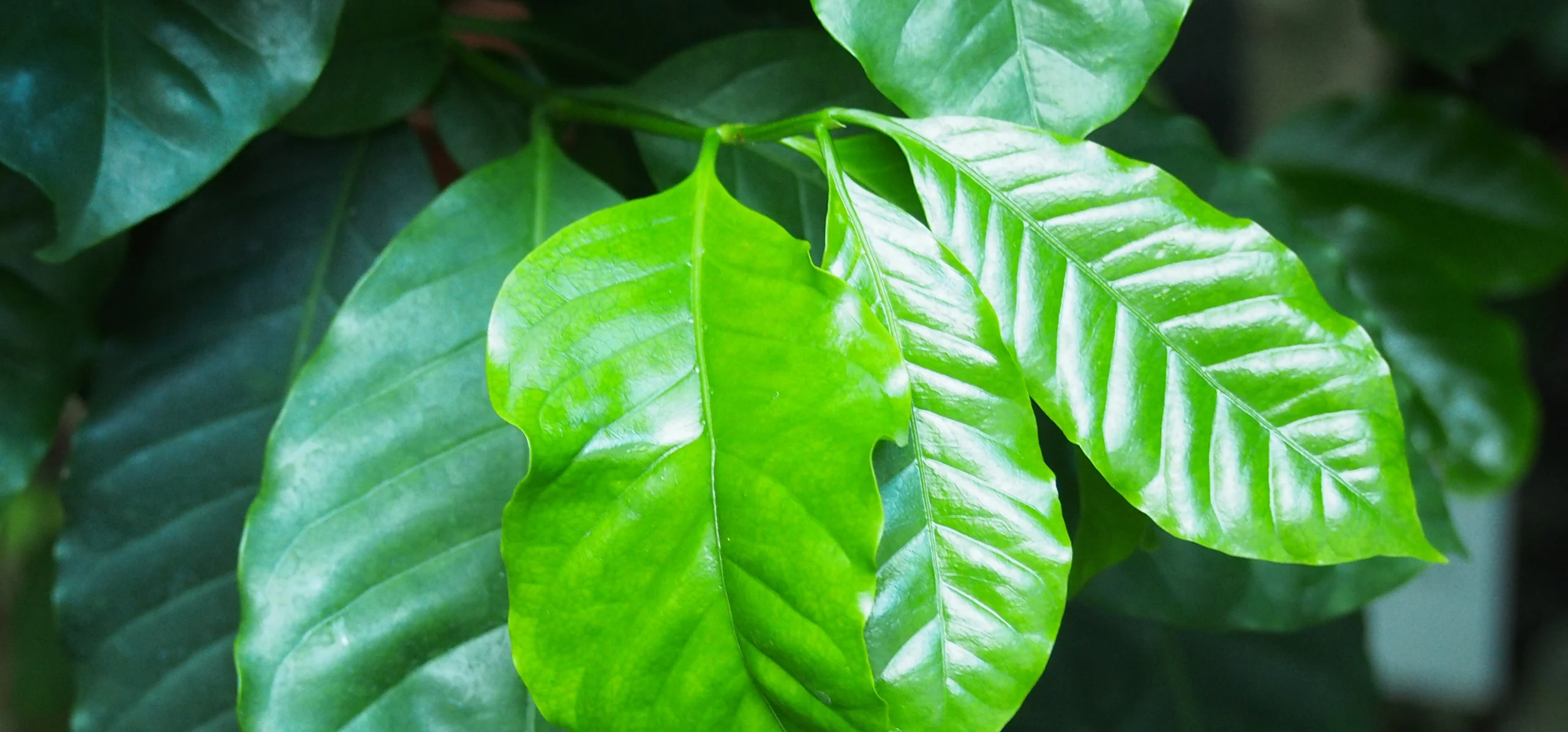
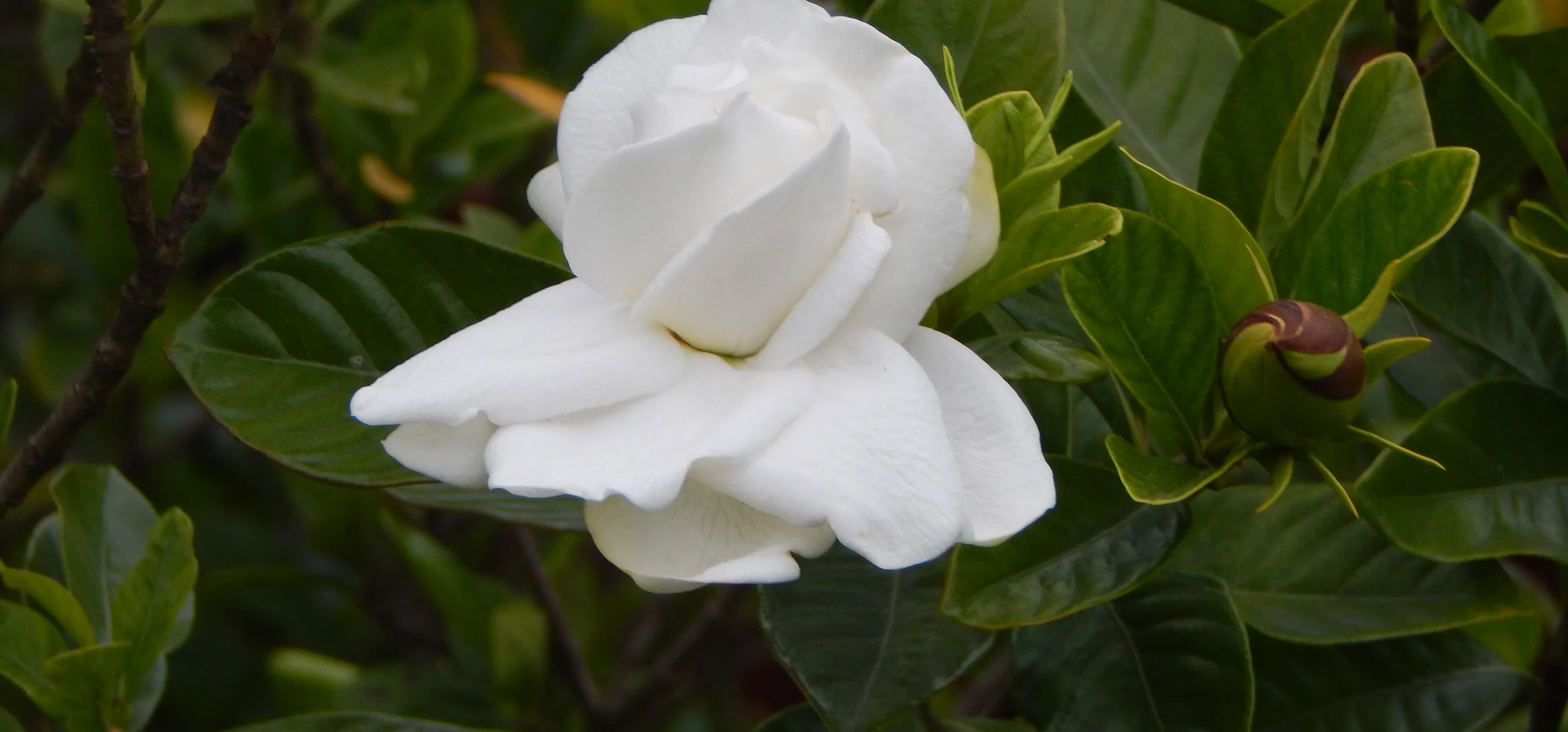
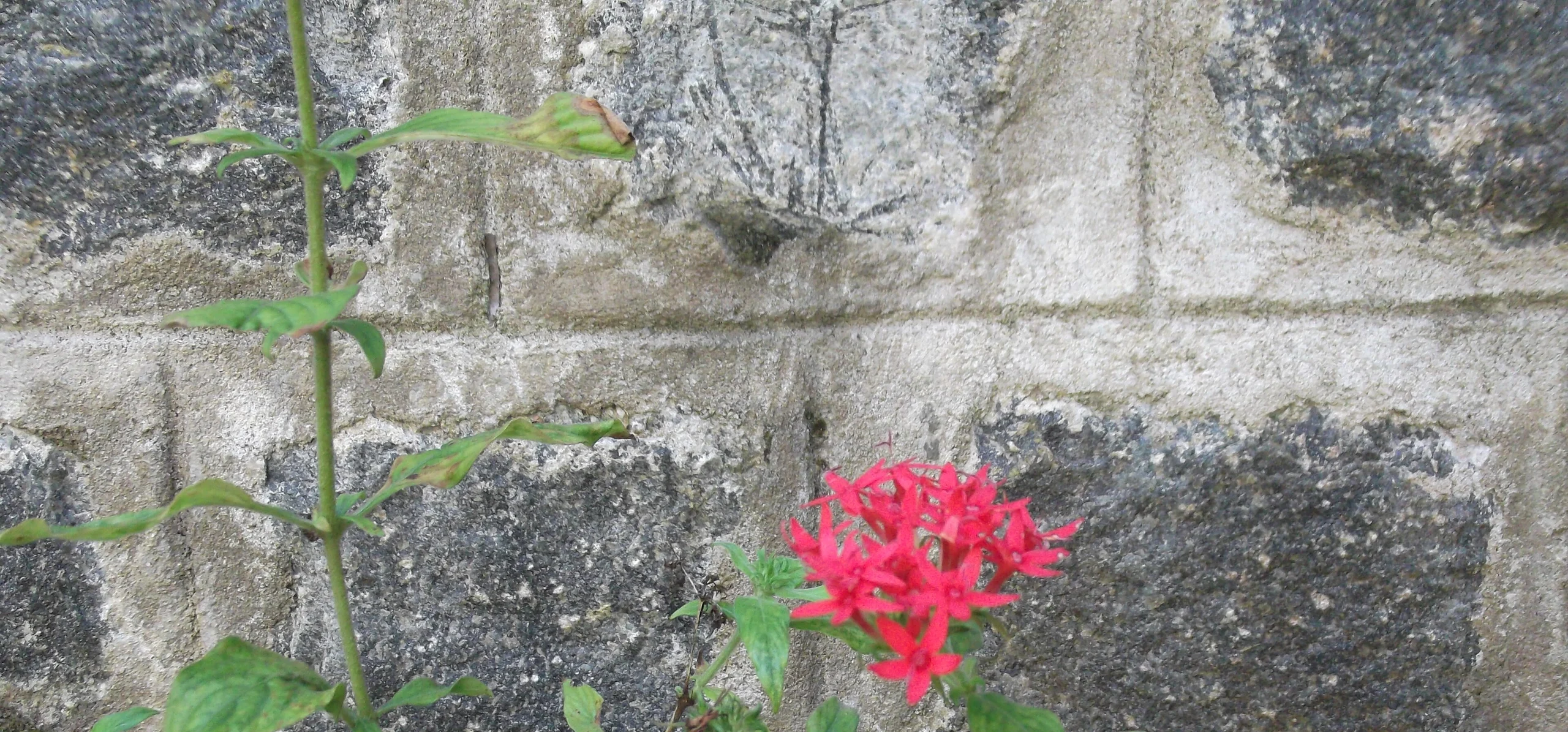
Ixora coccinea arrives from the nursery as a tidy, glossy-leaved shrub topped with a rounded cluster of small tubular flowers, usually red or orange, packed together into a head that can reach about 12cm (5in) across. Two things decide whether that cluster keeps coming back: light and soil chemistry. Give it several hours of direct sun and soil on the acid side of neutral, and a healthy plant flowers in flushes through the warm months; put it in an alkaline pot mix or a shaded corner and the same plant survives but sulks, leaves paling to yellow and flowering slowing to almost nothing. It is a tropical shrub at heart, and everything below follows from that.
Origin and What "Jungle Geranium" Actually Is
GBIF's accepted name for this species is Ixora coccinea, in the coffee family Rubiaceae, order Gentianales. Kew's Plants of the World Online records its native range as W. and S. India, Sri Lanka, and Bangladesh to Indo-China, tropical monsoon country where it grows as an understorey shrub along forest edges. The common names read like a list of the same plant described by different people at different times: jungle geranium (it is not related to true geraniums), flame of the woods, burning love, and in south Florida landscaping simply ixora. Long cultivation across South and Southeast Asia, then Florida, Hawaii, and other frost-free regions, has produced the compact, heavy-flowering garden forms sold today, distinct from the looser wild shrub.
Light: Full Sun for Flowering
The Missouri Botanical Garden lists full sun as the plant's best outdoor position, and North Carolina State Extension is specific: at least six hours of direct sun a day, with only a little tolerance for afternoon shade in the hottest climates. Grown in part shade the shrub stays alive and green, but the flower clusters thin out fast, since bud formation tracks light the way it does in many flowering shrubs. Indoors, that means the sunniest window available; a plant that only gets bright, indirect light will hold its leaves but rarely flower well.
Soil and the Chlorosis Problem
University of Florida IFAS Extension gives a target pH around 5.0, within a working range of 4.5 to 6.5: this is an acid-soil plant, not a tolerant one. Above roughly pH 6.5, iron in the soil becomes chemically unavailable to the roots even when there is plenty of it in the ground, and the classic symptom follows within weeks: new leaves turn yellow between dark green veins, a pattern called interveinal chlorosis, while older leaves often stay green longer. IFAS notes this makes Ixora coccinea high maintenance in the alkaline soils common along parts of the Florida coast, and recommends a chelated iron treatment every four to six weeks during active growth to correct it. In a pot, the fix is simpler: use an acidic, ericaceous-style potting mix and avoid tap water heavy in dissolved lime, which nudges the mix alkaline over repeated waterings.


Watering and Feeding
Keep the soil evenly moist through the growing season in a mix that drains fast. North Carolina State Extension rates the species' drought tolerance as moderate once established, but the more common failure in cultivation is soil that stays wet and heavy rather than soil that dries out, since poor drainage encourages the root rot the same extension listing flags as a problem. Water once the top couple of centimetres of mix have dried, then let it drain fully rather than sitting in a saucer. Feed with an acid-forming fertiliser formulated for camellias, azaleas, or citrus through spring and summer, and slow or stop feeding once growth slows in cooler months.
Warmth, Cold, and Growing It in a Pot
Both the Missouri Botanical Garden and North Carolina State Extension put the cold limit at the same figure: this shrub is intolerant of temperatures below about 10°C (50°F), and a light freeze kills the top growth back to the ground outright, even if the roots sometimes resprout the following spring within hardiness zones 9 to 11. Outside those zones it has to live as a container plant that comes indoors before nights turn cold, which covers most of temperate Europe and North America. The trouble with pot culture is not the cold alone but cold combined with low light: a plant moved into a dim hallway or an unheated porch for winter tends to drop leaves and stall rather than settle into a clean dormancy, since it has no real dormant season to fall back on in its native climate. Give it the brightest indoor spot available, keep it on the warm side, and treat sudden leaf drop as a sign to move it somewhere brighter rather than as normal winter behaviour.
Pruning After Flowering
North Carolina State Extension recommends pruning in late winter, and UF/IFAS notes the plant can technically be cut back at any time but warns that shearing it into a formal hedge shape reduces the flower display, since flowers form on the new growth that follows a cut. The practical rule: prune lightly to shape after a flowering flush rather than on a fixed calendar, removing thin or crossing stems and cutting just above a node, so the plant has time to push new growth and set the next round of buds before the following bloom. Heavy, repeated shearing for a hedge line trades flowers for a tidy outline, worth knowing before planting a run of ixora as a clipped border.
Pests: Aphids, Scale, and Sooty Mould
North Carolina State Extension lists aphids, thrips, scale, bagworms, nematodes, and mealybugs as the pests to watch for, alongside a susceptibility to sooty mould and mushroom root rot. In practice, aphids and scale are the two that show up most often on container plants, both feeding on sap and excreting sticky honeydew that sooty mould then grows on, coating leaves in a black film that blocks light rather than harming the plant directly. Wipe or spray off light infestations with insecticidal soap or a strong jet of water, checking new growth and the undersides of leaves regularly, since both pests build up fastest on soft new shoots. Clearing the honeydew and the mould that follows usually just means treating the insects causing it; the black coating washes off on its own once the pest is gone.
Cultivars, Butterflies, and Toxicity to Pets
Named selections such as 'Nora Grant', 'Fraseri', 'Crimson King', and 'Super King' are widely grown, and UF/IFAS notes that dwarf cultivars exist specifically for container growing, staying more compact than the species while keeping the same flower clusters, useful for anyone without space for a shrub that can eventually reach 120 to 180cm (4 to 6ft), occasionally more. The flowers earn their keep beyond looks: North Carolina State Extension lists Ixora coccinea as attractive to both hummingbirds and butterflies, the narrow tubular flowers suiting long-tongued visitors better than open-faced blooms. For anyone gardening around pets, the ASPCA lists the species, under the name Flame of the Woods, as non-toxic to cats, dogs, and horses, one less thing to worry about with a shrub otherwise fairly demanding about its soil.
Test your plant knowledge
Tap a card to flip it and reveal the answer.
Ixora coccinea flowers best in full sun and produces noticeably fewer blooms in shade. Tap to reveal ✓ True
Yellow leaves on Ixora coccinea in alkaline soil are mainly a sign of overwatering rather than soil pH. Tap to reveal ✕ False
Ixora coccinea tolerates temperatures well below freezing without damage. Tap to reveal ✕ False
According to the ASPCA, Ixora coccinea (Flame of the Woods) is non-toxic to cats, dogs, and horses. Tap to reveal ✓ True
Ixora coccinea's flower clusters attract butterflies and hummingbirds. Tap to reveal ✓ True
Sources
References consulted for this guide
- GBIF Backbone Taxonomy: Ixora coccinea Comm. ex Lam.gbif.org
- Plants of the World Online (Kew): Ixora coccinea L.powo.science.kew.org
- Missouri Botanical Garden Plant Finder: Ixora coccineamissouribotanicalgarden.org
- UF/IFAS Extension EDIS FPS-291: Ixora coccineaedis.ifas.ufl.edu
- North Carolina State Extension Gardener Plant Toolbox: Ixora coccineaplants.ces.ncsu.edu
- ASPCA: Toxic and Non-Toxic Plants, Flame of the Woodsaspca.org
- Reference entity : Wikipédiaen.wikipedia.org