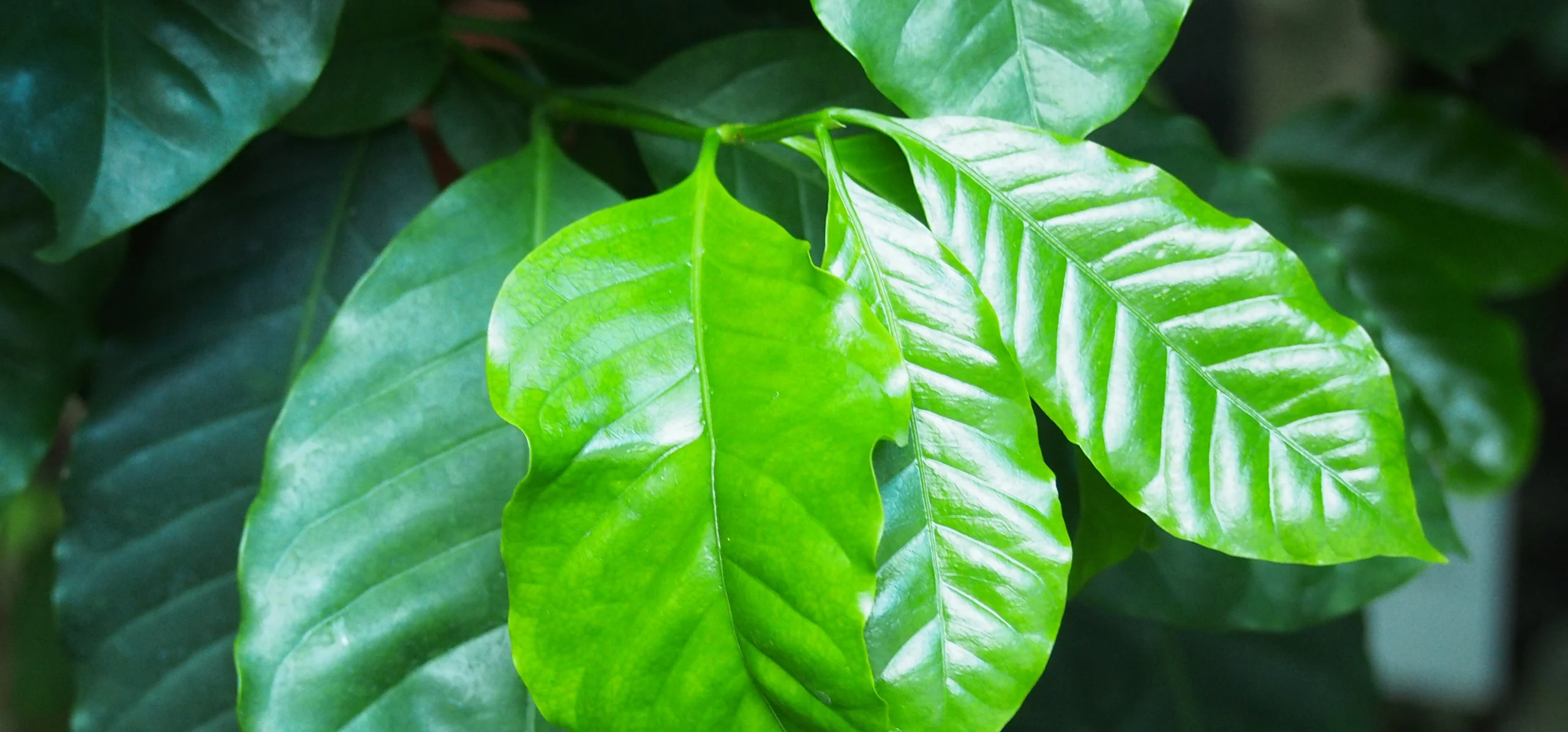
Arabian Coffee Plant
Coffea arabica
Family · Rubiaceae
Coffea arabica wants bright indirect light, steady moisture and high humidity; flowering and cherries take years, and it survives outdoors only frost-free.
Coffea arabica
Plant profile
- WateringHighWater every 5 days
- Light exposureIndirect light
- Ideal temperature13–27 °C
- Hardiness zoneUSDA 10–12
Growth
- Family
- Rubiaceae
- Life cycle
- Perennial
- Growth speed
- 5/10
- Mature size
- 400–800 cm
- Spread
- 250–400 cm
- Propagation
- Seed
FloweringFragrant white flowers in summer; green cherries ripen to deep red over several months
Dormancyevergreen, no true dormant season; growth slows below about 13 C (55 F)
Time to maturity3-4 years to first flowering, 5-10 years to full size
Soil & climate
- Soil types
- loam, high organic matter, well-drained
- Drought tolerance
- No
Light & Placement
- Origin
- Highlands of southwest Ethiopia and South Sudan
- Where to place it
- bright room away from direct midday sun
- north or east facing window
- partial shade in a frost-free garden
- sheltered understorey position
- rich, well-drained loam-based potting mix
Safety
- Pet safe
- No
ToxicityNot on the ASPCA plant list; caffeine in the cherries and beans still warrants caution around pets
Data fromCoffea arabica L., GBIF Backbone TaxonomCoffea arabica L., Plants of the World ORHS: Coffea arabica (Arabian coffee)NC State Extension Gardener Plant ToolboMissouri Botanical Garden Plant Finder:
Where it grows
World distribution
Arabian Coffee Plant is native to 3 countries: Ethiopia, Kenya, and Sudan.GBIF records 19,575 documented identifications across 142 countries, with the largest concentrations in Colombia, Brazil, and Mexico.
- Ethiopia
- Kenya
- Sudan
Yellow to orange dots: concentration of documented identifications per country. Green countries: sourced native range. Source: GBIFNative range from POWO (Kew).
A coffee plant bought from a garden centre is not a novelty mug plant, it is Coffea arabica, the same species that produces most of the world's coffee, just grown for its glossy foliage rather than its cherries. Indoors it stays a modest evergreen shrub for years, valued for dense, dark green leaves with a wavy margin rather than for flowers or fruit, both of which arrive late and only under fairly specific conditions. The species is native to the highland forests of southwest Ethiopia and South Sudan, not Arabia, despite the name, and it grows as understorey shade in the wild rather than in open sun. What it needs from you is consistent moisture, humid air and patience measured in years rather than seasons.
An Ethiopian Understorey Shrub, Not an Arabian One
GBIF lists the accepted name as simply Coffea arabica L., and Plants of the World Online gives its native range as southwest Ethiopia, South Sudan and northern Kenya rather than the Arabian Peninsula that supplies the common name. Coffee only reached Arabia through cultivation and trade centuries after it was first gathered from Ethiopian forest, and the species name stuck to the port it was shipped through rather than the region it came from. In the wild it grows as an understorey tree in mid-elevation cloud forest, sheltered by taller canopy, which is the single fact that explains most of its houseplant habits: it wants filtered light, not full sun, and air that never gets bone dry.
Light and Placement
NC State Extension describes the plant's preferred exposure as dappled sunlight or partial shade, with two to six hours of direct sun tolerated at most, and the RHS lists partial shade for plants grown indoors or under glass. A bright room a few feet back from a south or west window works, or direct light filtered through a sheer curtain; an east or north facing window with no obstruction is often close to ideal. Full, unbroken midday sun through glass is more likely to scorch the leaves than to help the plant grow, since glass concentrates heat a forest understorey shrub never evolved to handle.
Humidity and Why the Leaf Edges Brown
The RHS specifically calls for moderate to high humidity when this species is grown indoors, and low humidity is the complaint that shows up fastest: leaf tips and margins turn brown and papery while the rest of the leaf stays green, usually starting on the newest growth. Central heating and air conditioning are the usual culprits, both of them stripping moisture out of the air far faster than an Ethiopian cloud forest ever would. Grouping plants together, standing the pot on a tray of damp gravel that the roots never actually sit in, or running a small humidifier nearby all raise the humidity around the foliage without waterlogging the soil, which misting alone rarely achieves for long.
Watering, Soil and Feeding
NC State Extension is specific here: keep the mix consistently moist but not soggy, which in practice means watering again once the surface has started to dry rather than waiting for the whole pot to go dry. The RHS recommends a loam based compost that stays moist yet well drained, with an acid to neutral reaction, and NC State's own soil notes call for high organic matter and good drainage in the same mix, so a peat free, loam based potting compost enriched with compost or composted bark suits it well. Feed a lightly diluted, balanced liquid fertiliser through the active growing months and taper off once growth slows in winter; a plant kept constantly moist in a small pot exhausts nutrients faster than one watered on a stricter schedule.


Growth Rate and Repotting
NC State rates its growth as medium rather than fast, and left unpruned in the ground the RHS puts ultimate size at 4 to 8 metres tall with a 2.5 to 4 metre spread, reached only after 5 to 10 years. As a houseplant it is routinely kept far smaller, commonly pruned back to around 4 to 6 feet, and responds well to a hard cut after flowering if it outgrows its space. The RHS recommends repotting every two to three years in spring, moving up one pot size and refreshing the mix rather than burying the stem any deeper than it was sitting before.
Flowering, Hand Pollination and Coffee Cherries Indoors
Missouri Botanical Garden notes that plants first flower around 3 to 4 years old, and the RHS puts full maturity at 5 to 10 years, so a plant bought as a small foliage specimen is unlikely to bloom for a while yet. When it does, expect small, star shaped, intensely fragrant white flowers clustered at the leaf joints in summer, followed, if pollination succeeds, by green berries that NC State describes ripening through yellow and light red to a final deep red, a process that runs into autumn and winter. Coffea arabica is one of the few coffee species that sets fruit on its own flowers without a second plant or insect visit, but indoors, away from the bees that do the job outdoors, fruit set is often patchy. Running a small, soft paintbrush or a cotton bud from flower to flower while they are open, transferring pollen between blooms on the same plant, noticeably improves how many cherries actually form; without it, many flowers simply drop.
Pests and Common Problems
NC State Extension lists scale, mealybug, thrips, caterpillars and mites as the pests to check for, and the RHS separately flags glasshouse red spider mite as a particular risk under cover, which tends to flare up in exactly the dry, centrally heated air that also causes leaf scorch. Check the undersides of leaves and the leaf axils regularly, since most of these insects hide there before a heavy infestation becomes obvious on the top surface. Sudden leaf drop after a house move, a cold draught near a door, or a swing between soaking and drying out is otherwise the most common complaint, and steadier conditions fix it faster than any feed.
Toxicity to Pets and Growing Outdoors in Frost-Free Climates
The ASPCA's own toxic and non-toxic plant lists carry no entry for Coffea arabica; its "Coffee Tree" listing turns out to be an unrelated species, Polyscias guilfoylei. That does not make the ripe cherries and the beans inside them harmless: they contain caffeine, a stimulant that is well documented as unsafe for cats and dogs in general, so treat a fruiting plant the way you would a bowl of coffee beans left on the counter and keep it out of reach rather than relying on an ASPCA rating that simply does not exist for this species.
Outdoors, the RHS rates it H1a, meaning it needs temperatures above 15 C and effectively lives under glass or indoors year round in the UK, while NC State places it in USDA zones 10a to 12b. That limits true outdoor, in ground growing to genuinely frost-free climates such as coastal southern Florida, Hawaii or similar subtropical gardens, where it can be planted in part shade as a specimen shrub or, further down the same zones, grown commercially for its beans. Everywhere colder, it stays what most owners already have: a container plant that can spend summer on a sheltered, shaded patio and comes back indoors well before the first frost.
Test your plant knowledge
Tap a card to flip it and reveal the answer.
Coffea arabica is native to the Ethiopian highlands and South Sudan, not the Arabian Peninsula. Tap to reveal ✓ True
A coffee plant grown indoors typically flowers within its first year. Tap to reveal ✕ False
Coffee plants tolerate letting the soil dry out completely between waterings. Tap to reveal ✕ False
Low indoor humidity is a common cause of brown, crispy leaf edges on a coffee plant. Tap to reveal ✓ True
The ASPCA's toxic and non-toxic plant lists carry a specific entry for Coffea arabica. Tap to reveal ✕ False
Sources
References consulted for this guide
- Coffea arabica L., GBIF Backbone Taxonomygbif.org
- Coffea arabica L., Plants of the World Online (Kew Science)powo.science.kew.org
- RHS: Coffea arabica (Arabian coffee)rhs.org.uk
- NC State Extension Gardener Plant Toolbox: Coffea arabica (Arabian Coffee)plants.ces.ncsu.edu
- Missouri Botanical Garden Plant Finder: Coffea arabicamissouribotanicalgarden.org
- Reference entity : Wikipédiaen.wikipedia.org