Lindheimer's Beeblossom
Oenothera lindheimeri
Family · Onagraceae
Oenothera lindheimeri, still sold as Gaura, wants full sun and poor dry soil, resents being dug up because of its taproot, and self-seeds after a short life.
Oenothera lindheimeri
Plant profile
- WateringLittleWater every 10 days
- Light exposureFull sun
- Hardiness zoneUSDA 5–9
Growth
- Family
- Onagraceae
- Life cycle
- Perennial
- Growth speed
- 6/10
- Mature size
- 90–150 cm
- Spread
- 30–60 cm
- Propagation
- Seed
- Division
- Cutting
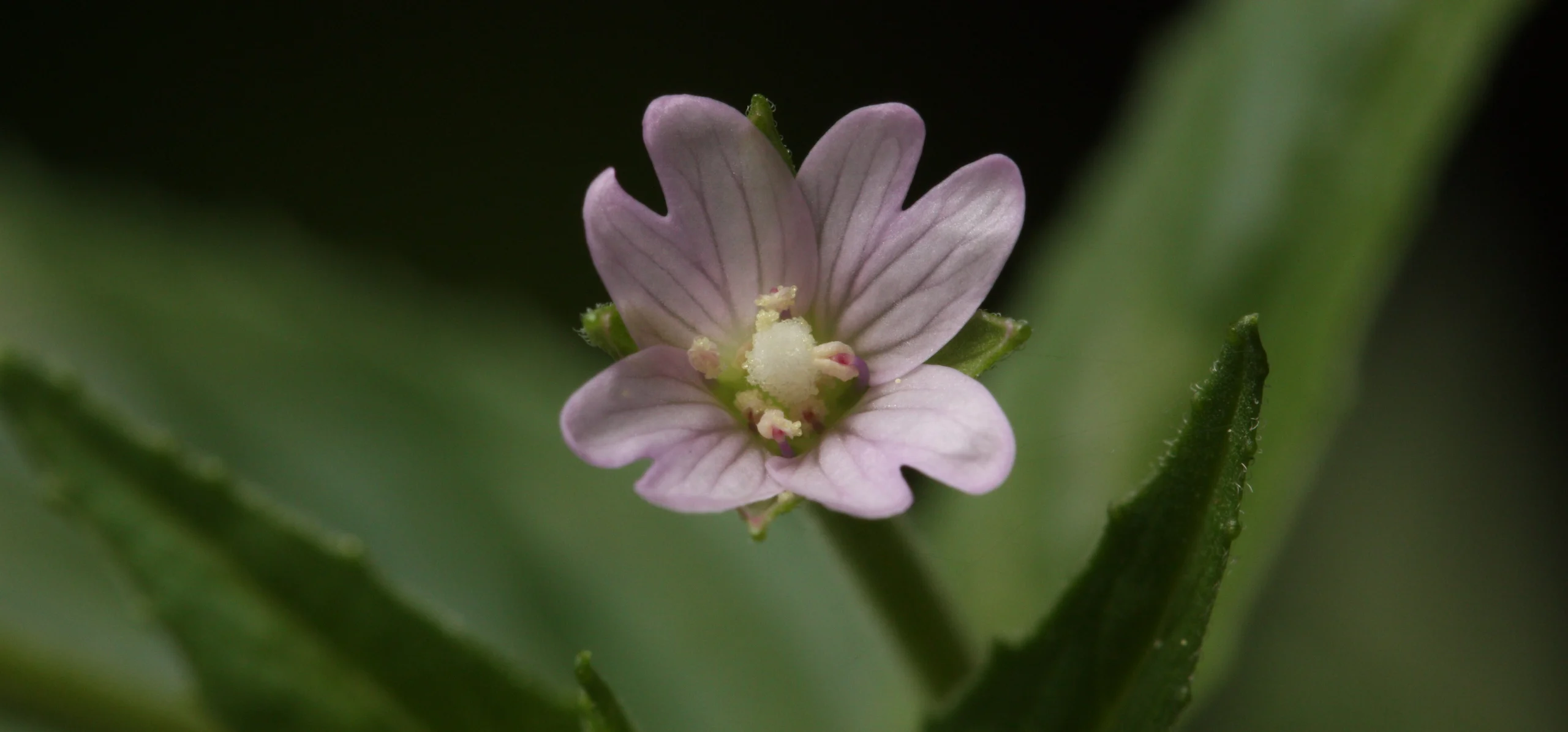
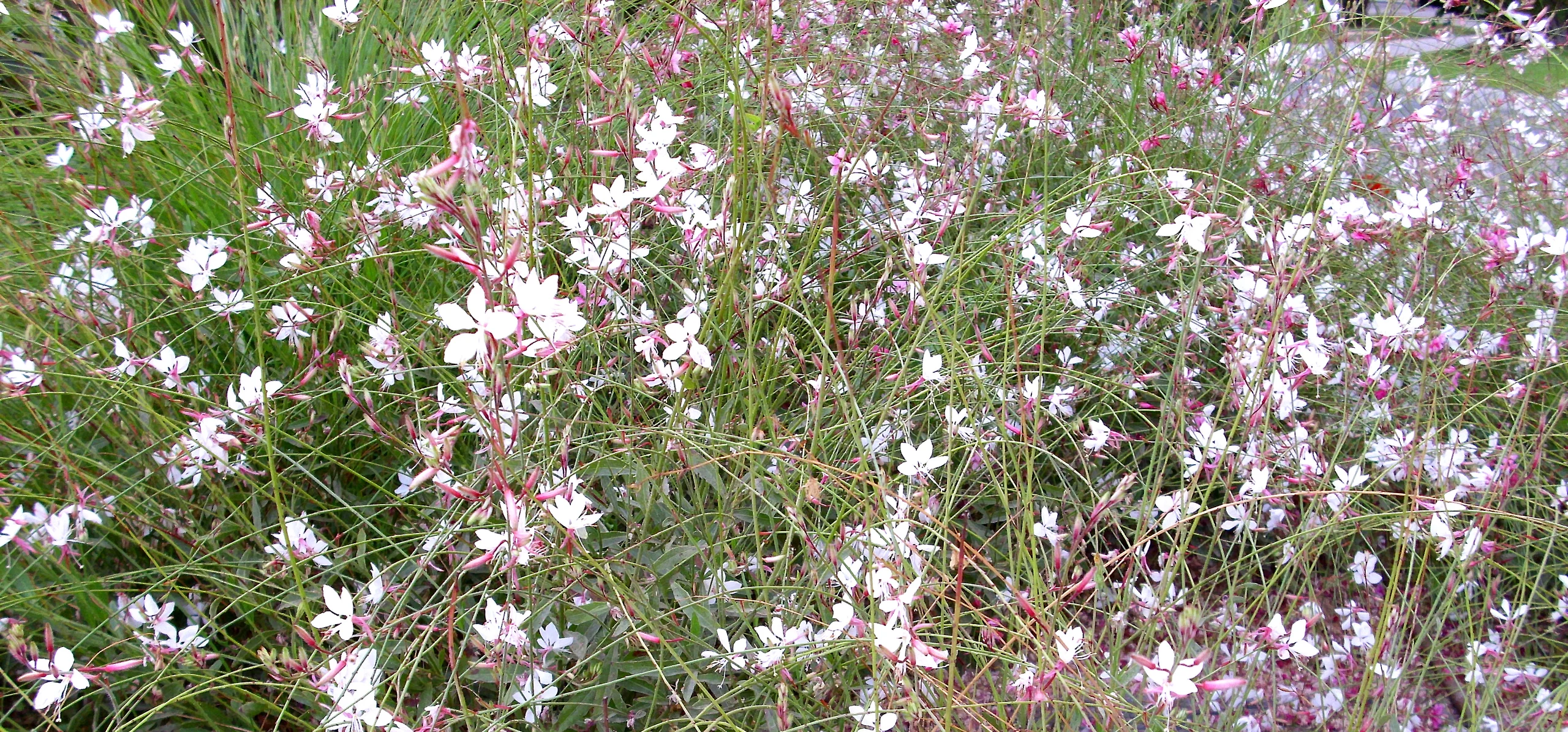
FloweringSmall white to pink four-petaled flowers on wiry, branching stems from early summer to the first frost
Dormancydies back to a woody base over winter; many gardeners leave the stems standing for cold protection and cut hard once new growth starts in spring
Time to maturityblooms the same year from a spring sowing and reaches full size by its second season
Soil & climate
- Soil types
- sandy, loamy, clay
- Drought tolerance
- Yes
Light & Placement
- Origin
- Native to southeastern Texas and southwestern Louisiana (POWO)
- Where to place it
- sunny border
- gravel garden
- cottage garden
- butterfly garden
- meadow planting
- large container
Safety
- Toxicity
- Not listed by the ASPCA for cats, dogs or horses
- Pet safe
- No
Invasive speciesself-seeds freely and can naturalize outside cultivated beds (University of Wisconsin-Madison Extension); not listed as invasive in the sources checked
Data fromGBIF: Oenothera lindheimeri (Engelm. & APlants of the World Online (Kew): OenothNC State Extension Gardener Plant ToolboUniversity of Wisconsin-Madison ExtensioRHS: Oenothera lindheimeri Rosyjane ('Ha
Where it grows
World distribution
Lindheimer's Beeblossom is native to a single country: United States.GBIF records 5,475 documented identifications across 54 countries, with the largest concentrations in United States, France, and Belgium.
- United States
Yellow to orange dots: concentration of documented identifications per country. Green countries: sourced native range. Source: GBIFNative range from POWO (Kew).
Oenothera lindheimeri, still sold nearly everywhere as Gaura lindheimeri, is the airy plant with small white and pink flowers that seem to hover just above wiry, branching stems, opening a few at a time from early summer into the first hard frost. If you just planted one, two things matter more than anything else: it wants poor, fast-draining soil in full sun rather than a fed and watered border, and it grows from a single deep taproot that does not forgive being dug up and moved once it is established. Treat it like a plant built for dry Texas and Louisiana ground rather than a pampered perennial, and it rewards you with months of the whirling, butterfly-like flowers its cultivar names keep referencing.
Full Sun and Poor, Dry Soil: Why Rich Ground Makes It Flop
NC State Extension lists full sun, six or more hours of direct light a day, as what this species needs to perform, with partial shade tolerated but not ideal. Soil texture is flexible: clay, loam or sand all work, provided drainage is good. What gaura does not want is a rich, heavily amended, constantly moist bed. Fertile, damp ground pushes soft, floppy growth that splays open in the middle and blooms less, and NC State Extension names root rot among the problems that turn up when the soil stays wet. A lean spot at the front or middle of a border, the kind that would starve a hungrier perennial, is closer to what this species actually grows in back home.
The Deep Taproot: Plant It Once and Leave It Alone
Both NC State Extension and the University of Wisconsin-Madison Extension trace the plant's drought and heat tolerance back to its taproot: a single woody root that drives down rather than spreading wide like fibrous-rooted perennials. That same root is the reason gaura punishes transplanting. Once a plant is settled into its spot, treat the location as permanent; lifting and moving it later tends to snap or badly damage the root the plant depends on. The same root explains why winter drainage matters more than winter cold for this species: a taproot sitting in cold, waterlogged soil rots, while the same plant in lean, sharply drained ground shrugs off far lower temperatures.


Cutting Back: Spring, Not Fall, in Most Gardens
Advice on timing varies a little between sources, which itself is useful to know. The RHS recommends cutting Rosyjane back in early spring and removing spent flowering stalks as the season goes. The University of Wisconsin-Madison Extension describes shearing plants in late spring, removing up to half their height, to keep them compact rather than sprawling. The common thread: leave the previous year's stems standing over winter, since they offer the crown some protection from cold and wet, then cut hard once new growth is visibly starting in spring. Deadheading through the summer, snipping spent flower spikes back to a lower node, keeps the wand-like stems blooming for longer instead of running to seed early.
Choosing a Variety: 'Siskiyou Pink', 'Whirling Butterflies' and 'Rosyjane'
The wild species carries mostly white flowers that fade to a light blush as they age. 'Siskiyou Pink', introduced in 1994 and described by the University of Wisconsin-Madison Extension as a tall variety around two and a half to three feet, carries bright pink flowers instead and holds that color from the start rather than fading into it. 'Whirling Butterflies' runs the other direction: the same extension calls it very heavy-blooming, with large white flowers on plants that stay around two feet tall, a shorter and denser habit than the straight species. 'Rosyjane' (sold under the name 'Harrosy') is a bicolor: the RHS describes white flowers flushed pink at the edges opening from dark pink buds, above foliage mottled with purple, on a compact plant reaching roughly half a metre to a metre. None of the three changes the plant's underlying needs, full sun and lean, well-drained soil still decide how well any of them perform.
Short-Lived and Self-Seeding: Why It Disappears, Then Comes Back
Gaura is not a long-term investment in any one plant. The University of Wisconsin-Madison Extension notes that individual plants may not be long-lived and that gardeners in colder regions often grow it as an annual rather than a perennial. What keeps a planting going year after year is self-seeding: the same source describes the species as readily self-sowing and capable of naturalizing where conditions suit it. In practice that means a bed of gaura is less a fixed clump than a slowly shifting population, older plants declining as new seedlings fill in the gaps around them, provided a few spent flower spikes are left to ripen and drop seed each year.
From Gaura to Oenothera: What Changed and Why the Old Name Persists
GBIF's accepted name for this species is Oenothera lindheimeri (Engelm. & A.Gray) W.L.Wagner & Hoch, in the family Onagraceae, order Myrtales. For most of its horticultural history it was classified as Gaura lindheimeri Engelm. & A.Gray, and that older name is still what appears on the vast majority of plant tags, catalogs and even the RHS database. The change followed genetic and morphological work that folded the genus Gaura into the much larger Oenothera, the evening primroses, rather than any dispute about the plant itself. Gaura filiformis var. munzii Cory is listed as a further synonym. Expect the two names, Gaura and Oenothera, to sit side by side on labels for years yet; both point to the same plant.
Pollinators and the One Caterpillar Worth Welcoming
NC State Extension credits this species with attracting hummingbirds, bumblebees and long-tongued bees, and the RHS lists Rosyjane among its plants for pollinators for the bees it draws in. The airy, staggered flowering habit, a handful of blooms open on each stem at a time over a long season, keeps a steady, low-key nectar source available rather than one short flush. The species is also a documented host plant for the caterpillars of the white-lined sphinx moth: chewed foliage in a gaura patch is worth a second look before reaching for anything, since it may be feeding a moth rather than signaling a pest problem.
Is Gaura Toxic to Pets? What the ASPCA Actually Says
Searching aspca.org directly for gaura under either name, Gaura lindheimeri or Oenothera lindheimeri, turns up no dedicated entry on the ASPCA's toxic or non-toxic plant lists. That is not a confirmed clean bill of health, the species simply has not been evaluated and listed either way, so it is worth the same ordinary caution given to any unlisted garden plant around pets inclined to chew on foliage.
Test your plant knowledge
Tap a card to flip it and reveal the answer.
Oenothera lindheimeri is the currently accepted scientific name, even though most nurseries and the RHS still sell it as Gaura lindheimeri. Tap to reveal ✓ True
Because it grows from a long taproot, an established gaura plant can be dug up and moved to a new spot with little risk. Tap to reveal ✕ False
Rich, consistently moist garden soil produces sturdier, longer-lived gaura plants than poor, dry soil does. Tap to reveal ✕ False
The ASPCA lists gaura, under either Gaura lindheimeri or Oenothera lindheimeri, as toxic to cats and dogs. Tap to reveal ✕ False
Gaura is a documented host plant for the caterpillars of the white-lined sphinx moth. Tap to reveal ✓ True
Sources
References consulted for this guide
- GBIF: Oenothera lindheimeri (Engelm. & A.Gray) W.L.Wagner & Hochgbif.org
- Plants of the World Online (Kew): Oenothera lindheimeripowo.science.kew.org
- NC State Extension Gardener Plant Toolbox: Oenothera lindheimeriplants.ces.ncsu.edu
- University of Wisconsin-Madison Extension: Gaura (Gaura lindheimeri)hort.extension.wisc.edu
- RHS: Oenothera lindheimeri Rosyjane ('Harrosy')rhs.org.uk
- Reference entity : Wikipédiaen.wikipedia.org