Blue Passionflower
Passiflora caerulea
Family · Passifloraceae
Passiflora caerulea survives to about -10°C against a sheltered wall, but rich soil and heavy feeding trade flowers for leaves. Pruning, pests, toxicity.
Passiflora caerulea
Plant profile
- WateringModerateWater every 7 days
- Light exposurePartial sun
- Ideal temperature-10–35 °C
- Hardiness zoneUSDA 6–10
Growth
- Family
- Passifloraceae
- Life cycle
- Perennial
- Growth speed
- 8/10
- Mature size
- 800–1200 cm
- Spread
- 250–400 cm
- Flowering
- Early summer to early autumn; each flower opens for a single day
- Propagation
- Seed
- Cutting
Dormancysemi-deciduous where winters are cool; evergreen in frost-free climates
Time to maturity5 to 10 years to ultimate height
Soil & climate
- Soil types
- loam, sand, chalk, clay
- Drought tolerance
- Yes
Light & Placement
- Origin
- Bolivia to Brazil and northern Argentina
- Where to place it
- unheated conservatory or frost-free greenhouse for winter
- sheltered south- or west-facing wall
- trellis, arbour or pergola in a sunny border
Safety
- Toxicity
- HumansToxic
Invasive speciesvigorous, can become a nuisance
Data fromPassiflora caerulea L., GBIF Backbone TaPlants of the World Online (Kew): PassifRHS: Passiflora caerulea, blue passion fNC State Extension Gardener Plant ToolboMissouri Botanical Garden Plant Finder:
Where it grows
World distribution
Blue Passionflower is native to 4 countries: Argentina, Bolivia, Brazil, and Paraguay.GBIF records 27,102 documented identifications across 92 countries, with the largest concentrations in Italy, Spain, and Argentina.
- Argentina
- Bolivia
- Brazil
- Paraguay
Yellow to orange dots: concentration of documented identifications per country. Green countries: sourced native range. Source: GBIFNative range from POWO (Kew).
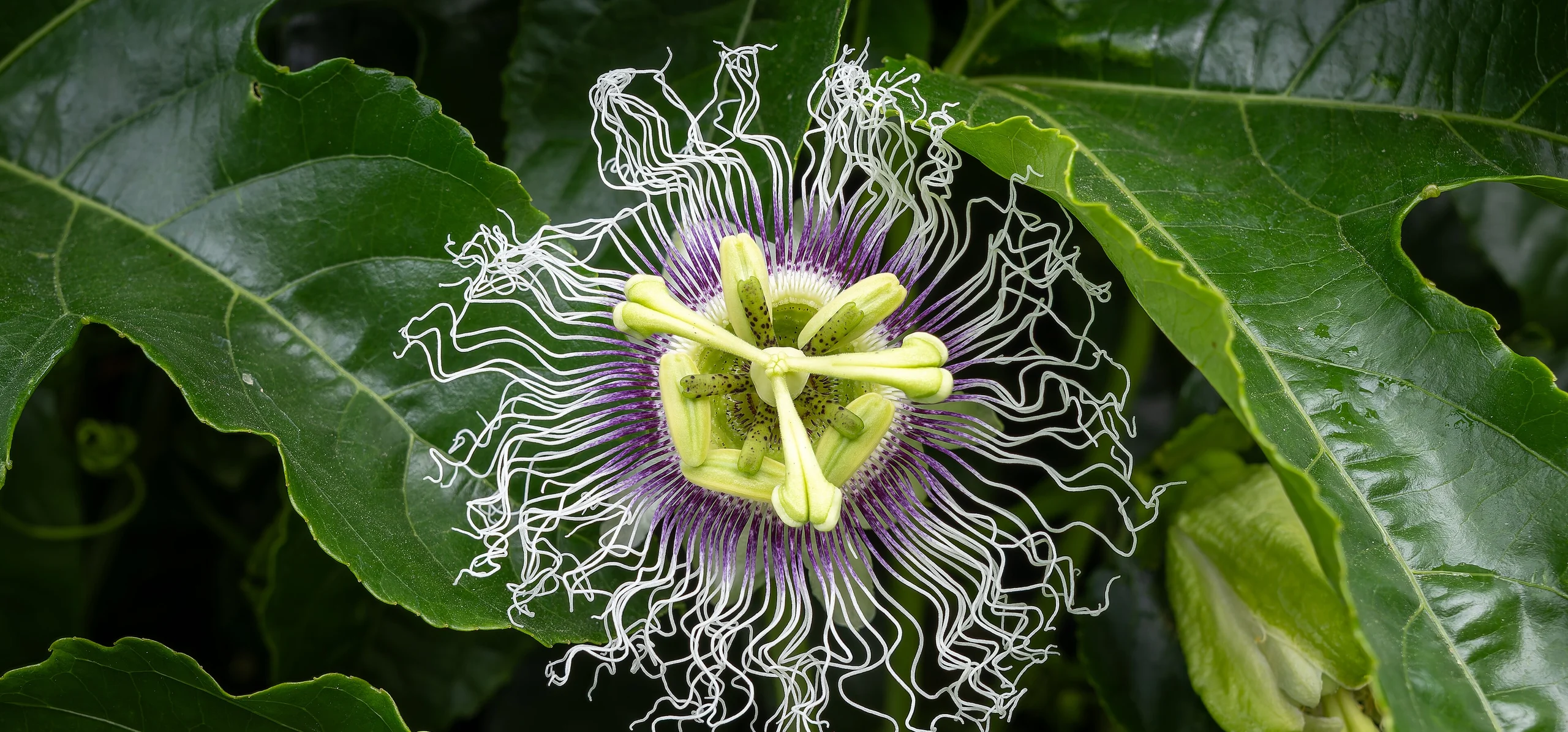
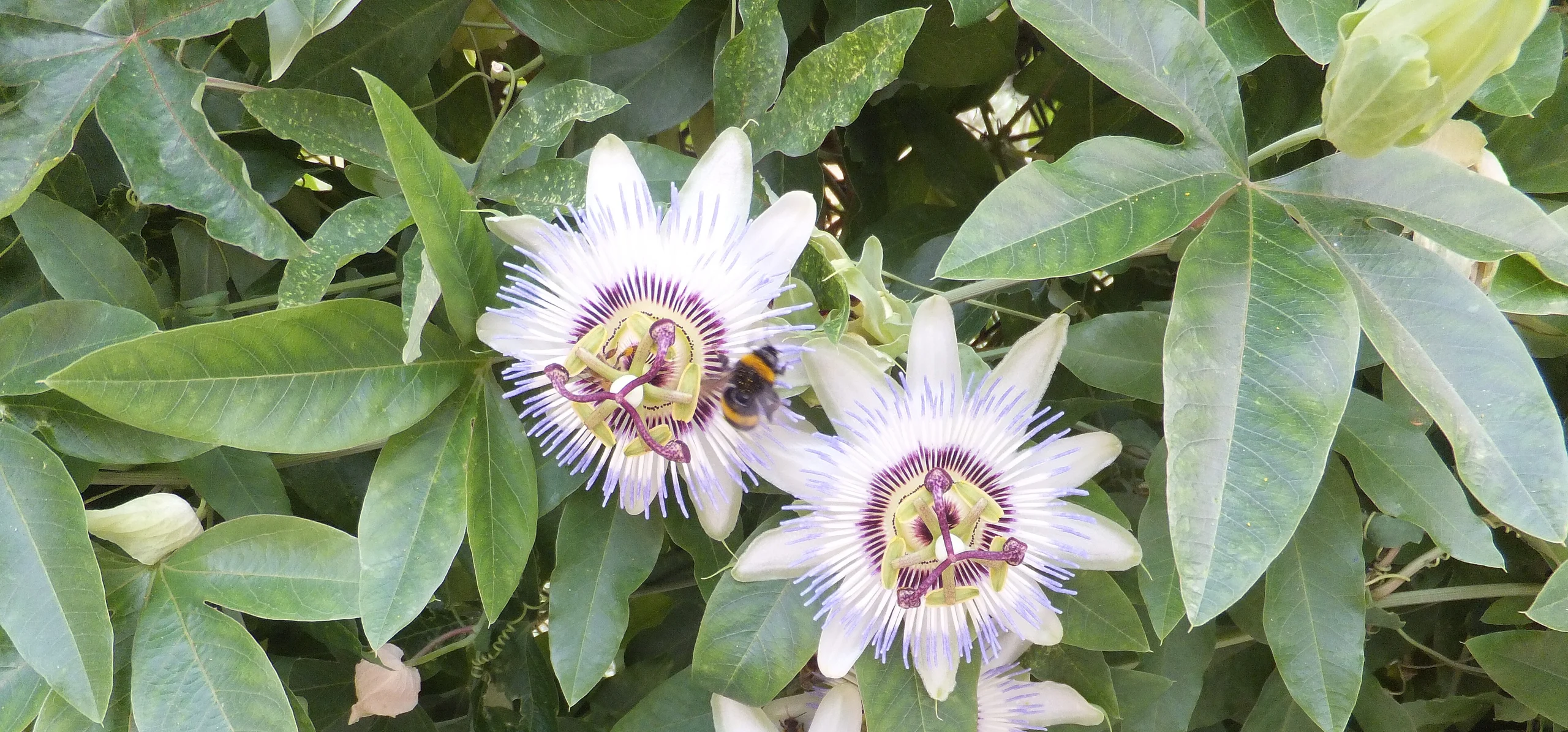
Passiflora caerulea is the passionflower most gardeners in a temperate climate can actually keep alive outdoors year after year: the RHS rates it H4, hardy to around -10°C against a sheltered wall, and it has held an Award of Garden Merit for its reliability. The white, saucer-shaped flowers, each with a corona of blue-and-purple banded filaments around a cream centre, open for a single day from early summer into autumn. The vine climbs by coiling tendrils rather than twining stems, so it needs wires or a trellis from the day it goes in the ground, and unlike the tropical Passiflora edulis grown for its fruit, this species shrugs off poor soil, drought and a wide pH range without complaint. What it will not tolerate well is neglect of its vigour: left unpruned against a warm wall, it grows fast enough to cover far more space than most gardens can spare.
Where to Plant It: Sun, Shelter and a Wall to Hold Heat
Give it a south- or west-facing wall in a sheltered spot, full sun for most of the day or partial shade of two to six hours, with wires, a trellis, an arbour or a pergola already in place before it starts climbing. A brick or stone wall that banks daytime heat and releases it slowly overnight makes the difference in a marginal climate, buffering the roots and lower stems through the coldest nights. Growth is rapid, and the RHS lists a time to ultimate height of five to ten years, reaching 8 to 12 metres tall with a 2.5 to 4 metre spread once established, so plant it where that eventual size is genuinely welcome rather than where it will need constant cutting back from a path or gutter.
Soil and Watering: Less Is More
It grows in loam, sand, chalk or clay, acid, neutral or alkaline, as long as drainage is reasonable; Missouri Botanical Garden notes it does especially well in loose, sandy or gravelly ground. The RHS lists it as drought resistant once established, and the better approach is to water deeply but infrequently, encouraging roots to reach down into the soil rather than staying shallow and dependent on frequent top-watering. A newly planted vine still needs regular water through its first season while roots establish; after that, let the top few centimetres of soil dry between waterings rather than keeping it constantly moist.
Feeding Without Killing the Flowers
This is the mistake that catches out gardeners used to feeding climbers generously: too much manure or compost pushes Passiflora caerulea into lush leafy growth at the expense of flowers, a trade Missouri Botanical Garden specifically warns against. Go light on fertiliser, especially anything nitrogen-heavy, and if a mature vine is covering its wires in green but producing few blooms, the fix is usually to feed less next season, not more.


Pruning and Training a Vine That Wants to Take Over
Because it grows so fast, this species tolerates hard pruning well and can be cut back close to its supporting framework each year without losing vigour. The RHS is explicit that it has the potential to become a nuisance if left unmanaged, so an annual prune, ideally in late winter or early spring before new growth accelerates, keeps it within its wires instead of smothering nearby shrubs or hedges. Tie in new tendrils regularly through the growing season rather than waiting for a once-a-year tidy, since a vine that has flopped away from its support is much harder to bring back under control.
Winter Protection Where It Runs Colder
Where winters regularly drop well below the -10 to -5°C range the RHS gives for H4 plants, grow it in a large container that spends the growing season outdoors on a sunny wall and moves into an unheated porch, conservatory or frost-free greenhouse for winter. Cut back on water while it sits indoors and expect slowed growth and some leaf drop; it is evergreen in frost-free climates but semi-deciduous where winters turn cool, so dropped leaves on an outdoor plant are not automatically a sign of trouble.
Flowers, Pollination and the Fruit
Flowers open through early summer to early autumn, each bloom around 2.5 to 3 inches across, and bees are the pollinators most often seen working them. Fertilised flowers develop into egg-shaped fruit that ripens from green through yellow to deep orange by late summer or autumn; Missouri Botanical Garden describes the flavour as bland on its own but usable in recipes that call for a blackberry-like fruit. Cutting one open reveals a mass of seeds in orange pulp, the part actually worth tasting, since the skin and rind are not eaten.
Pests and Diseases Specific to This Species
North Carolina State Extension flags the Phlox Plant Bug and related Lopidea plant bugs, along with barnacle scale, as the pests most commonly reported on this species, alongside fungal problems that take hold where air circulation around the foliage is poor. Training the vine so its growth does not bunch into a dense, airless mat against the wall reduces the fungal risk more reliably than any spray, and a light annual prune helps here too.
Toxicity and Why It Can Become a Garden Escapee
North Carolina State Extension lists Passiflora caerulea as poisonous to humans at medium severity: the leaves and stems contain cyanogenic glycosides that can cause severe nausea, vomiting, drowsiness and irregular heartbeat if eaten. The ASPCA's own toxic and non-toxic plant list does not carry an entry for this species by name, so there is no official verdict either way for cats, dogs or horses specifically, and the safest approach with children and pets is to keep them from chewing the foliage regardless. The same vigour that makes it forgiving in a garden also makes it a documented invasive risk outside its native range, and the RHS's own warning about it becoming a nuisance is worth taking literally when deciding how much space to give it.
Test your plant knowledge
Tap a card to flip it and reveal the answer.
Passiflora caerulea is rated H4 by the RHS and can survive winter outdoors against a sheltered wall down to around -10°C. Tap to reveal ✓ True
Feeding this vine heavily with manure or rich compost produces more flowers. Tap to reveal ✕ False
The ASPCA lists Passiflora caerulea by name as toxic to cats and dogs. Tap to reveal ✕ False
Its leaves and stems contain cyanogenic glycosides that make the plant toxic to humans if eaten. Tap to reveal ✓ True
The vine typically reaches its full height of 8 to 12 metres within its first two years in the ground. Tap to reveal ✕ False
Sources
References consulted for this guide
- Passiflora caerulea L., GBIF Backbone Taxonomygbif.org
- Plants of the World Online (Kew): Passiflora caerulea L.powo.science.kew.org
- RHS: Passiflora caerulea, blue passion flowerrhs.org.uk
- NC State Extension Gardener Plant Toolbox: Passiflora caeruleaplants.ces.ncsu.edu
- Missouri Botanical Garden Plant Finder: Passiflora caeruleamissouribotanicalgarden.org
- Reference entity : Wikipédiaen.wikipedia.org