Passion Fruit
Passiflora edulis
Family · Passifloraceae
Passiflora edulis climbs fast and fruits within a year or two, but drops flowers without pollination and dies back below light frost. Purple vs yellow, wilt.
Passiflora edulis
Plant profile
- WateringHighWater every 5 days
- Light exposurePartial sun
- Ideal temperature2–35 °C
- Hardiness zoneUSDA 9–11
Growth
- Family
- Passifloraceae
- Life cycle
- Perennial
- Growth speed
- 8/10
- Mature size
- 400–800 cm
- Spread
- 250–400 cm
- Flowering
- Blooms through the warm season; fruit ripens roughly 10 to 12 weeks after flowering
- Propagation
- Seed
- Cutting
- Grafting
Dormancysemi-dormant with some leaf drop indoors over winter; evergreen in frost-free climates
Time to maturityflowers and fruits within the first one to two years from seed
Soil & climate
- Soil types
- loam
- Drought tolerance
- No
Light & Placement
- Origin
- Native to Brazil, Paraguay and northeastern Argentina
- Where to place it
- brightest window or greenhouse wall
- conservatory with wires or a trellis to climb
- sunny wall with wires or trellis
- sheltered, sunny patio in frost-free climates
Safety
- Toxicity
- Not evaluated by the ASPCA; toxicity undetermined
- Pet safe
- No
Data fromPassiflora edulis Sims, GBIF Backbone TaPlants of the World Online (Kew): PassifMissouri Botanical Garden Plant Finder: RHS: Passiflora edulis (F), purple granaUC ANR Cooperative Extension Ventura Cou
Where it grows
World distribution
Passion Fruit is native to 3 countries: Argentina, Brazil, and Paraguay.GBIF records 16,612 documented identifications across 137 countries, with the largest concentrations in Brazil, Australia, and United States.
- Argentina
- Brazil
- Paraguay
Yellow to orange dots: concentration of documented identifications per country. Green countries: sourced native range. Source: GBIFNative range from POWO (Kew).
Passion fruit is one of the fastest vines you can put on a sunny wall or in a greenhouse, capable of covering several metres of wire in a single season and setting its first fruit within a year or two of germination. Two forms are sold under the same name: the purple-fruited Passiflora edulis f. edulis, which is cold-hardier and pollinates itself, and the yellow-fruited f. flavicarpa, more vigorous and tropical but unable to set fruit alone. Get the pollination and the winter protection right and this vine is generous; get either wrong and you end up with a wall of leaves, dropped flowers and no fruit.
Purple or Yellow: Two Forms, Two Personalities
The purple form is the one for a marginal climate: it tolerates a light frost, its flowers are self-compatible, and a single plant on a sheltered wall can set fruit without help. The yellow form, Passiflora edulis f. flavicarpa, grows harder and faster and produces a larger, tarter fruit prized commercially in the tropics, but its flowers are self-sterile, so it needs a second plant, an insect visitor, or your hand to move pollen. Growers in frost-prone areas often graft purple scions onto yellow rootstock, since the yellow form resists the soil diseases that eventually kill purple vines outright.
Light, Position and a Structure to Climb
Give it the sunniest spot you have, full sun for most of the day, with light afternoon shade only where summers are fierce. The vine climbs by coiling tendrils rather than twining stems, so it needs wires, a trellis or netting from the start; without one it collapses into a tangled heap that flowers poorly. A south or west-facing wall that also banks some heat suits it outdoors, and a greenhouse or conservatory wall does the same job where winters are too cold for it to live outside year-round.
Soil, Water and Feeding
Plant into a fertile, loam-based mix that drains well but does not dry out completely, the vine tolerates neutral to slightly alkaline soil without complaint. Water regularly through the growing season, this is not a plant that thrives on neglect: a vine that dries out repeatedly responds by shedding flowers and small fruit before they mature, which is one of the two most common reasons a passion fruit vine flowers heavily but fruits poorly. Feed through spring and summer with a balanced fertiliser, easing off once flowering slows in autumn.


Pollination and Why Flowers Fail to Set Fruit
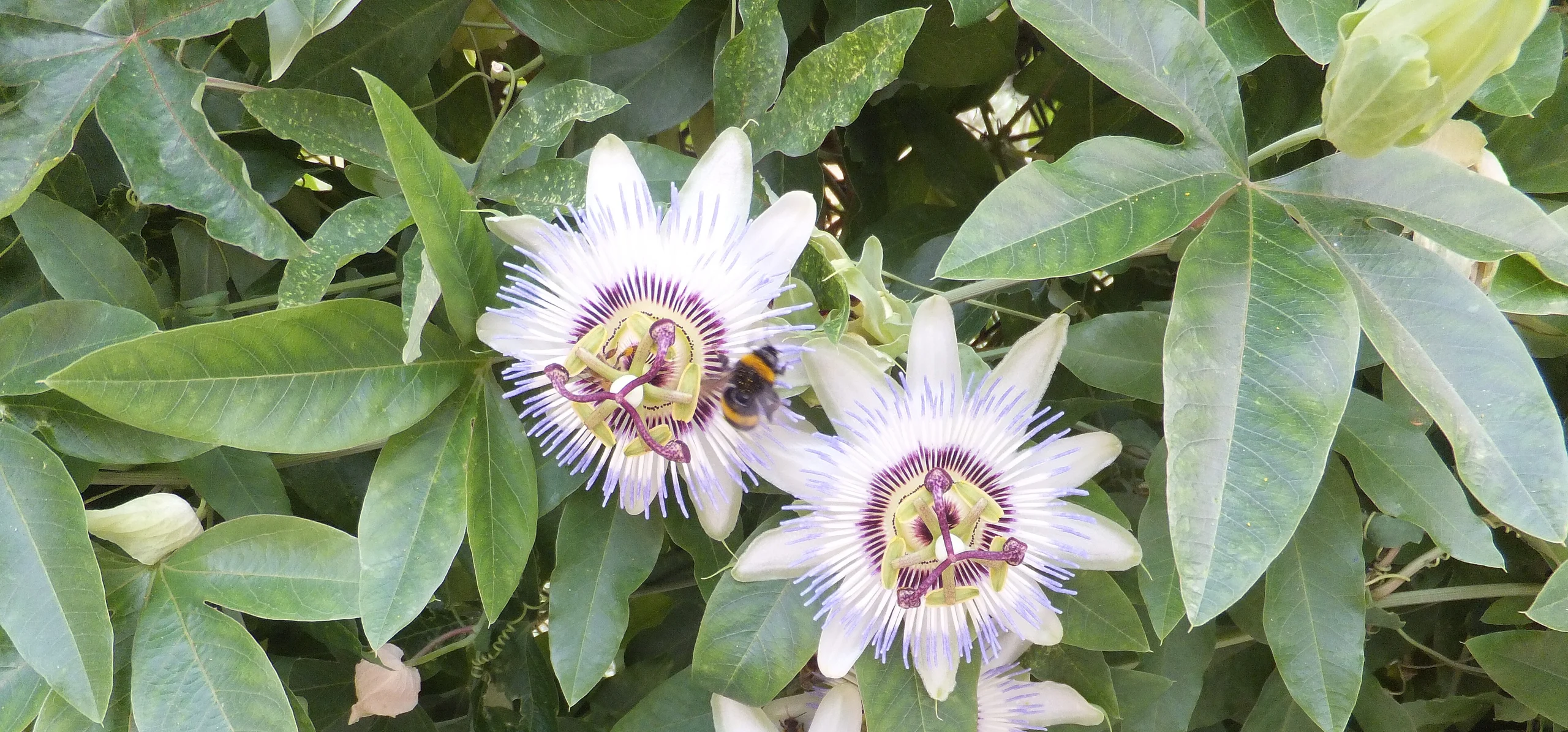
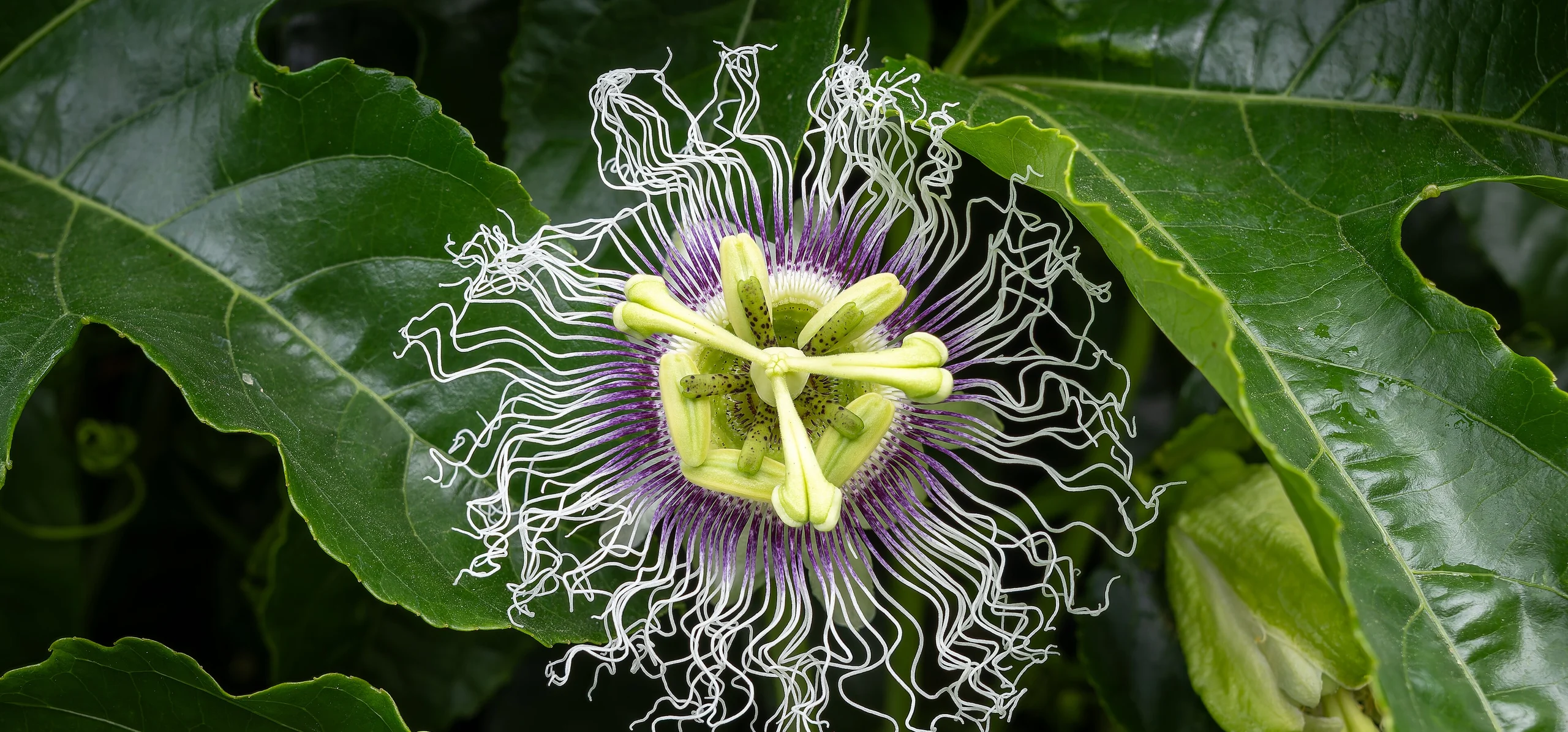
The other common cause of poor fruiting, alongside water stress, is simply a lack of pollination. Purple passion fruit is self-compatible and can set fruit with its own pollen, carried mostly by carpenter bees outdoors, but a vine grown under glass or on an enclosed balcony often sees no pollinators at all. The yellow form needs pollen from a separate flower regardless of location, since its own pollen cannot fertilise its own stigma. In either case, hand pollination solves the problem: use a small paintbrush or cotton swab to transfer the sticky yellow pollen from the anthers, which hang below the flower's centre, onto the three-lobed stigma above them, ideally in the morning when a flower first opens.
Hardiness, Frost and Pot Culture Indoors
Passion fruit is tender. The purple form holds on through a light frost, damage becomes serious as temperatures drop toward freezing, and a hard freeze kills the top growth outright and often the roots as well outside the mildest climates. Where winters bring real frost, grow it in a large pot that spends summer outdoors on the sunniest wall and winter under glass, a bright, frost-free greenhouse, conservatory or sunroom. Cut back watering while it sits indoors, growth slows and some leaf drop is normal, and do not rush it back outside until the last frost has passed.
Pruning After Harvest
Because it grows so fast, passion fruit tolerates pruning at almost any time, but the main cut is best made once harvest finishes, tidying the vine back before the next spring flush of growth. Remove dead, damaged or overcrowded stems, thin out the tangle that builds up over a season, and shorten side shoots to keep the plant within its allotted wires rather than letting it swamp neighbouring plants. A hard prune in late winter, just before new growth starts, keeps an older vine productive and easier to manage.
Fusarium Wilt and a Short Productive Life
The trade-off for that fast growth is a short lifespan. Fusarium wilt, a soil-borne fungus that blocks the plant's water-conducting tissue, along with nematodes and crown rot, commonly forces growers to replant purple passion fruit vines every three to five years even with good care. The yellow form tolerates these problems better, which is why it is used both as a crop in its own right and as rootstock for grafted purple plants. If an established vine wilts suddenly despite adequate water, especially with browning inside the stem, wilt disease rather than drought is the likely cause, and the plant is rarely worth trying to save.
Is Passion Fruit Safe Around Pets?
Passiflora edulis does not currently appear on the ASPCA's toxic or non-toxic plant list, so no official verdict exists either way for this species specifically, unlike some ornamental Passiflora species that are listed as non-toxic. Treat it with the same caution you would any unlisted plant: keep pets from chewing on the foliage or vines as a matter of course, and the ripe fruit itself, widely eaten by people, is not a known hazard.
Test your plant knowledge
Tap a card to flip it and reveal the answer.
The yellow form of passion fruit, f. flavicarpa, needs a second flower's pollen because its own flowers are self-sterile. Tap to reveal ✓ True
The purple form of passion fruit can set fruit using pollen from its own flowers. Tap to reveal ✓ True
A potted passion fruit can safely stay outdoors through a hard freeze in a cold-winter climate. Tap to reveal ✕ False
Passion fruit vines are often replaced every three to five years because of fusarium wilt. Tap to reveal ✓ True
The ASPCA lists passion fruit (Passiflora edulis) as toxic to cats and dogs. Tap to reveal ✕ False
Sources
References consulted for this guide
- Passiflora edulis Sims, GBIF Backbone Taxonomygbif.org
- Plants of the World Online (Kew): Passiflora edulis Simspowo.science.kew.org
- Missouri Botanical Garden Plant Finder: Passiflora edulismissouribotanicalgarden.org
- RHS: Passiflora edulis (F), purple granadillarhs.org.uk
- UC ANR Cooperative Extension Ventura County: Passion Fruitucanr.edu
- Reference entity : Wikipédiaen.wikipedia.org