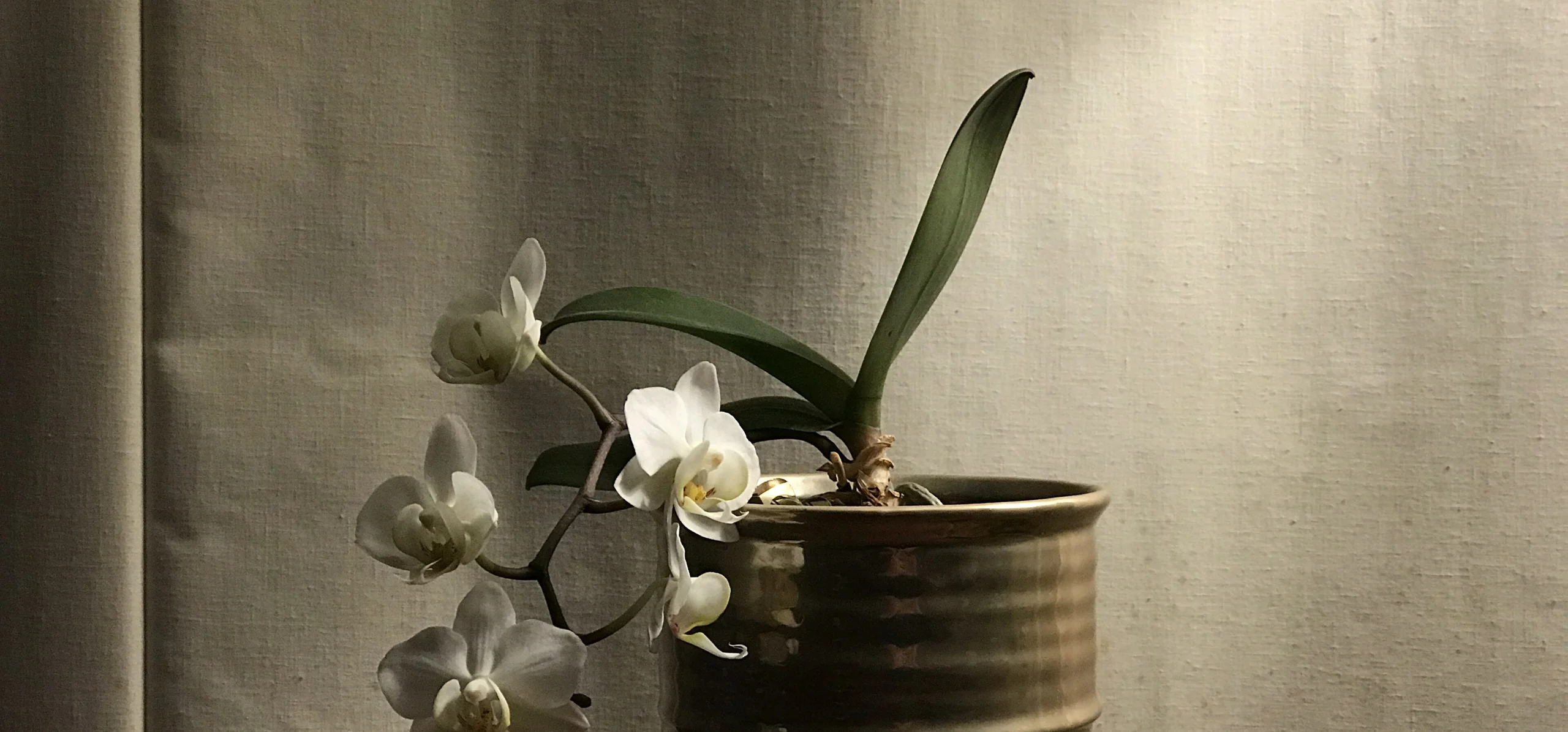
Moth Orchid
Phalaenopsis amabilis
Family · Orchidaceae
Phalaenopsis amabilis wants bright indirect light, 16 to 30 degrees C, weekly watering in bark mix, and a cool spell to rebloom. Non-toxic to pets (ASPCA).
Phalaenopsis amabilis
Plant profile
- WateringModerateWater every 7 days
- Light exposureIndirect light
- Ideal temperature16–30 °C
Growth
- Family
- Orchidaceae
- Life cycle
- Perennial
- Growth speed
- 2/10
- Mature size
- 50–100 cm
- Spread
- 10–50 cm
- Flowering
- Long-lasting spikes, reblooms roughly once a year with a cool rest
- Propagation
- Seed
- Offsets
Dormancyno true winter dormancy; needs a cool spell to trigger a new flower spike
Time to maturityreblooms roughly once a year under good light and a cool autumn rest
Soil & climate
- Soil types
- bark-based orchid compost, sphagnum moss
- Drought tolerance
- No
Light & Placement
- Origin
- Malesia to northeastern Australia
- Where to place it
- east or west-facing windowsill
- bright bathroom out of direct sun
- shaded patio in summer (frost-free, tropical climates only)
- transparent orchid pot
- slotted orchid basket
Safety
- Toxicity
- CatsSafe
- DogsSafe
- HorsesSafe
Data fromGBIF Backbone Taxonomy: Phalaenopsis amaPOWO (Kew): Phalaenopsis amabilis (L.) BASPCA: Toxic and Non-toxic Plants, PhalaRHS: How to grow Phalaenopsis (moth orchRHS Plant Guide: Phalaenopsis amabilis,
Where it grows
World distribution
Moth Orchid is native to 5 countries: Australia, Indonesia, Malaysia, Papua New Guinea, and Philippines.GBIF records 421 documented identifications across 19 countries, with the largest concentrations in Indonesia, Malaysia, and Philippines.
- Australia
- Indonesia
- Malaysia
- Papua New Guinea
- Philippines
Yellow to orange dots: concentration of documented identifications per country. Green countries: sourced native range. Source: GBIFNative range from POWO (Kew).
A newly bought Phalaenopsis amabilis, sold under its own name or hiding behind countless supermarket hybrids bred from it, is an epiphyte first and a houseplant second. In the wild it clings to tree bark from Malesia across to northeastern Australia, its flattened roots gripping rough surfaces and drying between tropical downpours, which is exactly why potting it in ordinary soil kills it faster than almost any other mistake a new owner can make. A healthy spike of pure white, yellow-and-red-marked flowers stays open for two or three months at a stretch. Get the roots, light and watering routine right and it settles into its own reblooming rhythm year after year.
A Species Behind Countless Hybrids
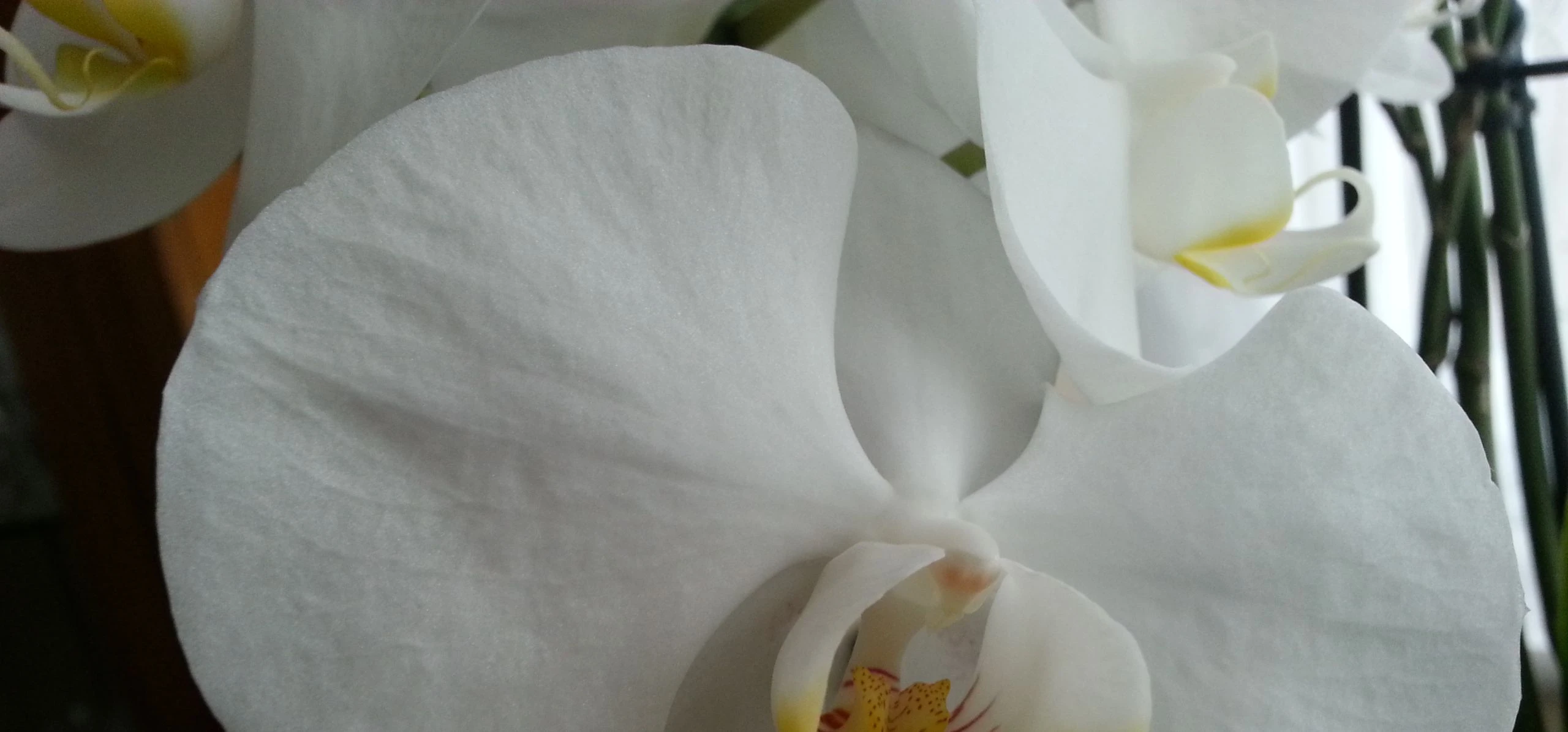
Phalaenopsis amabilis is one of the parent species behind most of the white moth orchid hybrids sold in supermarkets and garden centres, which explains why the plant on a windowsill is so often labelled simply Phalaenopsis. The true species carries broad, flat white petals around a smaller lip marked in yellow and red, evergreen oval leaves, and an evergreen habit with no dormant season. In the wild it is an epiphyte of the wet tropical biome, wedged into bark crevices in humid, dappled forest rather than rooted in leaf litter, which is the single fact that explains almost every care rule below.
Light and Placement
An east or west-facing windowsill is close to ideal: bright but not direct light for most of the year. In summer, keep it back from unfiltered sun, which scorches the fleshy leaves within days; in winter the lower sun angle is weak enough that a more direct spot does no harm and even helps trigger flowering. The leaves themselves are the best gauge. Light, fresh green foliage means the light level is correct; leaves that turn dark and stiff mean the plant wants more light; leaves developing pinkish margins or yellowing mean it is getting too much.
Temperature: Warm Days, Cooler Nights
This is a tender tropical orchid with no frost tolerance at all, rated H1A by the RHS, meaning it should never be allowed to drop below about 15 degrees C. Day temperatures of 19 to 30 degrees C with nights a few degrees cooler, around 16 to 19 degrees C, mirror its native climate and suit it best. What it dislikes far more than a specific number is instability: a spot near a radiator, an unheated windowsill that turns cold at night, or a draughty hallway all stress the plant more than a slightly warm or slightly cool room kept steady.


Watering Without Guesswork
Water thoroughly about once a week through the growing season and ease off in winter, using tepid water or rainwater rather than water straight from a cold tap. The two failure modes are equally damaging: never let the roots dry out completely, and never let the plant sit in a saucer of standing water. A reliable method is to run water over the bark and aerial roots in three or four short drenches spread over about ten minutes, letting it drain fully each time. The aerial roots themselves tell you what is happening: a dull silvery-white colour means the plant is dry and ready for water, a pale green colour means it is well hydrated. Wrinkled, slightly deflated leaves are the plant's way of saying it has gone too long without a drink. Avoid splashing water into the crown where the leaves meet, since standing water there invites rot.
Potting Mix and Repotting
Ordinary potting soil or multipurpose compost suffocates the roots within weeks; this plant needs a coarse, bark-based orchid compost that drains almost as fast as it is poured, ideally in a transparent pot so the roots can photosynthesise and you can see their colour at a glance. Repot roughly every one to two years, once the bark has broken down into a dense, soggy mass rather than on a fixed calendar. The best moment is just as new root or leaf growth starts. Tip the plant out, rinse off the old, decomposed bark, trim away any roots that are brown, hollow or mushy, and reset it in fresh bark at the same depth as before.
Feeding
Feed lightly but regularly with a fertiliser formulated for orchids during active growth and flowering, roughly every third or fourth watering rather than every time. Skipping a feed on the in-between waterings flushes accumulated mineral salts out of the bark before they can build up and burn the roots. Cut feeding right back, or stop altogether, once growth slows in winter; pushing nitrogen at a resting plant encourages soft leaf growth at the expense of the next flower spike.
Getting It to Rebloom
A Phalaenopsis that refuses to flower again is almost always short on light rather than short on care. Once a spike finishes flowering, resist the urge to cut it off at the base; trimming it back to just above the second node from the bottom often prompts a new side-branch to form and flower within a couple of months, at no extra effort. If nothing happens, moving the plant somewhere with cooler autumn nights, roughly 5 degrees C below its usual spot for three or four weeks, mimics the seasonal cue that pushes it into bud. A spell on a shaded summer patio, where nights are naturally cooler than an air-conditioned room, works the same way for plants that spend the rest of the year indoors.
Pests, Problems and Pets
Phalaenopsis amabilis is comparatively pest-resistant indoors; mealybugs tucked into leaf joints are the most likely visitor, and a cotton swab dipped in rubbing alcohol deals with a light infestation before it spreads. Plants that spend time outside can pick up slugs or snails chewing at the roots and flower buds. The overwhelming majority of serious problems trace back to one habit: watering on a fixed schedule regardless of how wet the bark still is, which leads straight to root rot and a plant that looks fine above the compost while its roots quietly die below it. On the safety side, this is one of the more reassuring houseplants to keep around animals: the ASPCA lists the Phalaenopsis orchid as non-toxic to cats, dogs and horses, so an inquisitive pet chewing a leaf or petal is a mess to clean up rather than a reason to call a vet.
Test your plant knowledge
Tap a card to flip it and reveal the answer.
Phalaenopsis amabilis is an epiphyte that naturally grows on tree bark rather than in soil. Tap to reveal ✓ True
You should let the potting mix dry out completely between waterings. Tap to reveal ✕ False
A cooler spell in autumn can help trigger a new flower spike. Tap to reveal ✓ True
Once flowers drop, the spent flower spike should always be cut off at the base. Tap to reveal ✕ False
The ASPCA lists Phalaenopsis orchids as toxic to cats and dogs. Tap to reveal ✕ False
Sources
References consulted for this guide
- GBIF Backbone Taxonomy: Phalaenopsis amabilis (L.) Blumegbif.org
- POWO (Kew): Phalaenopsis amabilis (L.) Blume, native rangepowo.science.kew.org
- ASPCA: Toxic and Non-toxic Plants, Phalaenopsis Orchidaspca.org
- RHS: How to grow Phalaenopsis (moth orchids), Growing Guiderhs.org.uk
- RHS Plant Guide: Phalaenopsis amabilis, key factsrhs.org.uk
- Reference entity : Wikipédiaen.wikipedia.org