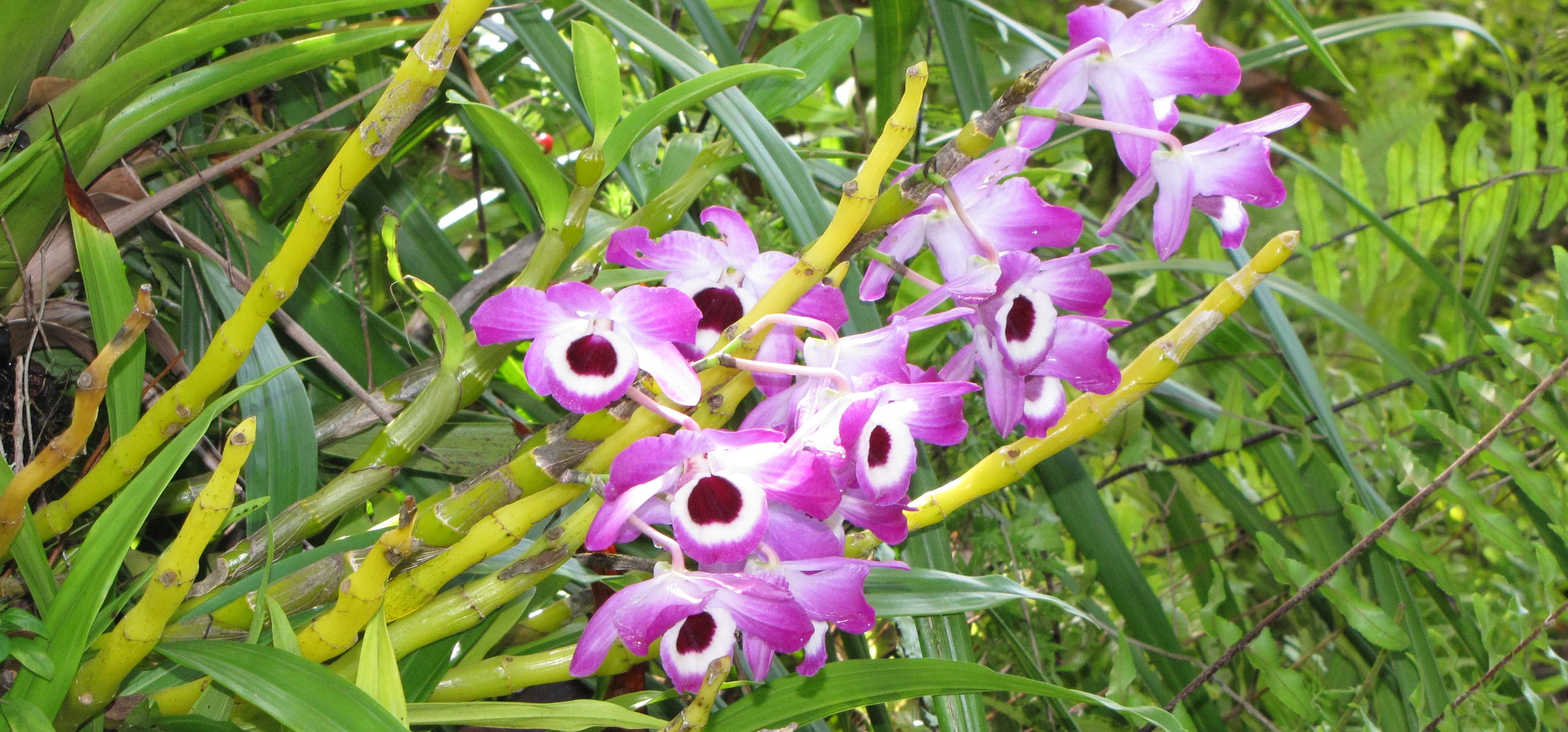
Noble Dendrobium
Dendrobium nobile
Family · Orchidaceae
Dendrobium nobile only buds reliably after a cool, dry autumn rest near 10-13°C with no water or fertiliser. Skip it and canes grow keikis instead of flowers.
Dendrobium nobile
Plant profile
- WateringModerateWater every 7 days
- Light exposurePartial sun
- Ideal temperature5–25 °C
- Humidity50–70 %
Growth
- Family
- Orchidaceae
- Life cycle
- Perennial
- Growth speed
- 3/10
- Mature size
- 10–50 cm
- Spread
- 10–50 cm
- Propagation
- Division
- Offsets
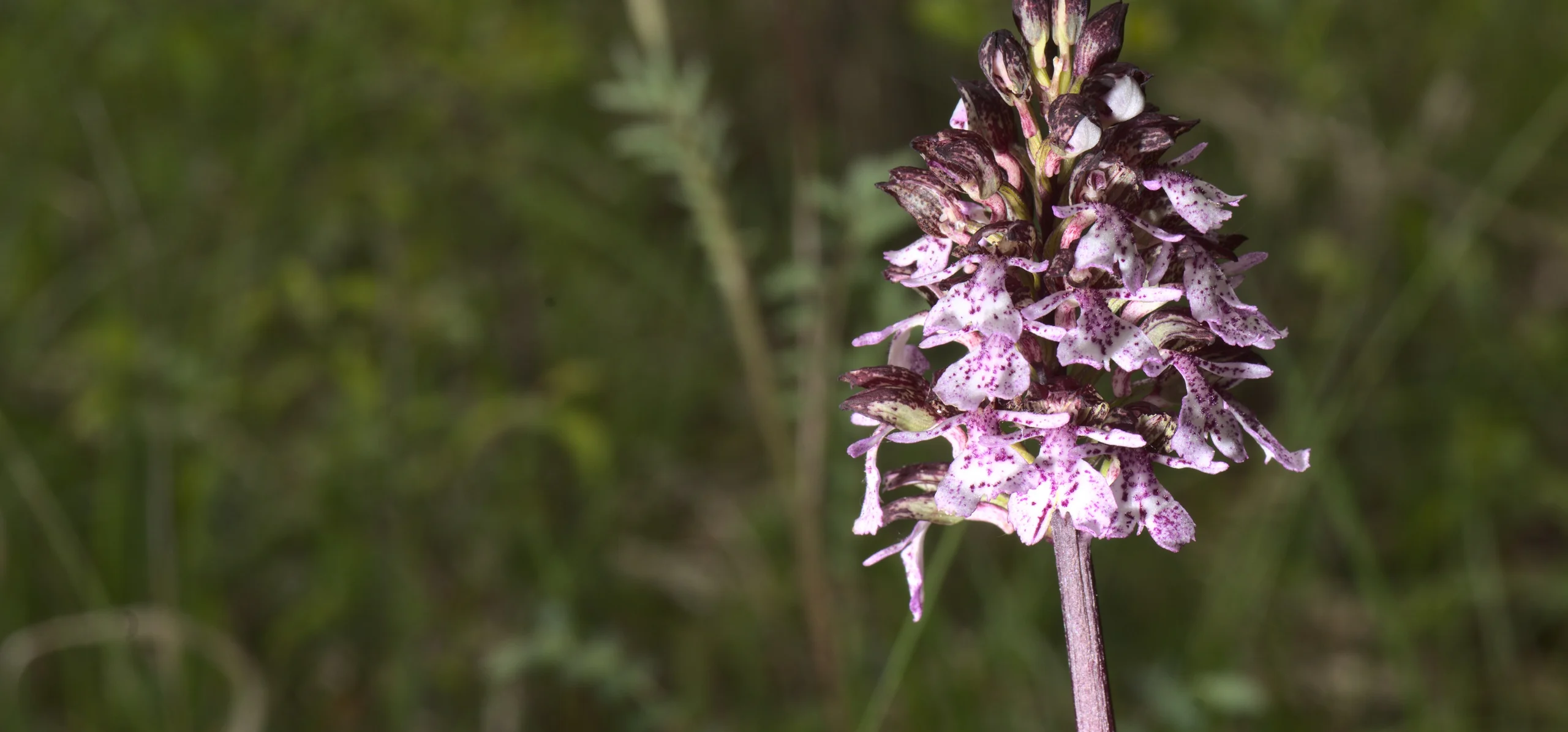
FloweringMagenta-and-white flowers along leafy and bare canes alike, typically winter to spring after the cool rest
DormancyCool, dry rest for 6 to 8 weeks in autumn/winter, nights near 10-13°C with no water or fertiliser, needed to trigger flower buds instead of keikis
Time to maturity2 to 5 years to flowering size (RHS)
Soil & climate
- Soil types
- Coarse, bark-based epiphytic orchid compost (RHS)
- Drought tolerance
- Yes
Light & Placement
- Where to place it
- Bright, unshaded east or south window
- Cool greenhouse or conservatory shelf
- Sheltered, humid spot in summer in frost-free or tropical climates only
- Small, snug pot or basket with coarse bark mix; avoid sizing up while it still drains well
OriginNepal to South China and Indo-China (POWO); RHS lists it broadly as native to S & SE Asia
Safety
- Toxicity
- Not specifically listed by the ASPCA; keep away from pets as a precaution
- Pet safe
- No
Data fromDendrobium nobile Lindl., GBIF Backbone Dendrobium nobile Lindl. | Plants of theDendrobium nobile | noble dendrobium, RHHow to grow Dendrobium, RHS Growing Guid
Where it grows
World distribution
Noble Dendrobium is native to 9 countries: Bangladesh, Bhutan, China, India, Laos, Myanmar (Burma), Nepal, and Thailand….GBIF records 833 documented identifications across 31 countries, with the largest concentrations in China, Brazil, and India.
- Bangladesh
- Bhutan
- China
- India
- Laos
- Myanmar (Burma)
- Nepal
- Thailand
- Vietnam
Yellow to orange dots: concentration of documented identifications per country. Green countries: sourced native range. Source: GBIFNative range from POWO (Kew).
A Dendrobium nobile that keeps producing small plantlets along its canes instead of the trademark magenta-and-white flowers has almost always spent the previous autumn somewhere too warm. This orchid needs a genuine cool, dry rest, nights near 10-13°C with no water and no fertiliser, to switch its dormant nodes into flower buds rather than keikis. Everything else about the plant follows from its structure: thick, cane-like pseudobulbs that thicken through summer, carry leaves for two or three years, then keep flowering along their bare length for years after the leaves drop. Skip the rest and you get a leggy plant covered in baby plantlets; give it the cold and the same canes bloom again and again.
The cool, dry rest that decides between flowers and keikis
From around October or November, once a cane has finished its growth for the season and stopped producing new leaves, move the plant somewhere unheated and bright, a cool greenhouse, an enclosed porch or a cold windowsill, where night temperatures fall to roughly 10-13°C. Cut watering back to almost nothing for six to eight weeks and stop feeding entirely; the RHS recommends withdrawing fertiliser through this dormancy so the plant is not pushed to keep growing. This single detail separates a nobile-type Dendrobium that flowers reliably from one that only ever produces keikis: a rest that runs too warm, stays too wet, or is fed with nitrogen turns the dormant nodes into small plantlets instead of flower buds. Once buds are visible along the upper part of the canes, usually by midwinter, move the plant back to warmth and resume watering.
Temperature and light for the rest of the year
Outside the rest, Dendrobium nobile wants a real difference between day and night rather than a flat houseplant temperature: RHS growing notes put the comfortable range at around 18-25°C by day and above 10°C at night through spring and summer. Light needs to be bright, closer to an unshaded east or south window than the low light most houseplants tolerate, and the RHS is specific that winter light should be maximised, since weak winter light on top of a poor cool rest is a second common reason plants fail to flower. A cool greenhouse or conservatory suits it better than a dim living-room shelf, which is also why the RHS rates it H1C, needing protection under glass through a temperate winter rather than living outdoors year round.


Watering and feeding while a cane is growing
Once new growth resumes in spring, water as the bark mix approaches dryness rather than on a fixed schedule, which in a warm summer can mean two or three times a week and drops to roughly once every ten to twelve days as the weather cools. Feed with a dilute orchid fertiliser every second or third watering while a cane is actively lengthening, then switch to a high-potassium feed in late summer to help that season's canes ripen and set up flowering, tapering off completely as the rest approaches. A cane fed hard with a high-nitrogen fertiliser right through autumn is exactly the kind of cane that produces keikis the following spring instead of flowers.
Bark mix, pot size, and repotting after flowering
Being an epiphyte, Dendrobium nobile needs an open, fast-draining medium, coarse bark-based orchid compost rather than potting soil, in a pot or basket that lets air reach the roots between waterings. The RHS notes that nobile-type Dendrobium actually flower best slightly pot-bound, so size up only once the bark has broken down and stopped draining freely, not simply because roots have filled the pot. Repot every two to three years, timed for just after flowering finishes in spring while new root growth is starting, which gives roots the best chance to establish in fresh bark before the next growing season.
Never cut back an old, leafless cane
A cane that has dropped all its leaves looks finished, but it is not: Dendrobium nobile flowers from nodes along canes of any age, including bare two- or three-year-old canes, so cutting one back to tidy the plant removes future flowers along with the leaves. The RHS is direct on this point, advising against cutting the long canes unless they have actually shrivelled and turned pale brown, the sign a cane has died rather than simply gone dormant between leaf sets. A healthy plant with canes at different ages, some leafy and still growing, some bare and flowering, is normal and is what produces the heaviest bloom each winter.
Propagating from keikis
The same dormant nodes that turn into flower buds after a proper cool rest turn into keikis, small plantlets with their own tiny leaves and aerial roots, when that rest is skipped or interrupted, and growers use this to their advantage for propagation rather than treating every keiki as a failure. Once a keiki has grown several roots at least a few centimetres long and two or three leaves, roughly a third the size of the parent cane, it can be cut away with a clean blade just below its base and potted into a small pot of fine bark mix. A young keiki is more forgiving of humidity swings than of drying out completely, so misting and light watering while its own roots establish gets it through the first few months faster than treating it like a mature, dormancy-tolerant orchid.
Mealybugs in the leaf axils
Mealybugs are the pest most likely to appear on Dendrobium nobile, tucked into the tight junction where a leaf meets the cane or hidden under the papery bracts wrapping new growth, where their white waxy coating is easy to miss until a colony is established. They feed on sap and leave sticky honeydew that can attract sooty mould on lower leaves, and a heavy infestation weakens a cane enough to affect the following season's flowering. Dabbing visible clusters with a cotton swab dipped in rubbing alcohol, repeated every few days until none remain, controls a light infestation on a plant that is usually kept close to living spaces where a systemic spray is less appealing.
Toxicity to pets
The ASPCA does not carry a specific entry for Dendrobium nobile among its toxic or non-toxic plant listings. Rather than assume it shares the non-toxic status recorded for a few other Dendrobium species, the safer approach with an unlisted orchid is to keep it out of reach of cats and dogs that chew on leaves, the same precaution worth taking with any houseplant that has not been individually assessed.
Test your plant knowledge
Tap a card to flip it and reveal the answer.
Dendrobium nobile needs a genuinely cool, dry rest with no fertiliser in autumn to flower reliably. Tap to reveal ✓ True
Cutting off an old, leafless cane helps the plant put its energy into new growth and more flowers. Tap to reveal ✕ False
Feeding heavily with a high-nitrogen fertiliser through autumn helps the plant set flower buds. Tap to reveal ✕ False
Nobile-type Dendrobium orchids generally flower better when their roots are slightly pot-bound. Tap to reveal ✓ True
The ASPCA specifically lists Dendrobium nobile as non-toxic to cats and dogs. Tap to reveal ✕ False
Sources
References consulted for this guide
- Dendrobium nobile Lindl., GBIF Backbone Taxonomygbif.org
- Dendrobium nobile Lindl. | Plants of the World Online, Kew Sciencepowo.science.kew.org
- Dendrobium nobile | noble dendrobium, RHS Plantsrhs.org.uk
- How to grow Dendrobium, RHS Growing Guiderhs.org.uk
- Reference entity : Wikipédiaen.wikipedia.org