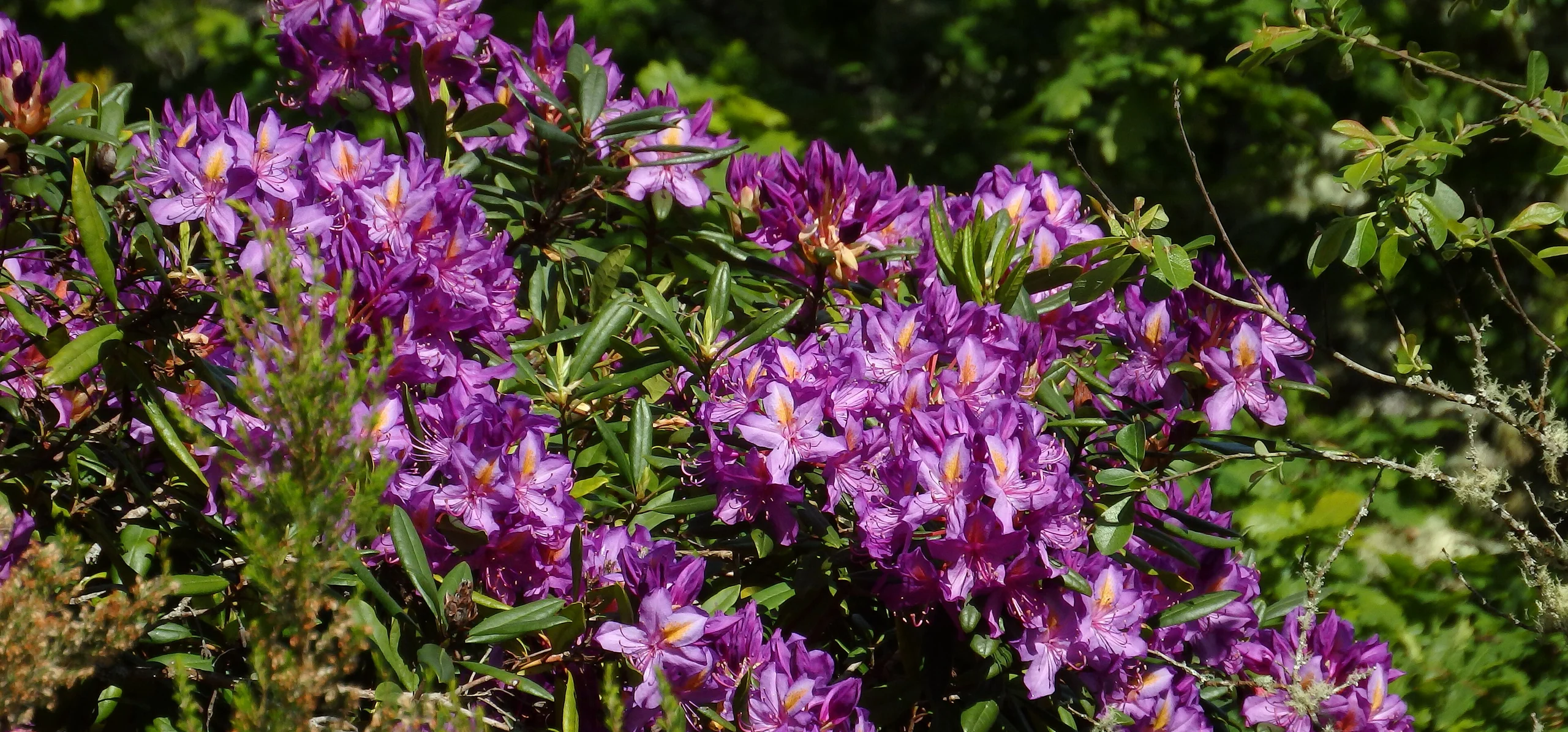
Pontic Rhododendron
Rhododendron ponticum
Family · Ericaceae
Rhododendron ponticum is hardy to -20C and flowers purple in spring, but UK law bans planting it in the wild. What that means for a garden specimen.
Rhododendron ponticum
Plant profile
- WateringModerateWater every 7 days
- Light exposureIndirect light
- Hardiness zoneUSDA 6–9
Growth
- Family
- Ericaceae
- Life cycle
- Perennial
- Growth speed
- 6/10
- Mature size
- 250–400 cm
- Spread
- 250–400 cm
- Flowering
- Purple, in spring (RHS)
- Propagation
- Cutting
- Layering
- Seed
Dormancyevergreen, no true winter dormancy
Time to maturityfull size in 10-20 years
Soil & climate
- Soil pH
- pH 4.5–6
- Soil types
- clay, loam, sand
- Saline soil
- Not tolerated
- Drought tolerance
- No
Light & Placement
- Where to place it
- woodland garden bed
- shaded boundary
- acid-soil shrub border
- large glazed ceramic pot
- wooden half-barrel
OriginIberian Peninsula (subsp. baeticum) and SE Bulgaria to the Caucasus and Lebanon (subsp. ponticum), per POWO
Safety
- Toxicity
- CatsToxic
- DogsToxic
- HorsesToxic
- HumansToxic
Invasive speciesListed on Schedule 9 of the UK Wildlife and Countryside Act 1981; planting or causing it to grow in the wild in Great Britain is an offence, and it is a major host of the plant pathogen Phytophthora ramorum
Data fromGBIF Backbone Taxonomy: Rhododendron ponPlants of the World Online (Kew): RhododRHS: Rhododendron ponticum (Pontic rhodoASPCA: Toxic and Non-toxic Plants, Rhodo
Where it grows
World distribution
Pontic Rhododendron is native to 7 countries: Bulgaria, Georgia, Lebanon, Portugal, Russia, Spain, and Türkiye.GBIF records 130,099 documented identifications across 49 countries, with the largest concentrations in United Kingdom, Belgium, and Netherlands.
- Bulgaria
- Georgia
- Lebanon
- Portugal
- Russia
- Spain
- Türkiye
Yellow to orange dots: concentration of documented identifications per country. Green countries: sourced native range. Source: GBIFNative range from POWO (Kew).
Rhododendron ponticum is the evergreen shrub behind the dense purple thickets that smother woodland understorey across western Britain and Ireland, not a plant most gardeners set out to buy today. If you have inherited an established specimen with a house, or a sucker has appeared from a neighbouring hedge, keeping the plant alive is the easy part: RHS growing notes rate it hardy to H6, surviving -20 to -15C, and tolerant of full sun, partial shade or full shade alike. What takes more thought is where you let it spread and what you do with the prunings, because in Great Britain it is an offence under Schedule 9 of the Wildlife and Countryside Act 1981 to plant it, or cause it to grow, in the wild. The flowers open purple in spring, in dense trusses, on a shrub that reaches 2.5 to 4 metres tall and wide in a garden over ten to twenty years, though wild plants can grow considerably larger.
Origin: Two Native Ranges, One Invasive History
Plants of the World Online (Kew) records Rhododendron ponticum as native to two disjunct regions rather than one continuous range. Subspecies baeticum grows wild in central and southern Portugal through to south-west Spain; subspecies ponticum is native from south-east Bulgaria across the Caucasus to Lebanon. GBIF's backbone taxonomy accepts the name Rhododendron ponticum L. without qualification, in family Ericaceae, order Ericales, alongside a long list of synonyms picked up over nearly three centuries of description, none of which is the currently accepted name. Brought into British gardens well before anyone understood its long-term behaviour, it was also widely used as a vigorous rootstock for grafting more tender, colourful hybrid rhododendrons: when a graft failed or simply lost vigour over the decades, the rootstock itself grew back and flowered, which is why plain-purple ponticum sometimes appears where a named hybrid was originally planted.
Recognizing the Species Among Garden Hybrids
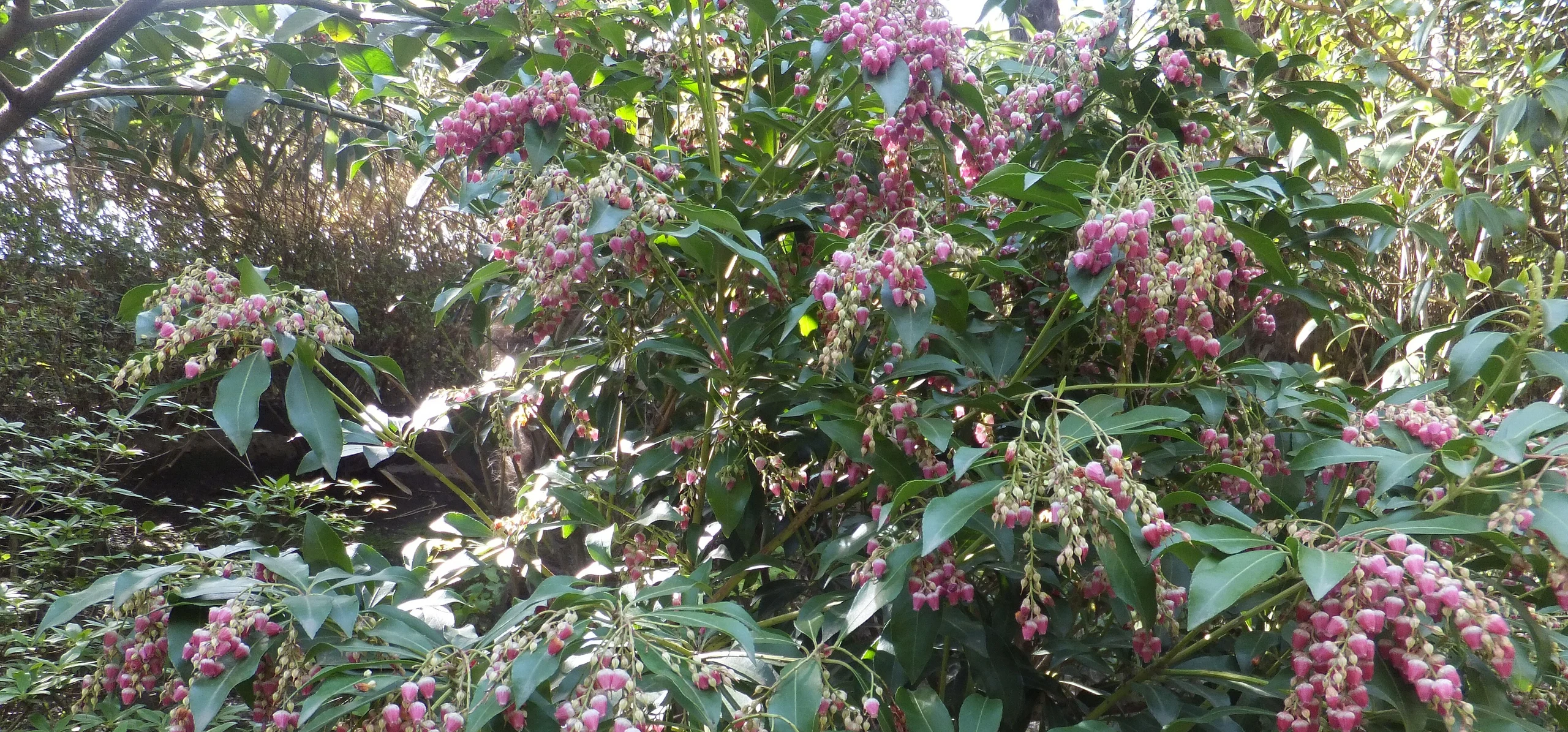
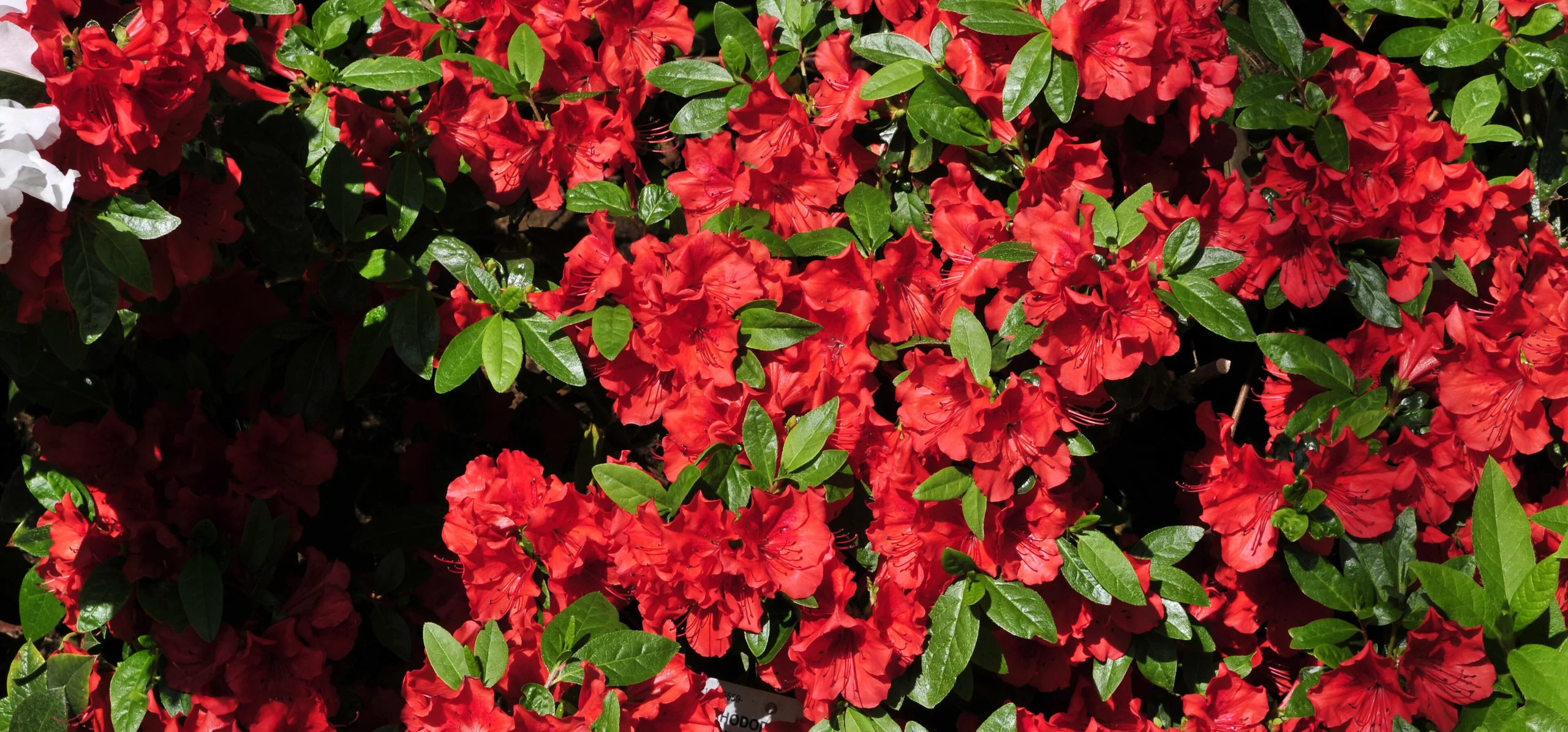
Plain Rhododendron ponticum has dark green, glossy, elliptical leaves and funnel-shaped purple flowers with faint greenish-yellow speckling inside the throat, carried in trusses of roughly ten to fifteen blooms; there is no white, pink or scarlet form of the true species, so a shrub in any other colour is a hybrid or a different rhododendron. It suckers freely from the base and self-seeds into surrounding ground, forming a dense, even-aged thicket rather than the single specimen shape most garden hybrids keep. If a shrub bought as a named hybrid starts throwing up plain-purple growth from low on the stem or from the roots a few years after planting, that is very likely ponticum rootstock reasserting itself, and it should be cut out before it flowers and seeds.


Site, Soil and Light
RHS cultivation notes list Rhododendron ponticum as needing acid soil, moist but well-drained, in clay, loam or sand; like other rhododendrons it struggles on chalk or limestone ground where the pH runs alkaline, and yellowing new growth on an otherwise healthy plant is usually a sign the soil is too limey rather than a nutrient problem to fix with feed. It tolerates full sun, partial shade or full shade, and copes with exposed or sheltered positions alike, which is part of why it naturalises so readily in British woodland: unlike most understorey plants it does not need a gap in the canopy to establish. In a container, use ericaceous compost formulated for acid-loving plants and avoid animal manures, mushroom compost and bonemeal, none of which suit rhododendrons and can scorch the roots if over-applied.
The Legal Reality: Schedule 9 and Containment
Because Rhododendron ponticum out-competes native ground flora, acidifies the soil beneath it and hosts the plant pathogen Phytophthora ramorum, it is listed on Schedule 9 of the Wildlife and Countryside Act 1981. The RHS is explicit that this makes it an offence to plant it, or cause it to grow, in the wild in Great Britain; an established garden specimen is not itself illegal, but letting seed or suckers spread beyond the garden boundary can be. The RHS's practical advice for anyone who does grow it is to manage it carefully and to dispose of prunings, flowerheads and root material through green waste collection or by burning where permitted, never by dumping over a garden fence into a hedge, verge or woodland edge, which is exactly how it has colonised so much of western Britain.
Pruning to Keep It in Bounds
Rhododendron ponticum is rough-barked, unlike many smooth-barked garden hybrids, and regenerates readily from old wood, so a neglected or oversized plant can be cut back hard without killing it. The best time is immediately after flowering in late spring or early summer, before next year's flower buds start forming further down the stem; pruning in autumn or winter removes wood that would otherwise have carried next year's blooms. Deadheading spent flower trusses by snapping them off just above the new growth buds redirects energy into shoots rather than seed production, which matters more with this species than most, since a single mature shrub can set an enormous number of wind-dispersed seeds in a season.
Propagation, and Why to Think Twice
Rhododendron ponticum roots easily from semi-hardwood cuttings taken in late summer once the season's growth has begun to harden, and it also layers naturally where a low branch touches damp soil, which is part of how a single shrub becomes a thicket over a decade or two without any human help. Seed germinates freely on bare, disturbed ground, especially the acidic leaf litter under conifers or oaks. Because of how easily all three routes work, deliberately propagating this species for planting outside an existing garden bed is the one piece of general rhododendron advice that does not apply here; if more purple ponticum is genuinely wanted, division of an already-established clump within the same garden is safer than raising new plants from seed or cuttings that could end up further afield.
Phytophthora, Leafhopper and Bud Blast
Rhododendron ponticum is one of the plants most strongly associated with outbreaks of Phytophthora ramorum in UK gardens and woodland, the pathogen behind the disease known in Europe as ramorum dieback; the RHS records necrotic leaf lesions, wilting and shoot dieback on infected plants, and infected ponticum has acted as a source of spores that then spread to oaks and other trees nearby. A shrub with blackened, wilting shoot tips or spreading brown leaf lesions should be reported and not simply composted at home. Rhododendron leafhopper does little direct feeding damage itself, but the RHS notes it is suspected of helping spread the fungus that causes bud blast, in which flower buds turn brown, dry out and fail to open the following spring instead of blooming.
Toxicity and Common Mistakes
The ASPCA lists Rhododendron (genus-wide, so including ponticum) as toxic to dogs, cats and horses, with grayanotoxin as the toxic principle; clinical signs include vomiting, diarrhoea, drooling, weakness and, in serious cases, coma, and the ASPCA notes that eating even a few leaves can cause real problems. The RHS separately marks the whole plant harmful if eaten and advises gloves when handling it. The most common mistakes with this species are treating a suckering rootstock as a disease rather than cutting it out, pruning in autumn and losing the next year's flowers, planting it on chalky soil where it will yellow and struggle regardless of feeding, and disposing of prunings or deadheads over a fence into a hedge or wood margin instead of through green waste, which is how most new wild colonies start in the first place.
Test your plant knowledge
Tap a card to flip it and reveal the answer.
It is an offence to plant Rhododendron ponticum in the wild in Great Britain. Tap to reveal ✓ True
Rhododendron ponticum should be pruned in autumn or winter for the best flowering the following year. Tap to reveal ✕ False
This species tolerates alkaline, chalky soil as well as acid soil. Tap to reveal ✕ False
The ASPCA lists Rhododendron as toxic to dogs, cats and horses. Tap to reveal ✓ True
Rhododendron ponticum was historically used as a rootstock for grafting hybrid rhododendrons. Tap to reveal ✓ True
Sources
References consulted for this guide
- GBIF Backbone Taxonomy: Rhododendron ponticum L.gbif.org
- Plants of the World Online (Kew): Rhododendron ponticum subsp. ponticumpowo.science.kew.org
- Plants of the World Online (Kew): Rhododendron ponticum subsp. baeticumpowo.science.kew.org
- RHS: Rhododendron ponticum (Pontic rhododendron)rhs.org.uk
- ASPCA: Toxic and Non-toxic Plants, Rhododendronaspca.org
- Reference entity : Wikipédiaen.wikipedia.org