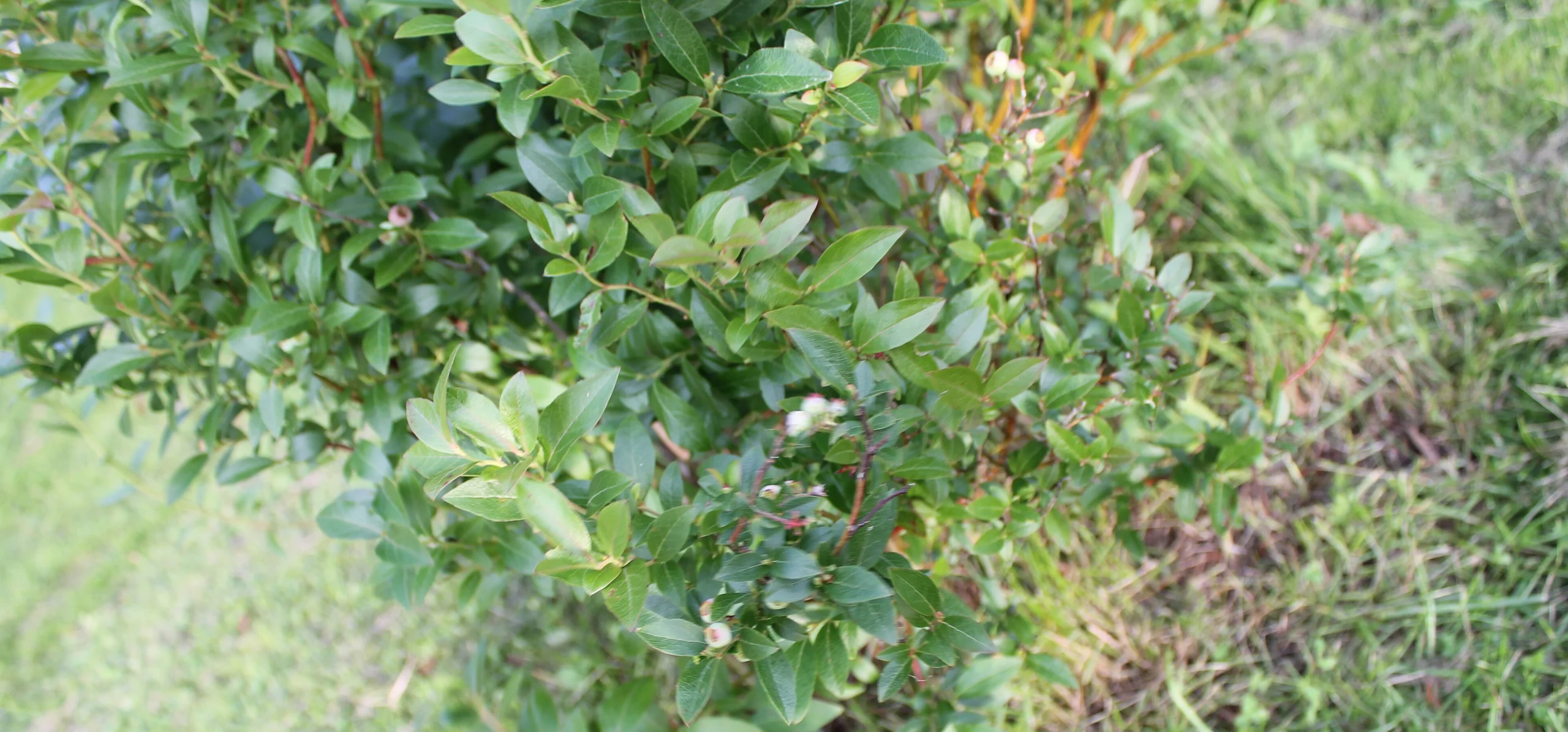
Highbush Blueberry
Vaccinium corymbosum
Family · Ericaceae
Highbush blueberry needs acid soil (pH 4.5-5.5), a second variety for pollination, rainwater in pots, pine bark mulch, and pruning that waits until year three.
Vaccinium corymbosum
Plant profile
- WateringHighWater every 5 days
- Light exposurePartial sun
- Ideal temperature-40–-7 °C
- Hardiness zoneUSDA 3–8
Growth
- Family
- Ericaceae
- Life cycle
- Perennial
- Growth speed
- 4/10
- Mature size
- 183–366 cm
- Spread
- 183–305 cm
- Flowering
- Small white to pale pink bell flowers in spring, fruit ripening through summer
- Propagation
- Cutting
Dormancydeciduous, dormant in winter
Time to maturityfull cropping by year 5-6
Soil & climate
- Soil pH
- pH 4.5–5.5
- Soil types
- sand, loam, peat
- Saline soil
- Not tolerated
- Drought tolerance
- No
Light & Placement
- Origin
- Native to eastern USA and Canada (POWO)
- Where to place it
- sunny fruit garden bed with acid soil
- raised mound in heavier or poorly drained ground
- large pot, at least 30 cm across, with peat-free ericaceous compost and sharp sand
Safety
- Toxicity
- HumansSafe
Data fromVaccinium corymbosum L., GBIF Backbone TVaccinium corymbosum L., Plants of the WRHS: How to grow blueberriesUniversity of Maryland Extension: GrowinNC State Extension Gardener Plant Toolbo
Where it grows
World distribution
Highbush Blueberry is native to 2 countries: Canada and United States.GBIF records 37,045 documented identifications across 48 countries, with the largest concentrations in United States, Netherlands, and Canada.
- Canada
- United States
Yellow to orange dots: concentration of documented identifications per country. Green countries: sourced native range. Source: GBIFNative range from POWO (Kew).
Vaccinium corymbosum will not thrive in ordinary garden soil no matter how well it is watered or fed: the whole plant, from its shallow fibrous roots to the soil fungi it depends on, is built around a narrow acid pH band that most garden loam does not offer. A single bush is self-fertile and will still fruit, but pairing it with a second variety produces more and larger berries, so the choice of a companion plant matters almost as much as the planting hole. A newly bought highbush blueberry needs its permanent bed or container decided within the first season, since correcting soil chemistry around an already-established bush is far harder than preparing it beforehand. Get the acid soil and the second variety right early, and the rest, pruning, mulching, netting, is mostly maintenance.
Acid Soil Is Non-Negotiable
Highbush blueberry belongs to the heath family, Ericaceae, and like the rest of that family it needs a soil pH of about 4.5 to 5.5 to take up iron and other nutrients properly, according to the University of Maryland Extension. Below that range, aluminum and manganese become toxic to the roots; above it, roughly pH 6 and up, those same nutrients lock into forms the roots cannot reach at all. Where garden soil runs neutral or alkaline, work powdered or elemental sulfur into the bed, ideally around six months before planting so the pH has time to shift; avoid aluminum sulfate, since blueberries are sensitive to excess aluminum, and never let lime, mushroom compost or wood ash anywhere near the root zone. In heavy or poorly drained ground, plant on a raised mound rather than fighting a wrong pH and wet feet at the same time.
Two Varieties, Bigger Berries
Blueberries are self-fertile, but the University of Maryland Extension is clear that two or more cultivars planted together produce more and larger fruit than a single bush alone, since cross-pollination sets a heavier crop. 'Bluecrop' is the standard mid-season northern highbush variety most nurseries stock, reliable and heavy-cropping once established. 'Duke' flowers and ripens early on an upright bush that stays easy to net and keep tidy. 'Patriot' is also early and notably cold-hardy, and tolerates heavier, wetter soil better than most highbush types, which makes it a useful second bush where drainage is imperfect. Planting any two of these together, rather than three of the same variety, is what actually moves the needle on yield.
Planting in the Ground or in Pots
In the ground, dig a wide planting hole backfilled with the sulfur-amended, acid soil described above, and space bushes roughly 1.2 to 1.5 m apart so mature canopies do not crowd each other once they reach their eventual 1.8 to 3.7 m height and near-equal spread. In a container, use a peat-free ericaceous compost mixed with an equal volume of sharp sand or grit, in a pot at least 30 cm across to start; ordinary multipurpose compost is close to neutral and will undo the acid soil the roots need within a season. Bare-root or potted nursery plants can go in from autumn through early spring while dormant.


Watering, Feeding and Mulching With Pine Bark
Tap water is usually alkaline, especially in hard-water areas, and repeated watering with it slowly raises the pH of container compost even when the potting mix started right; rainwater collected in a butt is the safer default for any potted blueberry. In the ground, keep the shallow root zone consistently moist rather than letting it swing between soaked and dry, since blueberry roots are fine and fibrous and dislike both extremes. Mulch every spring with a 5 to 7 cm layer of pine bark, aged sawdust or pine needles, all recommended by the University of Maryland Extension, since they suppress weeds, hold moisture and slowly help sustain the acidity the roots need. Feed with an ericaceous fertilizer rather than a general-purpose one, which typically contains lime buffers that work against the plant.
Chill Hours and Winter Dormancy
Northern highbush cultivars, including 'Duke', need a substantial period of winter cold, roughly 800 to 1,000 hours below about 7 C, to break dormancy properly and flower on schedule the following spring; university extension guides list this range for the group. Too little winter chill leads to patchy, delayed flowering and an uneven crop, which is why northern highbush varieties bred for this dormancy requirement underperform in mild-winter climates, while southern highbush types bred for a lower chill requirement exist specifically to fill that gap. Gardeners within the species' USDA zones 3a to 8b generally get enough winter cold without needing to think about it further.
Pruning From the Third Year
Leave a young bush unpruned for its first two years and start only in year three, cutting while the plant is still dormant in late February or March, when the fat, rounded fruit buds are easy to tell apart from the narrower leaf buds, per RHS guidance. Begin by removing any dead, diseased or crossing wood, then cut out around a quarter of the oldest, least productive branches, thick and pale grey rather than the reddish brown of younger, two- to three-year-old wood that carries the most fruit buds. Skipping this thinning does not stop a bush from fruiting, but it does let the centre fill with unproductive old wood at the expense of the young canes that actually crop well.
Birds, Yellow Leaves and Autumn Colour
Once berries start to colour, netting is close to essential, since birds strip a ripening bush fast; raise reused or plastic-free netting above the canopy on canes or posts and peg it taut to the ground so nothing gets trapped underneath, following RHS advice. If leaves turn pale green to yellow while the veins stay green, the soil has drifted too alkaline, typically above pH 6, and the fix is more sulfur and a switch to rainwater rather than more fertilizer, since the plant is not short of nutrients so much as unable to absorb the iron that is already there. In autumn, healthy foliage turns red and purplish before it drops, a display that is part of the plant's appeal even outside fruiting season. Vaccinium corymbosum does not appear on the ASPCA's toxic or non-toxic plant lists, so its status for cats, dogs and horses is officially undetermined rather than confirmed safe; the ripe berries themselves are, of course, a widely eaten food crop for people.
Test your plant knowledge
Tap a card to flip it and reveal the answer.
Highbush blueberry needs a soil pH of roughly 4.5 to 5.5 to take up nutrients properly. Tap to reveal ✓ True
A single blueberry bush gains nothing from having a second variety planted nearby. Tap to reveal ✕ False
Tap water is generally a safer choice than rainwater for watering a potted blueberry. Tap to reveal ✕ False
Blueberry bushes should be left unpruned until their third year. Tap to reveal ✓ True
Vaccinium corymbosum appears on the ASPCA's toxic or non-toxic plant lists. Tap to reveal ✕ False
Sources
References consulted for this guide
- Vaccinium corymbosum L., GBIF Backbone Taxonomygbif.org
- Vaccinium corymbosum L., Plants of the World Online (Kew)powo.science.kew.org
- RHS: How to grow blueberriesrhs.org.uk
- University of Maryland Extension: Growing Blueberries in a Home Gardenextension.umd.edu
- NC State Extension Gardener Plant Toolbox: Vaccinium corymbosumplants.ces.ncsu.edu
- Reference entity : Wikipédiaen.wikipedia.org