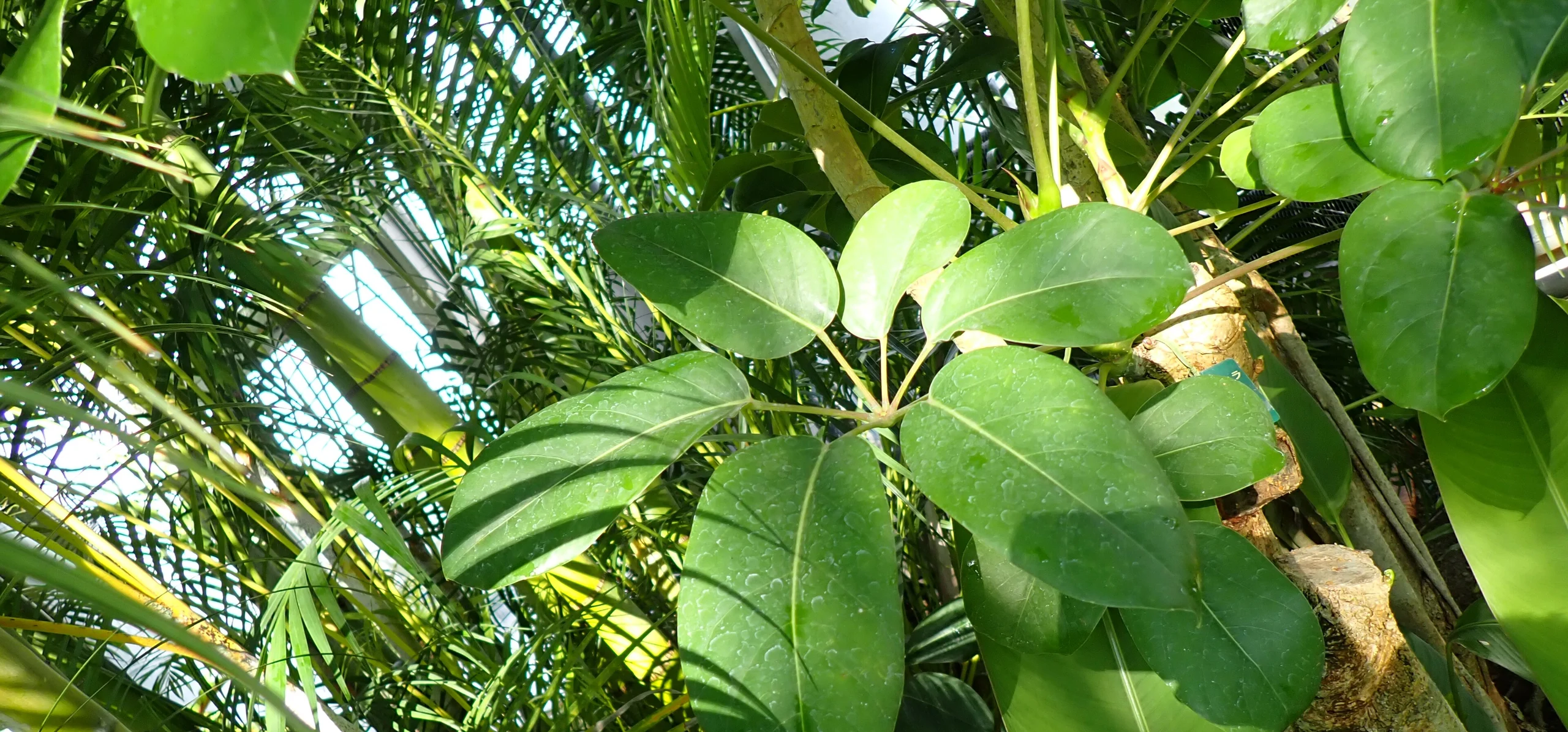
Umbrella Tree
Heptapleurum actinophyllum
Family · Araliaceae
Schefflera actinophylla, now Heptapleurum actinophyllum: light, watering and pruning, plus why it is invasive in garden beds in Florida and Hawaii.
Heptapleurum actinophyllum
Plant profile
- WateringModerateWater every 9 days
- Light exposurePartial sun
- Ideal temperature10–32 °C
- Hardiness zoneUSDA 10–12
Growth
- Family
- Araliaceae
- Life cycle
- Perennial
- Growth speed
- 7/10
- Mature size
- 250–400 cm
- Spread
- 150–250 cm
- Flowering
- Red flower spikes on mature outdoor trees; rarely flowers indoors
- Propagation
- Seed
- Cutting
- Layering
DormancyNo true dormancy; growth slows in cool, low-light winters
Time to maturityReaches full size in about 10 to 20 years (RHS)
Soil & climate
- Soil pH
- pH 5.5–7.5
- Drought tolerance
- No
Soil typesLoam, clay or sandy soil with good drainage, Peat-free potting mix loosened with perlite or bark for containers
Light & Placement
- Origin
- S. New Guinea to N. Australia (POWO)
- Where to place it
- A step back from an unshaded south- or west-facing window
- Bright room out of direct midday sun
- Sheltered patio in full sun to partial shade (RHS); container only in frost-free climates
- Sturdy container with drainage holes, sized up gradually as roots fill it
Safety
- Toxicity
- CatsToxic
- DogsToxic
- HumansToxic
Invasive speciesInvasive in Florida and Hawaii; keep in a container
Data fromHeptapleurum actinophyllum (Endl.) LowryHeptapleurum actinophyllum, RHS PlantsUmbrella Tree, Toxic and Non-Toxic PlantHeptapleurum actinophyllum, NC State ExtSchefflera actinophylla: Schefflera, UF/
Where it grows
World distribution
Umbrella Tree is native to 2 countries: Australia and Papua New Guinea.GBIF records 8,707 documented identifications across 86 countries, with the largest concentrations in United States, Australia, and Spain.
- Australia
- Papua New Guinea
Yellow to orange dots: concentration of documented identifications per country. Green countries: sourced native range. Source: GBIFNative range from POWO (Kew).
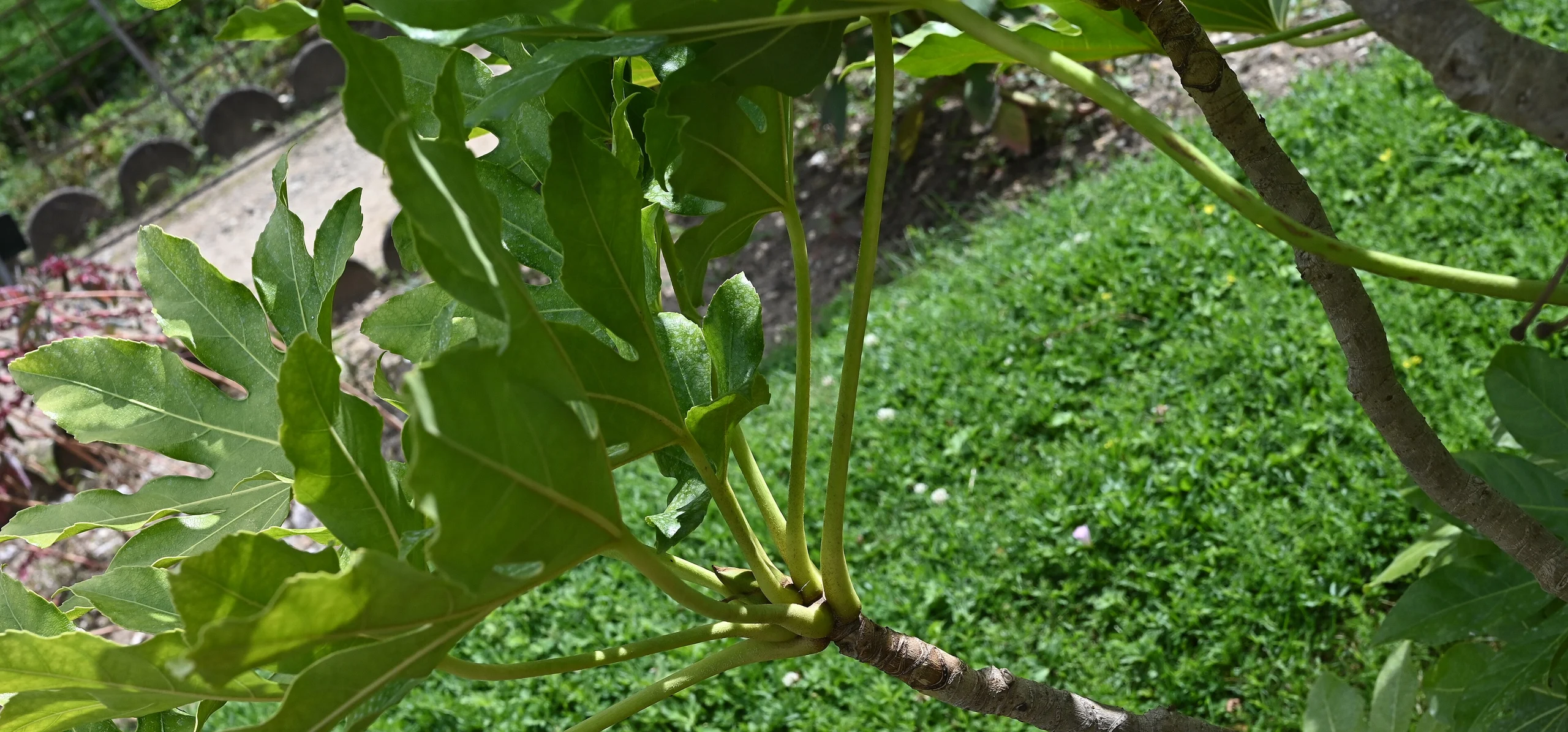
The plant sold as Schefflera actinophylla, with its glossy leaflets fanning out from a central point like the ribs of an umbrella, was reclassified in 2020 and its accepted botanical name is now Heptapleurum actinophyllum. That change has not touched how it is grown indoors: it still wants bright, indirect light, water only once the topsoil has dried, and warmth year round. What has changed is where you can plant it outdoors, because in the southern United States and Hawaii this fast grower has escaped gardens and taken over wet forest, and most extension services now advise against putting it in the ground there at all. The rest of this guide covers the name change, the light and water it actually needs, and where it has become a problem plant rather than a houseplant.
Why it is now Heptapleurum actinophyllum, not Schefflera actinophylla
GBIF's Backbone Taxonomy, the reference this guide checks its classification against, lists Heptapleurum actinophyllum (Endl.) Lowry & G.M.Plunkett as the accepted name for the species long sold as Schefflera actinophylla. The move followed molecular work by Lowry and Plunkett that found the tropical Asian and Pacific members of Schefflera, including this one, formed a separate lineage closer to the older genus Heptapleurum than to the true American and African scheffleras. GBIF records Schefflera actinophylla (Endl.) Harms, Brassaia actinophylla Endl., Brassaia singaporensis Ridl. and Aralia longipes W.Bull as synonyms of the same plant. Nurseries, plant tags and most growers still call it schefflera, umbrella tree or octopus tree, and that is still the name worth searching for; use Heptapleurum actinophyllum when you want the current scientific record.
Native range: rainforest margins from New Guinea to northern Australia
Plants of the World Online lists the native range as southern New Guinea to northern Australia, where the species grows along the edges of rainforest and gallery forest on the Queensland coast and in the Northern Territory. In the wild it often starts life as an epiphyte, germinating in the fork of a host tree and sending roots down to the soil before it takes on its familiar tree form, a habit that explains why it tolerates the low, filtered light of a rainforest understory as a young plant. Left to grow in the ground in a warm climate it is a genuine tree: the University of Florida's IFAS Extension lists mature landscape specimens at 30 to 40 feet tall with a broad, multi-trunked canopy, a size no pot will ever produce.
Light and placement
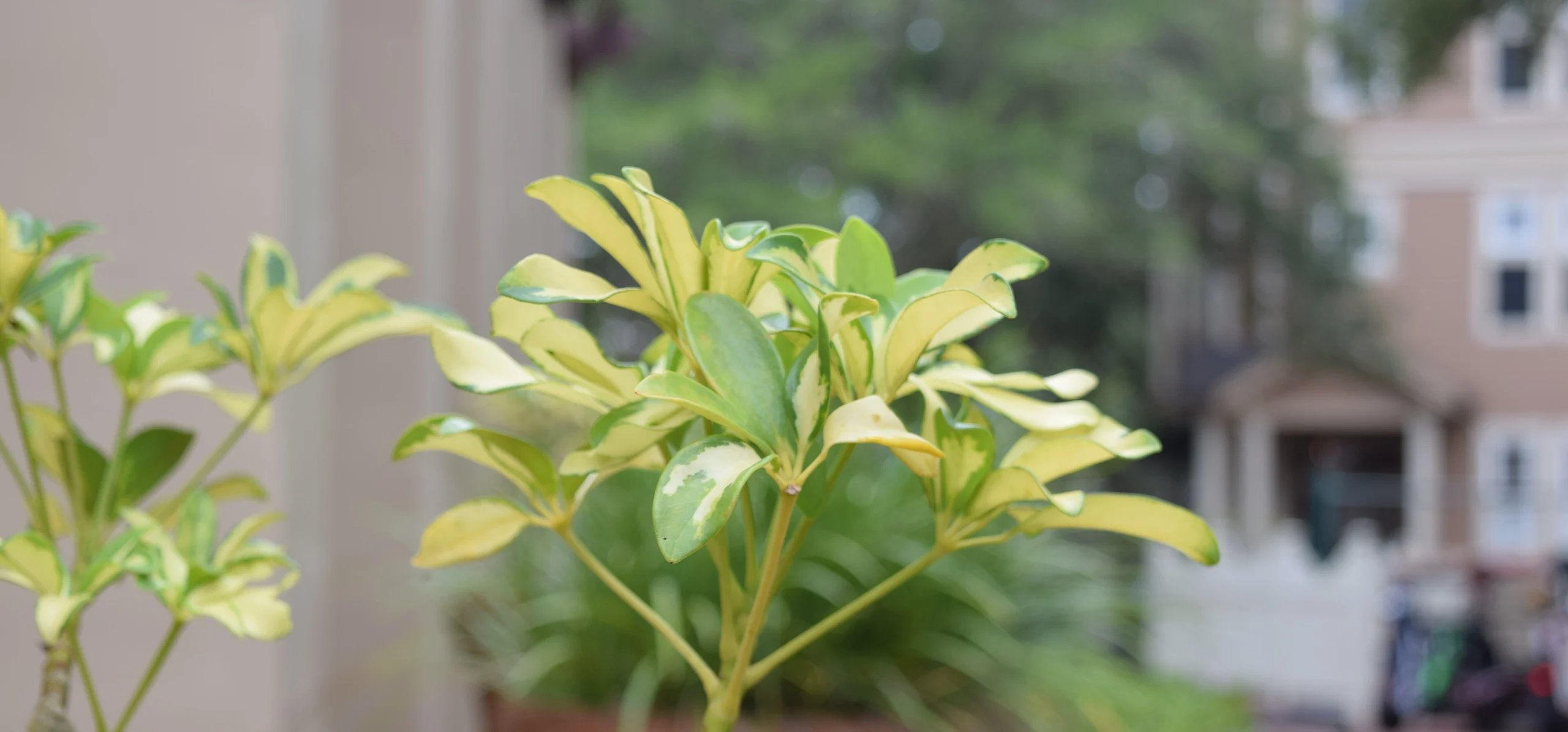
The RHS rates this species for full sun to partial shade with a west or south aspect and shelter from wind, and as a houseplant it wants the brightest spot short of scorching midday sun through glass. Indoors, give it a position a step or two back from an unshaded south or west window; it tolerates medium light but grows leggy, with widely spaced leaves reaching for the source, if kept too dim for too long. New growth is a giveaway of how the plant is coping: a well-lit crown pushes out tight clusters of fresh leaflets that unfurl a paler, almost yellow-green before hardening to the deep glossy green of mature foliage, while a light-starved plant produces thin, sparse leaflets months apart. Rotate the pot every few weeks if the light comes from one side only, so the canopy fills out evenly instead of leaning.


Watering and humidity
Water thoroughly until it runs from the drainage holes, then let the top few centimetres of mix dry before watering again; NC State Extension notes that underwatered plants respond by dropping leaves, which is unmistakable and easy to fix with a deeper, more regular soak. The opposite mistake is quieter and more dangerous: soil kept constantly wet, or a saucer left full after watering, sets up the root rot that kills more umbrella trees than drought ever does. Ease off through autumn and winter, when growth slows and the mix stays damp for longer between waterings. It comes from humid rainforest margins and appreciates humidity above what most heated homes offer in winter; a tray of damp gravel under the pot or grouping it with other plants helps more than misting the leaves, which dries almost immediately and does little.
Soil, potting and feeding
NC State Extension lists a wide tolerance for clay, loam or sandy soils from acidic to neutral, provided drainage is good, and the same logic applies in a pot: a standard peat-free potting mix loosened with perlite or bark keeps roots from sitting wet. Repot every two or three years in spring as the plant fills its container, moving up only one pot size at a time since a pot that is too large holds more moisture than the roots can use. Feed with a balanced liquid houseplant fertiliser through spring and summer while it is actively growing, and stop over winter when the plant is barely using the nutrients already in the mix.
Pruning, growth rate and propagation
NC State Extension rates the growth rate as rapid for a woody plant, and a happy specimen can outgrow a room within a few years if left unchecked; the RHS notes it needs no pruning to stay healthy, but cutting back leggy stems in spring, just above a leaf node, encourages branching and keeps the canopy dense rather than tall and bare-legged. Both the RHS and NC State Extension list stem cuttings and layering as the reliable ways to propagate it, alongside seed; a semi-hardwood cutting taken in summer, dipped in rooting hormone and kept warm and humid under cover, roots within a few weeks, while air-layering a thick stem is the surer route to a new plant that matches the size of an established parent.
Pests and common problems
The RHS lists soft scale, thrips and mealybugs as the main pests, and NC State Extension adds aphids and spider mites to that list; check the undersides of leaves and the leaf axils regularly, since all of these hide there before a sticky honeydew residue on nearby surfaces gives them away. Isolate a newly infested plant, wipe down leaves with a damp cloth or insecticidal soap, and repeat weekly until the pests are gone, since a single treatment rarely clears an established colony. Both sources describe the plant as otherwise largely disease free when grown in well-drained soil; most of the serious problems that do appear, wilting, yellowing or a collapsing base, trace back to roots sitting in water rather than to a pathogen.
Toxicity, pet safety and why it is invasive outdoors
The ASPCA lists umbrella tree, recorded there under the older synonym Brassaia actinophylla, as harmful to both cats and dogs, with terpenoids, saponins and insoluble oxalates as the toxic principles; the effects reported are typically mild vomiting and diarrhoea rather than anything severe, but the plant should still be kept out of reach of pets that chew foliage. NC State Extension separately notes the sap can irritate human skin on contact, so gloves are worth wearing when pruning or repotting. Outdoors, the picture changes: UF/IFAS Assessment classifies it as invasive with no recommended uses in central and south Florida, where it has naturalised across a dozen counties, and it is documented as extensively established in wet forest on every main Hawaiian island after escaping cultivation there decades ago. In both places it forms dense stands that shade out native seedlings, so however easy it is to grow, keep it in a container rather than planting it in the ground if you live somewhere warm enough for it to survive outside.
Test your plant knowledge
Tap a card to flip it and reveal the answer.
The accepted botanical name for this plant is now Heptapleurum actinophyllum. Tap to reveal ✓ True
It is fine to water this plant on a fixed weekly schedule regardless of the soil. Tap to reveal ✕ False
It is safe to plant this species directly in garden soil in southern Florida or Hawaii. Tap to reveal ✕ False
The ASPCA lists this plant as harmful to cats and dogs. Tap to reveal ✓ True
This plant needs regular pruning or it will die. Tap to reveal ✕ False
Sources
References consulted for this guide
- Heptapleurum actinophyllum (Endl.) Lowry & G.M.Plunkett, GBIF Backbone Taxonomygbif.org
- Heptapleurum actinophyllum, RHS Plantsrhs.org.uk
- Umbrella Tree, Toxic and Non-Toxic Plants, ASPCA Animal Poison Controlaspca.org
- Heptapleurum actinophyllum, NC State Extension Gardener Plant Toolboxplants.ces.ncsu.edu
- Schefflera actinophylla: Schefflera, UF/IFAS Extension (ENH743/ST585)ask.ifas.ufl.edu
- Reference entity : Wikipédiaen.wikipedia.org