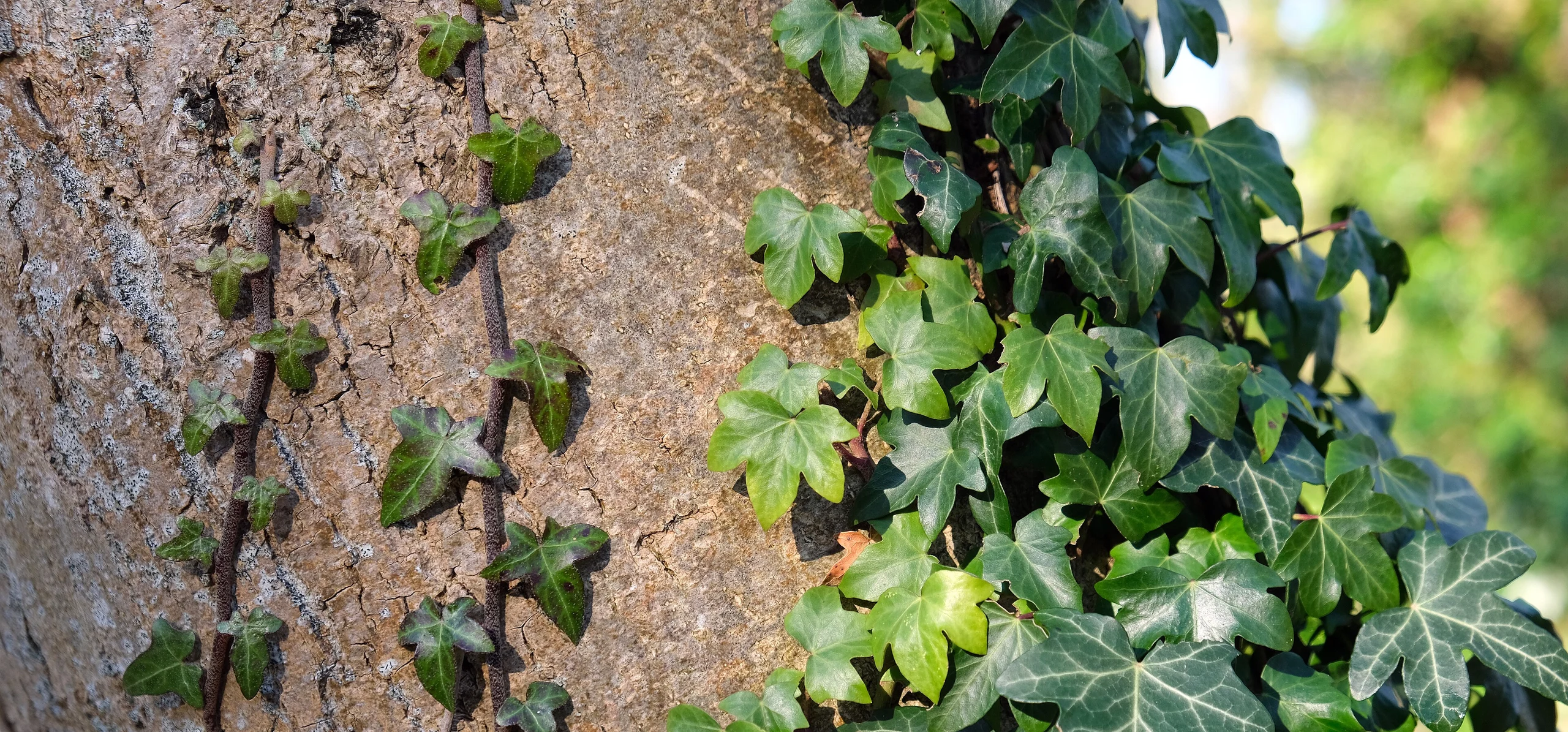
English Ivy
Hedera helix
Family · Araliaceae
English ivy glues aerial roots to bark or masonry, switches to a flowering adult form after about a decade, and stays toxic to cats, dogs and horses.
Hedera helix
Plant profile
- WateringLittleWater every 10 days
- Light exposurePartial shade
Growth
- Family
- Araliaceae
- Life cycle
- Perennial
- Growth speed
- 8/10
- Mature size
- 20–3050 cm
- Spread
- 150–3050 cm
- Propagation
- Cutting
- Layering
FloweringOnly adult, non-climbing growth flowers: small greenish-yellow umbels from September to November, followed by black berries ripening through winter (RHS)
DormancyEvergreen; retains foliage year-round with no true dormant season
Time to maturityAdult, flowering growth typically appears after about ten years of climbing (RHS)
Soil & climate
- Soil types
- clay, loam, sand
- Drought tolerance
- Yes
Light & Placement
- Where to place it
- bright indirect light near an east or north window
- a few feet back from a south or west window, out of direct midday sun
- full to partial shade under trees or on a north-facing wall
- a shaded fence or trellis kept clear of gutters and rooflines
- hanging basket or tall pot where trailing stems can drape
- topiary frame or moss pole trained from adult-phase cuttings for a bushy, non-climbing shape
OriginNative to Europe, the Mediterranean and east to Iran (POWO); naturalized and locally invasive across much of the temperate world
Safety
- Toxicity
- CatsToxic
- DogsToxic
- HorsesToxic
Invasive speciesOregon State University Extension lists English ivy among the Pacific Northwest's worst invasive weeds: birds spread its berries into wild forest, where it smothers native groundcovers, blocks tree seedling regeneration and climbs into the canopy of established trees
Data fromGBIF: Hedera helix L.POWO: Hedera helix L.ASPCA: Toxic and Non-Toxic Plants, EngliRHS: Hedera (Ivy) Growing GuideRHS: Ivy on Trees and as GroundcoverRHS: Ivy on Buildings and Fences
Where it grows
World distribution
English Ivy is native to 27 countries: Albania, Austria, Belarus, Belgium, Bulgaria, Croatia, Czechia, and Denmark….GBIF records 1,289,181 documented identifications across 109 countries, with the largest concentrations in France, United Kingdom, and Netherlands.
- Albania
- Austria
- Belarus
- Belgium
- Bulgaria
- Croatia
- Czechia
- Denmark
- Estonia
- France
- Germany
- Greece
Show 15 more countriesShow fewer countries
- Hungary
- Ireland
- Italy
- Netherlands
- Norway
- Poland
- Portugal
- Romania
- Russia
- Spain
- Sweden
- Switzerland
- Türkiye
- Ukraine
- United Kingdom
Yellow to orange dots: concentration of documented identifications per country. Green countries: sourced native range. Source: GBIFNative range from POWO (Kew).
English ivy (Hedera helix) rarely arrives by invitation: a runner creeps in under a fence or a fragment rides along in a load of topsoil, and within a season it is climbing whatever vertical surface it can find. GBIF records the accepted name as Hedera helix L., in the ginseng family Araliaceae, and the self-clinging vine with three- to five-lobed dark green leaves that most people picture is only the plant's first act. Given enough height and light, ivy switches into a second, completely different growth form that flowers, fruits and stops climbing altogether, which is part of why the same species reads as both a genuine wildlife asset and a listed forest weed depending on where it is growing.
Two Lives in One Plant: Juvenile Climber, Adult Shrub
In its juvenile phase, ivy sends out long stems that seek out vertical surfaces and grow rapidly upward, gripping on with adventitious roots rather than tendrils; the leaves at this stage keep the familiar three- to five-lobed shape, thick and dark green, on stems that root wherever they touch bark, wood or masonry. The RHS notes the switch to the adult phase typically happens after around ten years of climbing, once a shoot reaches enough light near the top of its support: the leaves lose their lobes and become plain elliptic or diamond-shaped, the stems stop producing aerial roots and thicken into a bushy, self-supporting shrub, and only this adult wood ever flowers or fruits. Nurseries sell that adult form on its own as 'Arborescens', a rounded shrub that never climbs and flowers reliably every year, propagated from cuttings taken specifically from mature, flowering growth rather than the climbing juvenile stems most people picture when they think of ivy.
Aerial Roots and the Wall Debate
Ivy's aerial roots do not behave like the true roots at its base: they glue fine root hairs to whatever surface they touch, for support only, and the RHS is explicit that they cannot bore into sound masonry. Well-pointed brick, dense stone or intact render generally comes through years of ivy cover undamaged, and the RHS points out that much of the damage blamed on ivy over a solid wall actually happens when an established, deeply glued mat is torn off by force rather than left in place or cut at the base to die back gradually. The real risk sits with walls that are already failing: on crumbling lime mortar, cracked joints or loose render, the RHS notes that aerial roots can work into the existing gaps and enlarge them as the plant grows, which is the situation worth keeping ivy off, rather than a sound wall in good repair.
On a Tree: Weight, Hidden Decay, Not a Strangler
Despite its reputation, English ivy is not parasitic and does not strangle a healthy tree: its aerial roots attach to bark for support only, drawing no water or nutrients from the trunk, and a vigorous mature tree can usually carry a full covering for years without measurable harm. The real cost shows up on trees that are already stressed. The RHS notes that the extra weight of a heavy ivy coat can make the canopy of an ailing tree unstable, particularly in windy conditions, and a bare tree that would shrug off a storm can go down under the added sail area of evergreen foliage it was never carrying before. The more practical problem for a specific tree is that a dense ivy coat hides the trunk entirely: the RHS warns that ivy growth can conceal cavities and other signs of decay, potentially making a tree unsafe without anyone noticing. Arborists routinely cut ivy back to bare wood at the base of any tree they need to inspect, whether or not that tree is otherwise thriving.


Keeping Ivy Off Gutters and Roofs
Left unmanaged, the RHS warns that ivy's creeping stems can lift roof copings and slates and grow into gutters, chimneys and roof spaces, where trapped moisture and leaf litter do far more damage than the ivy on a wall ever would. The fix is routine rather than dramatic: go over the plant with secateurs or loppers once or twice a year and trim back any growth heading toward gutters, windows, chimneys, roofs or decorative wall finishes, well before a stem reaches the roofline. Catching new growth at head height is minutes of work; freeing an established mat that has already wedged itself under tiles or packed a gutter with root and leaf debris is a repair job.
A Late-Season Lifeline for Wildlife
Only the adult, flowering growth earns ivy its reputation as one of the most valuable garden plants for wildlife. Its flat clusters of small greenish-yellow flowers open from September into November, exactly when most other nectar sources have finished for the year, and the RHS calls them an invaluable late source of pollen and nectar for bees, hoverflies and other pollinating insects still active into autumn. The high-fat black berries that follow ripen through winter and carry birds through the leanest months, and the evergreen cover itself is nesting habitat in its own right.
- Berries: eaten by blackbirds, finches, thrushes, doves, starlings, waxwings and pigeons
- Nesting cover: a preferred site for dunnocks, flycatchers, wrens and robins
- Foliage: a food source for the caterpillars of several butterfly and moth species
The RHS puts a number on the total: more than 140 species of insect and 17 species of bird are recorded feeding on ivy in Britain, one reason conservation-minded gardeners leave an old ivy-covered wall or tree alone even where they clear it elsewhere.
Indoors: Variegated Cultivars and Spider Mites
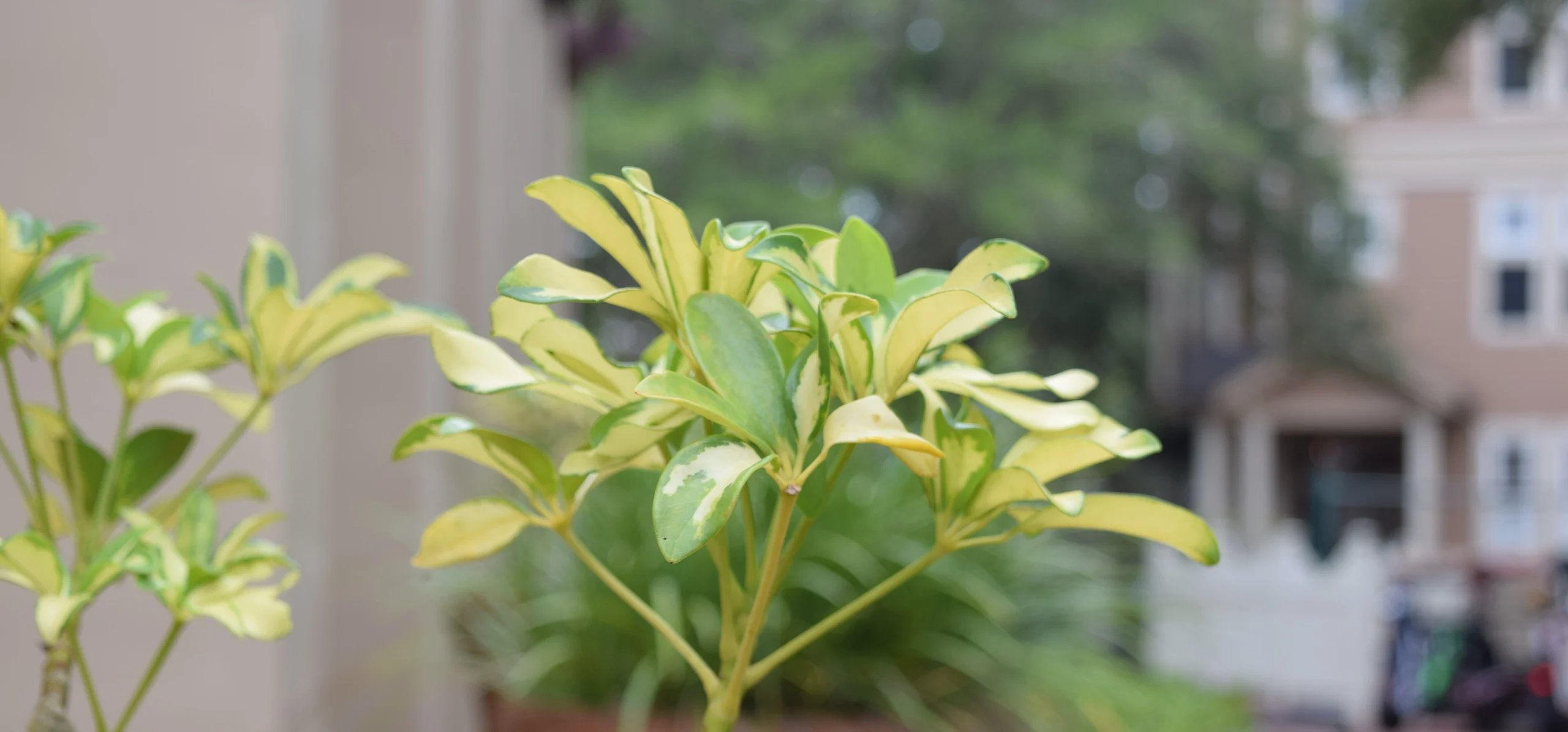
Grown as a houseplant, ivy is usually one of the variegated cultivars, cream-, white- or yellow-edged forms chosen for a paler, brighter leaf than the plain species. That variegation is light-hungry: keep a variegated ivy in bright, indirect light and the pattern holds, but move it somewhere dim and new growth tends to come back solid green, since plain green tissue grows faster than patterned tissue. Clemson Cooperative Extension recommends letting the top half-inch of potting mix dry between waterings, and warns that the warm, dry air of a heated home is exactly the condition spider mites prefer; the first sign is usually fine webbing on the underside of leaves rather than the mites themselves, and a weekly rinse of both leaf surfaces in the shower is often enough to keep a light infestation from building into one that needs a miticide.
An Invasive Weed in the Pacific Northwest, and How to Remove It
Outside cultivation, English ivy is one of the more consequential weeds in the Pacific Northwest's forests. Oregon State University Extension lists it among the region's worst invasive plants: birds carry its black berries into wild land, and where the vine gets a foothold it forms a dense evergreen carpet across the forest floor that smothers native groundcovers and keeps tree seedlings from ever reaching the light, before climbing into the canopy of the trees already established there. Removing an established planting from a tree does not require digging out a mature vine's full root system. Clemson Cooperative Extension's method is to cut through every stem climbing the trunk at a comfortable working height, loosen and pull away the growth below the cut, and leave the section still attached above alone: cut off from its roots, it dies in place over the following weeks, faster in hot, dry weather, and drops away on its own rather than needing to be pulled down from height.
Toxic to Pets, and to Skin
The ASPCA lists English ivy as toxic to cats, dogs and horses, naming the triterpenoid saponin hederagenin as the toxic principle in the foliage, with vomiting, abdominal pain, drooling and diarrhea among the reported signs; the leaves carry more of the compound than the berries, but both should be kept away from pets that chew houseplants or garden trimmings. The sap causes a separate problem for the people handling it: it can trigger contact dermatitis on bare skin, and Clemson Cooperative Extension recommends gloves and a long-sleeved shirt for anyone pruning or clearing ivy, particularly on hot days when sweat makes a reaction more likely.
Test your plant knowledge
Tap a card to flip it and reveal the answer.
Ivy's aerial roots dissolve tree bark to draw water and nutrients from the tree it climbs. Tap to reveal ✕ False
On sound, well-pointed masonry, ivy's aerial roots generally cannot bore in and cause damage. Tap to reveal ✓ True
Ivy only produces its nectar-rich flowers and berries once it switches to its adult, non-climbing growth form. Tap to reveal ✓ True
The ASPCA lists English ivy as non-toxic to cats, dogs and horses. Tap to reveal ✕ False
Oregon State University Extension considers English ivy an invasive weed in Pacific Northwest forests. Tap to reveal ✓ True
Sources
References consulted for this guide
- GBIF: Hedera helix L.gbif.org
- POWO: Hedera helix L.powo.science.kew.org
- ASPCA: Toxic and Non-Toxic Plants, English Ivyaspca.org
- RHS: Hedera (Ivy) Growing Guiderhs.org.uk
- RHS: Ivy on Trees and as Groundcoverrhs.org.uk
- RHS: Ivy on Buildings and Fencesrhs.org.uk
- Oregon State University Extension: English Ivy is an Invasive Weed in the Pacific Northwestextension.oregonstate.edu
- Clemson Cooperative Extension HGIC: English Ivy Controlhgic.clemson.edu
- Clemson Cooperative Extension HGIC: Growing English Ivy Indoorshgic.clemson.edu
- Missouri Botanical Garden Plant Finder: Hedera helixmissouribotanicalgarden.org
- Reference entity : Wikipédiaen.wikipedia.org