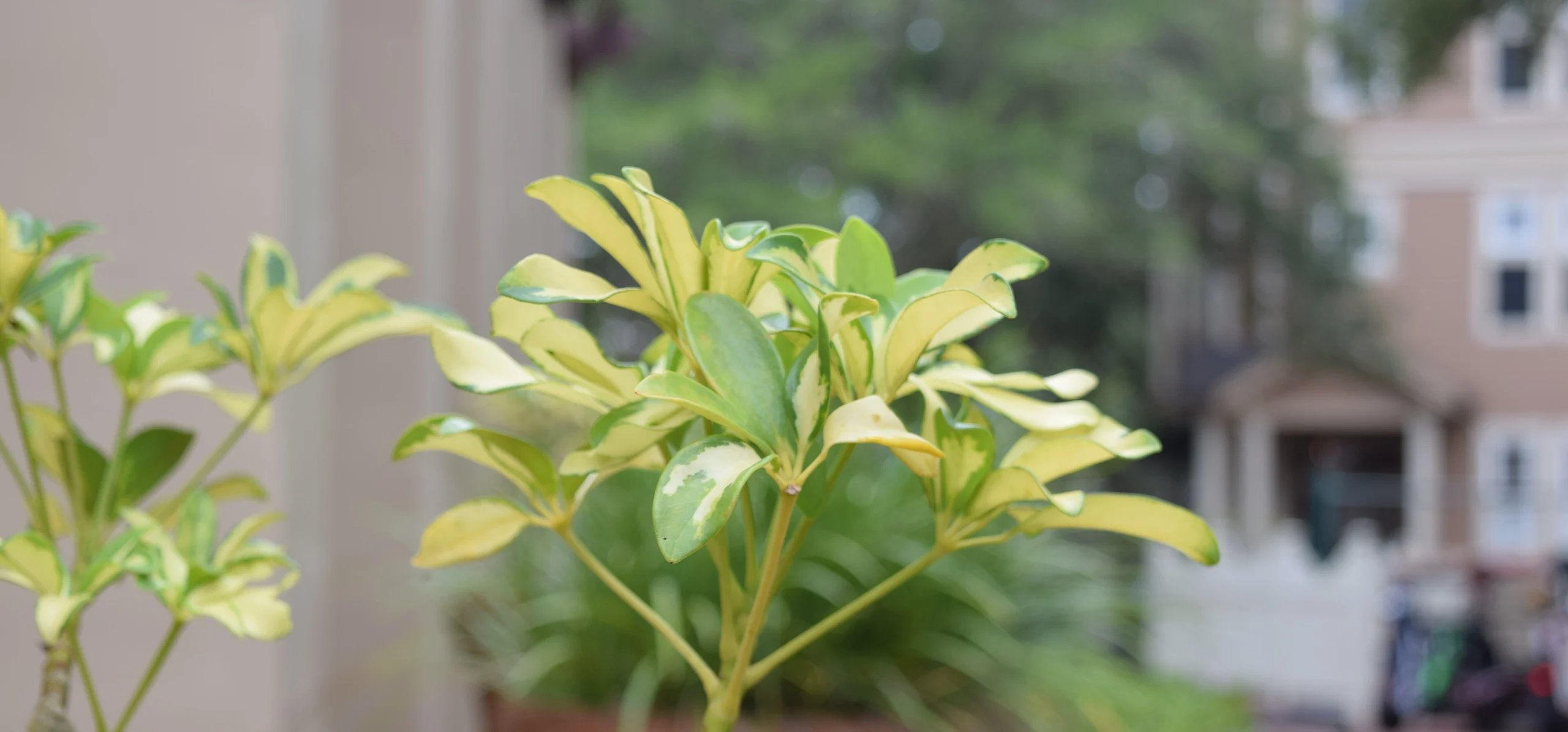
Dwarf Umbrella Tree
Schefflera arboricola
Family · Araliaceae
Schefflera arboricola, the dwarf umbrella tree from Hainan and Taiwan: light, watering and pruning, plus why Kew already lists it as Heptapleurum arboricola.
Schefflera arboricola
Plant profile
- WateringModerateWater every 8 days
- Light exposureIndirect light
- Ideal temperature16–24 °C
- Hardiness zoneUSDA 10–12
Growth
- Family
- Araliaceae
- Life cycle
- Perennial
- Growth speed
- 5/10
- Mature size
- 120–180 cm
- Spread
- 120–180 cm
- Flowering
- Tiny red flowers in summer on outdoor plants; rarely blooms indoors
- Propagation
- Cutting
DormancyNo true dormancy; growth slows in low light, cool winters
Soil & climate
- Drought tolerance
- No
Soil typesWell-drained, organic-rich potting mix, Peaty mix loosened with perlite or bark for containers
Light & Placement
- Origin
- Hainan and Taiwan (POWO)
- Where to place it
- A step back from a bright south-, west- or east-facing window
- Filtered light 3 to 4 hours a day
- Sheltered spot in filtered sun to light shade, frost-free climates only
- Container with drainage holes and a well-drained mix
Safety
- Toxicity
- CatsToxic
- DogsToxic
Invasive speciesNot documented as invasive (NC State)
Data fromSchefflera arboricola Hayata, GBIF BackbHeptapleurum arboricola Hayata, Plants oSchefflera, Toxic and Non-Toxic Plants, Heptapleurum arboricola, NC State ExtensSchefflera, Clemson HGIC Home & Garden ISchefflera arboricola, Missouri Botanica
Where it grows
World distribution
Dwarf Umbrella Tree is native to 2 countries: China and Taiwan.GBIF records 412 documented identifications across 30 countries, with the largest concentrations in Taiwan, China, and Spain.
- China
- Taiwan
Yellow to orange dots: concentration of documented identifications per country. Green countries: sourced native range. Source: GBIFNative range from POWO (Kew).
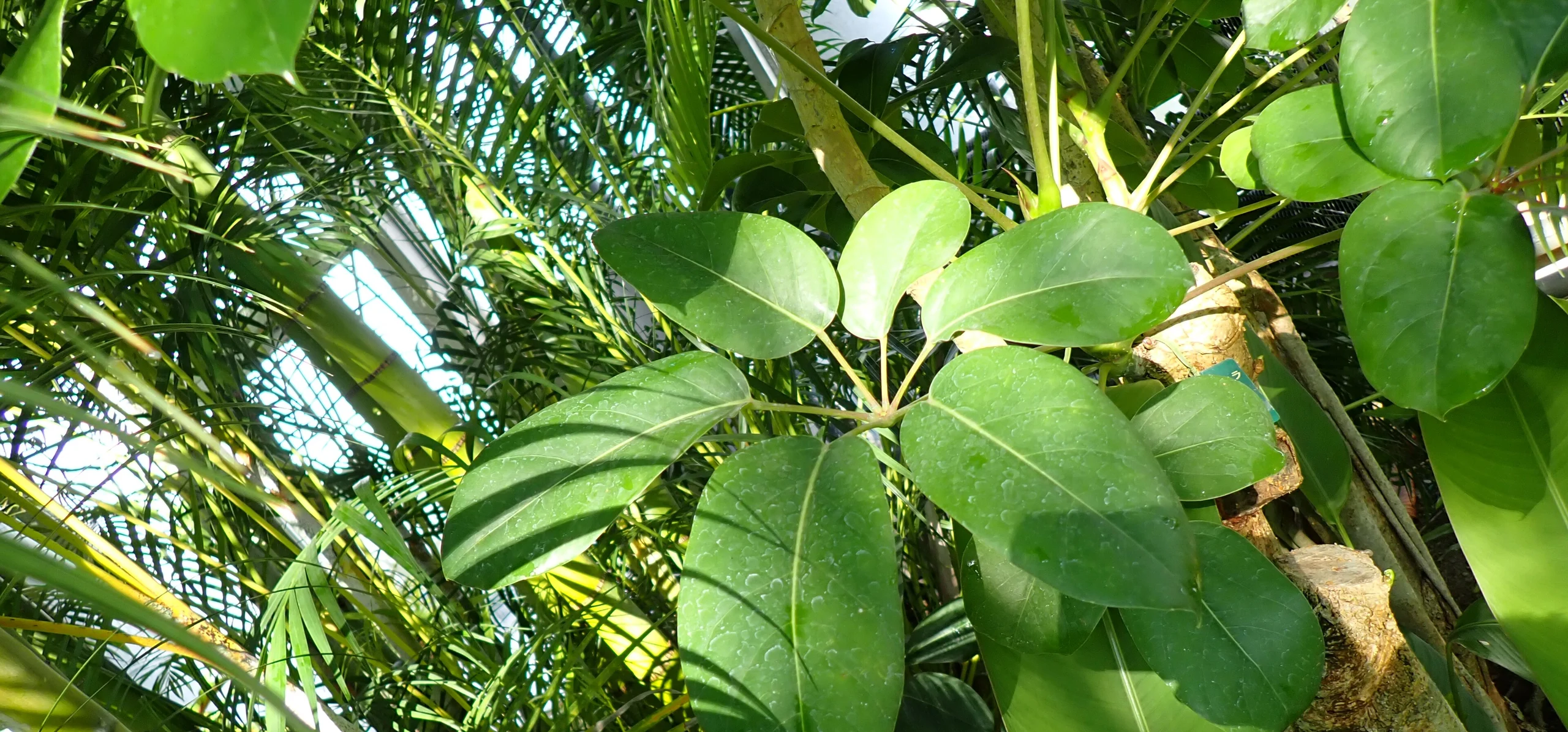
Sold in nurseries as Schefflera arboricola, and increasingly labelled Heptapleurum arboricola on the tag, this compact evergreen shrub is one of the easier tropical foliage plants to keep alive: it tolerates the low humidity of a heated room, forgives an occasional missed watering, and rewards a bright but curtain-filtered spot with fresh, glossy leaflets through spring and summer. Each leaf is palmately compound, small leaflets radiating from a central stalk like the ribs of a miniature umbrella, which is also why it gets confused with its much larger relative, the umbrella tree Schefflera actinophylla, now Heptapleurum actinophyllum. This guide covers where the plant actually comes from, how the two species differ, and the light, water and pruning it needs to stay full and compact rather than leggy.
A name still catching up: Schefflera or Heptapleurum arboricola
GBIF's Backbone Taxonomy, the reference this guide checks its classification against, still lists Schefflera arboricola Hayata as the accepted name, with no synonyms recorded under that entry. Kew's Plants of the World Online has already moved on: it treats Schefflera arboricola (Hayata) Merr. as a synonym and records the accepted name as Heptapleurum arboricola Hayata, part of the same molecular revision that pulled the larger umbrella tree, Schefflera actinophylla, into the genus Heptapleurum in 2020. In practice the two references simply have not caught up with each other yet: nursery tags and most current horticultural sources now favour Heptapleurum arboricola, while GBIF's backbone, which this guide follows for its taxonomy field, has not yet folded this particular species into the revision. Either name points at the same plant, and the everyday name dwarf schefflera is not going away regardless of which one wins out.
Origin: an epiphyte from Hainan and Taiwan
Plants of the World Online lists the native range as Hainan and Taiwan, where the species grows in warm, humid forest. Like several of its Araliaceae relatives, it starts life as an epiphyte in the wild, a habit the Missouri Botanical Garden notes explicitly for this species, germinating on a mossy bank or in the fork of a host tree before its own roots reach the ground. That epiphytic start explains why it tolerates the filtered, broken light of a plant stand indoors so well: in nature it spends its early years rooted in bark and leaf litter rather than open soil, in dappled light beneath a forest canopy. Left in the ground in a frost-free climate, the Missouri Botanical Garden lists it growing into a shrub or small tree up to 25 feet tall, though as a houseplant in a container it stays far smaller and is usually trained as a compact, bushy specimen instead.
Telling it apart from its larger relative
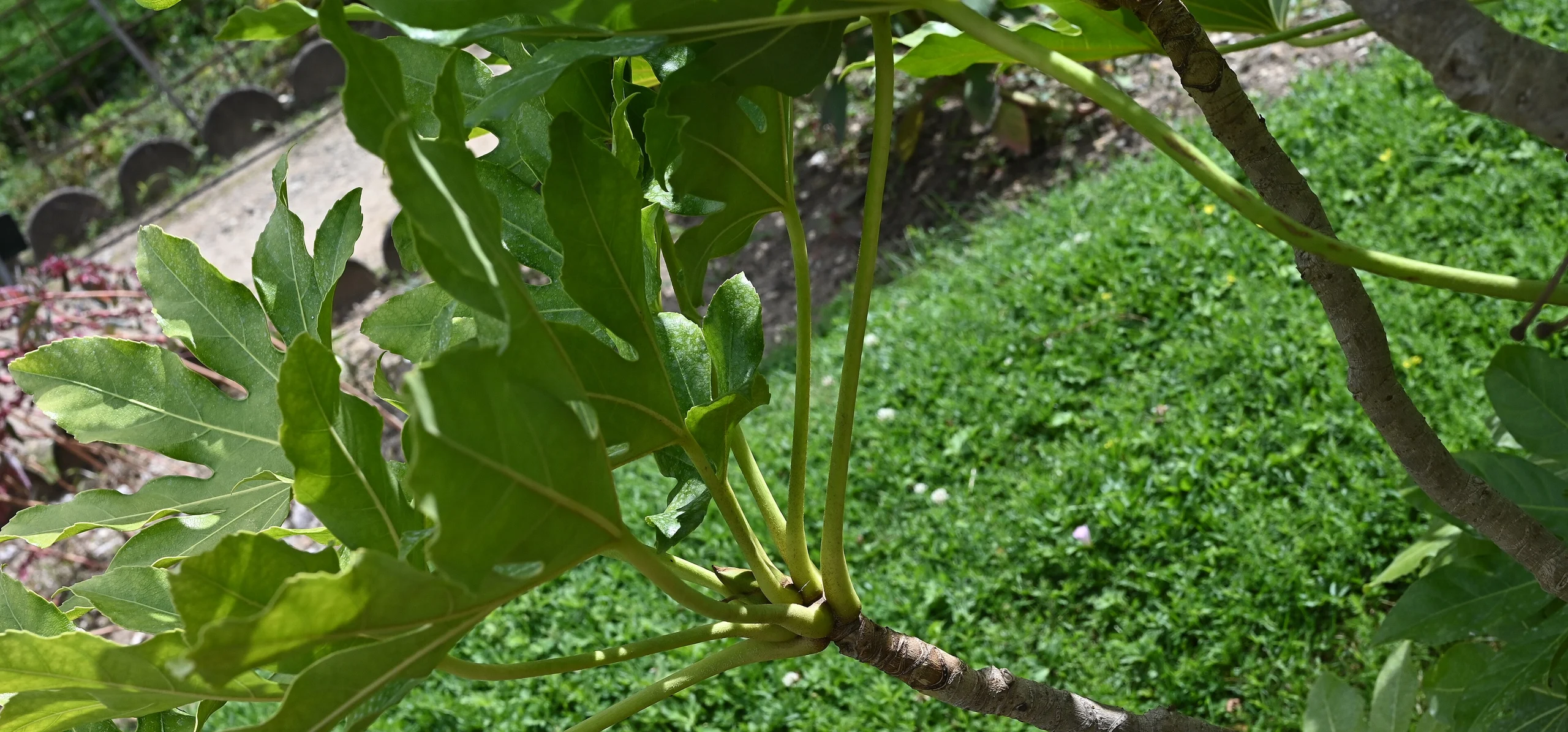
Schefflera arboricola is often sold simply as schefflera alongside its much bigger relative, Schefflera actinophylla, now Heptapleurum actinophyllum, and the two are easy to mix up on a nursery bench. Size settles it quickly: North Carolina State Extension lists this dwarf species at 4 to 6 feet tall and wide in a container, or 10 to 15 feet if planted outdoors in a frost-free climate such as South Florida, while its larger relative is documented growing into a much bigger tree in the landscape. The leaves are a second clue: both species carry glossy, palmately compound leaflets radiating from a central stalk, but this dwarf species holds distinctly smaller, more tightly packed leaflets, which is exactly what earns it the common name dwarf umbrella tree. If the plant in front of you is a modest houseplant rather than something that could plausibly become a tree, it is almost certainly this species.


Light and placement
North Carolina State Extension recommends a south-, west- or east-facing exposure with three to four hours of filtered light a day; direct, unfiltered sun through glass can scorch the leaves, though the same source notes it tolerates some full sun once established outdoors. Indoors, a spot a step or two back from a bright window suits it well, and new leaf clusters are the best gauge of whether it is getting enough: a well-lit plant pushes out tight new growth that unfurls pale green before hardening to a deeper gloss, while a plant kept too dim produces sparse, widely spaced leaves as it stretches toward the light. Rotate the pot occasionally if the light comes from one side only, so the canopy fills out evenly.
Watering and humidity
Both North Carolina State Extension and the Missouri Botanical Garden give the same instruction: let the soil dry out, then water thoroughly, rather than keeping it on any fixed schedule. The Missouri Botanical Garden is explicit that this means watering deeply and then allowing the mix to nearly dry before the next soak, and warns against overwatering, which is the more common way to lose this plant than underwatering ever is. It likes humidity above what most centrally heated rooms provide in winter, and North Carolina State Extension lists high humidity among its preferences; a pebble tray under the pot or grouping it with other plants raises the humidity around the leaves more reliably than misting, which dries within minutes.
Soil, feeding and repotting
A well-drained potting medium rich in organic matter is what North Carolina State Extension recommends, and the Missouri Botanical Garden specifies a peaty, free-draining mix for containers, both agreeing that soggy soil is the real danger rather than the plant's basic soil chemistry. Repot in spring once roots fill the container, moving up only one pot size at a time, since a pot that is too large holds more moisture than the smaller root system can use. Feed with a balanced liquid houseplant fertiliser through the growing season and stop over winter, when growth slows and the plant needs little of what is already in the mix.
Pruning and propagation from cuttings
Left unpruned, a happy specimen, growing at the medium rate North Carolina State Extension records for this species, will still fill a room within a few years, so cutting back leggy or bare stems in spring, just above a leaf node, is the main tool for keeping the plant bushy rather than tall and thin. North Carolina State Extension lists stem cuttings, rooted in soil or water, as the way to propagate it; a cutting with a few leaves left on, taken in spring or summer and kept warm and out of direct sun, is the most reliable route to a new plant, and pruning off leggy growth is a convenient source of material for exactly that.
Pests, common mistakes and toxicity to pets
Red spider mites, mealybugs and scale are the pests North Carolina State Extension flags most often, usually turning up on the undersides of leaves or in leaf axils before a sticky honeydew residue gives them away; isolate an infested plant and treat with insecticidal soap, repeating weekly since a single application rarely clears an established colony. The most common mistake is not a pest at all but the watering routine: a fixed schedule that keeps the mix constantly damp invites the root rot that kills this plant far more often than an occasional missed watering ever does. It is not documented as invasive the way its larger relative Heptapleurum actinophyllum is; North Carolina State Extension's own entry for this species carries no such warning. It does, however, carry the same warning around pets: the ASPCA lists Schefflera as toxic to both cats and dogs, with calcium oxalate crystals as the toxic principle, causing oral irritation, drooling, vomiting and difficulty swallowing if chewed, so keep it out of reach of a curious cat or dog.
Test your plant knowledge
Tap a card to flip it and reveal the answer.
GBIF's Backbone Taxonomy still lists Schefflera arboricola as the accepted name, even though Kew's Plants of the World Online already treats it as a synonym of Heptapleurum arboricola. Tap to reveal ✓ True
It is fine to water this plant on a fixed schedule regardless of how dry the soil is. Tap to reveal ✕ False
This plant is toxic to cats and dogs. Tap to reveal ✓ True
This dwarf species has been documented as invasive by North Carolina State Extension, the same way its larger relative has. Tap to reveal ✕ False
As a houseplant, Schefflera arboricola generally stays much smaller than its relative Schefflera actinophylla (Heptapleurum actinophyllum). Tap to reveal ✓ True
Sources
References consulted for this guide
- Schefflera arboricola Hayata, GBIF Backbone Taxonomygbif.org
- Heptapleurum arboricola Hayata, Plants of the World Online, Kew Sciencepowo.science.kew.org
- Schefflera, Toxic and Non-Toxic Plants, ASPCA Animal Poison Controlaspca.org
- Heptapleurum arboricola, NC State Extension Gardener Plant Toolboxplants.ces.ncsu.edu
- Schefflera, Clemson HGIC Home & Garden Information Centerhgic.clemson.edu
- Schefflera arboricola, Missouri Botanical Garden Plant Findermissouribotanicalgarden.org