Riverbank Grape
Vitis riparia
Family · Vitaceae
Riverbank grape is a vigorous native vine with edible fruit and phylloxera-resistant roots: how to identify it, train it, and keep its growth in bounds.
Vitis riparia
Plant profile
- WateringModerateWater every 10 days
- Light exposurePartial sun
- Hardiness zoneUSDA 3–9
Growth
- Family
- Vitaceae
- Life cycle
- Perennial
- Growth speed
- 9/10
- Mature size
- 300–2300 cm
- Spread
- 200–900 cm
- Flowering
- Small greenish-yellow flowers May to July; fruit ripens late summer into fall
- Propagation
- Seed
- Cutting
Dormancydeciduous, bare in winter
Time to maturityclimbs vigorously from its first season; first meaningful fruiting typically follows within a few years once it reaches full sun at the top of its support
Soil & climate
- Soil pH
- pH 5–8.5
- Soil types
- sand, loam, clay, gravel
- Drought tolerance
- Yes
Light & Placement
- Origin
- Central and Eastern Canada to Mexico (Coahuila)
- Where to place it
- Sturdy pergola or arbor
- Chain-link or wire fence
- Dead tree or snag
- Sunny fence line
Safety
- Pet safe
- No
ToxicityNot evaluated by the ASPCA as an ornamental plant; the fruit, as with grapes generally, is documented as toxic to dogs
Invasive speciesNative and valuable to wildlife within its North American range, but vigorous enough in full sun to smother shrubs and small trees by shading; regarded as weedy in reclaimed fields and young forest stands without management.
Data fromGBIF Backbone Taxonomy: Vitis riparia MiPlants of the World Online (Kew): Vitis Penn State Extension: Wild GrapeNC State Extension Gardener Plant ToolboASPCA: Grape and Raisin toxicity
Where it grows
World distribution
Riverbank Grape is native to 3 countries: Canada, Mexico, and United States.GBIF records 24,406 documented identifications across 32 countries, with the largest concentrations in United States, Canada, and France.
- Canada
- Mexico
- United States
Yellow to orange dots: concentration of documented identifications per country. Green countries: sourced native range. Source: GBIFNative range from POWO (Kew).
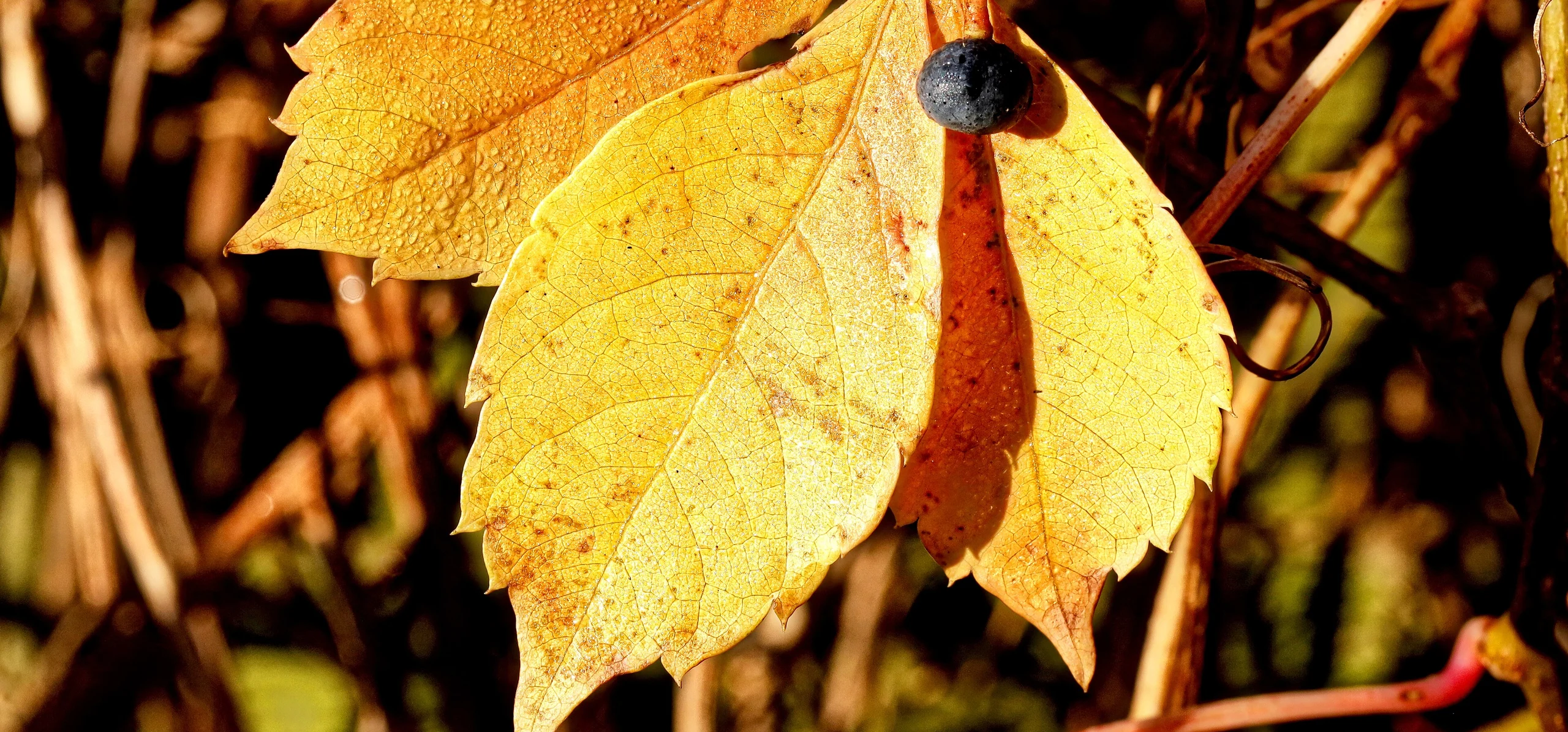
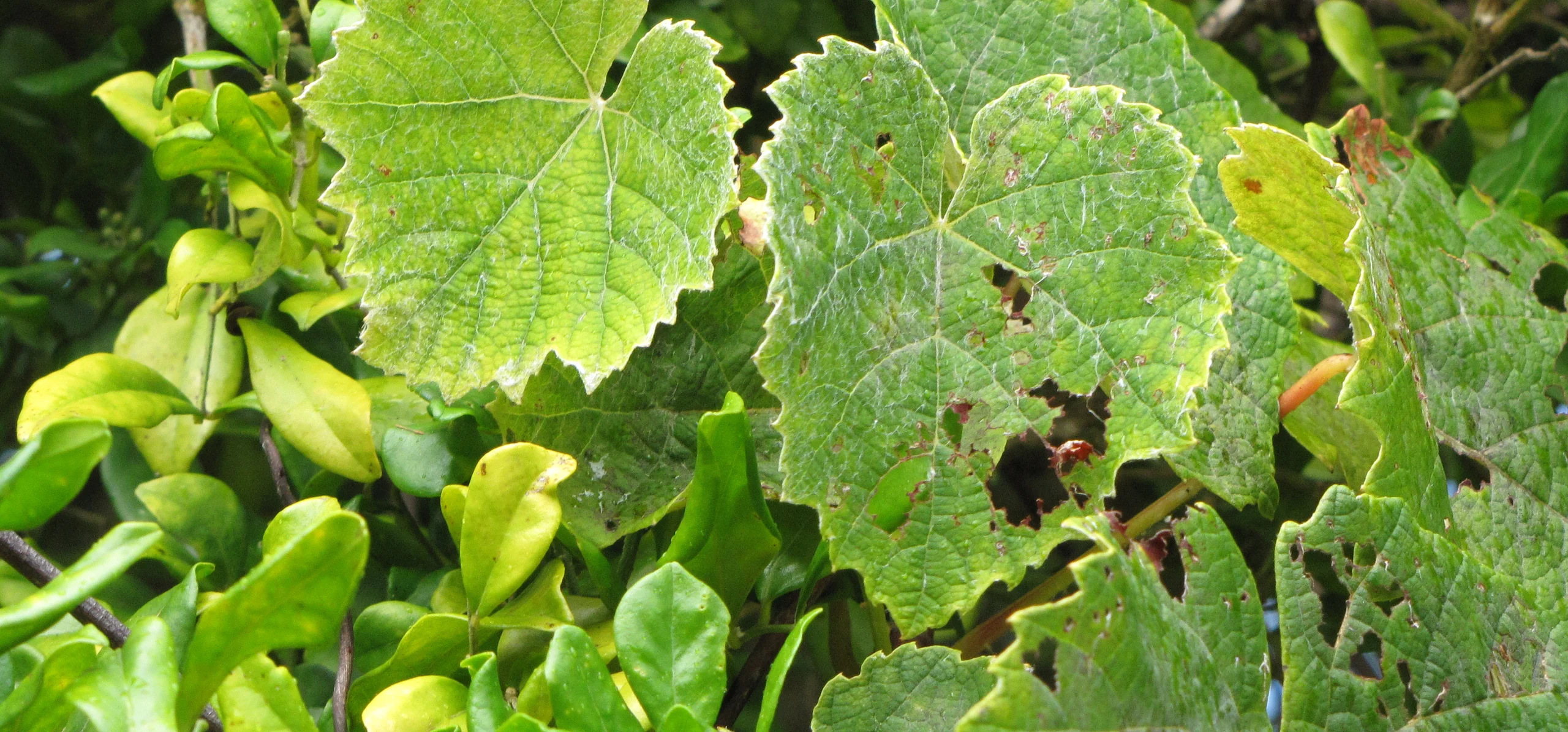
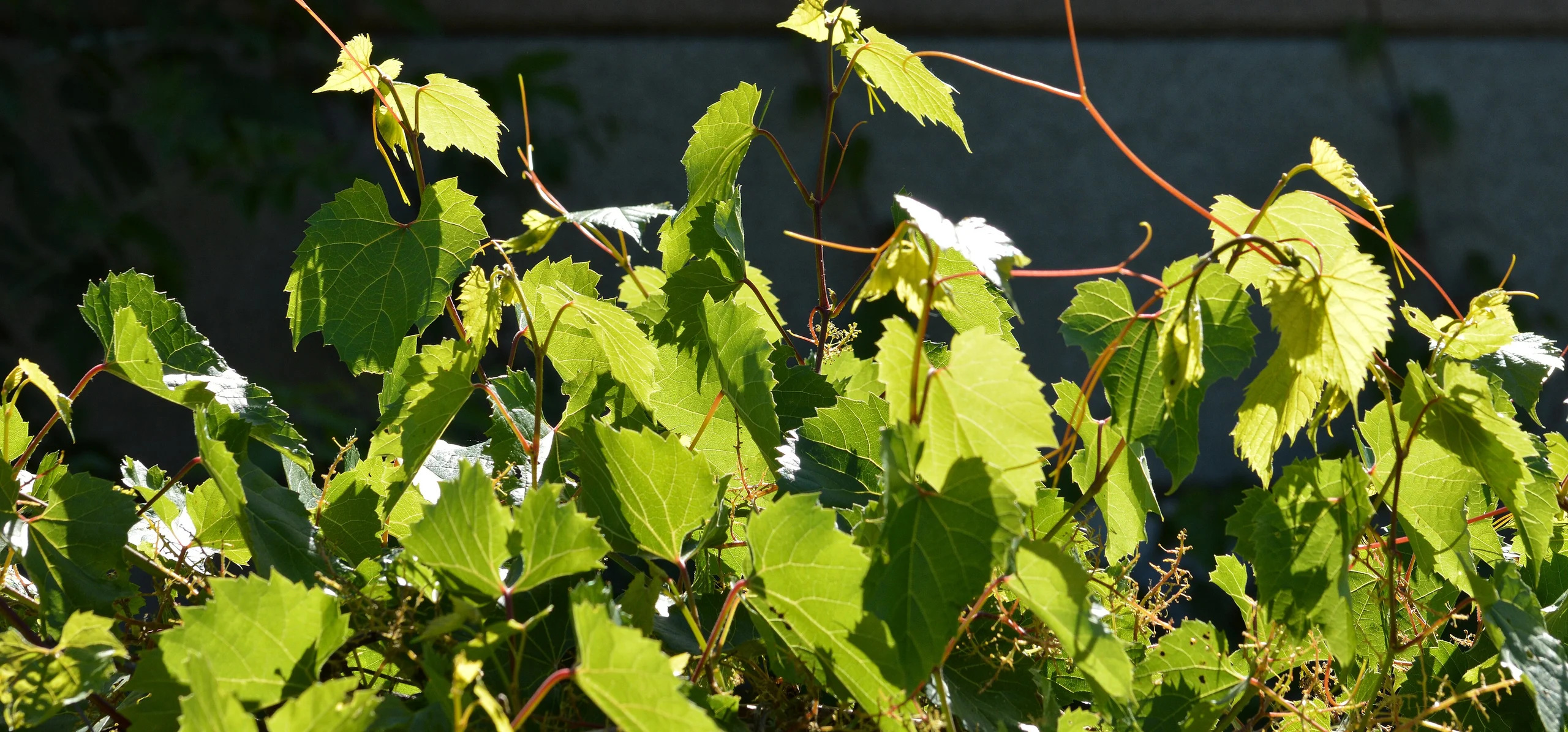
The heart-shaped, three-lobed leaf with a toothed margin, the reddish-brown bark shredding into narrow strips, and the curling tendril opposite every other leaf mark this out as a wild grape, and across the northern two-thirds of North America the odds favor Vitis riparia, the riverbank grape. It is one of the toughest grapevines on the continent: hardy from USDA zone 3 into zone 9, unbothered by soil that floods every spring and soil that dries out every August, and capable of climbing 23 m (75 ft) into a mature tree canopy given a decade and something to hold onto. That resilience is exactly why nineteenth-century viticulturists grafted European vines onto its roots, and it is worth knowing whether the vine along your fence line or riverbank is this species before deciding whether to train it or cut it back.
Identifying Riverbank Grape
Leaves run 5 to 23 cm long, alternate along the stem, broadly heart-shaped at the base with three shallow lobes and coarse teeth at the edges. New stems are thornless and dark, while older wood turns brown and peels away in long, papery strips, a texture that separates grape at a glance from lookalike climbers such as Virginia creeper, which grips with adhesive tendril discs rather than grape's simple curling tendrils. Flowers appear in loose, drooping clusters and are easy to miss: tiny, greenish-yellow, and sweetly scented, opening from May into July. Like many grapes, riverbank grape is dioecious, meaning an individual vine carries either male or female flowers, not both, so a fruiting stand usually needs more than one seedling nearby.
Native Range and Habitat
Plants of the World Online records its native range as Central and Eastern Canada south to Mexico, in the state of Coahuila, which makes it one of the most widely distributed grape species on the continent. It turns up in lower and upper woodlands, along dunes and thickets, on riverbanks and floodplains, in abandoned fields, and along railroad corridors, always favoring the disturbed, sunlit edges where a climbing vine can reach light quickly. The common name comes directly from its habit of colonizing the silty, periodically flooded soil of stream and river banks, though it is just as at home on a dry fencerow once established.
Where It Fits in a Garden or Vineyard
Few gardeners plant riverbank grape for its own fruit, which is sharper than a dessert grape, but it earns a place in two other ways. Its root system resists phylloxera, the root-feeding aphid that nearly destroyed the European wine industry in the nineteenth century, so grafting susceptible vinifera vines onto riparia rootstock became standard practice and remains widespread today. Breeders also lean on its cold hardiness, crossing it into wine grape cultivars bred for regions where ordinary vinifera simply cannot survive the winter. Outside of viticulture, it is planted along a fence, arbor, or dead tree specifically as a wildlife vine, since almost nothing else offers this much cover and fruit for so little maintenance once it is established.


Light, Soil and Water
Full sun brings the heaviest fruit set, though the vine also grows in partial shade with two to six hours of direct light. What it will not do for long is persist as an understory plant in full, closed-canopy shade: cut stems left in deep shade rarely resprout for more than a few seasons. Soil is close to a non-issue. Riverbank grape grows in sand, loam, clay, and gravelly or shallow rocky ground, and tolerates soil pH from distinctly acid through alkaline. It prefers rich, consistently moist ground and is genuinely tolerant of periodic flooding, yet it copes just as well with dry spells once its roots are established, which is the same trait that makes it valuable as rootstock in difficult vineyard soils.
Giving It Something to Climb
This is not a vine for a small trellis. A mature specimen can run to 23 m and develop a trunk up to 20 cm across at the base, so plan for a structure built to carry real weight: a pergola with steel cable, a chain-link or heavy wire fence, or a sturdy dead tree left standing on purpose. Left unmanaged over a live tree, riverbank grape climbs into the canopy, shades out the host's leaves, and adds enough weight in wet snow or ice to snap branches during winter storms, which is the main reason foresters treat it as a problem in young stands even though it is native.
Pruning and Propagation
Prune only while the vine is fully dormant in winter. Cut into it during active growth and it bleeds sap heavily from the wound, a habit sometimes called weeping; it is not fatal, but it wastes the plant's stored energy and looks alarming enough to put people off pruning altogether. New plants grow readily from seed or from hardwood cuttings taken off the current season's mature growth once it has hardened at the end of the year, which is the faster and more reliable route if you want a known, well-formed vine rather than whatever a bird-planted seedling turns into.
Flowers, Fruit and Wildlife
Bees and bumblebees handle pollination once the small flowers open. Berries follow in tight, hanging clusters, blue-black and dusted with a pale waxy bloom, each fruit roughly 0.6 to 1.3 cm across with a handful of flat, egg-shaped seeds inside. They ripen from late summer into fall, sour enough to pucker the mouth until the first hard frost softens and sweetens them, the same trick frost grape and fox grape rely on. Songbirds, game birds, waterfowl, and small mammals depend on this fruit heavily going into winter, which is the strongest argument for leaving a stand along a woodland edge rather than clearing it outright. If you plan to eat the fruit yourself, confirm the identification carefully first, since several unrelated vines with superficially similar leaves are genuinely poisonous. Worth knowing separately: the ASPCA lists grapes and raisins, the fruit of the genus as a whole, among the foods that are toxic to dogs and can cause kidney damage, so fallen fruit under a productive vine is worth clearing if a dog has access to the area.
Managing Its Vigor: Pests and Problems
Disease and insect trouble is generally light, though Japanese beetles, aphids, and spider mites will feed on the foliage, and powdery mildew and occasional viral diseases can show up in a wet season or a crowded planting. The bigger issue is the vine's own vigor: left to run in full sun it turns genuinely weedy, smothering shrubs and small trees under a blanket of leaves before they can recover. If you need to remove an unwanted stand growing under the shade of a forest canopy, cutting the stems 30 to 60 cm above the ground is usually enough, since sprouted regrowth in low light typically dies out within a few years without ever reaching the sun again.
Test your plant knowledge
Tap a card to flip it and reveal the answer.
Vitis riparia has one of the widest native ranges of any North American grape species, from Canada to Mexico. Tap to reveal ✓ True
Riverbank grape should be pruned in spring, just as new growth begins. Tap to reveal ✕ False
The vine tolerates soil that floods periodically along riverbanks. Tap to reveal ✓ True
Vitis riparia became important in viticulture because its roots resist phylloxera, the insect that devastated European vineyards. Tap to reveal ✓ True
Riverbank grape produces its heaviest fruit crops when grown in full, closed-canopy shade. Tap to reveal ✕ False
Sources
References consulted for this guide
- GBIF Backbone Taxonomy: Vitis riparia Michx.gbif.org
- Plants of the World Online (Kew): Vitis riparia Michx.powo.science.kew.org
- Penn State Extension: Wild Grapeextension.psu.edu
- NC State Extension Gardener Plant Toolbox: Vitis ripariaplants.ces.ncsu.edu
- ASPCA: Grape and Raisin toxicityaspca.org
- Reference entity : Wikipédiaen.wikipedia.org