Desert Rose
Adenium obesum
Family · Apocynaceae
Adenium obesum grows a water-storing caudex, needs full sun, deep then dry watering, and a frost-free winter rest to keep flowering year after year.
Adenium obesum
Plant profile
- WateringLittleWater every 10 days
- Light exposureFull sun
- Hardiness zoneUSDA 11–12
Growth
- Family
- Apocynaceae
- Life cycle
- Perennial
- Growth speed
- 2/10
- Mature size
- 91–274 cm
- Spread
- 91–152 cm
- Flowering
- Red, pink or white blooms before new leaves, spring into summer
- Propagation
- Seed
- Cutting
- Grafting
Dormancyleaf-drop and slowed growth through the cool, dry season
Time to maturity2 to 5 years to ultimate size in cultivation (RHS)
Soil & climate
- Soil types
- cactus/succulent mix, sandy loam, well-draining
- Drought tolerance
- Yes
Light & Placement
- Origin
- West Tropical Africa to Arabian Peninsula and Tanzania
- Where to place it
- sunniest windowsill
- bright greenhouse away from scorching glass
- full sun bed or patio, frost-free climate
- wide, shallow pot to showcase the caudex
Safety
- Toxicity
- CatsToxic
- DogsToxic
- HorsesToxic
- HumansToxic
Data fromGBIFPlants of the World Online (Kew)RHSNC State ExtensionASPCA
Where it grows
World distribution
Desert Rose is native to 24 countries: Benin, Burkina Faso, Burundi, Cameroon, Chad, Côte d’Ivoire, Ethiopia, and Ghana….GBIF records 4,102 documented identifications across 69 countries, with the largest concentrations in South Africa, Saudi Arabia, and Yemen.
- Benin
- Burkina Faso
- Burundi
- Cameroon
- Chad
- Côte d’Ivoire
- Ethiopia
- Ghana
- Guinea
- Guinea-Bissau
- Kenya
- Mali
Show 12 more countriesShow fewer countries
- Mauritania
- Niger
- Nigeria
- Oman
- Saudi Arabia
- Senegal
- Somalia
- Sudan
- Tanzania
- Togo
- Uganda
- Yemen
Yellow to orange dots: concentration of documented identifications per country. Green countries: sourced native range. Source: GBIFNative range from POWO (Kew).
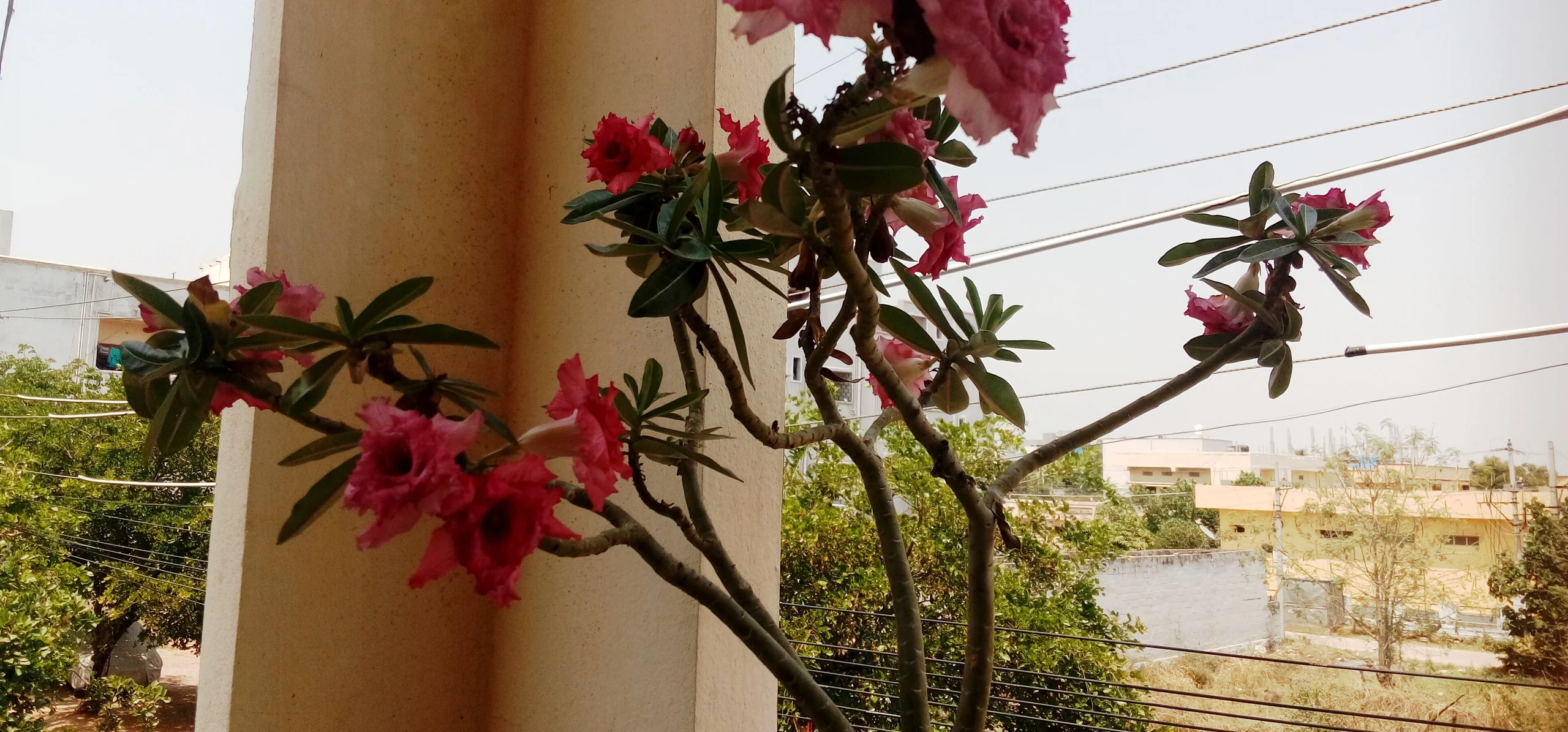
Adenium obesum arrives from the nursery already showing its trademark feature: a thick, swollen base, the caudex, tapering up into slender branches tipped with a rosette of leaves. That caudex is a water reservoir, and it is the reason this plant survives long dry spells in the wild and tolerates being forgotten on a sunny windowsill for a week or two. Give it strong light, water it deeply, then leave it alone until the soil is dry, and the same clusters of red, pink or white flowers that gave it the names Desert Rose and Impala Lily will keep opening through the warm months. One thing every new owner needs to know before anything else: every part of this plant is poisonous, so keep it out of reach of pets and small children.
Native Range and the Swollen Caudex
Plants of the World Online (Kew) lists the native range of Adenium obesum as West Tropical Africa to the Arabian Peninsula and Tanzania, spanning dry, rocky ground from Senegal to Somalia, Socotra, Yemen, Oman and Saudi Arabia. Across that range rainfall is short and unpredictable, and the caudex, a barrel-like swelling at the base of the stem that continues below soil level as a fat taproot, is the plant's answer to it: it stores water and carbohydrate reserves that carry the plant through months without rain. Growers exploit the same structure for a different reason, lifting the caudex above the soil as the plant matures to show off its bonsai-like shape, a style often sold as a desert rose bonsai. NC State Extension notes the species belongs to the dogbane family, Apocynaceae, the same family as oleander and plumeria, which explains both its milky sap and its toxicity.
Light and Placement
Outdoors in a frost-free climate, NC State Extension recommends full sun, six or more hours of direct light a day, for the strongest growth and the most flowers. Under glass in cooler climates the RHS gives slightly different advice: partial shade with protection from the hottest midday sun, because glass concentrates heat and can scorch leaves that never had to cope with it in the open desert. The practical version of both: put it in the brightest spot available, a south-facing windowsill or greenhouse bench, but watch the leaves on the hottest summer afternoons and pull the plant back from glass that is baking hot to the touch. Too little light produces thin, reaching stems and few if any flowers, the single most common reason an indoor desert rose refuses to bloom.
Watering: Deep, Then Dry
Water thoroughly until it runs from the drainage holes, then wait until the top few centimetres of mix are completely dry before watering again. NC State Extension describes the species as highly drought tolerant, and that tolerance is the caudex at work: a plant that has just been watered can coast through a missed week with no visible stress. Overwatering, not underwatering, is what kills desert roses, since a caudex sitting in constantly damp mix rots from the inside before the symptoms show on top. During active growth in spring and summer that usually means watering roughly once a week in a well-drained pot; scale it back sharply once growth slows in autumn.
How often to water your Desert Rose
Soil and Potting a Caudex
Use a fast-draining mix built for cacti and succulents, or a loam-based potting compost cut with extra sharp sand, matching the RHS's own recommendation of a loam-and-sand mix with sharp drainage. NC State Extension notes the species tolerates acid to neutral soils; what matters more than exact pH is that water never pools around the caudex. Choose a pot only slightly larger than the root ball, wide rather than deep, since a container that holds too much unused soil stays wet for too long after watering and invites rot at the base. As the plant matures and the caudex swells, many growers repot in spring into a shallow, wide container that lets them raise the caudex above the soil line, exposing more of its sculptural shape each time.
Winter Rest and Leaf Drop
Adenium obesum is a deciduous succulent: as temperatures and light drop in autumn and winter it slows down and can lose some or all of its leaves, a normal response rather than a sign of failure. The RHS rates the species H1A, meaning it needs a minimum temperature above 15°C (59°F) to avoid cold damage and cannot be left outdoors through a temperate winter; in climates that cold, bring the pot under glass or indoors well before the first chilly night. While the plant is resting, cut watering back significantly and stop feeding altogether, since a dormant caudex sitting in wet, cold soil is far more likely to rot than one kept on the dry side. New leaves resume once the plant is back in warmth and stronger light in spring.
Feeding, Pruning and Propagation
Feed during active growth with a diluted fertiliser to support flowering, and stop once growth slows in autumn. The RHS notes the species needs no routine pruning, but many growers cut back leggy stems in late winter or early spring, just before growth resumes, to encourage branching and a fuller rosette of shoots the following season, since flowers form on new growth. Propagation follows the same window: the RHS recommends rooting non-flowering stem cuttings in summer with bottom heat, while NC State Extension also lists seed and grafting as methods growers use, grafting in particular for named flower-colour cultivars that do not come true from seed. A cutting will not usually develop the thick caudex of a seed-grown plant, so growers chasing that bonsai-like base most often start from seed.
Pests and Root Rot
NC State Extension lists mealybugs, aphids, scale insects and root mealybugs as the pests most likely to trouble a desert rose, usually settling into the joints between stem and leaf or hiding in the root ball where they are harder to spot. Check new growth regularly and treat early infestations with a cotton swab dipped in rubbing alcohol or an insecticidal soap before numbers build up. Fungal leaf spot can appear in humid, poorly ventilated conditions, but the more serious risk by far is root rot from excess moisture, which can spread up into the caudex itself and is often fatal once the base turns soft and dark. If a stem or the caudex feels mushy rather than firm, cut back into clean, white tissue immediately and let the wound dry before repotting into fresh, dry mix.
Toxicity: Keep It Away From Pets and Children
The ASPCA lists Adenium obesum, under names including Desert Rose and Impala Lily, as toxic to dogs, cats and horses, with cardiac glycosides as the toxic principle and vomiting, diarrhoea, loss of appetite, depression and irregular heartbeat among the clinical signs of ingestion. The RHS adds that the plant is harmful to people too if eaten, and recommends gloves when handling it because the milky sap can irritate skin. None of this means the plant cannot be grown around a household with pets or children, but it does mean a spot out of chewing range, on a high shelf or in a room pets do not access, is worth planning for from the start.


Test your plant knowledge
Tap a card to flip it and reveal the answer.
Every part of Adenium obesum is toxic to cats and dogs if eaten. Tap to reveal ✓ True
Adenium obesum should be watered on a fixed daily schedule year-round. Tap to reveal ✕ False
The swollen caudex at the base of the plant stores water and helps it survive drought. Tap to reveal ✓ True
Adenium obesum flowers appear before the new leaves in spring. Tap to reveal ✓ True
Adenium obesum can be left outdoors through a cold winter without any protection. Tap to reveal ✕ False
Sources
References consulted for this guide
- GBIF - Adenium obesumgbif.org
- Plants of the World Online (Kew) - Adenium obesumpowo.science.kew.org
- RHS - Adenium obesumrhs.org.uk
- NC State Extension - Adenium obesumplants.ces.ncsu.edu
- ASPCA - Desert Roseaspca.org
- Reference entity : Wikipédiaen.wikipedia.org