Madagascar Periwinkle
Catharanthus roseus
Family · Apocynaceae
Catharanthus roseus (Madagascar periwinkle) wants full sun, sharp drainage and pH 5.5 to 6.0. Covers watering, wet-soil risks, and toxicity to pets.
Catharanthus roseus
Plant profile
- WateringModerateWater every 7 days
- Light exposurePartial sun
- Hardiness zoneUSDA 10–11
Growth
- Family
- Apocynaceae
- Life cycle
- Perennial
- Growth speed
- 7/10
- Mature size
- 15–60 cm
- Spread
- 15–60 cm
- Flowering
- Summer to first frost; year-round in frost-free climates
- Propagation
- Seed
- Cutting
Dormancynone in the tropics; frost-killed in cold winters
Time to maturity12-16 weeks from seed to bloom
Soil & climate
- Soil pH
- pH 5.5–6
- Soil types
- loam, sand
- Drought tolerance
- Yes
Light & Placement
- Origin
- East and south Madagascar
- Where to place it
- bright south-facing windowsill
- sunny bedding border
- edging
- ground cover
- outdoor container or hanging basket
Safety
- Toxicity
- CatsToxic
- DogsToxic
- HorsesToxic
Invasive speciesself-seeds readily in frost-free climates
Data fromGBIF Backbone Taxonomy: Catharanthus rosPOWO (Kew): Catharanthus roseus (L.) G.DASPCA: Toxic and Non-toxic Plants, PeriwMissouri Botanical Garden Plant Finder: Clemson HGIC Factsheet: Annual Vinca (Ca
Where it grows
World distribution
Madagascar Periwinkle is native to a single country: Madagascar.GBIF records 33,227 documented identifications across 202 countries, with the largest concentrations in United States, India, and South Africa.
- Madagascar
Yellow to orange dots: concentration of documented identifications per country. Green countries: sourced native range. Source: GBIFNative range from POWO (Kew).
A newly bought Catharanthus roseus, most often sold simply as vinca or Madagascar periwinkle, ranks among the most forgiving flowering plants for a hot, sunny spot. It keeps opening five-petaled blooms from early summer until the first frost with no deadheading at all, and it shrugs off heat and dry spells that wilt most bedding plants within days. The one thing that kills it quickly is wet feet: soggy, poorly drained soil brings on root and stem rot within weeks. Outside the frost-free tropics it is grown as a summer annual almost everywhere, even though in its native range it behaves as a woody-based perennial that keeps flowering year round.
What You're Growing: Species and Cultivars
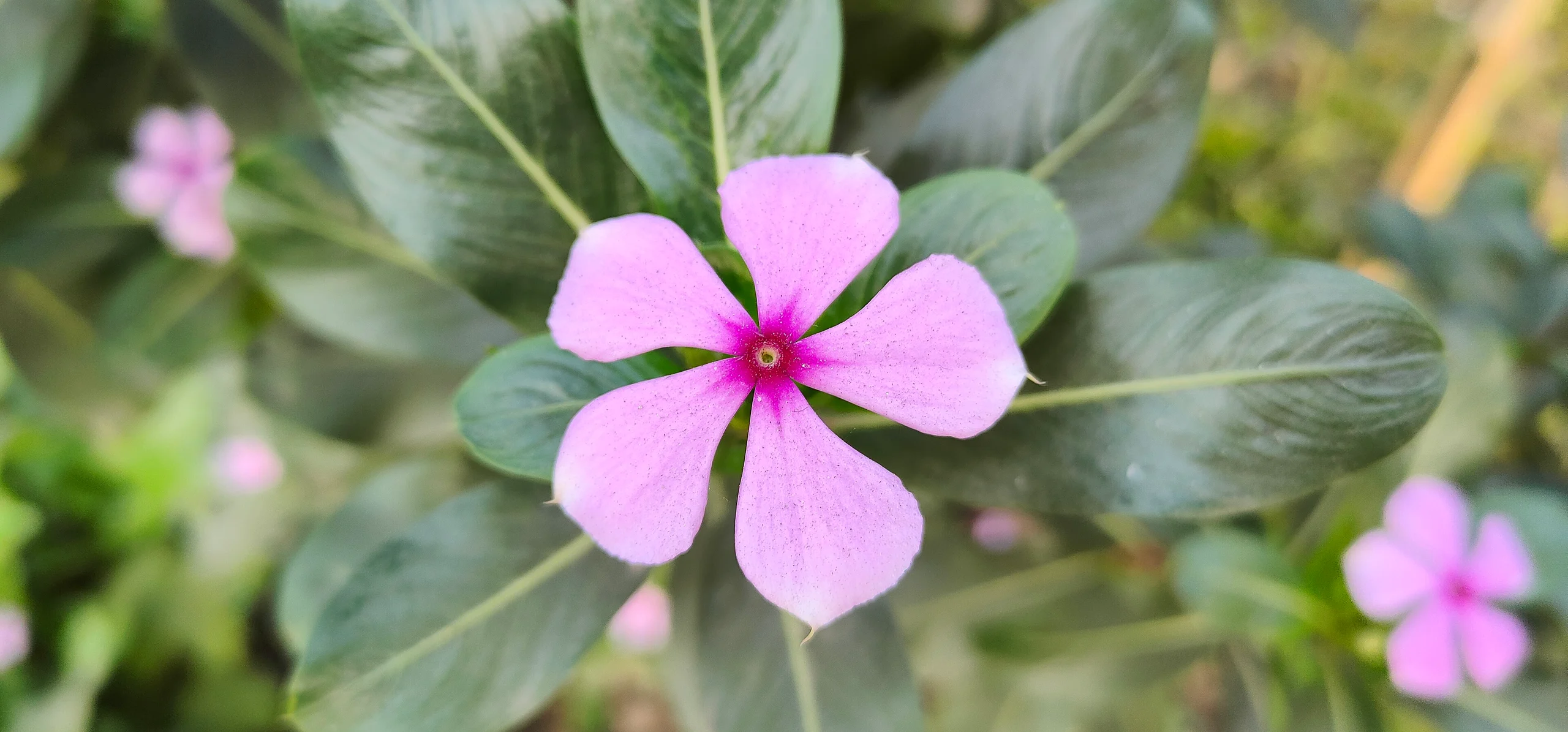
The species was long sold under the older name Vinca rosea, and that synonym still turns up on some seed packets and plant tags. Wild Catharanthus roseus carries rosy-pink to red flowers with a darker mauve throat, but true species plants are rarely offered in nurseries today. Almost everything on sale is a bred cultivar, ranging from tall, loose-growing types to compact mounds only about 15 cm high, in colours from white and pale pink through hot pink, red and lilac, usually with a contrasting eye at the centre of each bloom. The oval, glossy leaves reach roughly 5 cm long and stay dense on the plant all season, which is part of why it works as well in mixed containers as it does in open beds. Newer series such as Cora were bred specifically for resistance to the root and stem rots that plague older varieties in wet weather, worth seeking out if your soil drains slowly.
Light and Position
Full sun gives the fullest, longest bloom; light part shade is tolerated but flowering thins out and stems stretch toward the light within a few weeks. A hot, reflected spot next to pavement or a south-facing wall is not a problem the way it would be for most flowering annuals, this is one of the few bedding plants that genuinely performs better in the kind of baking, exposed corner that scorches everything else.
Soil, pH and Planting Timing
This plant wants well-drained sandy loam and a soil pH on the acidic side, ideally 5.5 to 6.0, though it tolerates higher pH once drainage is sorted out. Drainage matters more than fertility here: a rich, moisture-retentive bed is a bigger risk than a lean, sandy one. Do not rush planting in spring. Set seedlings out only once the soil has warmed past about 15.5 degrees C (60 degrees F), typically several weeks after the last frost date; planting into cold, damp soil is the single biggest cause of early-season fungal losses. If starting from seed, sow indoors 12 to 16 weeks before your last frost date so plants are sturdy enough to go straight into flower once the weather turns warm.


Watering the Right Way
Water needs sit in the middle, not as thirsty as a typical bedding annual but not a true drought specialist either. Keep the soil lightly, evenly moist while plants establish, then let the surface dry between waterings once roots are in. Water at the base rather than overhead: wetting the foliage repeatedly is what triggers leaf spot in humid weather, far more often than the plant simply needing more water. Once established, Catharanthus roseus tolerates real drought and dry soil far better than it tolerates being kept wet, so when in doubt, water less rather than more.
Feeding
Skip heavy fertilising. A light, balanced feed during the peak of summer growth is enough to keep flowering going; pushing extra nitrogen produces soft, leggy stems and the kind of lush growth that fungal rots move into first. In an average garden bed with reasonable soil, most gardeners get a full season of bloom without feeding it at all.
Perennial in the Tropics, Annual Everywhere Else
Catharanthus roseus is winter hardy only in USDA zones 10 to 11, where it persists as a low, woody-based perennial and keeps flowering through winter. Everywhere colder, frost kills it outright, which is why it is grown as a disposable summer annual through most temperate gardens. If you want to keep a favourite colour going rather than buying new plants each spring, take cuttings in late summer and overwinter them indoors on a bright windowsill, or bring a whole container plant inside before the first frost. Given the chance, it also self-seeds readily in mild, frost-free climates.
Pests, Diseases and Common Mistakes
Left in well-drained soil and watered sensibly, this plant is close to trouble-free. Almost every serious problem traces back to one mistake: too much water sitting around the roots. That is what causes the stem rot and root rot that are by far the most common way to lose a planting, and it is worsened by planting too early into cold, wet soil. Watch too for leaf spot from overhead watering, occasional aster yellows, and slugs or snails nibbling low foliage in damp spells. The single most avoidable mistake gardeners make with vinca is treating it like a thirsty summer annual and watering it on the same schedule as petunias or impatiens; that habit alone kills more plants than any pest does.
Toxicity: Keep It Away From Pets
The ASPCA lists periwinkle (Vinca rosea, a direct synonym of Catharanthus roseus) as toxic to dogs, cats and horses. The toxic principles are vinca alkaloids, and reported signs of ingestion include vomiting, diarrhoea, low blood pressure, depression, tremors, seizures, coma and death. These are the same class of alkaloids that made the plant important to cancer research, which is exactly why a curious dog chewing on stems or leaves is not a minor stomach upset. Keep plants out of reach of pets and grazing animals, and contact a vet promptly if ingestion is suspected.
Test your plant knowledge
Tap a card to flip it and reveal the answer.
Catharanthus roseus flowers best in full sun and tolerates heat and drought once established. Tap to reveal ✓ True
This plant performs best in rich, moisture-retentive soil. Tap to reveal ✕ False
Catharanthus roseus is winter hardy throughout most temperate gardens and survives frost outdoors. Tap to reveal ✕ False
Watering overhead and wetting the foliage increases the risk of leaf spot. Tap to reveal ✓ True
The ASPCA lists periwinkle as safe for dogs, cats and horses to eat. Tap to reveal ✕ False
Sources
References consulted for this guide
- GBIF Backbone Taxonomy: Catharanthus roseus (L.) G.Dongbif.org
- POWO (Kew): Catharanthus roseus (L.) G.Don, native rangepowo.science.kew.org
- ASPCA: Toxic and Non-toxic Plants, Periwinkleaspca.org
- Missouri Botanical Garden Plant Finder: Catharanthus roseusmissouribotanicalgarden.org
- Clemson HGIC Factsheet: Annual Vinca (Catharanthus roseus)hgic.clemson.edu
- Reference entity : Wikipédiaen.wikipedia.org