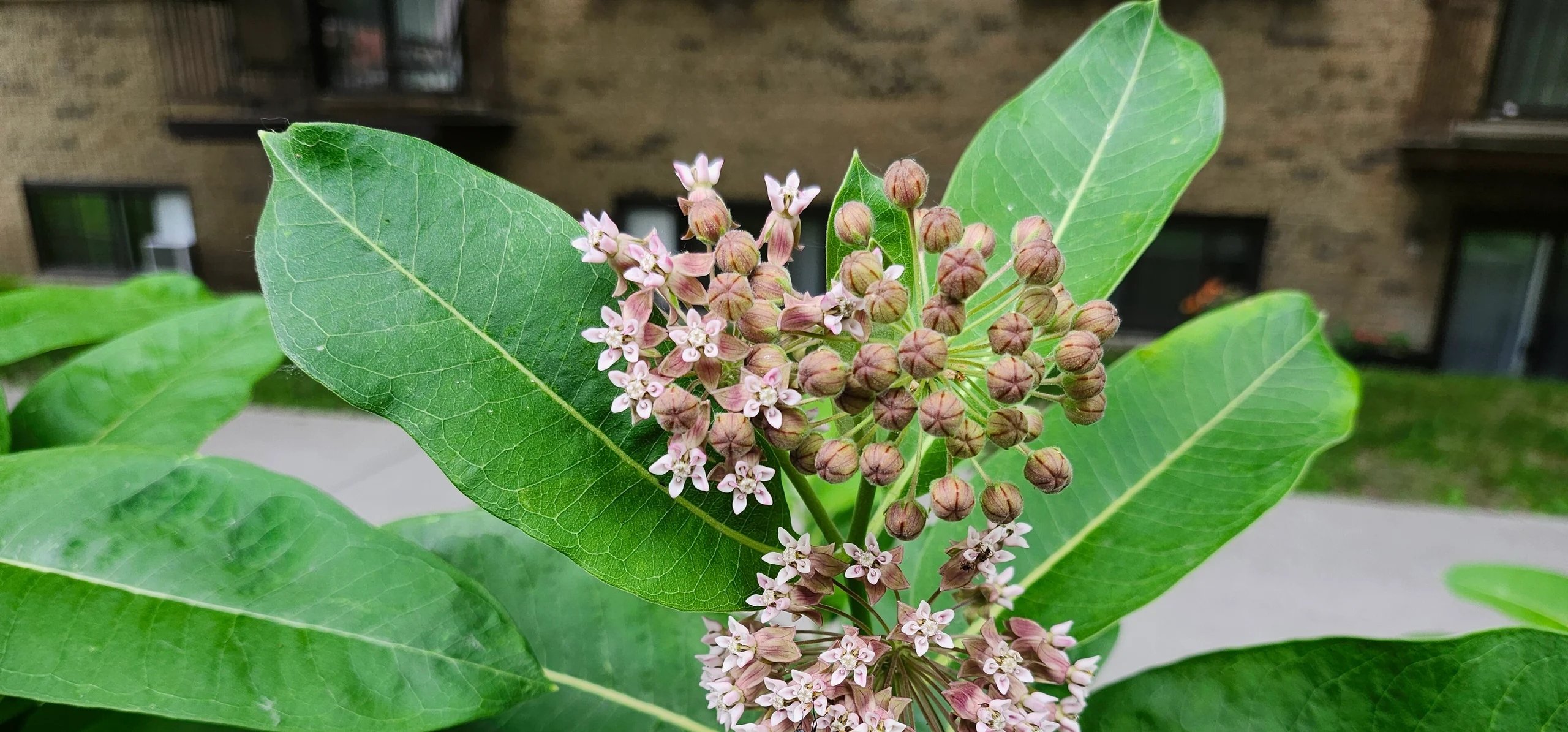
Common Milkweed
Asclepias syriaca
Family · Apocynaceae
Common milkweed needs full sun, average to dry soil and weeks of cold stratification to germinate from seed. Covers rhizome spread, pods and toxicity to pets.
Asclepias syriaca
Plant profile
- WateringLittleWater every 10 days
- Light exposurePartial sun
- Hardiness zoneUSDA 4–9
Growth
- Family
- Apocynaceae
- Life cycle
- Perennial
- Growth speed
- 7/10
- Mature size
- 90–200 cm
- Spread
- 30–60 cm
- Flowering
- Late spring to late summer
- Propagation
- Seed
- Division
Dormancydies back to the rootstock after frost, resprouting from rhizomes in mid to late spring
Time to maturity2-3 years from seed to first flowering
Soil & climate
- Soil types
- clay, loam, sand
- Drought tolerance
- Yes
Light & Placement
- Origin
- Central and eastern Canada to north-central and eastern United States
- Where to place it
- open meadow
- roadside or waste-ground border
- pollinator or monarch waystation planting
- large, deep container used specifically to contain the spreading rhizomes
Safety
- Toxicity
- CatsToxic
- DogsToxic
- HorsesToxic
Invasive speciesSpreads aggressively by rhizome and is listed as an invasive alien species of concern in parts of the European Union; check local regulations before planting outside its native range
Data fromAsclepias syriaca L., GBIF Backbone TaxoPOWO: Asclepias syriaca L., native distrASPCA: Milkweed toxicity to cats, dogs aMissouri Botanical Garden Plant Finder: Oklahoma State University Extension: NatCABI Compendium: Asclepias syriaca (comm
Where it grows
World distribution
Common Milkweed is native to 2 countries: Canada and United States.GBIF records 149,146 documented identifications across 48 countries, with the largest concentrations in United States, Canada, and Ukraine.
- Canada
- United States
Yellow to orange dots: concentration of documented identifications per country. Green countries: sourced native range. Source: GBIFNative range from POWO (Kew).
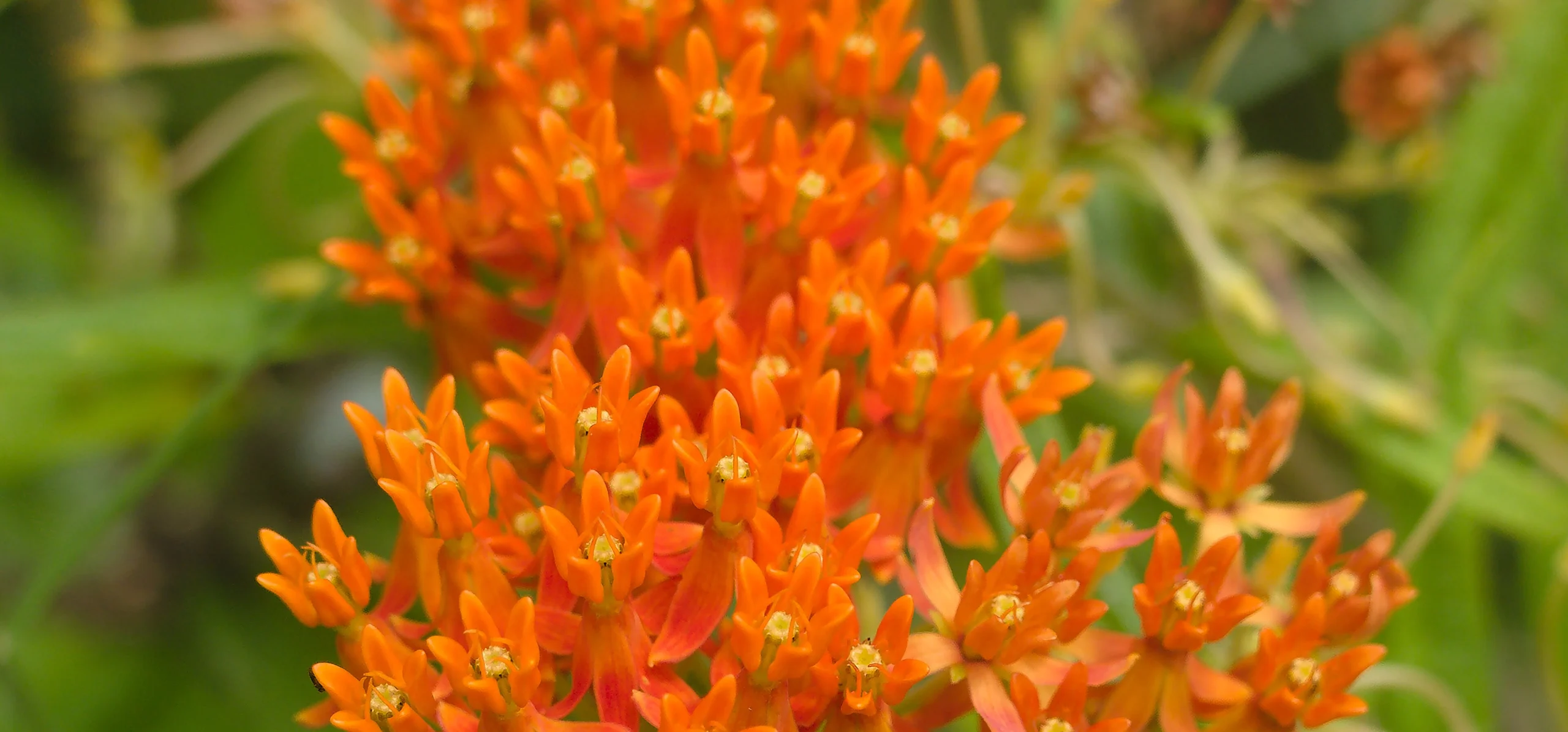
Asclepias syriaca, common milkweed, is a rhizomatous perennial you grow for one reason above all others: it is the plant monarch butterfly caterpillars actually eat, not a nectar source that merely attracts them. If you bought seed, dug a rooted piece from a friend's patch, or found volunteer shoots colonizing a corner of the garden, expect a coarse, upright plant with broad grey-green leaves and a milky latex sap that bleeds from any cut or torn tissue, the trait that gives the whole genus its name. It spreads by rhizomes as readily as it does by wind-blown seed, so the question that matters from day one is not whether it will grow, it will, but how much room you are willing to let it take.
What You're Growing: A Monarch Host, Not Just a Pollinator Plant
The domed, fragrant, pinkish-purple flower clusters draw a wide range of butterflies, bees and wasps for nectar, but the leaves are what matter ecologically: monarch females lay eggs almost exclusively on Asclepias foliage, and the caterpillars sequester the plant's cardiac glycosides as a chemical defense against predators. A single mature clump can carry several instars of caterpillars through a summer, stripped leaves and all, and that damage is the plant working as intended rather than a problem to fix.
Growing From Seed and Cold Stratification
Common milkweed seed has a dormancy that field conditions break with winter cold, and you need to replicate that indoors or the germination rate stays low. Oklahoma State University Extension's native milkweed guide recommends roughly 30 days of cold, moist stratification, seed mixed into damp sand or wrapped in a damp paper towel inside a sealed bag in the refrigerator, before sowing. After stratification, sow shallowly, the fine seed needs light to germinate and should barely be covered, at temperatures around 21°C. Alternatively, sow directly outdoors in autumn and let the ground do the stratifying; either way, expect two to three years in the ground before a seed-grown plant produces its first flower umbel.


Site, Sun and Soil
Give it full sun. Plants tolerate very light shade but stems stretch and flowering thins out noticeably once shade becomes regular. Missouri Botanical Garden lists it as tolerant of most soils, clay, loam or sand, with one clear exception: it performs poorly in ground that stays consistently wet. A rough, dry roadside verge or an unimproved corner of a border suits it better than rich, irrigated beds, where the plant grows lush but also spreads faster than most gardeners expect.
Watering and Establishment
Water a newly planted division or seedling regularly through its first season while the taproot and initial rhizomes establish. After that, step back: this is a drought-tolerant species built for open fields and disturbed ground, and supplemental watering mostly serves to push growth and spread, not to keep the plant alive. If a summer is unusually dry, an occasional deep soak is more useful than frequent shallow watering.
Rhizome Spread and Colony Management
This is the detail that catches gardeners off guard: common milkweed does not stay where you plant it. Lateral rhizomes travel outward below ground and send up new shoots each spring, turning one plant into a patch and a patch into a colony over a few seasons. In a wildlife meadow or a dedicated monarch bed, that spread is the point. In a mixed border, it will crowd out shallow-rooted neighbors, so either give it a bed of its own, sink a deep barrier around the planting area, or grow it in a large, bottomless-free container specifically to contain the roots. Pulling unwanted shoots by hand rarely works for long; any rhizome fragment left in the soil can resprout.
Flowering, Pods and Seed Collection
Flowering runs from late spring into late summer depending on climate, with fragrant umbels forming in the upper leaf axils. Pollinated flowers develop into the plant's signature warty, spindle-shaped seed pods, which ripen from green to grey-brown over several weeks. Left alone, a ripe pod splits along one seam and releases dozens of flat brown seeds, each attached to a tuft of silky white floss that carries it on the wind. If you want to collect seed rather than let it disperse, harvest pods just as the seam starts to split and the seeds inside have turned brown, picking too early yields seed that will not germinate.
Invasive Status in Europe
Outside its native range in central and eastern Canada and the north-central and eastern United States, common milkweed has become a genuine problem. It is established across parts of central and eastern Europe, where the same rhizome spread and wind-dispersed seed that make it useful for monarchs in North America let it colonize sandy grasslands and disturbed ground unchecked, and it is regulated as an invasive alien species of concern in parts of the European Union. If you garden in Europe, check current local and national rules before planting it, and never let seed pods disperse into wild or semi-natural habitat.
Pests, Disease and Toxicity
Milkweed generally shrugs off pests, though oleander aphids can cluster thickly on flower stems and new growth in bright orange colonies, a strong jet of water or a wipe with insecticidal soap usually clears them without harming monarch eggs elsewhere on the plant. The bigger hazard is the sap itself: the milky latex contains cardiac glycosides and can irritate skin and eyes on contact, so wear gloves when cutting stems or pulling unwanted shoots and rinse promptly if sap reaches bare skin. The ASPCA lists milkweed as toxic to cats, dogs and horses, so keep the planting away from grazing pasture and areas where pets browse.
Test your plant knowledge
Tap a card to flip it and reveal the answer.
Common milkweed seeds need weeks of cold, moist stratification before they germinate reliably. Tap to reveal ✓ True
Once established, common milkweed tolerates dry spells better than it tolerates constantly soggy ground. Tap to reveal ✓ True
A plant grown from seed usually flowers in its first summer. Tap to reveal ✕ False
Common milkweed only spreads by seed and never by its roots. Tap to reveal ✕ False
The ASPCA lists milkweed as toxic to cats, dogs and horses. Tap to reveal ✓ True
Sources
References consulted for this guide
- Asclepias syriaca L., GBIF Backbone Taxonomygbif.org
- POWO: Asclepias syriaca L., native distributionpowo.science.kew.org
- ASPCA: Milkweed toxicity to cats, dogs and horsesaspca.org
- Missouri Botanical Garden Plant Finder: Asclepias syriacamissouribotanicalgarden.org
- Oklahoma State University Extension: Native Milkweed Germination Guideextension.okstate.edu
- CABI Compendium: Asclepias syriaca (common milkweed) datasheetcabi.org
- Reference entity : Wikipédiaen.wikipedia.org