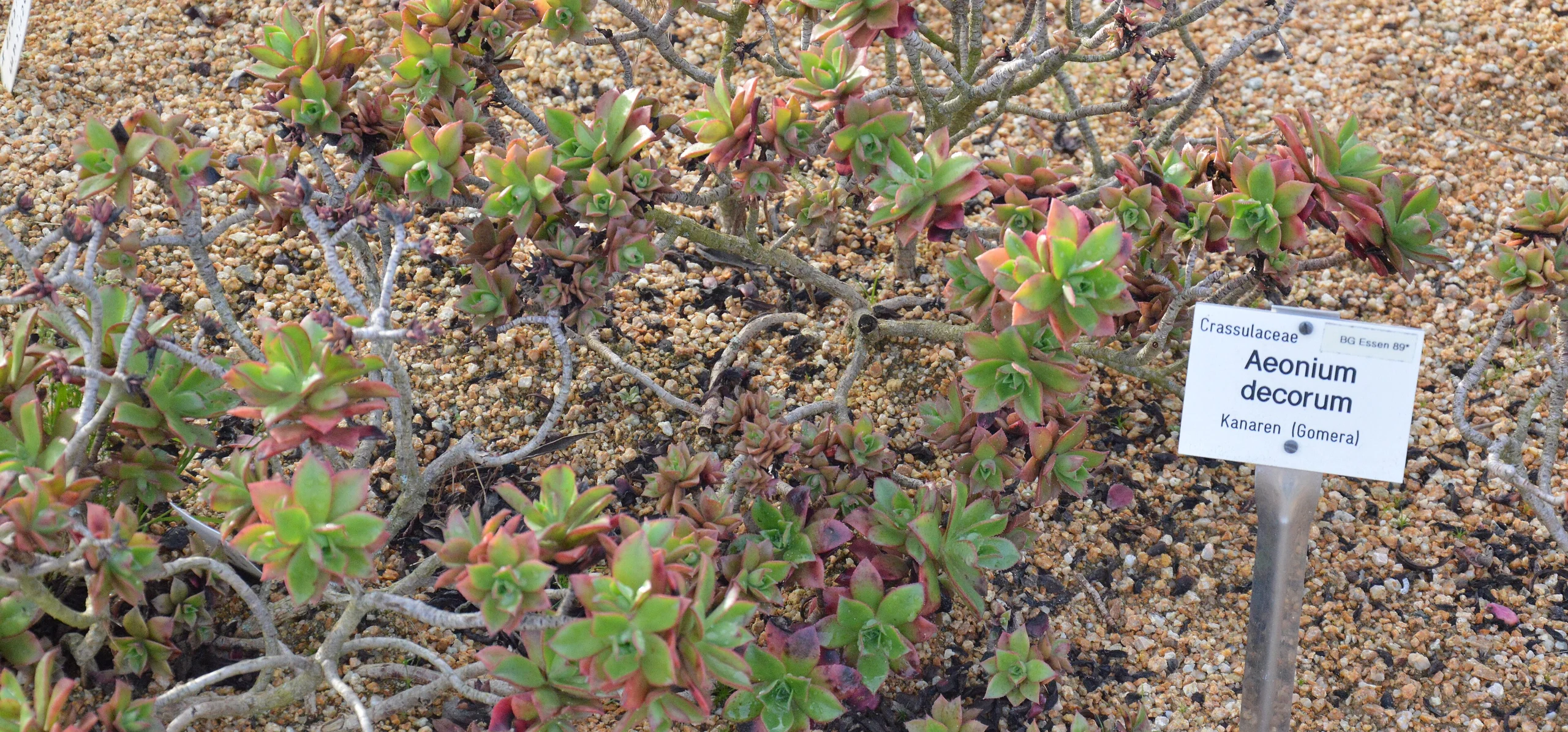
Aeonium decorum
Family · Crassulaceae
Aeonium decorum care: how this Canary Islands succulent grows through winter, rests dry in summer, and roots easily from stem cuttings.
Aeonium decorum
Plant profile
- WateringLittleWater every 21 days
- Light exposurePartial sun
Growth
- Family
- Crassulaceae
- Life cycle
- Perennial
- Growth speed
- 4/10
- Mature size
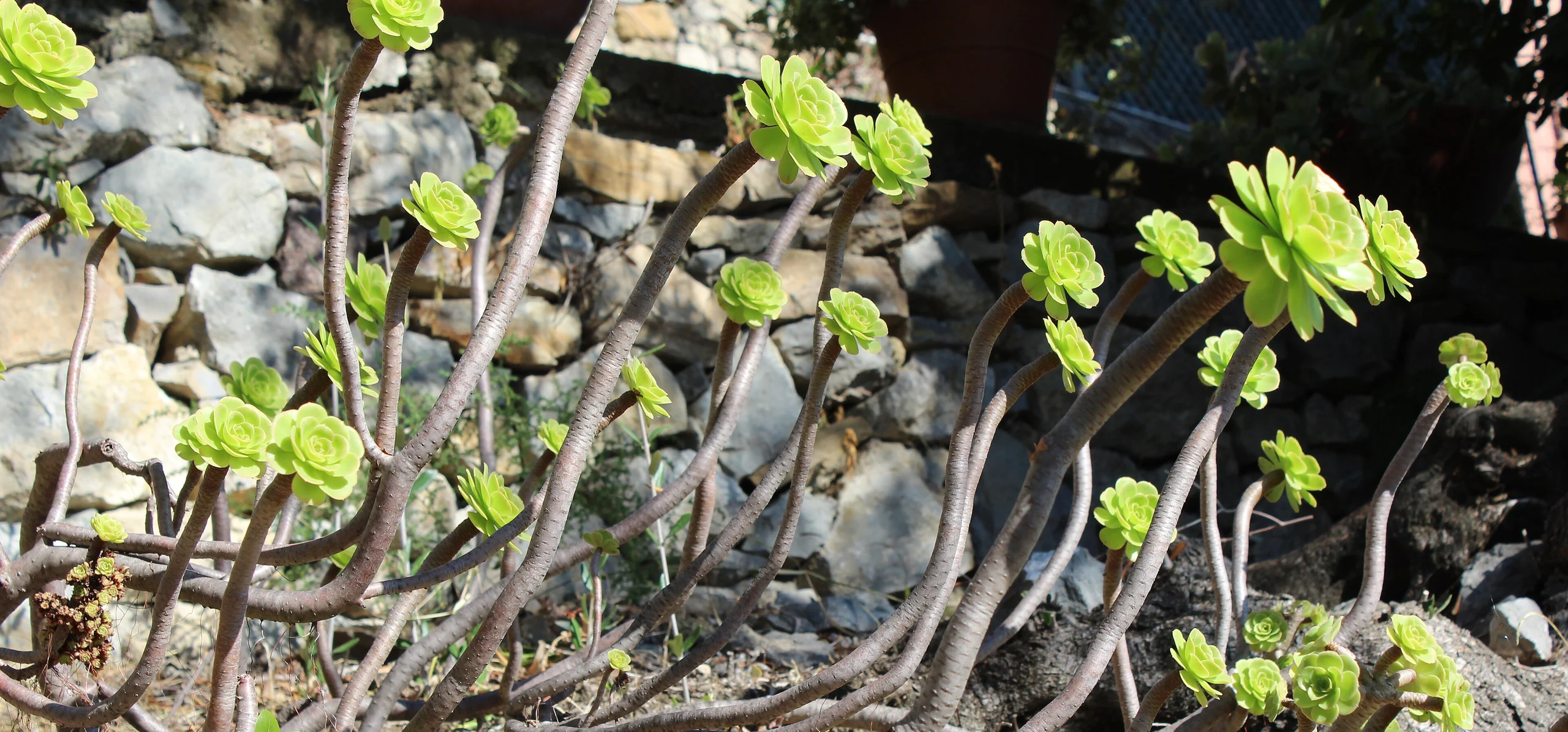
- Branching rosette subshrub
- Flowering
- Pale yellow, star-shaped panicles
- Propagation
- Cutting
Dormancysummer dormant, winter growing
Soil & climate
- Soil types
- gritty, fast-draining, cactus/succulent mix
- Drought tolerance
- Yes
Light & Placement
- Origin
- Canary Islands (La Gomera, NE Tenerife)
- Where to place it
- sunny windowsill
- unheated bright greenhouse
- full sun to light shade in frost-free climates
- unglazed terracotta
Safety
- Toxicity
- Not evaluated by the ASPCA; toxicity undetermined
- Pet safe
- No
Where it grows
World distribution
Aeonium decorum is native to a single country: Spain.GBIF records 273 documented identifications across 7 countries, with the largest concentrations in Spain, Belgium, and United States.
- Spain
Yellow to orange dots: concentration of documented identifications per country. Green countries: sourced native range. Source: GBIFNative range from POWO (Kew).
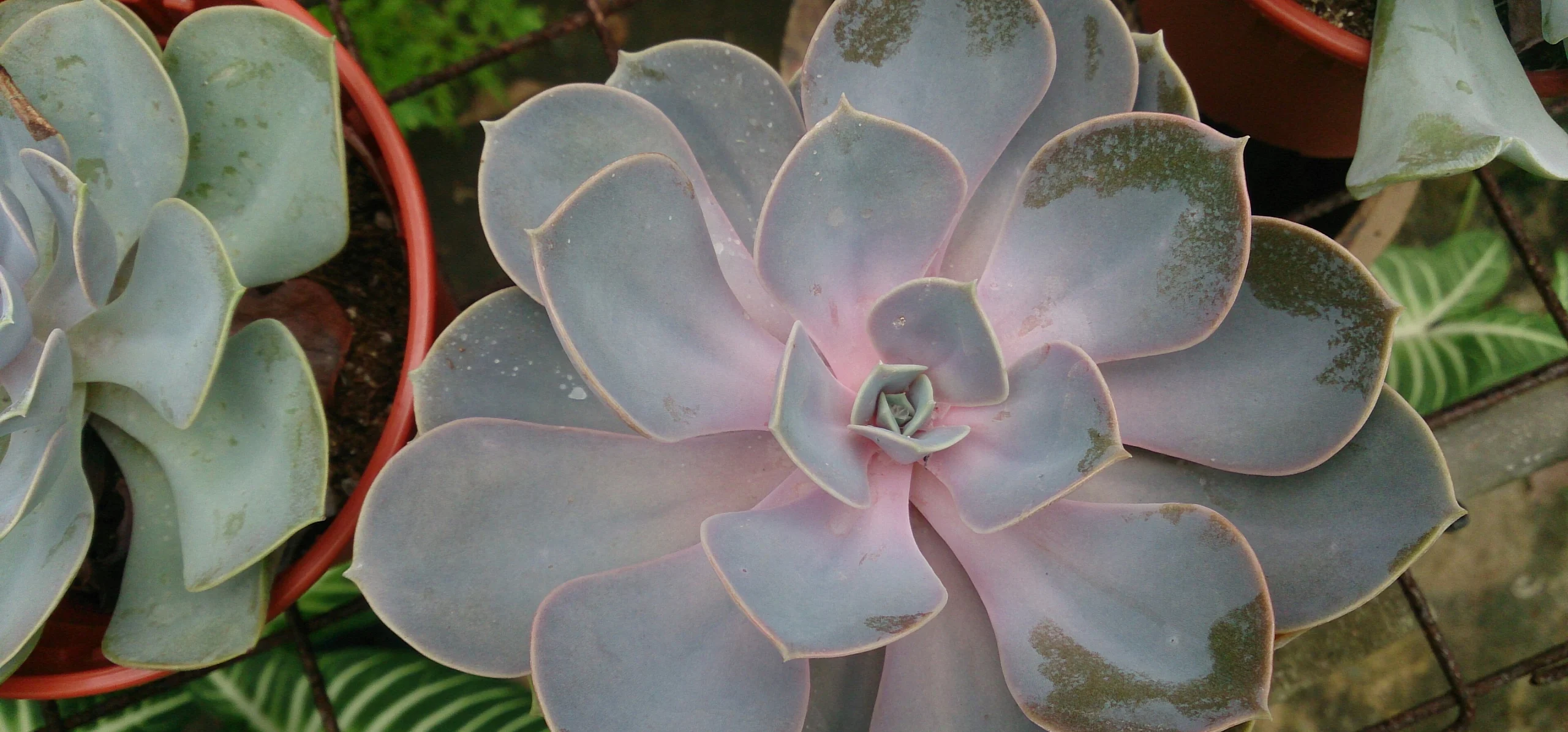
Aeonium decorum has no widely accepted English common name: nurseries sell it under its Latin name, or under the names of its variegated selections, such as 'Sunburst' and 'Tricolor'. It is a small succulent subshrub from the Canary Islands, where it grows on rocky slopes on La Gomera and in the north-east of Tenerife, forming flat rosettes of blue-green, often red-rimmed leaves on branching stems. Unlike a typical houseplant that rests in winter, this Aeonium follows the opposite calendar: it grows through the cool, damp months and shuts down through the hot, dry summer, when the rosette closes tight and almost stops. Understanding that reversed rhythm, more than any single number, is what keeps this plant healthy for years instead of rotting the first winter or collapsing the first heatwave.
Where Aeonium decorum comes from
Kew's Plants of the World Online lists the native range of Aeonium decorum as the Canary Islands, specifically La Gomera and north-eastern Tenerife, where it grows as a succulent subshrub on cliffs and rocky, volcanic ground. That island climate is mild and rainy in winter and hot and dry in summer, which is the origin of the plant's unusual growth pattern. It is also the reason a plant that looks perfectly healthy in spring can seem to give up in August: it is not struggling, it is simply doing what it has done on those slopes for a very long time.
Light and placement
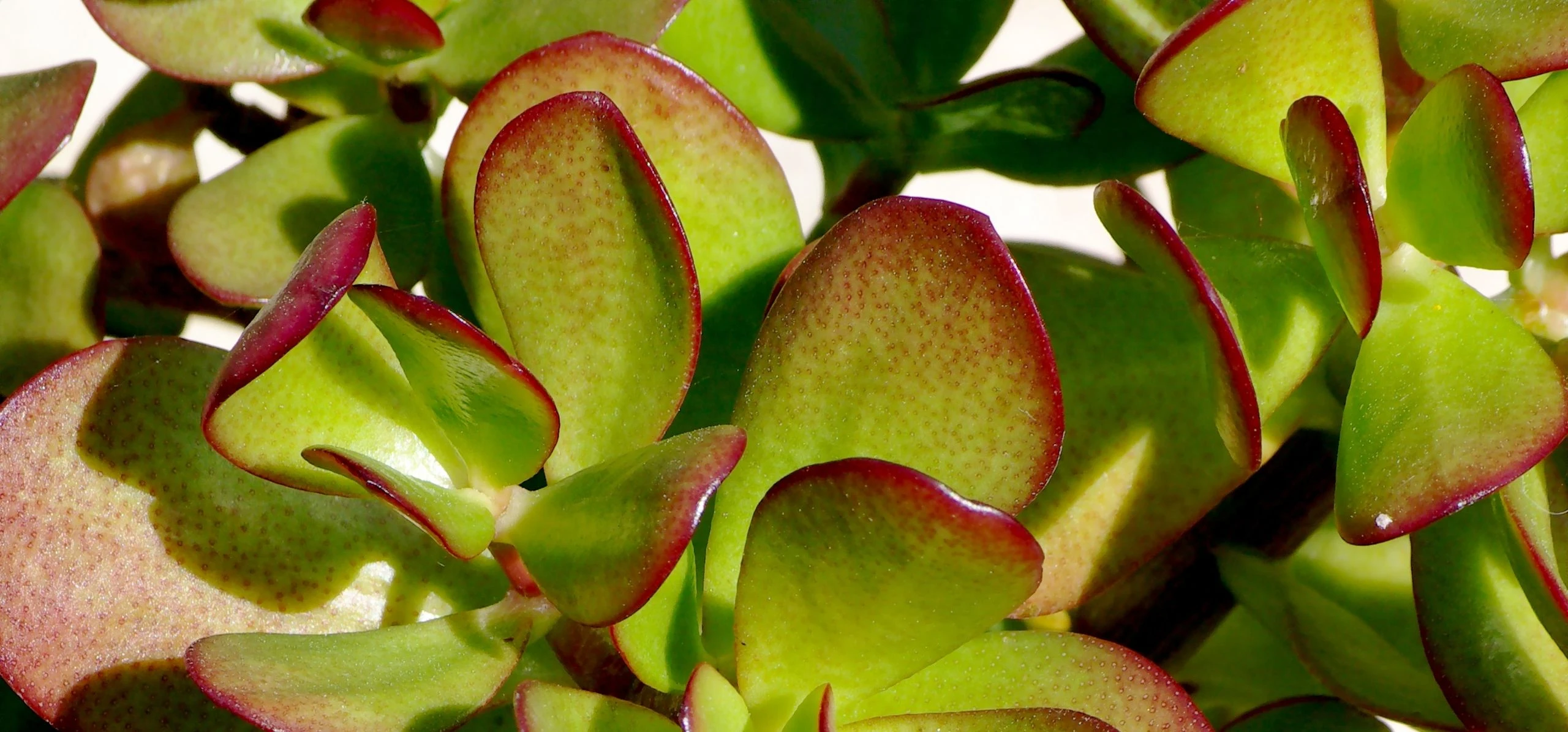
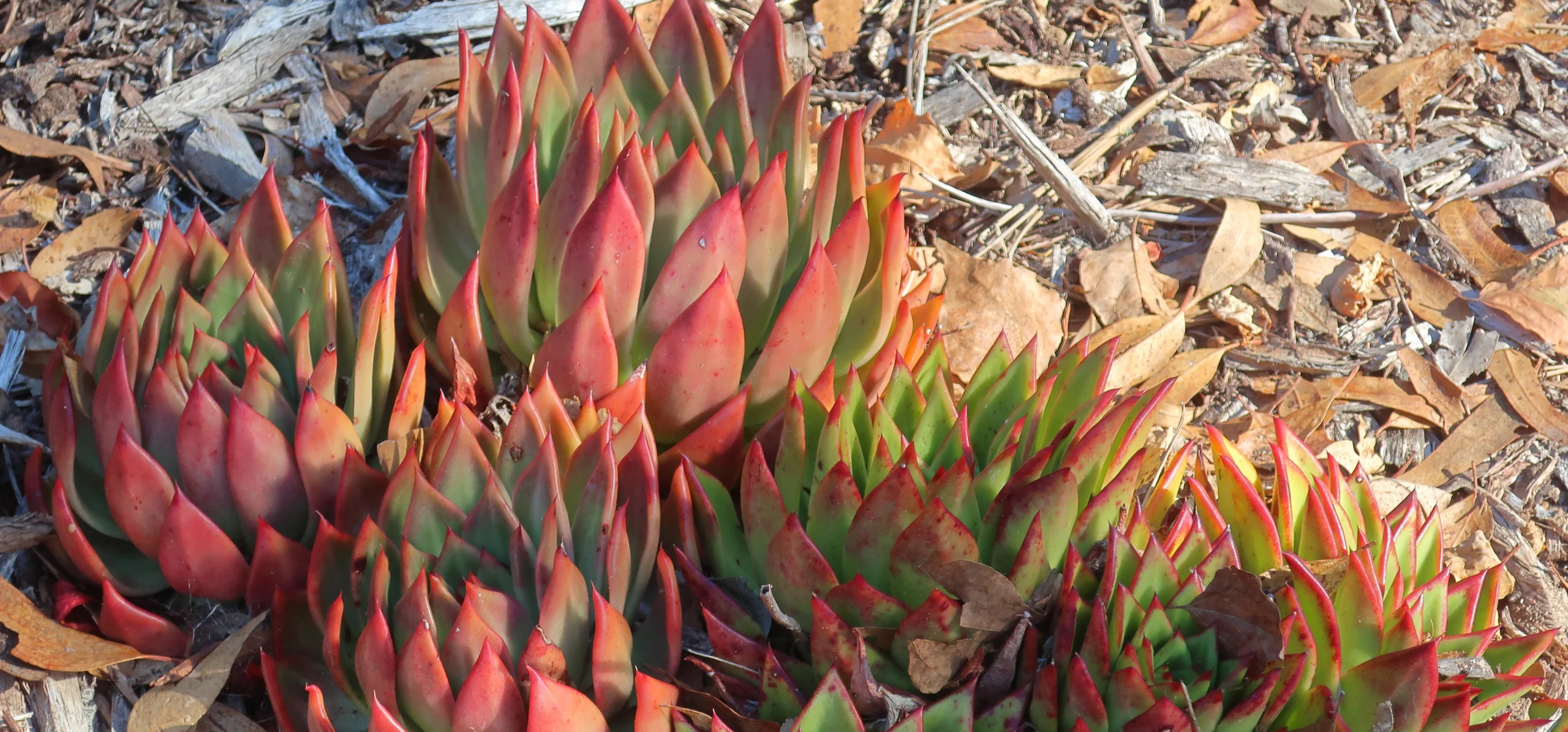
Give it as much bright light as you can. Outdoors in a mild, frost-free climate it takes full sun to light shade; indoors, a south or west-facing windowsill or an unheated greenhouse suits it best. In strong light the leaf margins flush a deep coppery red or purple, a trait that is especially striking on the variegated 'Sunburst' and 'Tricolor' forms, whose rosettes carry broad cream and pink bands alongside the green. Move a plant into brighter light gradually, since leaves used to shade can scorch if suddenly exposed to midday sun. Too little light has the opposite problem: the rosette loses its flat, tidy shape, the stem stretches, and the leaves space out and lose their color.
The winter-growing, summer-dormant cycle
This is the detail that separates Aeonium decorum from almost every other succulent on a windowsill. University of California extension guidance on succulents places Aeonium among the winter growers: active growth runs through the cool season, and the plant enters a dormant period in summer, when the soil should be kept dry, with very little or no water given unless the leaves start to shrivel noticeably. In practice that means watering generously, though never leaving the pot standing in water, from autumn through spring whenever the top of the mix has dried out, then cutting back hard as the weather warms. A rosette that closes up and sits tight through July and August is not thirsty, it is doing exactly what it should; watering it heavily at that point is one of the more common ways to lose the plant to rot.


Soil and potting
Plant Aeonium decorum in a gritty, fast-draining mix, such as a cactus and succulent blend lightened further with coarse sand, pumice or perlite. A pot with a drainage hole is essential, and unglazed terracotta is a good choice because the porous walls let the compost dry between waterings, which matters most through the resting summer months. Keep the plant on the snug side; a container only slightly larger than the root ball encourages the tidy, low-branching habit that makes a mature clump of rosettes so architectural.
Feeding and repotting
Feed lightly, and only during the active growing season from autumn to spring, with a dilute balanced or cactus fertilizer; stop altogether once the plant slows down for summer. Repot in early autumn, just as new growth is about to resume, rather than in the middle of the summer rest, when disturbed roots have little chance to recover before they need to take up water again. Handle the stems carefully when you do: the leaf rosettes snap off cleanly if knocked, which is useful for propagation but frustrating if it happens by accident during a repot.
Cold tolerance and bringing it under cover
Native to a mild, frost-free stretch of the Canary Islands, Aeonium decorum has no meaningful tolerance for freezing weather. Where winters bring frost, grow it in a pot that can be moved under glass, into a bright porch, or indoors before the first cold snap, and keep it on the dry side while it is inside, since cool, low-light conditions combined with wet soil are what cause stems to blacken and rot. In genuinely frost-free, Mediterranean-type climates it can stay outdoors year-round, where established plants eventually produce panicles of small, star-shaped, pale yellow flowers, usually from a rosette that then dies back after flowering while the rest of the branching plant carries on.
Propagating from stem cuttings
Stem cuttings are the easiest way to make new plants, and the fastest way to rescue a rosette that has snapped off. Cut a rosette with two to three centimetres of bare stem attached, then set it aside somewhere dry and out of direct sun for two or three days so the cut end calluses over. Press the callused stem into shallow, gritty mix, and resist the urge to water immediately; wait until small roots have formed, which is easier to check by a gentle tug than by digging around. Rooted cuttings taken in autumn settle in fastest, since they arrive right at the start of the plant's growing season instead of heading straight into summer dormancy.
Common mistakes and pests
The single biggest mistake is watering on a fixed schedule instead of watching the plant: regular summer watering, applied out of habit, is the most reliable way to rot the roots and the base of the stem. The second is too little light, which turns a compact, colorful rosette into a pale, stretched one that never recovers its shape, even if it is later moved somewhere brighter. Mealybugs are the pest to watch for, tucked into the tight leaf axils near the center of the rosette, where a small dab of methylated spirit on a cotton swab deals with them before they spread. Beyond that, this is a plant that rewards being left alone through the parts of the year when it wants to rest.
Test your plant knowledge
Tap a card to flip it and reveal the answer.
Aeonium decorum grows most actively in winter and rests in summer. Tap to reveal ✓ True
You should water Aeonium decorum generously all through summer. Tap to reveal ✕ False
Aeonium decorum tolerates hard, prolonged frost outdoors. Tap to reveal ✕ False
Aeonium decorum can be propagated from stem cuttings. Tap to reveal ✓ True
Aeonium decorum needs a heavy, moisture-retentive soil. Tap to reveal ✕ False
Sources
References consulted for this guide
- GBIF - Aeonium decorumgbif.org
- Plants of the World Online (Kew) - Aeonium decorumpowo.science.kew.org
- UC ANR - Succulents (dormancy and watering)ucanr.edu
- Reference entity : Wikidatawikidata.org