Echeveria 'Perle Von Nurnberg'
Echeveria
Family · Crassulaceae
Echeveria 'Perle von Nurnberg' care: why the rosette shifts pink to grey with light, soak-and-dry watering, gritty mix, and beheading a stretched plant.
Echeveria
Plant profile
- WateringLittleWater every 14 days
- Light exposureFull sun
Growth
- Family
- Crassulaceae
- Life cycle
- Perennial
- Growth speed
- 3/10
- Mature size
- 10–50 cm
- Spread
- 10–50 cm
- Flowering
- Light red/coral flowers on panicles to 45 cm (RHS)
- Propagation
- Cutting
- Offsets
Dormancygrowth slows sharply in winter; keep almost dry
Time to maturity5 to 10 years to full size (RHS)
Soil & climate
- Soil types
- loam or sand, well-drained, gritty cactus/succulent mix
- Drought tolerance
- Yes
Light & Placement
- Origin
- Garden hybrid; genus Echeveria native from S. Texas to NW. Argentina
- Where to place it
- bright windowsill
- full sun, sheltered position
- shallow, wide pot with drainage hole
Safety
- Toxicity
- CatsSafe
- DogsSafe
- HorsesSafe
Data fromGBIFPlants of the World Online (Kew)RHSASPCANC State Extension
Where it grows
World distribution
GBIF records 17,120 documented identifications across 50 countries, with the largest concentrations in Mexico, Ecuador, and United States.
Yellow to orange dots: concentration of documented identifications per country. Green countries: sourced native range. Source: GBIF.
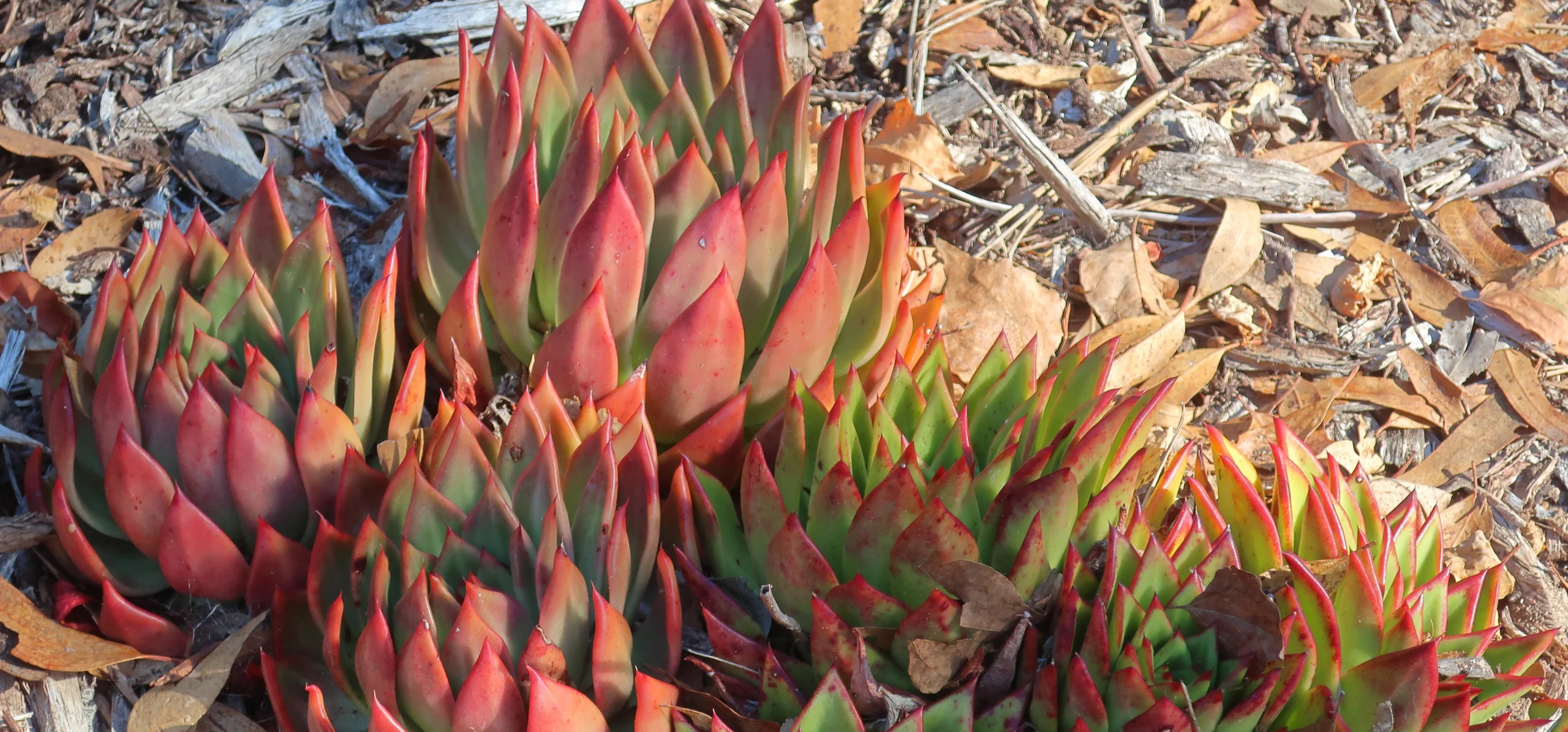
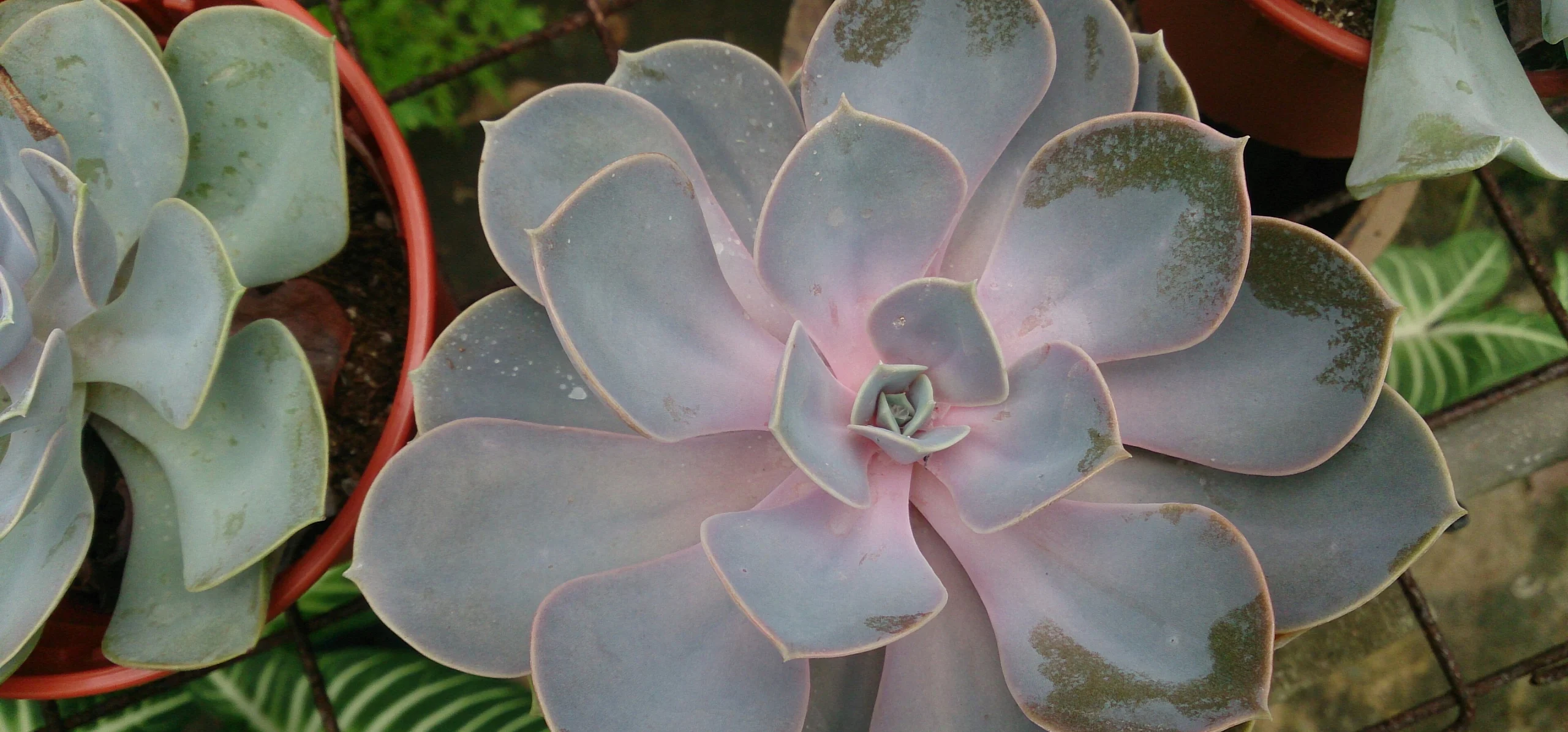
Echeveria 'Perle von Nurnberg' is a nursery hybrid, not a species found growing wild anywhere, and that distinction explains a few oddities in how it is classified and how it behaves in a pot. The rosette opens flat and wide, roughly 10 to 20 cm across, in a color range that runs from dusty pink through lavender to a metallic grey depending on how much sun it gets, with the newest leaves at the center usually carrying the deepest pink. It is one of the hardier Echeveria hybrids for a windowsill or a covered patio, shrugging off a few degrees of chill that would mark a softer succulent, but it still rots quickly in a soggy pot and stretches into a leggy mess without strong light. Buy it for the color, then manage light and water the way you would for any Echeveria: bright, dry, and unhurried.
A Garden Hybrid, Not a Wild Species
The plant sold everywhere as Echeveria 'Perle von Nurnberg' has no accepted binomial of its own. GBIF and other taxonomic databases file it as a cultivar under the genus Echeveria DC. rather than as a distinct species, which is why the taxonomy on this page (family Crassulaceae, order Saxifragales) is recorded at genus level instead of under a species name. The cultivar itself is generally credited to the German succulent grower Richard Graessner, said to have raised it in the 1930s by crossing Echeveria gibbiflora 'Metallica', a large, purple-leaved species from central Mexico, with Echeveria potosina. That parentage is repeated across grower catalogs and succulent references rather than tied to a single formal registration record, so treat the exact cross as garden history rather than a verified botanical fact, the way most old hybrid succulents are documented. What is certain is that it has stayed in commercial production for close to a century, and the RHS has given it its Award of Garden Merit.
Where the Pink Turns to Grey: Light and Color
The rosette's color is not fixed. Strong, cool-season sun pushes it toward a frosted, pinkish lavender with a visible surface bloom, the powdery wax common to many Echeverias, while a plant kept indoors in dim, warm conditions fades to a plainer blue-grey and eventually loses most of the pink. New leaves show the change first, emerging pale at the center of the rosette and coloring up over one to two weeks as they harden off in whatever light they are actually getting, so a recent change of position takes a little while to show in leaves that were already grown. Move a faded plant back into strong light gradually over a week or two rather than all at once, since leaves that softened in shade can scorch in sudden full sun.


The Soak-and-Dry Watering Rule
Water the pot thoroughly until it runs from the drainage hole, then leave the mix bone dry before watering again, checking with a finger rather than a fixed schedule. Cut back hard in winter: RHS growing notes for this cultivar call for keeping it almost dry through the cold months and watering only moderately, with feeding, during active growth. A rosette that has drawn its outer leaves in tight and slightly wrinkled is thirsty; one with soft, translucent, or yellowing lower leaves has been watered too often, and watering again on the usual schedule at that point usually finishes the job of rotting the crown.
Gritty Soil and the Right Pot
RHS growing guidance lists loam or sand, well drained, as the soil this cultivar wants, which in practice means a bagged cactus and succulent mix or an ordinary potting mix cut by half with coarse sand, pumice, or perlite. A shallow, wide pot suits the flat rosette better than a deep one, since the compact root system rarely uses the extra depth, and unused soil at the bottom of a tall pot just stays wet for longer between waterings. Terracotta, which lets the mix breathe and dry through the pot wall, is more forgiving of an overwatering mistake than glazed ceramic or plastic.
Etiolation: When to Behead and Restart the Rosette
Given too little light, the rosette etiolates: it stops sitting flat and instead opens up along a lengthening stem, with new leaves emerging pale, thin, and spaced further apart than the tight older growth below them. Unlike the reversible color fade, etiolation does not correct itself once the plant is moved back into strong light; the stretched section of stem stays stretched. The standard fix is to behead the rosette, cutting cleanly through the stem an inch or so below the head, letting the cut surface callus for three to five days out of direct sun, then setting it on top of fresh gritty mix to root at the base. The leafless stump left in the pot usually pushes new offsets from its sides within a few weeks once it is getting real light again, turning one leggy plant into several new ones.
Propagating from a Single Leaf
A healthy leaf twisted cleanly from the stem, so the base comes away in one piece, can be left to dry and callus for two to three days, then laid flat on top of gritty mix without burying it. Because this is a hybrid rather than a straight species, take rates on leaf propagation run more variable than on a plant like Echeveria agavoides: some leaves throw a tiny rosette and roots within a couple of weeks, others sit doing nothing for a month before rooting, and a portion will not root at all, which is a normal outcome rather than a sign of bad technique. Offsets that form naturally around the base of an older rosette are the more reliable route, and can be detached with a clean cut once they have grown their own roots. Spring and early summer, when the plant is actively growing, give faster and more consistent results than the middle of winter dormancy.
Mealybugs, Frost, and Whether It's Safe Around Pets
Mealybugs are the pest most likely to show up, tucked into the tight gaps between leaves near the crown or hiding among dead leaves left at the base of the rosette, so stripping off spent lower leaves removes one of their favorite hiding spots. A cotton swab dipped in isopropyl alcohol, wiped directly onto the white, waxy clusters, kills them on contact, and a bad infestation usually needs two or three passes a week apart rather than a single treatment. The RHS rates this cultivar H2, tolerant of low temperatures but not of an actual freeze, so bring container plants under cover before the first frost and keep them dry rather than merely cool over winter, since cold, wet soil kills roots faster than cold air on its own. On the safety side, the ASPCA's toxic-and-non-toxic plant list covers Echeveria under the common name Blue Echeveria and rates the genus non-toxic to cats, dogs, and horses, which covers this hybrid along with the rest of the group.
Test your plant knowledge
Tap a card to flip it and reveal the answer.
Echeveria 'Perle von Nurnberg' is an accepted wild species rather than a cultivated hybrid. Tap to reveal ✕ False
The rosette's pink color intensifies under strong, cool-season light and fades toward grey in dim, warm conditions. Tap to reveal ✓ True
Soak-and-dry watering means keeping the mix lightly moist at all times. Tap to reveal ✕ False
An etiolated, stretched rosette will tighten back up once it is returned to strong light. Tap to reveal ✕ False
The ASPCA lists Echeveria as non-toxic to cats, dogs, and horses. Tap to reveal ✓ True
Sources
References consulted for this guide
- GBIF - Echeveria DC.gbif.org
- Plants of the World Online (Kew) - Echeveria DC.powo.science.kew.org
- RHS - Echeveria 'Perle von Nurnberg'rhs.org.uk
- ASPCA - Blue Echeveria (Echeveria)aspca.org
- NC State Extension - Echeveriaplants.ces.ncsu.edu
- Reference entity : Wikipédiaen.wikipedia.org