Lipstick Echeveria
Echeveria agavoides
Family · Crassulaceae
Echeveria agavoides care: why the leaf tips turn red under strong light, the soak-and-dry watering rule, gritty mix, and propagating from a single leaf.
Echeveria agavoides
Plant profile
- WateringLittleWater every 14 days
- Light exposureFull sun
Growth
- Family
- Crassulaceae
- Life cycle
- Perennial
- Growth speed
- 3/10
- Mature size
- 10–50 cm
- Spread
- 10–50 cm
- Flowering
- Red, yellow-tipped lantern flowers on racemes to 40 cm (RHS)
- Propagation
- Seed
- Cutting
- Offsets
Dormancygrowth slows sharply in winter with much less water
Time to maturity5 to 10 years to full size (RHS)
Soil & climate
- Soil types
- loam or sand, well-drained, gritty cactus/succulent mix
- Drought tolerance
- Yes
Light & Placement
- Origin
- NE. and SW. Mexico
- Where to place it
- bright, filtered-light windowsill
- full sun, sheltered position
- shallow pot with drainage hole
Safety
- Toxicity
- CatsSafe
- DogsSafe
- HorsesSafe
Data fromGBIFPlants of the World Online (Kew)RHSASPCANC State Extension
Where it grows
World distribution
Lipstick Echeveria is native to a single country: Mexico.GBIF records 342 documented identifications across 6 countries, with the largest concentrations in Mexico, United States, and Belgium.
- Mexico
Yellow to orange dots: concentration of documented identifications per country. Green countries: sourced native range. Source: GBIFNative range from POWO (Kew).
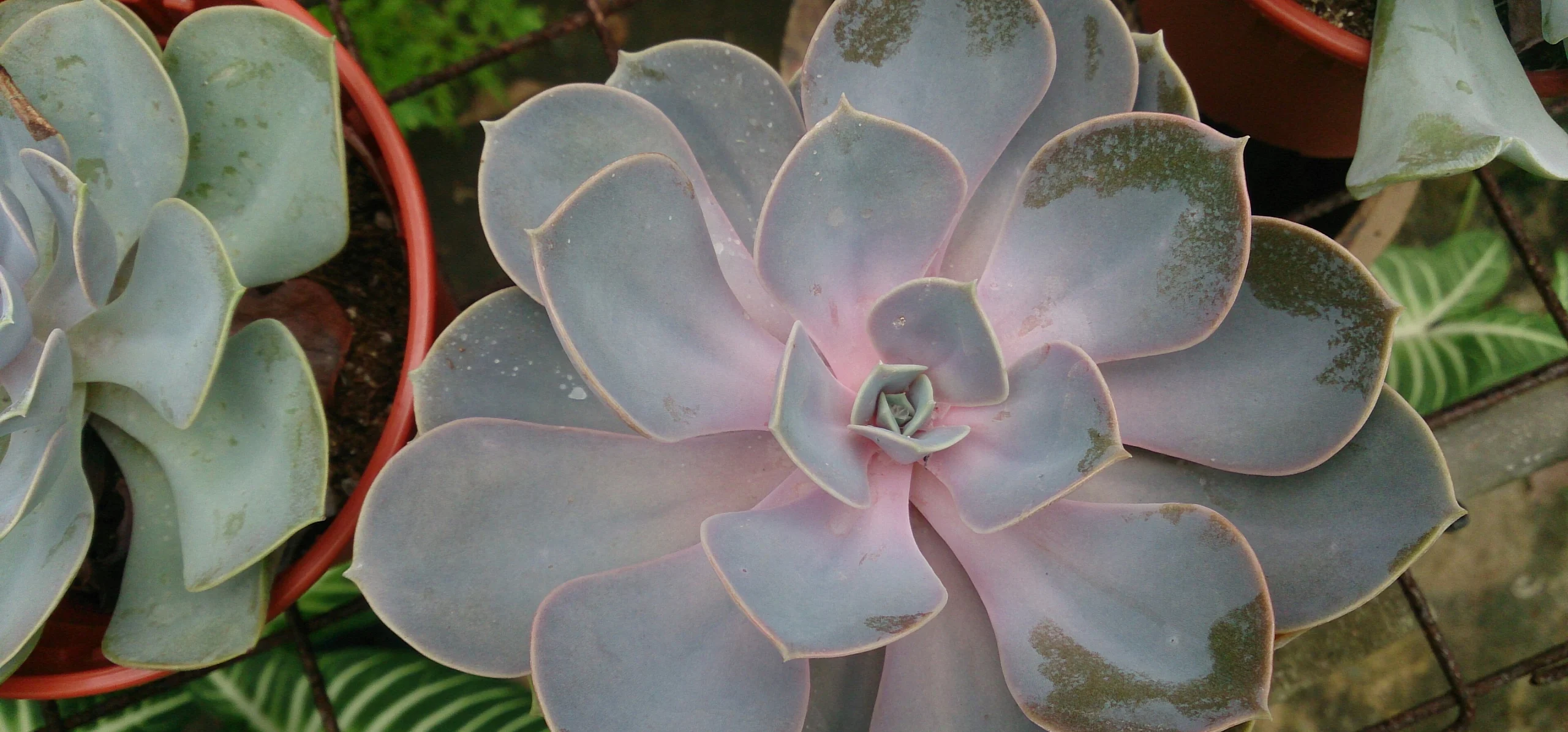
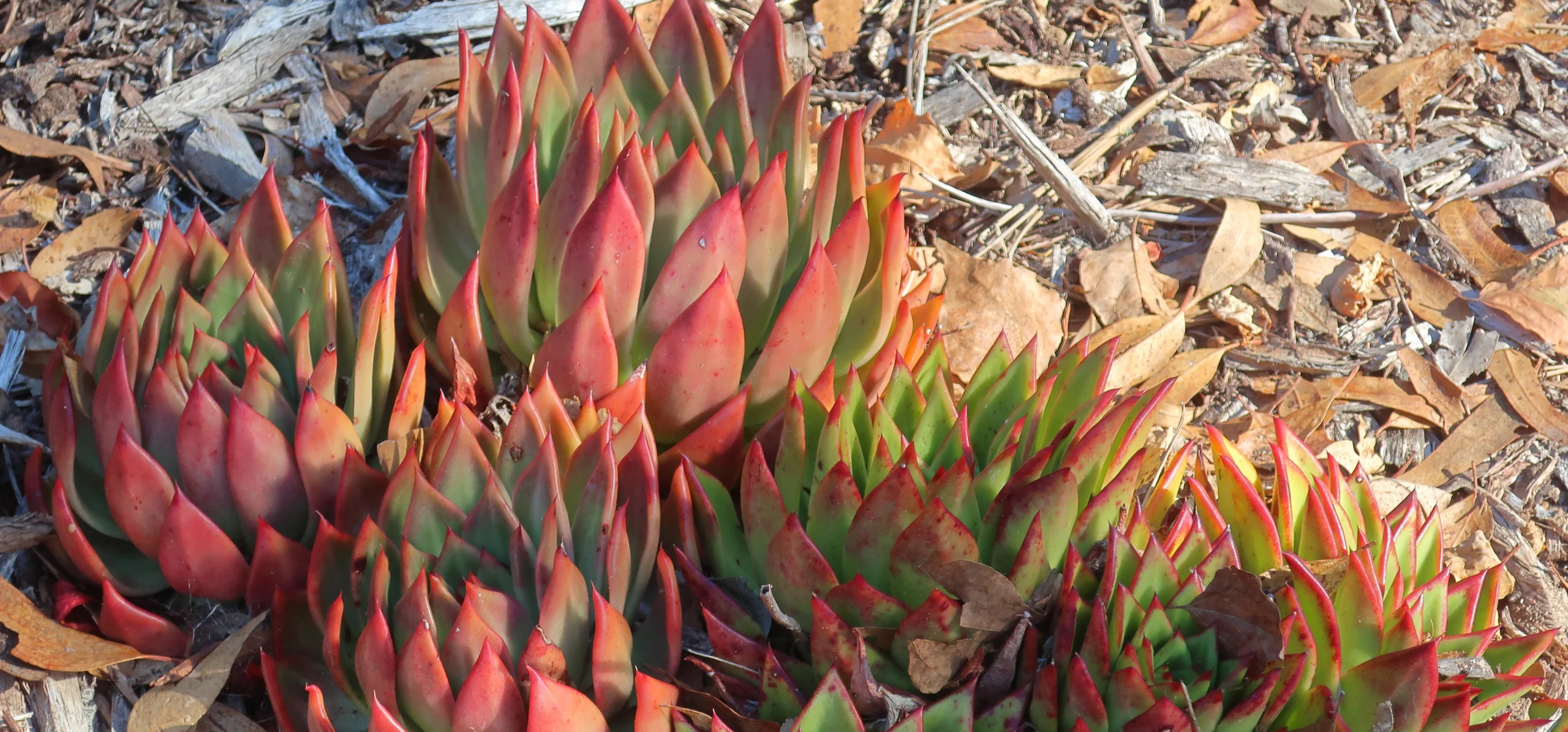
Echeveria agavoides gets its common names, molded-wax and Lipstick Echeveria, from a rosette that looks more like a small agave than a typical soft-leaved Echeveria: thick, triangular leaves that come to a firm point rather than a rounded tip. Under strong light and cool nights the margin of each leaf colors up into a translucent red or maroon band, the trait behind cultivars like 'Ebony', 'Romeo' and 'Lipstick', while a plant kept dim and warm stays plain green. It is one of the sturdier Echeverias for a windowsill, tolerant of an occasional missed watering thanks to those thick leaves, but it rots fast if the mix stays wet, so drainage matters more than feeding or fuss.
Where Echeveria agavoides grows in the wild
Kew's Plants of the World Online lists the native range of Echeveria agavoides as NE. & SW. Mexico, where it grows among rock and dry shrubland rather than in cultivated soil. That native climate, intense sun, sharp drainage on rocky slopes, and a marked dry season, explains most of what the plant asks for in a pot: full light, a mix that never stays soggy, and a rest period when growth and water both slow down.
'Ebony', 'Romeo' and 'Lipstick': choosing a variety
The plain species has pale green leaves edged in red, but most of what is sold under this name is a selected form bred to push that red band further. 'Lipstick' keeps a green body with a bright red rim along every leaf; 'Romeo' and its darker sibling 'Red Taurus' flush a deeper wine-red across most of the leaf in strong light; 'Ebony' goes furthest, turning near-black at the tips while the base stays green. None of these differ in care from the species itself, so pick on color and let light do the rest of the work.
Light and the red edge
The RHS rates this species for full sun and a sheltered position outdoors, and recommends bright, filtered light rather than harsh midday glass for plants grown indoors. The red pigment along the leaf margin is a stress response to intense light and cool night temperatures, the same mechanism that colors up many succulents, so a rosette moved from a nursery greenhouse to a dim indoor corner will gradually lose its red rim and green out within a few weeks. Reintroduce strong sun gradually over a week or two after a long stretch indoors, since leaves that have softened in low light can scorch if suddenly exposed to full midday sun.


The soak-and-dry watering rule
Water thoroughly until it runs from the drainage holes, then leave the mix to dry out completely before watering again, checking by pushing a finger an inch or two into the mix rather than watering on a fixed calendar. The RHS calls for moderate watering through the growing months and a sharp reduction in winter, and university extension guidance on the genus describes Echeverias as needing little water given their desert origin and strong drought tolerance. A rosette that has pulled its lower leaves in tight and firm is simply thirsty; one with soft, translucent, or yellowing leaves at the base has usually been watered too often, not too little.
Soil and potting
Use a loam or sand based mix that drains quickly, either a bagged cactus and succulent compost or a standard potting mix cut roughly half and half with coarse sand, pumice, or perlite. Extension guidance on the genus is explicit that very well drained soil is what separates a healthy Echeveria from one that rots at the base. Choose a shallow pot, terracotta over glazed ceramic where possible, with a real drainage hole, since a rosette this compact rarely needs the root depth a tall nursery pot provides, and excess unused soil around the roots just holds water longer than the plant wants.
Avoiding stretched, etiolated growth indoors
Given too little light, Echeveria agavoides etiolates: the rosette opens up, leaves space out along a visibly elongating stem, and new leaves emerge pale and thin instead of tight and colored. Unlike a fading leaf color, this is not reversible by moving the plant back into the sun; the stretched section of stem stays stretched. The fix is to behead the rosette, cutting through the stem just below the head, let the cut end callus for a few days, then reroot it in fresh gritty mix at the correct depth, while the leafless stub left behind will often push new offsets from its sides once it gets real light again.
Propagation from leaves and offsets
This species roots readily from a single leaf: twist a healthy lower leaf free from the stem in one clean motion so the base comes away intact, let it dry and callus for two to three days out of direct sun, then lay it on top of gritty mix without burying it. A tiny rosette and roots form at the base over the following weeks, drawing on the stored leaf until it can be potted on its own once the original leaf has shriveled. Offsets that form naturally around the base of a mature rosette can simply be detached with a clean cut once they have their own roots, and both methods, along with stem cuttings, work fastest when started in spring or early summer rather than the middle of winter dormancy.
Mealybugs, winter rest and common mistakes
Mealybugs are the main pest to watch for, tucking into the tight leaf axils near the crown and among fallen dead leaves at the base of the rosette, so clearing debris from the soil surface removes one of their favorite hiding spots. A cotton swab dipped in isopropyl alcohol wiped directly onto the white, waxy clusters kills them on contact; a bad infestation may need repeat treatments a week apart. The RHS rates the species H2, tolerant of cool temperatures but not of an actual freeze, so bring container plants under cover before the first frost and keep them on the dry side while indoors for winter, since cold, wet soil kills the roots faster than cold air alone. The two mistakes that account for most losses are watering on a fixed schedule through a cool or dormant spell, which rots the crown, and leaving water sitting in the cup formed by the central leaves after a soak, which can mark or rot the newest growth. On the safety side, the ASPCA lists this species, under its older synonym Urbinia agavoides, as non-toxic to cats, dogs, and horses.
Test your plant knowledge
Tap a card to flip it and reveal the answer.
Echeveria agavoides holds its reddest leaf-edge color under strong light and cool nights. Tap to reveal ✓ True
The soak-and-dry rule means watering little and often to keep the mix always slightly damp. Tap to reveal ✕ False
A single healthy leaf, twisted cleanly from the stem, can grow into a new plant. Tap to reveal ✓ True
An etiolated, stretched rosette will pull itself back together once returned to strong light. Tap to reveal ✕ False
The ASPCA lists this species as non-toxic to cats, dogs, and horses. Tap to reveal ✓ True
Sources
References consulted for this guide
- GBIF - Echeveria agavoidesgbif.org
- Plants of the World Online (Kew) - Echeveria agavoidespowo.science.kew.org
- RHS - Echeveria agavoidesrhs.org.uk
- ASPCA - Urbinia Agavoides (Echeveria agavoides)aspca.org
- NC State Extension - Echeveriaplants.ces.ncsu.edu
- Reference entity : Wikipédiaen.wikipedia.org