Peruvian Lily
Alstroemeria aurea
Family · Alstroemeriaceae
Alstroemeria aurea grows orange-yellow, dark-flecked flowers from fleshy roots that resent disturbance. How to plant, feed and overwinter it outdoors.
Alstroemeria aurea
Plant profile
- WateringModerateWater every 7 days
- Light exposurePartial sun
- Ideal temperature-10–-5 °C
Growth
- Family
- Alstroemeriaceae
- Life cycle
- Perennial
- Growth speed
- 5/10
- Mature size
- 50–100 cm
- Spread
- 10–50 cm
- Flowering
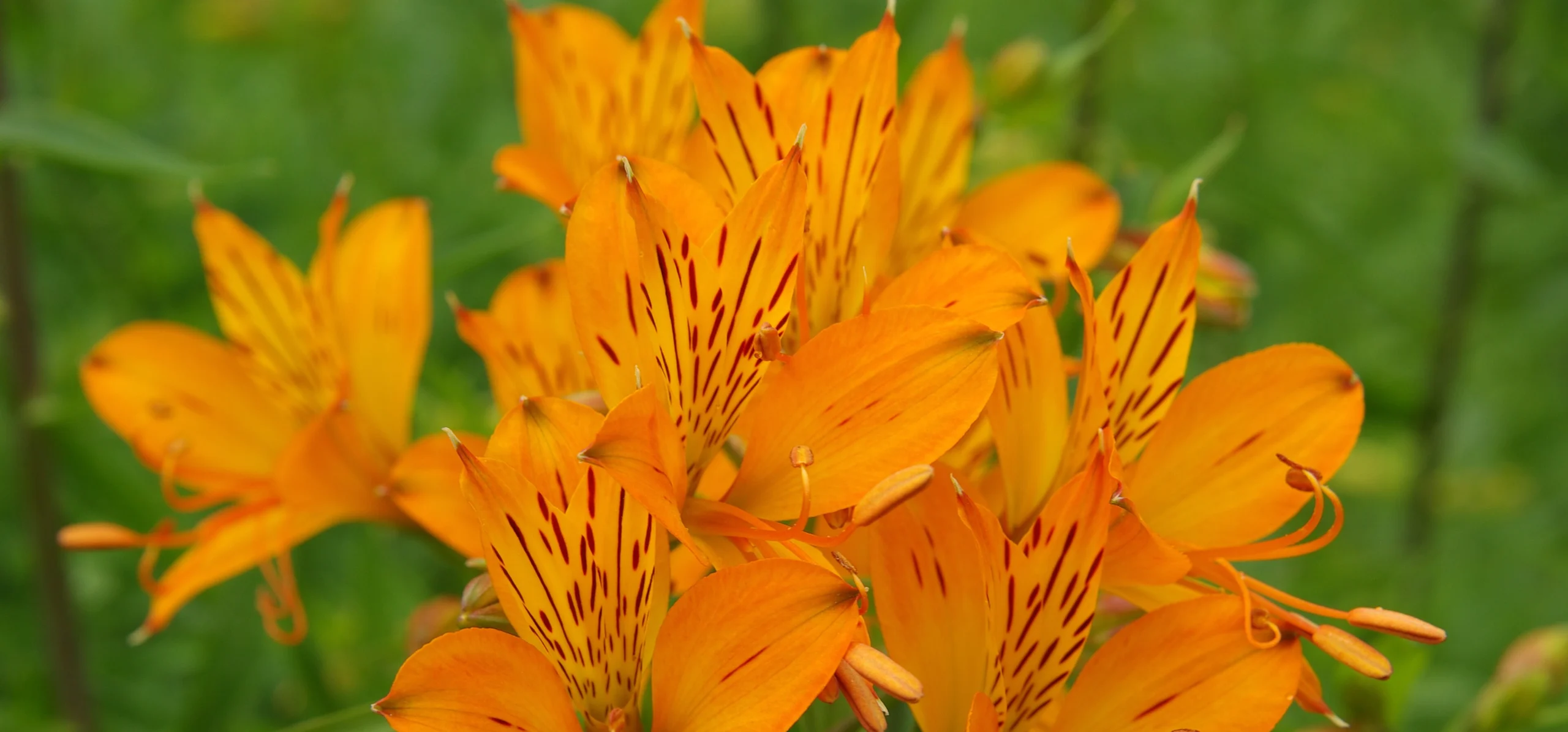
- Summer; orange-yellow flowers with darker upper petals streaked and speckled dark red
- Propagation
- Division
Dormancyherbaceous; top growth dies back after autumn cold, new shoots emerge from the tuberous roots in spring
Time to maturity2-5 years
Soil & climate
- Soil types
- chalk, loam, sand
- Drought tolerance
- No
Light & Placement
- Origin
- Central and south-central Chile to southern Argentina, per Plants of the World Online
- Where to place it
- sheltered sunny border
- large container on a patio
- cottage or informal garden bed
- large pot with sharp drainage, moved to a sheltered spot or under cover for winter
Safety
- Toxicity
- CatsSafe
- DogsSafe
- HorsesSafe
- HumansToxic
Invasive speciesNaturalized outside its native range in parts of the UK, New Zealand and Australia, spreading by its tuberous roots and by self-seeding; can behave as a garden escape in mild climates.
Data fromAlstroemeria aurea Graham, GBIF BackboneAlstroemeria aurea Graham, Plants of theRHS: Alstroemeria aurea, Peruvian lilyRHS Growing Guide: how to grow alstroemeMissouri Botanical Garden Plant Finder: ASPCA: Toxic and Non-toxic Plants, Peruv
Where it grows
World distribution
Peruvian Lily is native to 2 countries: Argentina and Chile.GBIF records 4,495 documented identifications across 34 countries, with the largest concentrations in Australia, United Kingdom, and Chile.
- Argentina
- Chile
Yellow to orange dots: concentration of documented identifications per country. Green countries: sourced native range. Source: GBIFNative range from POWO (Kew).
If you have just brought home a potted Alstroemeria aurea, the orange-yellow flowers flecked dark red on their upper petals are the whole point: they last for weeks in a vase and even longer on the plant, over a long summer season. The fleshy, brittle roots underneath are the part to be careful with, since this species resents disturbance far more than most border perennials. Plant it deep and leave it alone once it is in, buy it in a pot rather than as a dry bare root, and it will settle into a dense, slowly spreading clump that comes back reliably where winters are not too severe. Everything else, from watering to pest control, is straightforward once that root system is respected.
A Chilean Wildflower Behind Florists' Lilies
Plants of the World Online records the native range of Alstroemeria aurea as central and south-central Chile through to southern Argentina, where it grows as a wild colonizer of open, disturbed ground. GBIF's backbone taxonomy places it in the family Alstroemeriaceae, order Liliales, alongside the many garden hybrids sold as cut flowers; this species is one of the parents behind that trade, valued for its color and its vase life. The long list of synonyms attached to it, including Alstroemeria aurantiaca and Alstroemeria peruviana, reflects just how variable its flower color and markings are across its native range, from pale yellow to deep orange, always with those characteristic dark streaks and spots on the two upper petals that guide pollinators to the nectar.
Buy It Potted, Never as a Bare Root
The RHS is blunt about the best way to start a new plant: buy container-grown stock rather than dry tubers, since dry tubers sold loose like bulbs often fail to establish at all. Once planted, a young clump is best left completely undisturbed while it forms its root system, so resist the urge to lift and check it or to move it to a better spot after the first season. The roots themselves are fragile and snap easily, which is why the RHS advises lifting and dividing established clumps only when necessary, and replanting the divisions immediately rather than letting them sit exposed to air.


Full Sun and Free-Draining, Fertile Soil
Give it full sun for the heaviest flowering, though the RHS lists partial shade as tolerable, and choose a sheltered spot facing south, east or west over one exposed to cold wind. Soil should be fertile and moist but well-drained; the RHS names chalk, loam and sand as all suitable, with a wide tolerance for acid, alkaline or neutral pH. In hot summer climates, Missouri Botanical Garden notes the plant appreciates some afternoon shade, which slows moisture loss from the soil around the roots during the warmest part of the day.
Watering Through the Growing Season
Keep the soil moist but never waterlogged, particularly through spring and summer while the plant is actively producing new shoots and flower stems. Container-grown plants dry out faster than anything in open ground and should be checked often in hot weather; Missouri Botanical Garden specifically warns against letting potted specimens dry out during active growth. Once top growth dies back for the season, cut watering right back, since wet, cold soil around a dormant tuberous root is a far greater risk than a dry spell.
Pull the Flowering Stems, Do Not Cut Them
The traditional way to harvest or deadhead an established Alstroemeria is to grasp the stem low down, near the base, and pull it upward with one quick, firm tug rather than reaching for secateurs. Done correctly, this pulls the whole stem cleanly out from below ground and, according to the RHS, actually stimulates the plant to send up further flowering shoots, which is why growers doing this regularly get a longer succession of blooms. The one exception is the plant's first summer after planting: while the root system is still establishing itself, the RHS recommends cutting the stems instead of pulling them, since a young, loosely anchored clump can be pulled partly out of the ground along with the stem.
Overwintering in Cold Gardens
The RHS rates Alstroemeria aurea H4, hardy through most of the UK to around -10 to -5 degrees C once it is established, and recommends a thick autumn mulch, ideally composted bark about 20 cm deep, over the root zone for the plant's first two winters while it is still settling in. Where winters are colder than that, Missouri Botanical Garden suggests growing it in containers that can be moved under cover, watered only sparingly until growth resumes in spring; clumps left in open ground in marginal climates can also be lifted and stored indoors in a barely moist medium, though the brittle roots make this a last resort rather than a routine practice.
Slugs, Snails and a Spreading Habit
The main pest to watch for is slugs and snails, which the RHS flags as a threat specifically to young shoots as they emerge in spring, when the new growth is at its softest; a barrier or torchlight check on damp evenings during that window catches most damage before it happens. Left to its own devices, this species spreads steadily by its tuberous roots and by self-seeding, forming an expanding colony rather than staying in a tidy clump, and it has naturalized outside its native South American range in parts of the UK, New Zealand and Australia. Where that colonizing habit is not wanted, lifting and dividing the clump every few years, and removing spent flower heads before they set seed, keeps its spread in check.
Sap, Skin and Household Pets
The RHS lists the plant as a skin allergen and recommends gloves and other protective equipment when handling it; Alstroemeria sap is a well-known cause of contact dermatitis among florists and gardeners who handle the stems regularly, usually showing up as dry, cracked skin on the fingertips after repeated exposure. Pet owners get better news: the ASPCA's Peruvian lily listing records the plant as non-toxic to cats, dogs and horses, which makes it a reasonably safe choice for gardens shared with animals, even though the same plant can still irritate sensitive human skin.
Test your plant knowledge
Tap a card to flip it and reveal the answer.
Alstroemeria aurea is native to Chile and Argentina. Tap to reveal ✓ True
Established Alstroemeria stems should always be cut with scissors rather than pulled. Tap to reveal ✕ False
The ASPCA lists Alstroemeria (Peruvian lily) as non-toxic to cats, dogs and horses. Tap to reveal ✓ True
Alstroemeria aurea's sap cannot cause any skin reaction. Tap to reveal ✕ False
In cold gardens, a thick autumn mulch helps protect the tuberous roots over winter. Tap to reveal ✓ True
Sources
References consulted for this guide
- Alstroemeria aurea Graham, GBIF Backbone Taxonomygbif.org
- Alstroemeria aurea Graham, Plants of the World Online (Kew)powo.science.kew.org
- RHS: Alstroemeria aurea, Peruvian lilyrhs.org.uk
- RHS Growing Guide: how to grow alstroemeriasrhs.org.uk
- Missouri Botanical Garden Plant Finder: Alstroemeria aureamissouribotanicalgarden.org
- ASPCA: Toxic and Non-toxic Plants, Peruvian Lilyaspca.org
- Reference entity : Wikipédiaen.wikipedia.org