Pinstripe Calathea
Goeppertia ornata
Family · Marantaceae
Goeppertia ornata needs partial shade, about 60% humidity and evenly moist soil; here is what RHS and NC State Extension actually document about it.
Goeppertia ornata
Plant profile
- WateringHighWater every 7 days
- Light exposurePartial shade
- Ideal temperature18–24 °C
- Humidity60 %
- Hardiness zoneUSDA 11–12
Growth
- Family
- Marantaceae
- Life cycle
- Perennial
- Growth speed
- 4/10
- Mature size
- 50–100 cm
- Spread
- 10–50 cm
- Propagation
- Division
FloweringSmall white spike flowers in spring and summer in the wild; rare indoors (NC State Extension)
DormancyNo true dormancy; growth slows in autumn and winter (RHS)
Time to maturityReaches full clump size in 2 to 5 years (RHS)
Soil & climate
- Soil pH
- pH 6–8
- Soil types
- loam
- Saline soil
- Not tolerated
- Drought tolerance
- No
Light & Placement
- Origin
- Tropical forest understory of SE Colombia to SW Venezuela (POWO)
- Where to place it
- East-, north- or west-facing window, set back from the glass
- Humid bathroom with diffused light
- Shaded, humid greenhouse or patio in USDA zones 11a to 12b (NC State Extension)
- Pot with drainage holes, sized up only when roots fill the current one
Safety
- Toxicity
- CatsSafe
- DogsSafe
- HorsesSafe
Data fromGoeppertia ornata (Linden) Borchs. & S.SGoeppertia ornata (Lem.) Borchs. & S.SuáRHS: Goeppertia ornata (pin-stripe calatNC State Extension Gardener Plant ToolboASPCA: Toxic and Non-Toxic Plants, Calat
Where it grows
World distribution
Pinstripe Calathea is native to 2 countries: Colombia and Venezuela.GBIF records 95 documented identifications across 20 countries, with the largest concentrations in Brazil, Colombia, and Costa Rica.
- Colombia
- Venezuela
Yellow to orange dots: concentration of documented identifications per country. Green countries: sourced native range. Source: GBIFNative range from POWO (Kew).
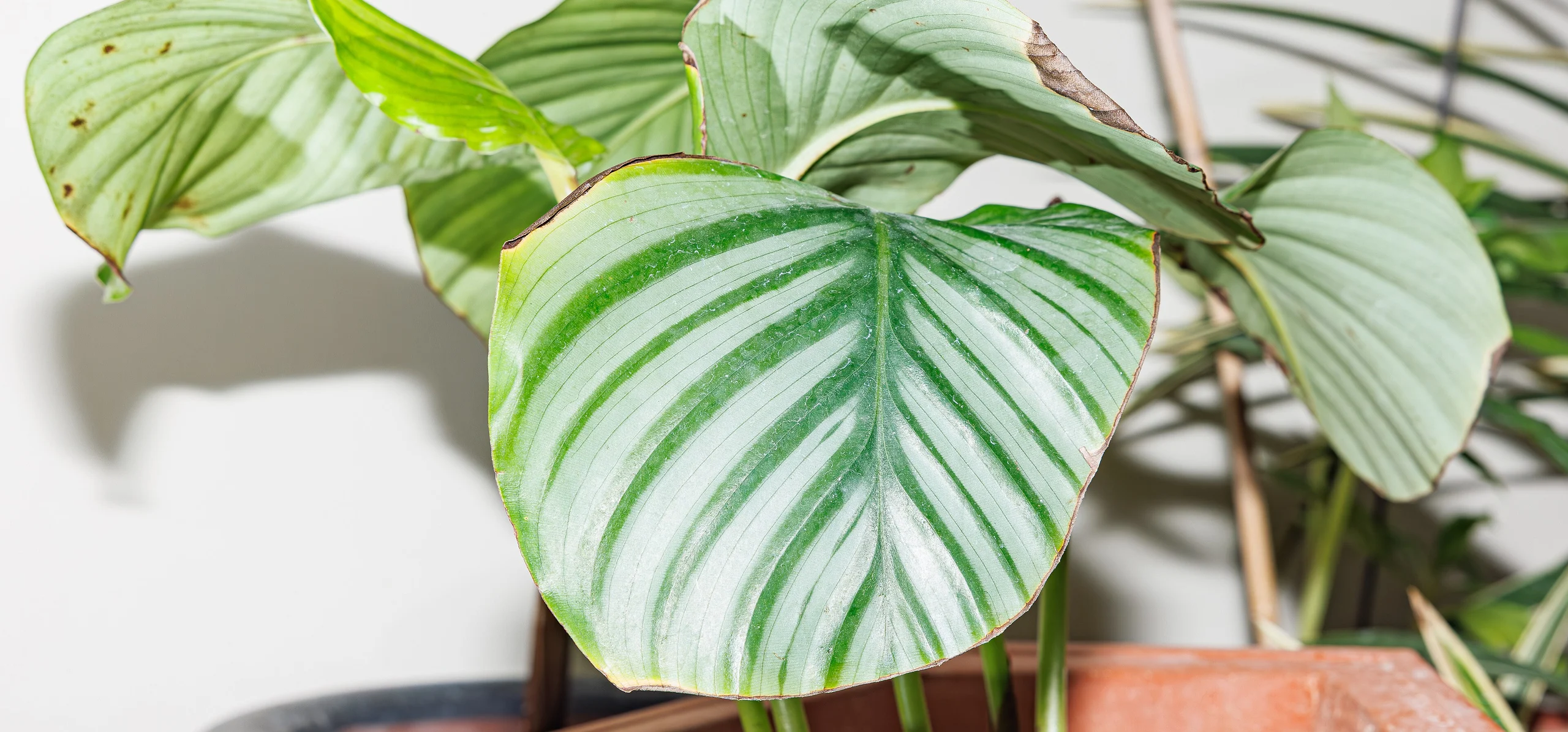
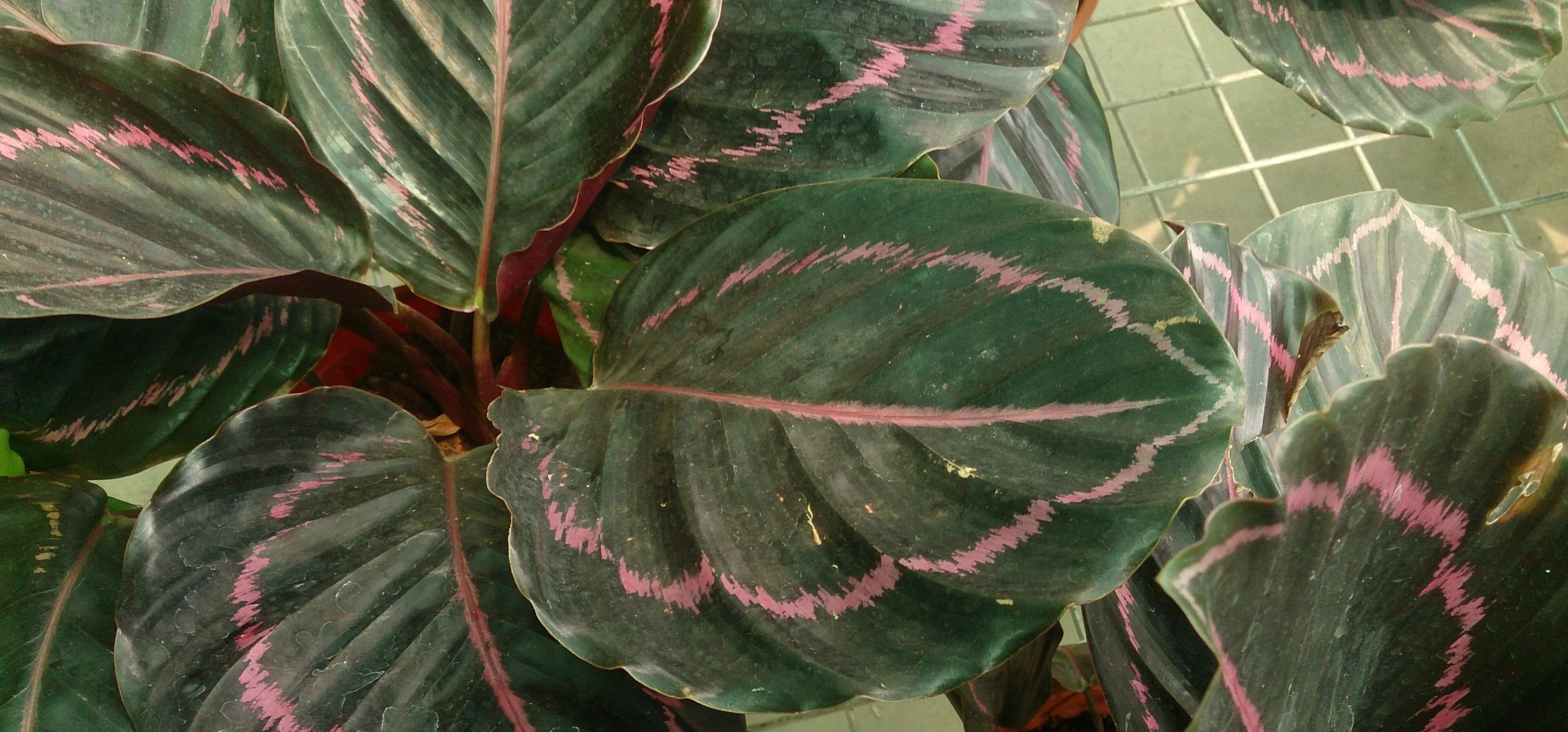
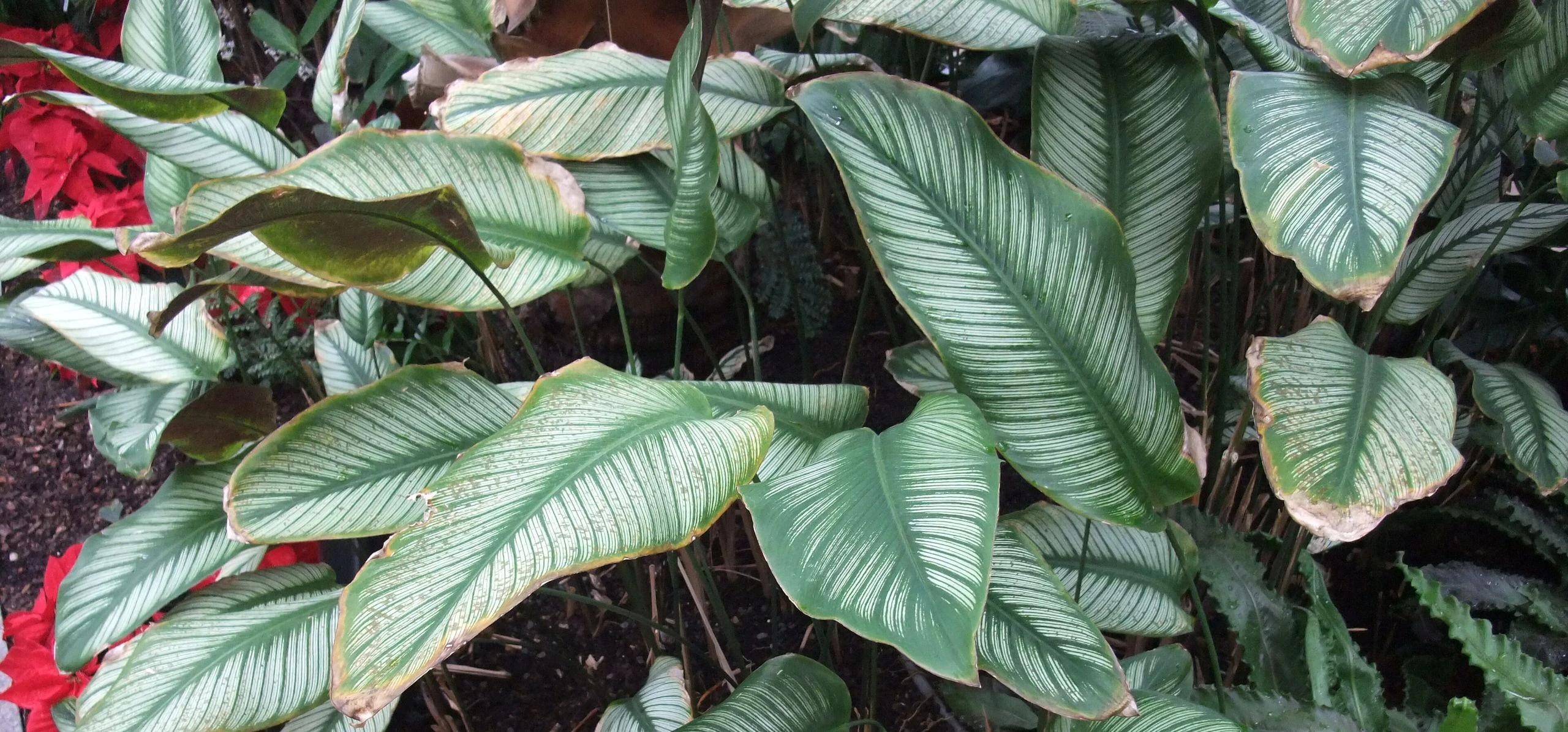
A plant sold as Calathea ornata and labelled Goeppertia ornata on the same nursery shelf is not a pricing mix-up. GBIF's accepted name for this species is Goeppertia ornata (Linden) Borchs. & S.Suárez, with Calathea ornata now filed as a synonym after botanists split most of the old Calathea genus into Goeppertia. The plant has not changed: broad, dark green leaves marked with pairs of pale pink stripes running out from the midrib, deep purple undersides, and a habit of folding those leaves upright every evening before opening them flat again by morning. It grows wild in the humid forest understory of southeastern Colombia and southwestern Venezuela, and that origin explains most of what makes it a demanding houseplant.
Why the Name Changed From Calathea to Goeppertia
The reclassification is not cosmetic. The RHS still keeps separate plant pages for Calathea ornata and Goeppertia ornata, noting that Goeppertia species were previously included within the broader genus Calathea and describing the same plant grown the same way under both names. GBIF records eleven synonyms for this species, including Maranta ornata and Calathea arrecta, a sign of how many times it was reclassified before the current genus split settled the matter. For a buyer, the practical point is simple: whichever name sits on the label or the search result, the care below applies to it.
Light: Partial Shade, Not a Dark Corner
The RHS categorises this plant's position as partial shade, growing best under bright indirect or filtered light rather than in a fully shaded room. NC State Extension puts a number on that: two to six hours of indirect light a day, with direct sun avoided because it scorches the thin leaf tissue and bleaches the pink pinstripes. An east, north or west-facing window, the aspects the RHS lists as suitable, works well as long as the plant sits back from the glass rather than in the direct beam. Too little light slows growth and dulls the stripe pattern; too much burns the leaf edges within a day or two.
Watering and Humidity: The Two Factors That Decide Everything
The RHS describes the moisture need as moist but well-drained, watering freely through the growing season and cutting back once growth slows for winter. NC State Extension is more specific about humidity: around 60 percent, kept up with a humidifier or a pebble tray, since the plant comes from a rainforest floor where the air rarely dries out. Skip that humidity and the symptoms appear fast: leaves curl inward when the root ball has dried between waterings, and margins turn brown and crisp when the air is too dry or a draft crosses the foliage. The RHS also names glasshouse whitefly and red spider mite as the pests most likely to move in once the plant is stressed by exactly those conditions.


Soil, Potting and a Minimum Temperature to Respect
A free-draining mix is not optional. NC State Extension recommends a peat-based potting mix or an African violet mix at a pH between 6.0 and 8.0; the RHS instead specifies peat-free potting compost built on loam. Either works as long as the pot drains freely and never sits in standing water, since NC State Extension lists root rot from overwatering among the most common ways the plant is lost. Temperature matters as much as soil: the RHS rates it H1A, meaning it needs a constant minimum near 16°C and will not tolerate conditions outside a heated room or greenhouse anywhere close to that floor, while NC State Extension gives a comfortable working range of 65 to 75°F, roughly 18 to 24°C, for ordinary indoor growth.
Feeding and Propagation by Division
Feed monthly during the growing season with a general houseplant fertiliser, then stop once growth slows for winter, the same seasonal rhythm the RHS gives for watering. Propagation happens by division rather than cuttings: split the rhizomatous root clump in late spring, the timing the RHS recommends, then keep the divided sections warm and humid until new roots establish. NC State Extension lists division as the only propagation method it documents for this species, which fits a plant that grows as a cluster of separate crowns rather than a single stem that roots from a cutting.
Reading the Leaves: Common Problems
NC State Extension's list of what goes wrong reads like a diagnostic chart. Leaves that curl inward point to a root ball that dried out between waterings. Brown, crisp leaf margins usually mean cold drafts or humidity that dropped too low. Spotting on the leaf surface signals excess moisture rather than too little. Left unresolved, any of those stresses opens the door to the pests NC State Extension names as recurring visitors: spider mites, thrips, mealybugs, whiteflies and scale insects. One habit helps more than it sounds like it should: NC State Extension's own tip is to dust the leaves regularly, since a coating of dust blocks light and slows the photosynthesis the plant needs to keep producing new growth.
Is It Safe Around Cats and Dogs?
The ASPCA lists Calathea, at the genus level, as non-toxic to dogs, cats and horses, a listing broad enough to cover this species alongside the other pinstripe and rattlesnake calatheas sold under the same common name. NC State Extension's own species page repeats the same non-toxic verdict specifically for cats and dogs. A curious pet can still end up with a mouthful of fibrous leaf, which may cause mild stomach upset from the plant matter itself, but there is no toxin here to worry about.
Test your plant knowledge
Tap a card to flip it and reveal the answer.
Calathea ornata is now scientifically accepted under the name Goeppertia ornata. Tap to reveal ✓ True
This plant grows best in full, direct sun once it matures. Tap to reveal ✕ False
It propagates readily from stem cuttings, the way pothos does. Tap to reveal ✕ False
Humidity of around 60 percent is important for keeping the leaves from browning. Tap to reveal ✓ True
The ASPCA lists Calathea as toxic to cats and dogs. Tap to reveal ✕ False
Sources
References consulted for this guide
- Goeppertia ornata (Linden) Borchs. & S.Suárez, GBIF Backbone Taxonomygbif.org
- Goeppertia ornata (Lem.) Borchs. & S.Suárez, Plants of the World Online, Kew Sciencepowo.science.kew.org
- RHS: Goeppertia ornata (pin-stripe calathea)rhs.org.uk
- NC State Extension Gardener Plant Toolbox: Goeppertia ornataplants.ces.ncsu.edu
- ASPCA: Toxic and Non-Toxic Plants, Calatheaaspca.org
- Reference entity : Wikidatawikidata.org