Calathea Orbifolia
Goeppertia orbifolia
Family · Marantaceae
Calathea orbifolia, now Goeppertia orbifolia, needs filtered water, high humidity and bright indirect light to avoid crispy brown leaf edges.
Goeppertia orbifolia
Plant profile
- WateringHighWater every 6 days
- Light exposurePartial shade
- Ideal temperature16–24 °C
- Humidity50–70 %
Growth
- Family
- Marantaceae
- Life cycle
- Perennial
- Growth speed
- 4/10
- Mature size
- 50–100 cm
- Spread
- 50–100 cm
- Flowering
- Rarely flowers indoors
- Propagation
- Division
DormancySlows down in winter
Time to maturityReaches full size in 2 to 5 years
Soil & climate
- Soil pH
- pH 5.5–7
- Saline soil
- Not tolerated
- Drought tolerance
- No
Soil typesLoam-based, peat-free potting compost, Moisture-retentive mix with perlite or orchid bark
Light & Placement
- Origin
- Atlantic Forest of eastern Brazil
- Where to place it
- North or east window, 1 to 2 m back from the glass
- Bright bathroom with steady humidity
- Shaded, humid greenhouse or conservatory (frost-free)
- Plastic nursery pot to retain moisture
- Glazed ceramic pot with drainage holes
Safety
- Toxicity
- CatsSafe
- DogsSafe
- HorsesSafe
Data fromGoeppertia orbifolia (Linden) Borchs. & Goeppertia orbifolia, GBIF Backbone TaxoCalathea, Toxic and Non-Toxic Plants, ASCalathea orbifolia, RHS Plants
Where it grows
World distribution
Calathea Orbifolia is native to a single country: Brazil.GBIF records 66 documented identifications across 5 countries, with the largest concentrations in Brazil, United States, and Belgium.
- Brazil
Yellow to orange dots: concentration of documented identifications per country. Green countries: sourced native range. Source: GBIFNative range from POWO (Kew).
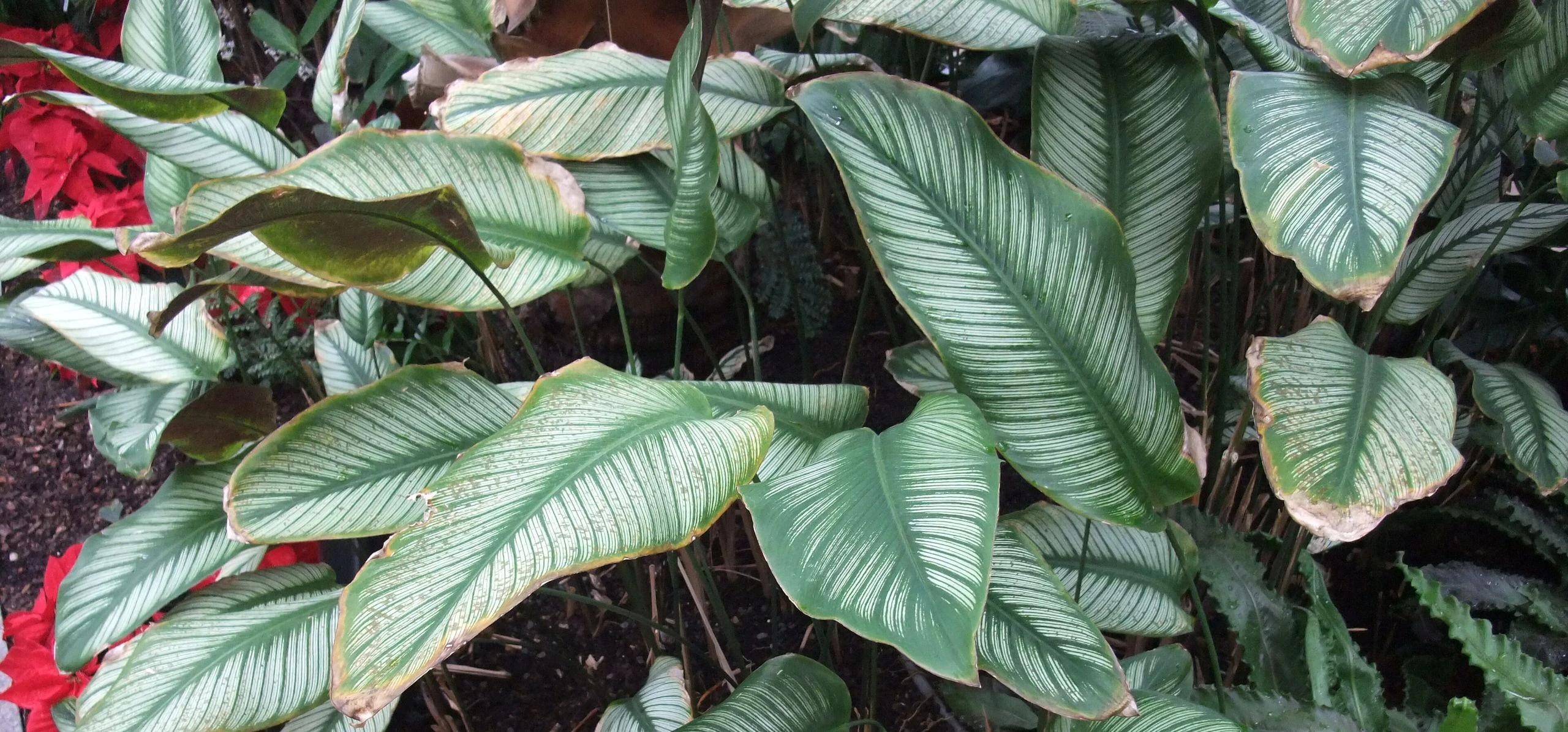
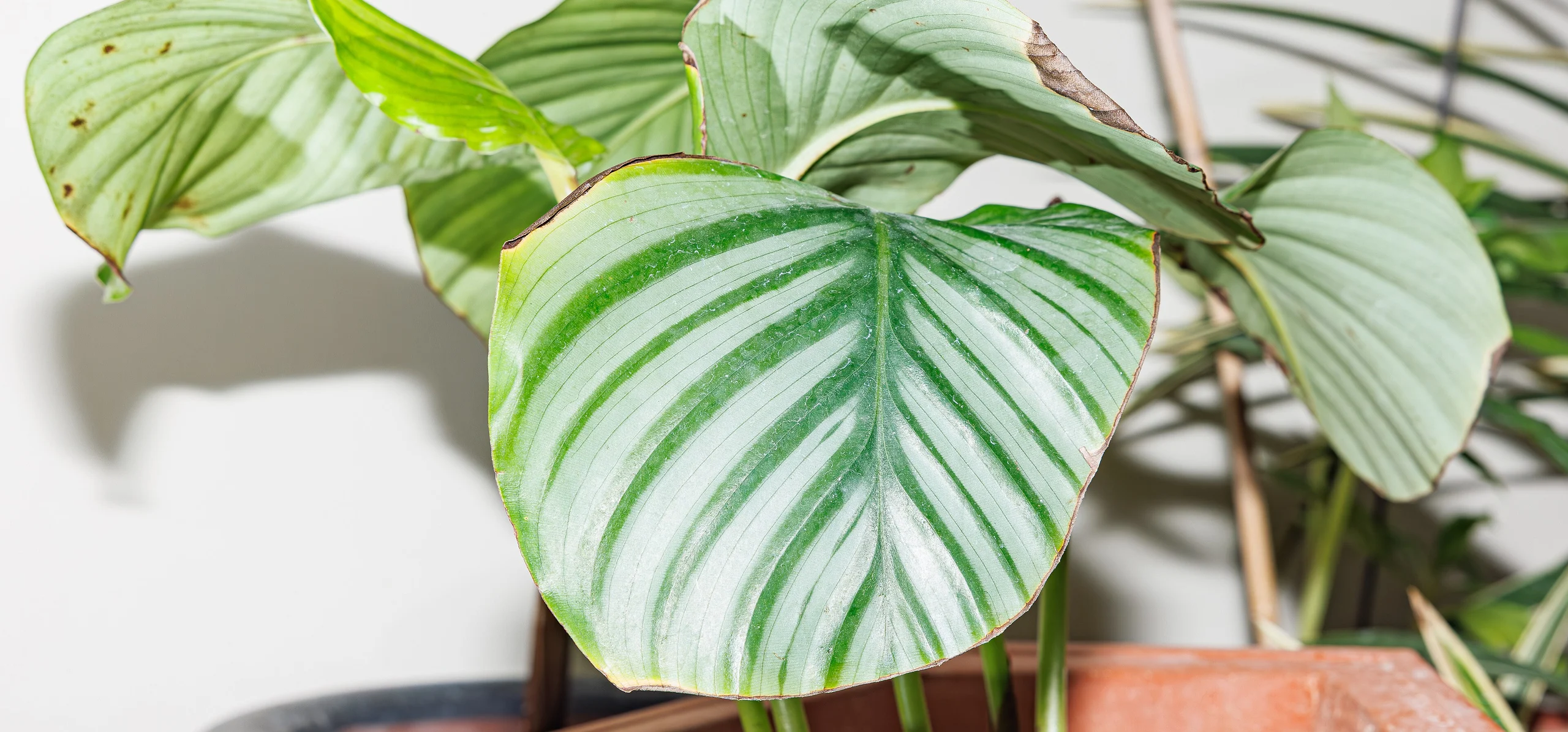
Most collectors still ask for it as Calathea orbifolia, and garden centres keep selling it under that label, but taxonomists moved the whole genus into Goeppertia in 2012 after DNA studies split the old Calathea in two. The accepted name is now Goeppertia orbifolia, though the change has barely reached retail tags. Either name points to the same plant: a rainforest understory herb from the Atlantic Forest of eastern Brazil, grown for leaves that can reach the size of a dinner plate, dark green with silvery-white herringbone stripes running out from the midrib and a plain green underside.
Calathea by name, Goeppertia by science
Like every member of the prayer-plant family Marantaceae, its leaves rise and fold together at dusk and open flat again by morning, a movement called nyctinasty that is easy to notice once you know to look for it. The species was first described from cultivated material collected by the Belgian nurseryman Jean Jules Linden, and it remains one of the largest-leaved Calathea-type plants sold as a houseplant, easily distinguished from smaller relatives like Calathea lancifolia by the sheer size and roundness of its foliage.
Light without direct sun
In its native forest this plant grows under a closed canopy, filtered and dim for most of the day, so indoors it wants bright indirect light rather than a sunny sill. An hour or two of gentle morning sun through a sheer curtain is fine, but several hours of direct afternoon sun bleaches the stripe pattern to a washed grey-green and can scorch the thin leaf tissue outright. A spot one to two metres back from an east or north-facing window suits it well; a south or west window works only behind a curtain or blind. Too little light shows up as small, dull new leaves with weak contrast between the stripes, the plant is not dying, it is just asking to move a little closer to the glass.
Watering and the water quality problem
Keep the potting mix evenly moist through spring and summer and let it dry slightly at the surface before the next watering in winter, when growth slows and the roots use far less. The detail that separates a thriving orbifolia from a crispy one is not frequency but water quality: this species is unusually sensitive to the fluoride, chlorine and dissolved minerals in ordinary tap water, which build up in the leaf tissue and show as brown, dead edges on otherwise healthy leaves. Rainwater, distilled water, or tap water left uncovered for 24 hours to off-gas chlorine, all reduce the damage noticeably. Water at room temperature: cold water shocks the roots of a plant that evolved in a forest with no seasonal chill.


Humidity and temperature
Humidity matters as much as watering technique. Below roughly 50% the leaf margins start to curl and brown regardless of how carefully you water, above 60% the foliage stays glossy and fully unfurled. A bathroom with a shower, a pebble tray topped up with water, or a small humidifier running nearby all help; misting alone barely moves the number and dries fast enough to have little lasting effect. Keep the plant between 16°C and 24°C and never let it sit below 15°C. Cold draughts from an opened window or an air-conditioning vent cause the same curling and browning as low humidity, so the two problems are often confused. Steady conditions matter more than any single number: a plant moved repeatedly between a warm room and a cold hallway struggles more than one left in a slightly cooler but stable spot.
Soil, potting and feeding
Use a loam-based, peat-free potting mix that holds moisture without staying waterlogged; a standard houseplant compost loosened with perlite or orchid bark works well, and the plant prefers acid to neutral soil rather than alkaline. A plastic nursery pot helps retain the constant moisture this species wants, since it dries out more slowly than unglazed terracotta. Feed monthly with a balanced liquid fertiliser diluted to half strength while the plant is actively growing, and stop feeding from autumn through winter. Because orbifolia is already prone to leaf-tip burn from mineral buildup, over-fertilising causes the same brown edges as hard tap water; when in doubt, feed less rather than more.
Dividing and repotting
Calathea orbifolia grows from a clump of rhizomes rather than a single stem, so the standard way to propagate it is dividing that clump at repotting time in summer, not taking stem or leaf cuttings, which will not root. Ease the root ball out, gently pull or cut the rhizome mass into sections that each carry several leaves and a healthy portion of roots, and pot each division into fresh, moist mix. Expect the divided sections to sulk for a couple of weeks before new growth resumes. Repot the whole plant every one to two years, moving up one pot size once roots fill the current container; this species reaches its mature spread of roughly 50 to 100 cm over two to five years, so repotting slows once it nears that ceiling.
Common problems and pet safety
Curling, browning leaf edges are almost always low humidity, mineral-heavy water, or cold draughts, so check those three before assuming disease. Yellowing lower leaves that drop occasionally are normal ageing; widespread yellowing points to overwatering or a pot without drainage. The pests to watch for are spider mites and glasshouse whitefly, both favoured by dry indoor air: spider mites leave fine webbing and stippled, dull patches on the leaf underside and respond to raised humidity plus insecticidal soap, while whitefly scatter from the foliage when disturbed and are controlled the same way. On the safety side, Calathea is listed as non-toxic to cats, dogs and horses by the ASPCA, so an inquisitive pet chewing a leaf risks nothing worse than mild, short-lived stomach upset from the fibre.
Test your plant knowledge
Tap a card to flip it and reveal the answer.
Calathea orbifolia is safe to keep around cats and dogs. Tap to reveal ✓ True
This plant is usually propagated by taking stem cuttings. Tap to reveal ✕ False
Tap water high in fluoride or minerals can cause the leaf edges to turn brown and crispy. Tap to reveal ✓ True
Calathea orbifolia tolerates several hours of direct sun each day. Tap to reveal ✕ False
The leaves rise and fold together at night and open flat again in the morning. Tap to reveal ✓ True
Sources
References consulted for this guide
- Goeppertia orbifolia (Linden) Borchs. & S.Suarez, Plants of the World Online (Kew)powo.science.kew.org
- Goeppertia orbifolia, GBIF Backbone Taxonomygbif.org
- Calathea, Toxic and Non-Toxic Plants, ASPCA Animal Poison Controlaspca.org
- Calathea orbifolia, RHS Plantsrhs.org.uk
- Reference entity : Wikidatawikidata.org