Peacock Plant
Goeppertia makoyana
Family · Marantaceae
Calathea makoyana, now Goeppertia makoyana, needs filtered water, steady humidity and indirect light to stop the peacock pattern browning at the edges.
Goeppertia makoyana
Plant profile
- WateringHighWater every 6 days
- Light exposurePartial shade
- Ideal temperature15–21 °C
- Humidity55–75 %
Growth
- Family
- Marantaceae
- Life cycle
- Perennial
- Growth speed
- 3/10
- Mature size
- 10–50 cm
- Spread
- 10–50 cm
- Flowering
- Rarely flowers indoors; small purple and white spikes possible
- Propagation
- Division
DormancySlows down in winter
Time to maturityReaches full size in 5 to 10 years
Soil & climate
- Saline soil
- Not tolerated
- Drought tolerance
- No
Soil typesPeat-free, moisture-retentive potting compost, Multi-purpose compost loosened with grit or perlite
Light & Placement
- Origin
- Espirito Santo, eastern Brazil
- Where to place it
- North or east window, out of direct sun
- Bright bathroom or other humid room
- Frost-free, shaded greenhouse or conservatory
- Plastic nursery pot to hold moisture
- Terracotta only if watered more often
Safety
- Toxicity
- CatsSafe
- DogsSafe
- HorsesSafe
Data fromGoeppertia makoyana (E.Morren) Borchs. &Goeppertia makoyana, peacock plant, RHS Calathea makoyana, Missouri Botanical GaCalathea, Toxic and Non-Toxic Plants, AS
Where it grows
World distribution
Peacock Plant is native to a single country: Brazil.GBIF records 91 documented identifications across 16 countries, with the largest concentrations in Brazil, United States, and China.
- Brazil
Yellow to orange dots: concentration of documented identifications per country. Green countries: sourced native range. Source: GBIFNative range from POWO (Kew).
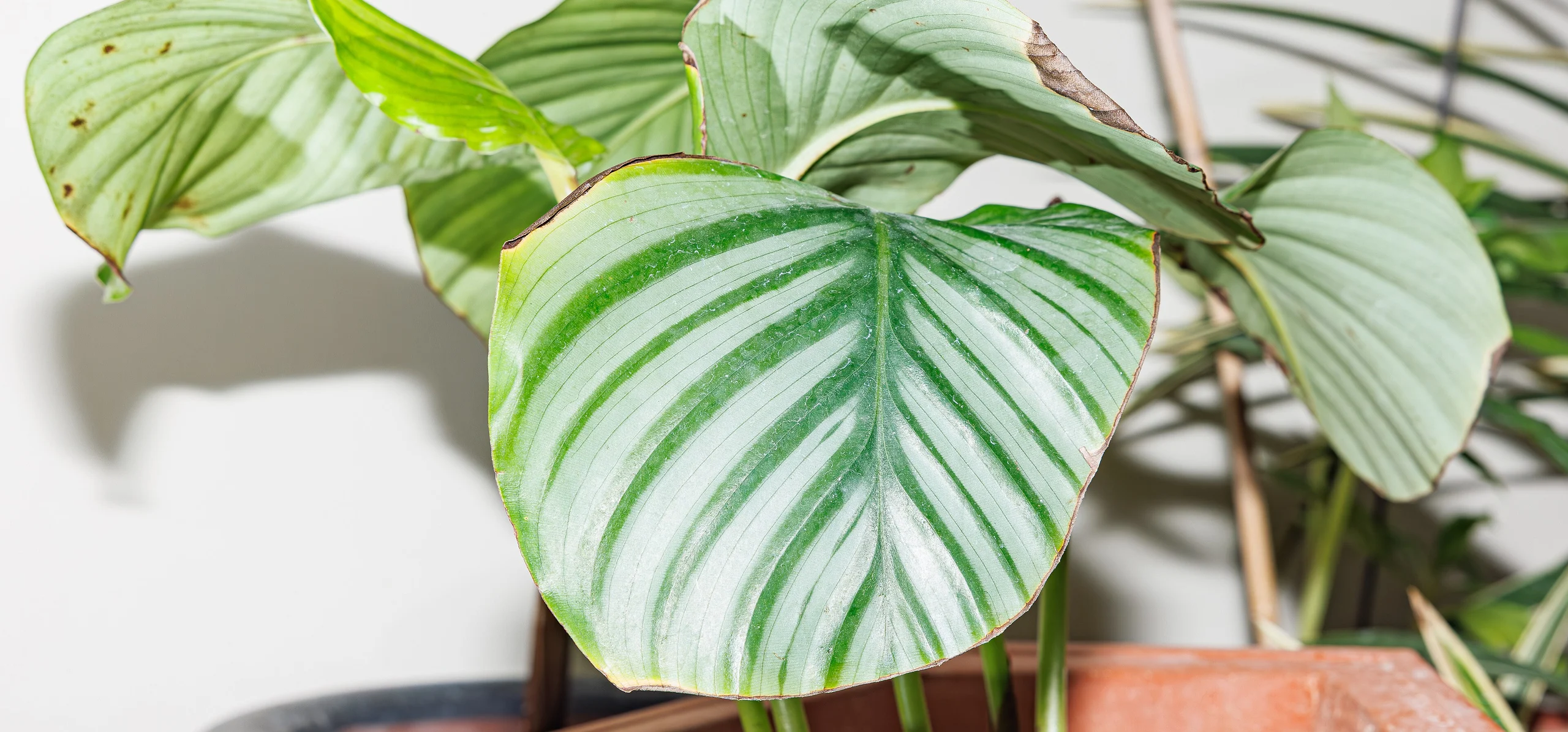
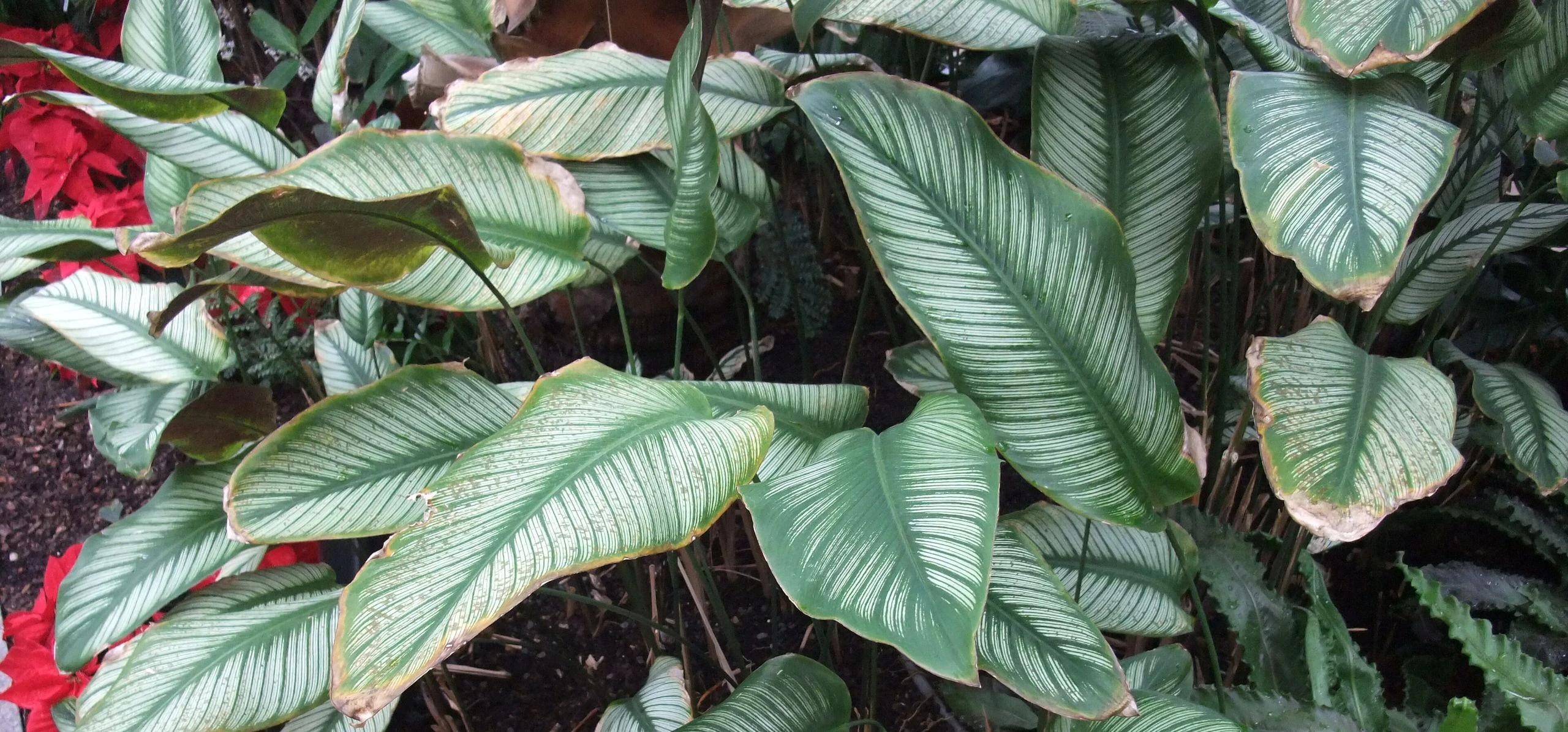
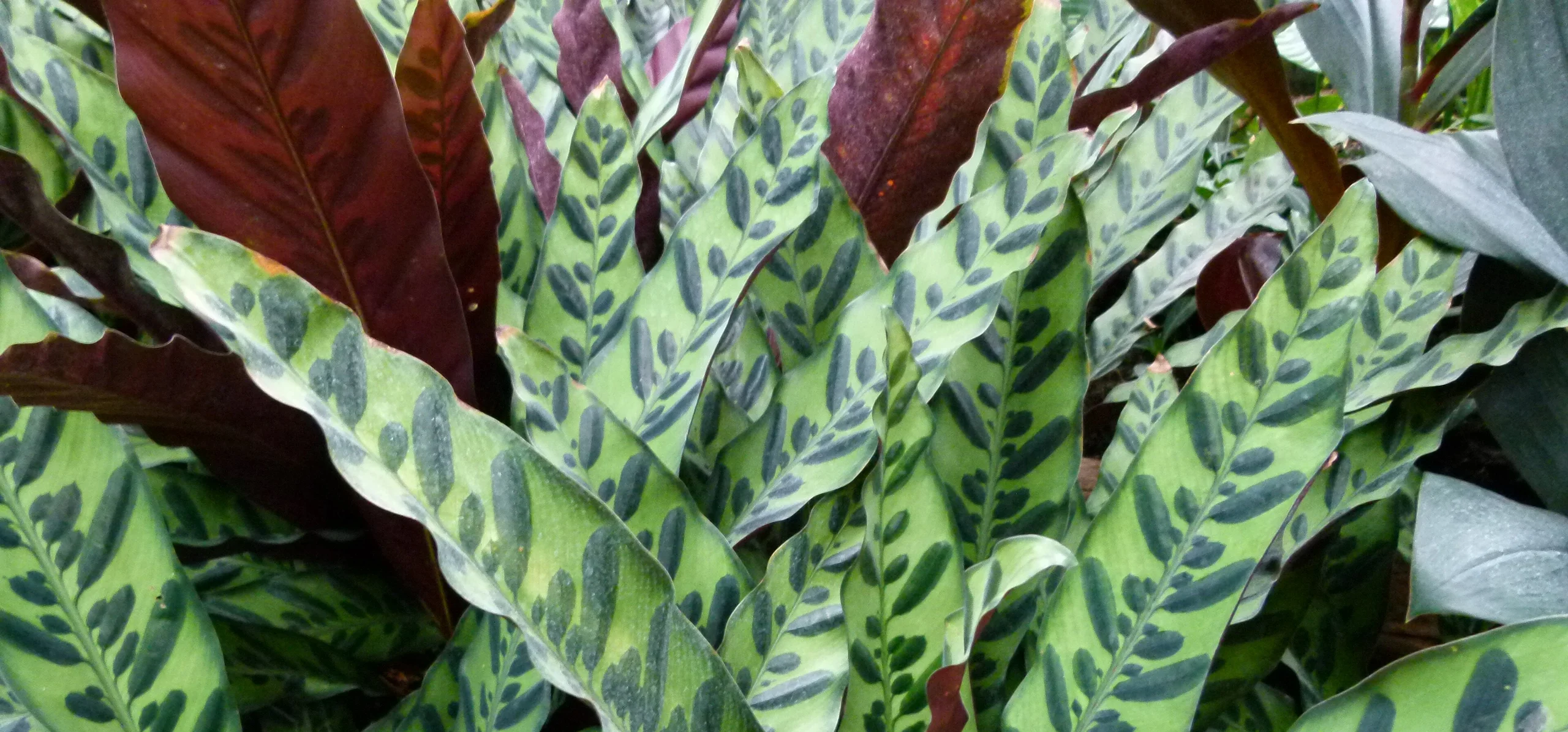
If the tag on your new plant still reads Calathea makoyana, that is the name almost every grower and garden centre still uses, even though taxonomists moved the whole genus into Goeppertia in 2012. It grows wild on the shaded rainforest floor of Espirito Santo in eastern Brazil, where broad, feather patterned leaves catch what little light filters through the canopy above. Sold as the peacock plant for the dark blotches fanning out from the midrib like tail feathers, or as cathedral windows for the same panels of pale and dark green, it stays compact indoors and rarely grows much past knee height. It wants what most Marantaceae want, filtered light, steady humidity and soft water, but its leaf undersides, modest size and occasional flowers set it apart from bigger relatives like Calathea orbifolia.
From Calathea to Goeppertia
Botanists split the old, unwieldy genus Calathea in 2012 after DNA studies showed it was not one natural group, moving roughly half its species, this one included, into the resurrected genus Goeppertia. The recombination for this species was published in Systematic Botany in 2012, but two decades of retail habit move slower than genetics: seed catalogues, plant tags and most houseplant forums still sell it as Calathea makoyana, and either name points to the same plant, recorded by GBIF as native to Espirito Santo in Brazil's Atlantic Forest. Two English common names describe the same leaf from two angles: peacock plant, for the pattern's likeness to a spread tail, and cathedral windows, for the way light seems to show through the pale panels between the dark blotches.
Leaf pattern and the nightly fold
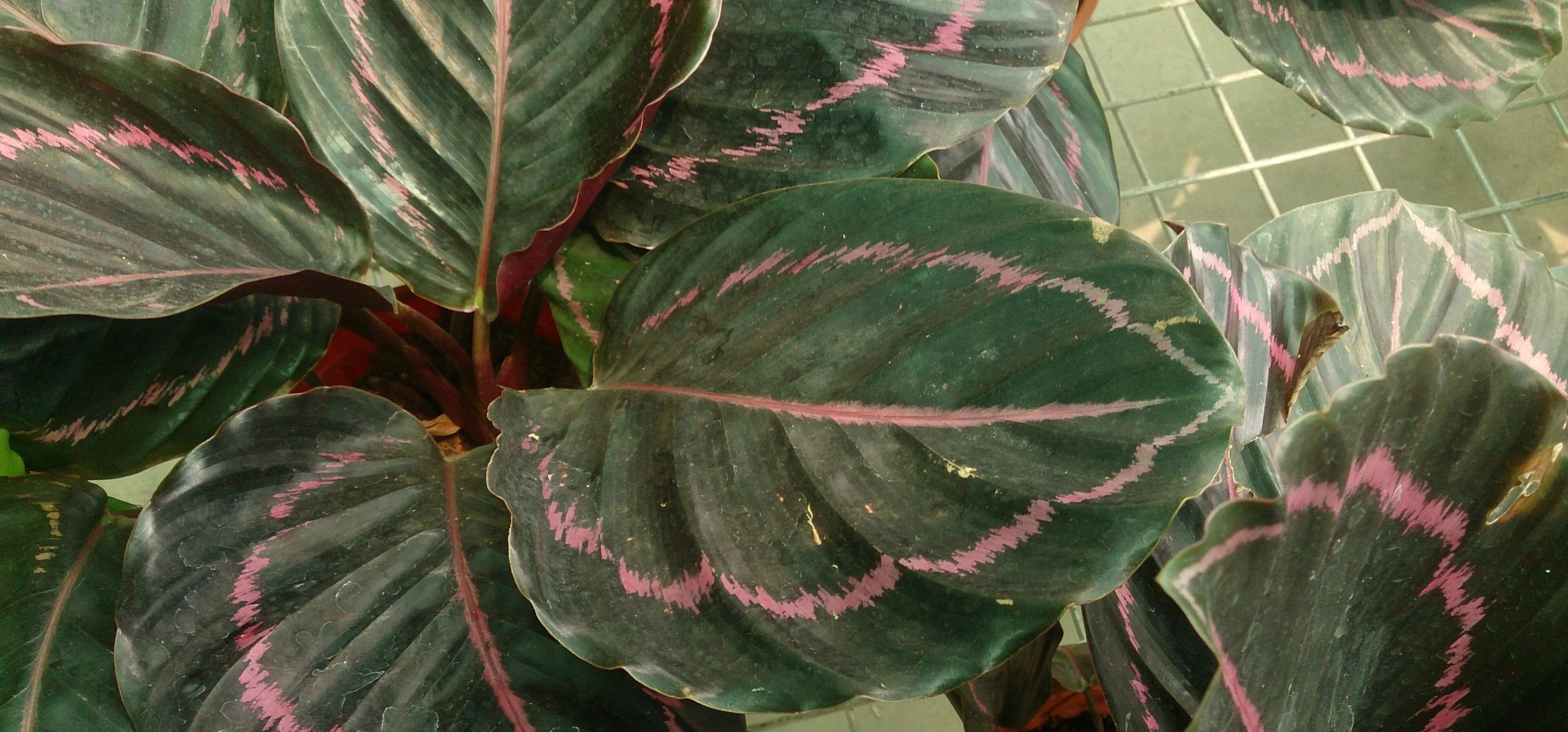
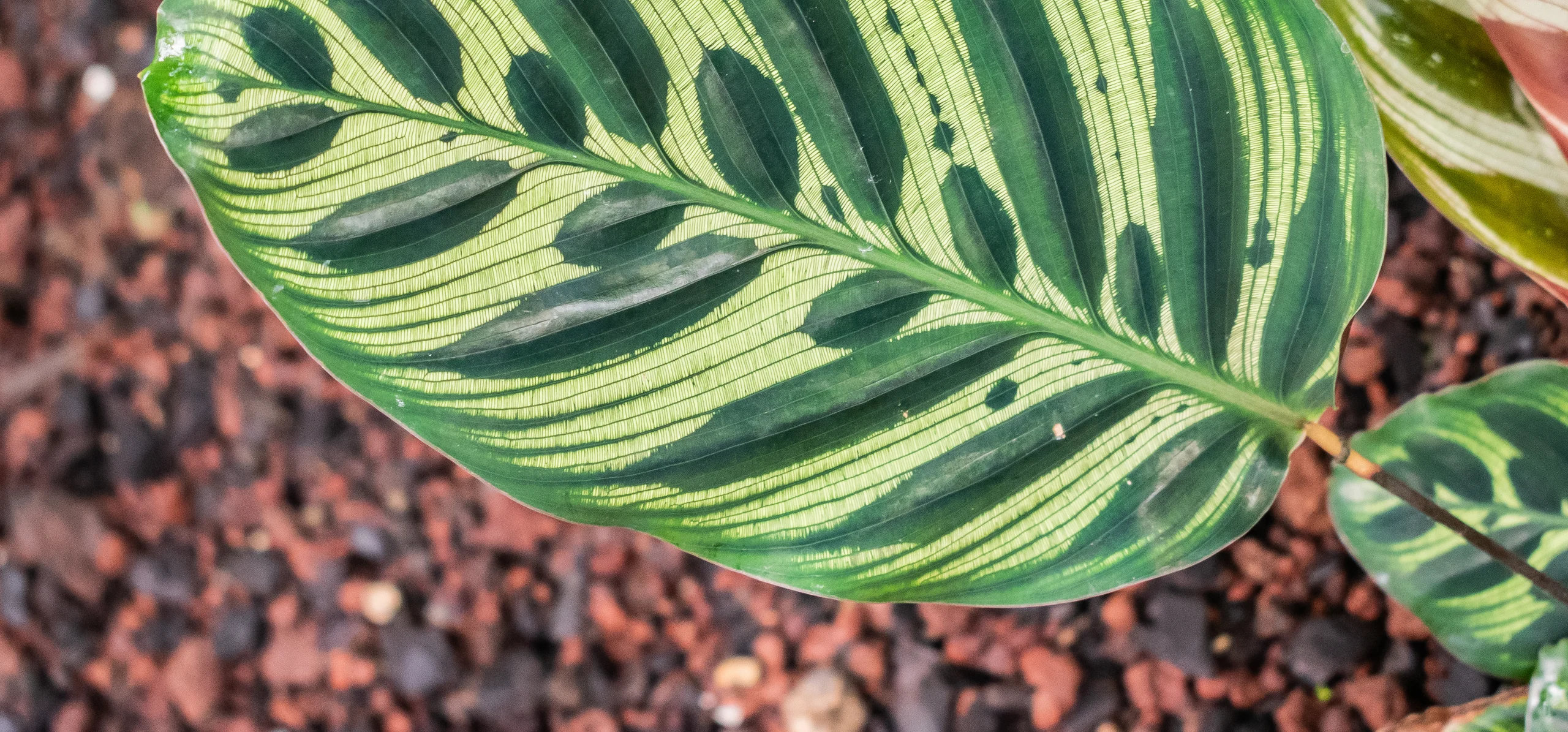
Each oval leaf carries a row of dark green, feather shaped blotches stepping out from a pale midrib toward a cream green background, arranged closely enough that no two mature leaves look quite alike. Turn a leaf over and the pattern reads again in reverse: the underside is a deep maroon-purple rather than plain green, a detail that separates this species at a glance from green-backed relatives such as Calathea orbifolia. Like the rest of the prayer-plant family Marantaceae, the leaves rise upright and fold together at dusk on a hinge-like pulvinus at the base of each stalk, then relax flat again by mid-morning. This daily movement, nyctinasty, is normal behaviour, not a sign of stress; a plant that has stopped folding at night is usually the one to check first.
Light without direct sun
In the wild this plant grows under a closed canopy, so indoors it wants bright, indirect light rather than a sunny sill. RHS guidance for the species calls for partial shade and notes it tolerates fairly low light, while several hours of direct sun bleach the contrast between the pale and dark leaf zones and can scorch the thin tissue outright. A spot one to two metres back from a north or east facing window suits it through the growing season; in a darker room, or through the low light of winter, move the pot closer to the glass rather than reaching for a sunnier sill.
Watering and the tap water problem
Keep the compost evenly moist from spring through summer, then let the surface dry slightly before watering again once growth slows in autumn and winter. As with its relatives, the detail that decides whether the leaves stay clean or turn crisp at the edges is not how often you water but what you water with: chlorine, fluoride and dissolved minerals in ordinary tap water build up in the leaf tissue and show up as brown, dead margins that will not green up again. Rainwater, filtered water, or tap water left standing uncovered for 24 hours to off-gas chlorine all reduce the damage. Water at room temperature; a splash of cold water straight from the tap shocks roots that evolved in a forest with no winter chill.


Humidity and temperature
Humidity matters as much as watering technique. Missouri Botanical Garden notes plainly that the species does not thrive in low humidity, where the leaves roll inward and the tips brown regardless of how carefully you water; a bathroom with a shower, a pebble tray kept topped up, or a small humidifier nearby all help more than misting, which dries too fast to make a lasting difference. RHS growing guidance for the genus puts the comfortable range at 16 to 21 degrees Celsius, and its detail page for this species rates it H1A, meaning it needs to stay indoors or under glass year round and never colder than about 15 degrees Celsius. Sudden swings from a warm room to a cold hallway or a draughty windowsill cause the same curling and browning as low humidity, so rule out temperature before assuming disease.
Soil, potting and feeding
A free-draining, moisture-retentive, peat-free compost suits it best; the RHS recommends a multi-purpose peat-free mix loosened with roughly 10 percent grit or perlite by volume, so it holds water without waterlogging the reddish stems. A plastic nursery pot helps keep that constant moisture better than porous terracotta, which dries faster than this plant likes. Feed monthly with a balanced liquid houseplant fertiliser diluted to half strength through the growing season, from spring to early autumn, and stop feeding entirely from October to March; because the leaf edges are already prone to burning from mineral buildup, over-feeding produces the same crisping as hard tap water.
Propagation by division
This plant grows as a clump of leafy shoots rising from a mass of rhizomes rather than from a single stem, so RHS advice is to lift and split that clump in late spring rather than take stem or leaf cuttings, which will not root. Ease the root ball free, then pull or cut the rhizomes into sections that each keep several leaves and a healthy portion of roots, and pot each division into fresh, barely damp mix, keeping humidity high while it settles. Expect a divided section to sit still for a couple of weeks before a new leaf appears. This is a slow grower overall: RHS records five to ten years to reach its mature size of roughly 30 to 50 cm tall and about as wide, so a fresh division needs patience more than fertiliser.
Common problems and pet safety
Rolled, browning leaf edges point first to low humidity, hard tap water or a cold draught, in roughly that order of likelihood, so check those three before reaching for a fungicide. Missouri Botanical Garden lists aphids, scale and spider mites as the usual pests, all of which favour dry indoor air and multiply fastest on a plant already stressed by low humidity; raising the humidity and wiping the leaves down periodically does more to prevent an infestation than any spray. On the safety side, the ASPCA lists Calathea species, this one included, as non-toxic to cats, dogs and horses, so a curious pet chewing a leaf risks nothing worse than mild, short-lived stomach upset.
Test your plant knowledge
Tap a card to flip it and reveal the answer.
Calathea makoyana is still sold under that older name even though botanists renamed it Goeppertia makoyana in 2012. Tap to reveal ✓ True
The undersides of the leaves are plain green, just like the top. Tap to reveal ✕ False
This plant is usually propagated by dividing the rhizome clump rather than by stem cuttings. Tap to reveal ✓ True
Hard tap water high in minerals or chlorine can cause the leaf edges to turn brown and crispy. Tap to reveal ✓ True
Several hours of direct sun each day makes the peacock pattern more vivid. Tap to reveal ✕ False
Sources
References consulted for this guide
- Goeppertia makoyana (E.Morren) Borchs. & S.Suarez, GBIF Backbone Taxonomygbif.org
- Goeppertia makoyana (E.Morren) Borchs. & S.Suarez, Plants of the World Online (Kew)powo.science.kew.org
- Goeppertia makoyana, peacock plant, RHS Plantsrhs.org.uk
- Calathea makoyana, Missouri Botanical Garden Plant Findermissouribotanicalgarden.org
- Calathea, Toxic and Non-Toxic Plants, ASPCA Animal Poison Controlaspca.org
- Reference entity : Wikipédiaen.wikipedia.org