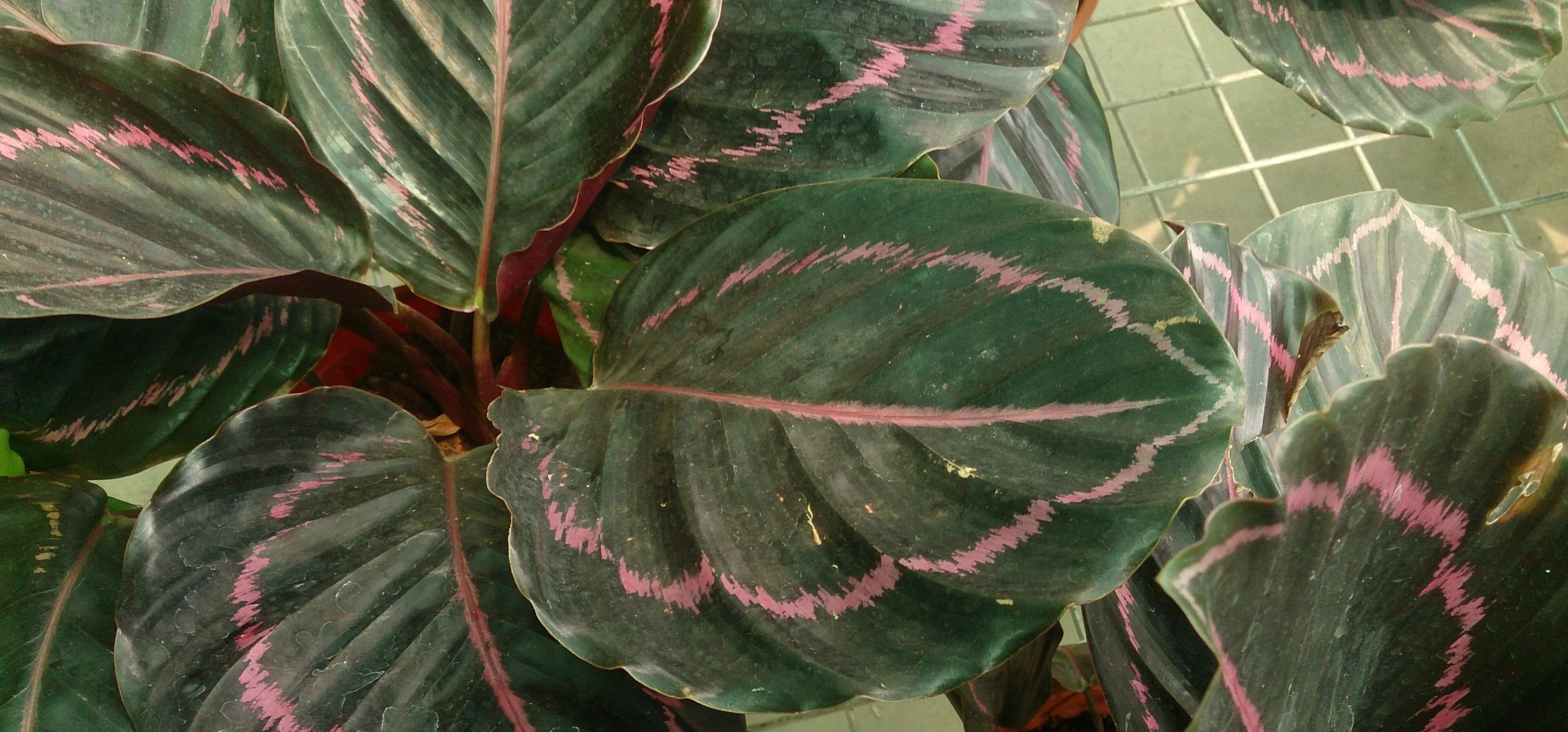
Rose-Painted Calathea
Goeppertia roseopicta
Family · Marantaceae
Sold as Calathea roseopicta, accepted as Goeppertia roseopicta: indirect light, mineral-free water and steady humidity keep the rose feathering from crisping.
Goeppertia roseopicta
Plant profile
- WateringHighWater every 6 days
- Light exposurePartial shade
- Ideal temperature16–21 °C
- Humidity60–80 %
- Hardiness zoneUSDA 11–12
Growth
- Family
- Marantaceae
- Life cycle
- Perennial
- Growth speed
- 4/10
- Mature size
- 20–50 cm
- Spread
- 20–50 cm
- Flowering
- Small tubular flowers, seldom produced in cultivation
- Propagation
- Division
DormancySlows down in winter
Time to maturity5 to 10 years to full size (RHS)
Soil & climate
- Soil pH
- pH 5–7
- Soil types
- Peat-free, moisture-retentive potting compost
- Saline soil
- Not tolerated
- Drought tolerance
- No
Light & Placement
- Origin
- Western Amazon basin: Colombia, Ecuador, Peru and Brazil
- Where to place it
- North or east window, out of direct sun
- Humid bathroom or kitchen
- Frost-free, shaded greenhouse or conservatory
- Plastic nursery pot to hold moisture
Safety
- Toxicity
- CatsSafe
- DogsSafe
- HorsesSafe
Data fromGoeppertia roseopicta (Linden ex Lem.) BGoeppertia roseopicta, rose-painted calaHow to grow calatheas, RHS Growing GuideGoeppertia roseopicta, Jungle Rose, NC SCalathea, Toxic and Non-Toxic Plants, AS
Where it grows
World distribution
Rose-Painted Calathea is native to 4 countries: Brazil, Colombia, Ecuador, and Peru.GBIF records 175 documented identifications across 10 countries, with the largest concentrations in Peru, Colombia, and Brazil.
- Brazil
- Colombia
- Ecuador
- Peru
Yellow to orange dots: concentration of documented identifications per country. Green countries: sourced native range. Source: GBIFNative range from POWO (Kew).
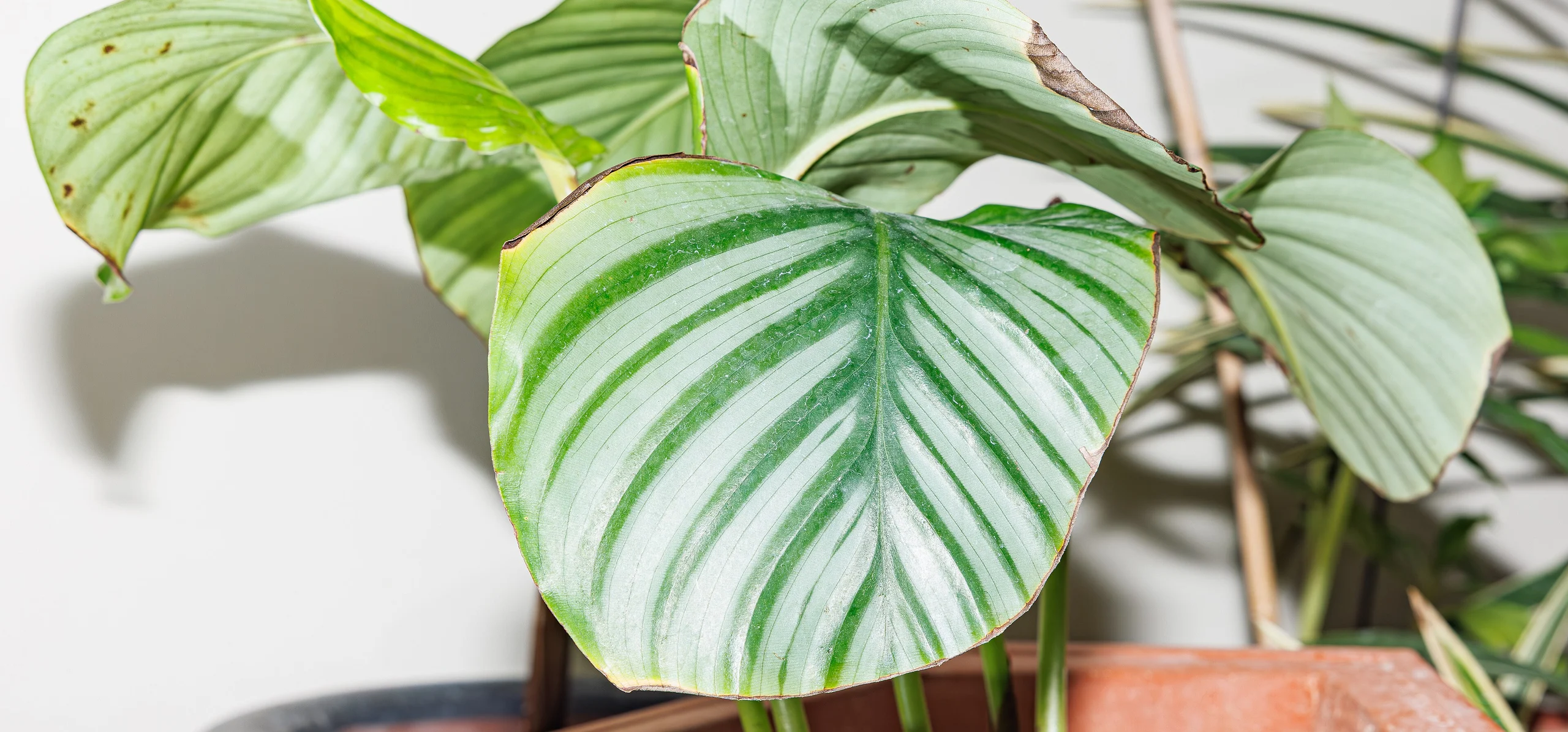
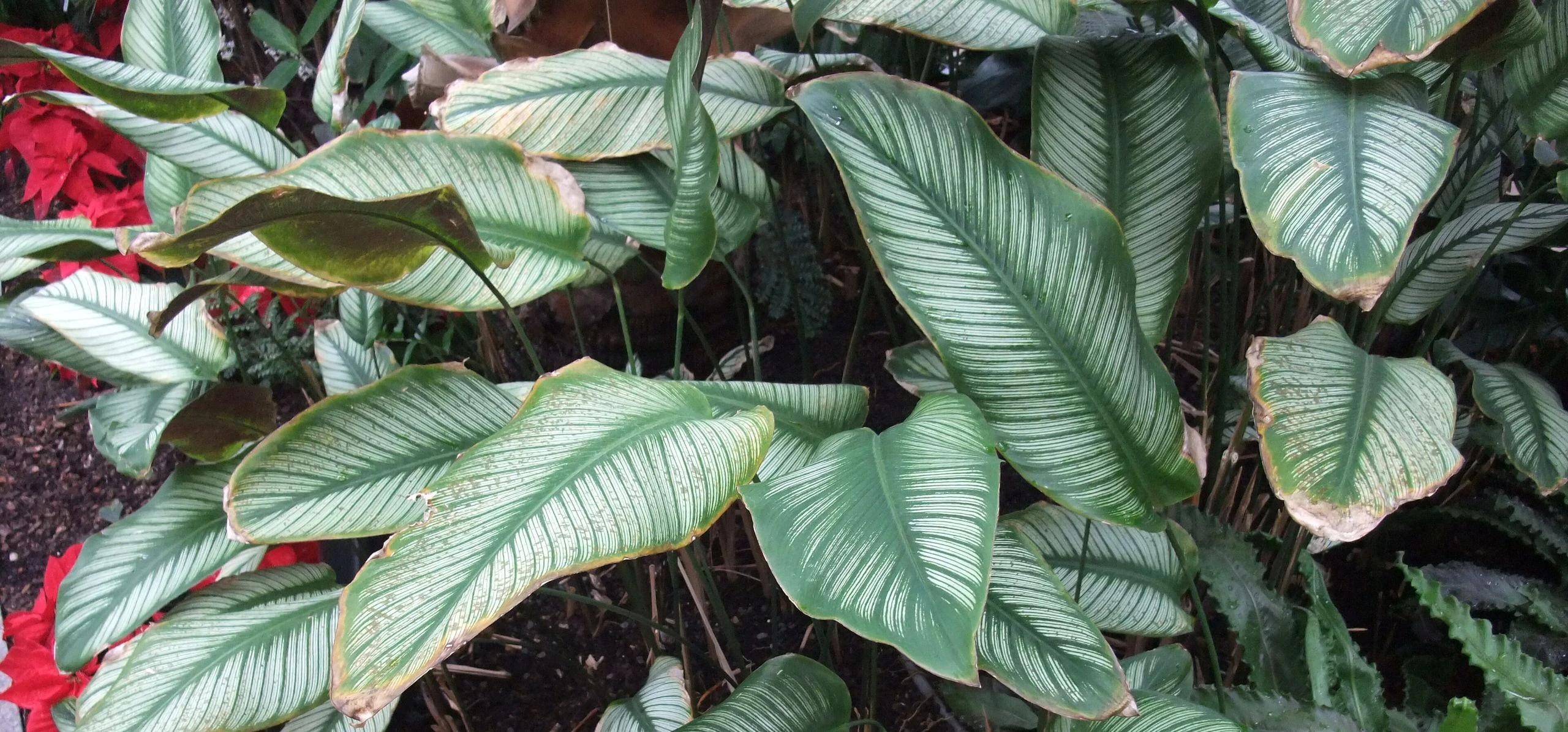
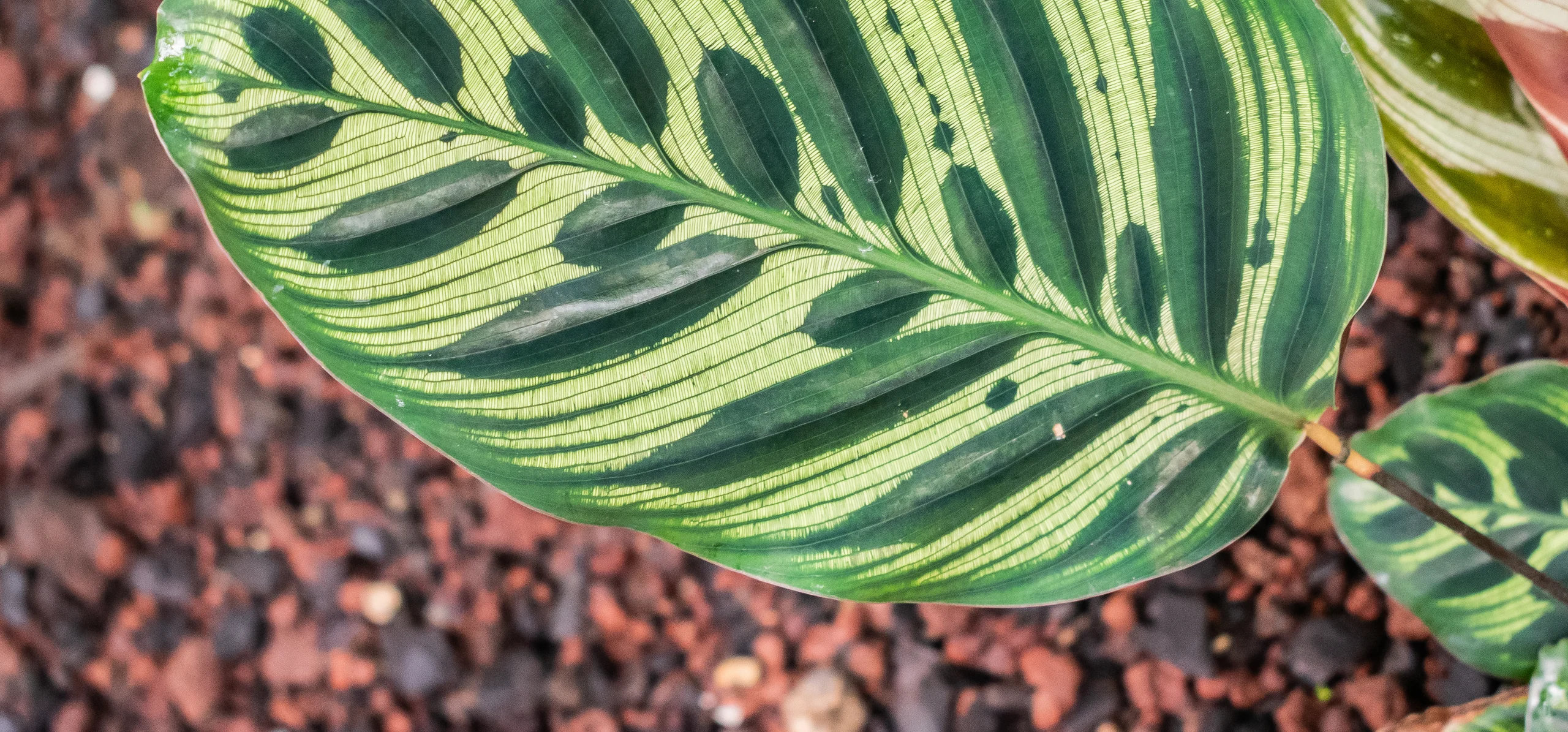
If the tag on your new plant reads Calathea roseopicta, you are holding what botanists now accept as Goeppertia roseopicta, an evergreen rhizomatous perennial from the shaded rainforest floor of the western Amazon basin. Growers sell it under a long list of trade names, Medallion, Rosy, Dottie and Crimson among them, all for the same reason: each rounded, deep green leaf carries a band of rose, silver or white feathering radiating out from the midrib, with a wine-purple underside that shows the moment a leaf turns. It stays a compact clump under half a metre tall and never climbs, but it punishes two mistakes more than most houseplants: ordinary tap water, which leaves the leaf margins crisp and brown within weeks, and a spell of dry or chilly air, which the plant answers by curling its leaves inward days before any other symptom shows.
From Calathea to Goeppertia
DNA studies published in 2012 showed that the old genus Calathea was not one natural group, and roughly half of its species, this one included, were moved into a revived genus, Goeppertia. GBIF records the accepted name as Goeppertia roseopicta (Linden ex Lem.) Borchs. & S.Suárez, with Calathea roseopicta, the older Calathea illustris and several Maranta combinations from the nineteenth century listed as straight synonyms. Nurseries, seed packets and plant tags have mostly not caught up, so expect Calathea roseopicta on the label far more often than the accepted name, even though the plant underneath is identical.
Choosing a Variety
Almost everything sold as a rose-painted calathea is a cultivar selection of this one species, bred for how the feathering sits on the leaf rather than for any difference in care. Medallion carries a pale midrib stripe with a ring of rose picked out toward the leaf edge on a near-black background. Rosy leans into solid, saturated pink veining across most of the blade. Dottie, a patent-protected selection, pushes the contrast furthest with hot pink edging and midrib on almost black foliage. Crimson runs the whole leaf in deeper red-purple tones with less green showing through. Whichever pattern you pick, the light, water and humidity needs below apply equally.


Light Without Direct Sun
In the wild this plant grows under a closed canopy, so indoors it wants medium, indirect light rather than a sunny sill. The RHS lists partial shade with bright indirect or filtered light as the target for the species, and that balance matters both ways: too little light dulls the leaf pattern to plain green, while direct sun through south or west glass fades the pink and silver feathering to a washed-out tan and can scorch the thin coloured tissue outright. A spot a metre or two back from an east or north window, or a sheer curtain between the plant and stronger glass, keeps the pattern at its sharpest.
Even Moisture, No Tap Water
RHS guidance for the species is to water moderately through the growing season and keep the compost just moist in winter, in a peat-free, moisture-retentive mix. What decides whether the leaf margins stay clean or turn crisp and brown is less the schedule than the water itself: chlorine, fluoride and dissolved minerals build up at the tips and edges of Marantaceae leaves like this one and leave a dead, papery rim that will not green up again. Rainwater, distilled water, or tap water left standing uncovered for a day to off-gas chlorine all reduce the damage, and water warmed to room temperature avoids shocking roots that never meet a cold snap in their native range.
Humidity and Warmth
The RHS calls for high humidity and draught-free conditions, with a constant temperature of at least 16 degrees Celsius, and the wider calathea growing guide sets a comfortable range of 16 to 21 degrees Celsius while warning against sitting the plant near cold glass, radiators or a draughty doorway. A bathroom, a pebble tray topped up with water, or a small humidifier running nearby all raise ambient moisture more reliably than misting, which dries off a leaf surface in minutes without shifting the humidity of the room around it.
What a Curling Leaf Means
A leaf that rolls or cups inward on this plant is not decorative, it is the earliest warning sign of thirst or dry air, showing up well before any tip turns brown. Curling driven by dry air or an underwatered rootball relaxes flat again within a day of a thorough watering and a humidity boost; curling that does not relax after that points instead to cold air, a draught, or root damage from waterlogged compost. Reading this signal early catches a stressed plant before the tap-water margin damage described above even has a chance to start.
Dividing the Clump
This plant grows from a mass of shallow rhizomes rather than a single stem, thickening sideways into a dense clump rather than climbing or trailing, and the RHS recommends propagating it by division in late spring. Repotting every couple of years, once the clump fills its pot, is the easiest moment to do this: ease the rootball free, then pull or cut the rhizome mass into sections that each keep several leaves and a healthy portion of roots, and pot each division separately into barely damp, peat-free compost. Keep humidity high while a division settles in and expect it to sit still for a couple of weeks before the first new leaf unfurls; stem or leaf cuttings will not root on their own.
Spider Mites
The same warm, dry, still air that stresses the leaf margins also favours red spider mite, the pest the RHS names as the main risk to this species alongside glasshouse whitefly. The first sign is usually a fine, pale stippling across the upper leaf surface rather than the mites themselves, with faint webbing along the midrib or between touching leaves once an infestation has built up. Raising humidity and rinsing the leaves occasionally under lukewarm water does more to prevent an outbreak than any spray; an established infestation generally needs repeated treatment with insecticidal soap or neem oil rather than a single application.
Is It Safe Around Pets
The ASPCA lists Calathea species as non-toxic to dogs, cats and horses, so a curious pet chewing a leaf of this rose-painted calathea risks nothing worse than mild, short-lived stomach upset from the fibre. That makes it one of the safer large-leafed houseplants to keep within reach of cats and dogs, though any houseplant eaten in quantity can still cause vomiting simply from the volume of plant matter swallowed.
Test your plant knowledge
Tap a card to flip it and reveal the answer.
The plant sold as Calathea roseopicta is now accepted under the genus Goeppertia rather than Calathea. Tap to reveal ✓ True
Medallion, Rosy, Dottie and Crimson are different species related to the rose-painted calathea. Tap to reveal ✕ False
Ordinary tap water is one of the main causes of crisp, brown leaf margins on this plant. Tap to reveal ✓ True
A leaf curling inward is best treated by moving the plant into direct sunlight. Tap to reveal ✕ False
The ASPCA lists Calathea species, including this one, as non-toxic to cats, dogs and horses. Tap to reveal ✓ True
Sources
References consulted for this guide
- Goeppertia roseopicta (Linden ex Lem.) Borchs. & S.Suárez, GBIF Backbone Taxonomygbif.org
- Goeppertia roseopicta, rose-painted calathea, RHS Plantsrhs.org.uk
- How to grow calatheas, RHS Growing Guiderhs.org.uk
- Goeppertia roseopicta, Jungle Rose, NC State Extension Gardener Plant Toolboxplants.ces.ncsu.edu
- Calathea, Toxic and Non-Toxic Plants, ASPCA Animal Poison Controlaspca.org
- Reference entity : Wikipédiaen.wikipedia.org