Cockscomb
Celosia argentea cristata
Family · Amaranthaceae
Grow cockscomb (Celosia argentea cristata) with confidence: full-sun placement, well-drained soil, drought tips, feeding, and the pests that rot the crest.
Celosia argentea cristata
Plant profile
- WateringModerateWater every 6 days
- Light exposureFull sun
- Ideal temperature10–35 °C
- Hardiness zoneUSDA 10–11
Growth
- Family
- Amaranthaceae
- Life cycle
- Annual
- Growth speed
- 8/10
- Mature size
- 23–46 cm
- Spread
- 23–30 cm
- Flowering
- Midsummer to first frost
- Propagation
- Seed
Dormancynone, completes its cycle in one warm season
Time to maturityflowers 10-14 weeks after sowing
Soil & climate
- Soil pH
- pH 6–8
- Soil types
- loam, sand
- Drought tolerance
- Yes
Light & Placement
- Origin
- Tropical Africa
- Where to place it
- south-facing windowsill for young seedlings
- sunny border
- raised bed
- patio in full sun
- terracotta or plastic container with drainage holes
Safety
- Toxicity
- CatsSafe
- DogsSafe
- HorsesSafe
Data fromGBIF: Celosia argentea f. cristataPOWO (Kew): Celosia argentea L.ASPCA: Celosia cristata (Fairy Fountain NC State Extension: Celosia argentea
Where it grows
World distribution
GBIF records 1,948 documented identifications across 81 countries, with the largest concentrations in China, Japan, and Brazil.
Yellow to orange dots: concentration of documented identifications per country. Green countries: sourced native range. Source: GBIF.
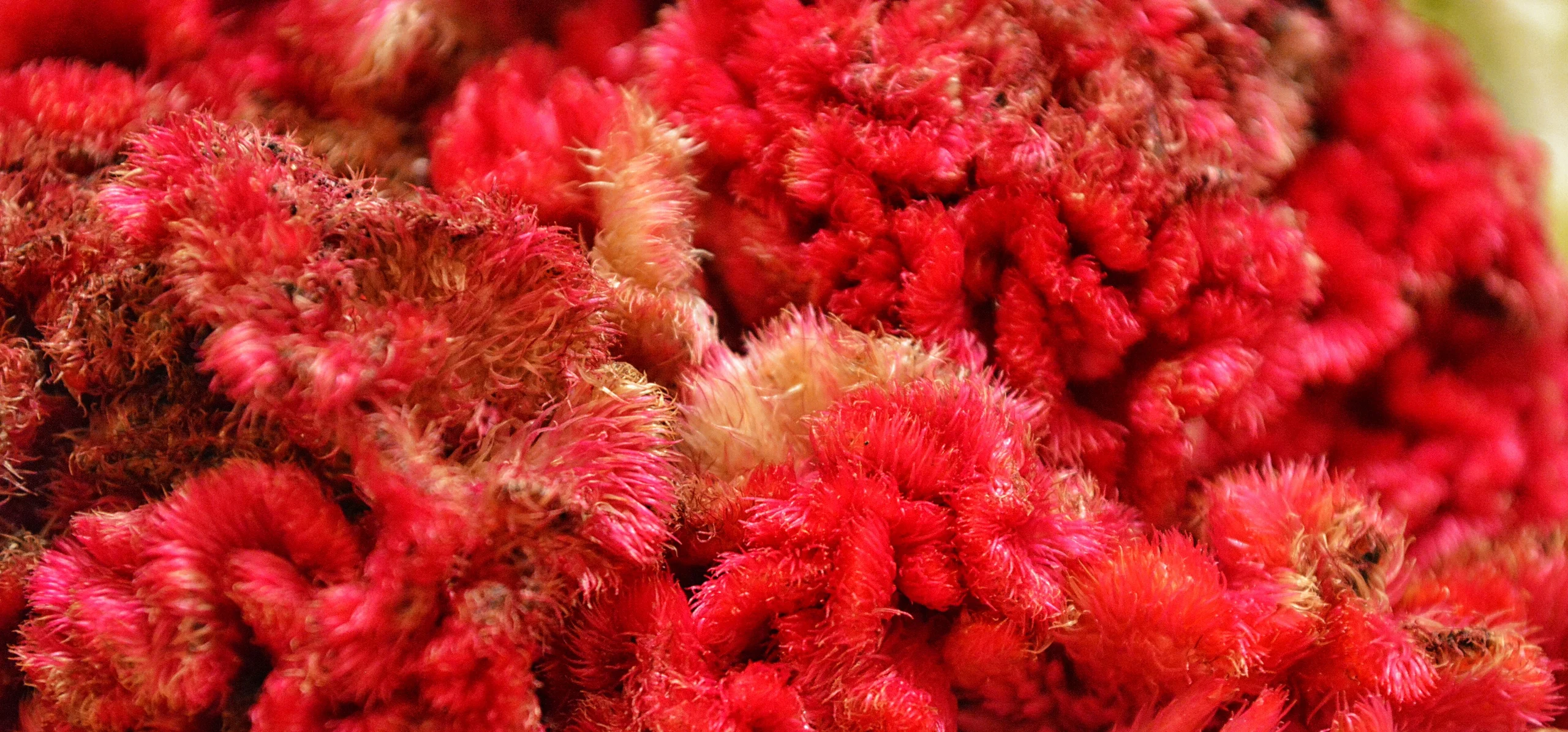
That dense, velvety crest folded like coral or a rooster's comb is Celosia argentea cristata, sold almost everywhere as cockscomb. It is a warm-season annual grown for one thing: a fasciated flower head, a genetic quirk where the growing tip fuses flat and wide instead of branching into a normal spike. Give it full sun, well-drained soil, and steady warmth, and a single plant holds that crest from midsummer until the first frost. It will not survive winter outdoors above roughly USDA zone 10, so plan on it as a one-season bedding or container plant, either self-seeded or restarted from seed each spring.
A Name in Flux: From Celosia Cristata to Celosia Argentea
Gardeners have called this plant Celosia cristata since Linnaeus described it in 1753, and seed packets still use that name. Taxonomists now treat it differently: GBIF lists the accepted name as Celosia argentea f. cristata (L.) Schinz, a form within the wider species Celosia argentea, the same species that produces feathery plume-type celosias and is grown as a leaf vegetable (Lagos spinach or quailgrass) across West Africa and South Asia. In other words, the crested, brain-like head is not a separate species, it is one striking mutant form of a plant that also comes as slender wheat-like spikes and soft feathery plumes. The trade name Celosia cristata is kept here in the title because that is how buyers search for it, but the botanically accepted name is Celosia argentea cristata.
Choosing a Type: Crested, Plumed, or Wheat
Nurseries group Celosia argentea into three broad forms. The Cristata group is the true cockscomb, with a wide, ruffled, fasciated head in red, orange, pink, or yellow that widens as the plant matures. The Plumosa group, often called plumed or feather celosia, produces upright, flame-shaped plumes instead of a folded crest and tends to look tidier in mixed borders. The Spicata group, sold as wheat celosia or flamingo feather, carries slender, bottlebrush-like spikes and reads more like an ornamental grass than a classic cockscomb. All three share the same soil, sun, and water needs described below, the difference is purely in flower shape, so pick by the look you want rather than by ease of care.


Light and Placement
Cockscomb wants full sun, at least six hours of direct light a day. In part shade the stems stretch and thin, flopping under the weight of the crest, and the flower head itself stays smaller and duller than it would in an open, south-facing bed. It also handles heat unusually well for a bedding annual, thriving through the hottest, most humid weeks of summer when many other annuals stall. Space plants 20-30 cm apart so air moves freely between the crowns, crowding is one of the main triggers for the flower rot described further down.
Soil and Starting from Seed
A loamy or sandy soil with good drainage and a near-neutral pH of 6.0 to 8.0 suits cockscomb best, it tolerates occasional dry patches far better than heavy, water-retentive clay. Work in some compost at planting time for the organic matter it prefers, but avoid rich, constantly damp beds. Start seed indoors four to six weeks before the last frost and transplant once nights stay above 10 degrees C, or direct-sow after frost danger has passed since the seed germinates quickly in warm soil. Seedlings resent root disturbance, so raise them in cell trays or biodegradable pots rather than bare-root transplanting.
Watering Without Rotting the Roots
Keep the soil evenly moist while plants are young and establishing a root system, then ease off once they are settled. Established cockscomb is genuinely drought-tolerant and prefers to dry out slightly between waterings rather than sit in soggy ground. Containers dry faster than open beds, so check pots more often in hot weather. The plant's weak point is the opposite extreme: soil that stays wet for extended periods invites root rot, which is one of the more common ways a healthy-looking cockscomb collapses within a few days.
Feeding for a Bigger Crest
A balanced, moderate feed every four to six weeks through the growing season supports the dense flower head without pushing excessive leafy growth at its expense. Skip high-nitrogen fertilisers late in the season, they encourage soft foliage over flowering. Container-grown plants exhaust their potting mix faster than plants in open ground, so they benefit from slightly more frequent, diluted feeding than bedding specimens.
Pests, Diseases, and Common Mistakes
Slugs and snails target young seedlings before the stems toughen up, so protect new transplants in damp spring weather. Indoors or in a greenhouse, watch for aphids and spider mites on the undersides of leaves. The flower head itself is vulnerable to rot when conditions turn cool, wet, and crowded at once, good spacing and well-drained soil are the best prevention. Deer will browse the foliage in gardens where other options are scarce. The single most common mistake is planting cockscomb too early in cold, damp soil, chilled seedlings stall and rarely catch up even once the weather warms.
Origin and Pet Safety
Celosia argentea is native to tropical Africa, where it grows wild across a broad band of countries from Senegal to Kenya and south to Zambia, and it has long been cultivated and naturalised well beyond that range in warm climates worldwide. For households with animals, the ASPCA lists Celosia cristata as non-toxic to cats, dogs, and horses, so a curious pet chewing a fallen crest is a mess to clean up rather than a poisoning risk. That safety profile, combined with its tolerance for heat and drought once established, is a large part of why cockscomb remains a reliable choice for sunny beds, cutting gardens, and containers on hot patios.
Test your plant knowledge
Tap a card to flip it and reveal the answer.
Cockscomb needs at least six hours of direct sun a day to flower well. Tap to reveal ✓ True
The crest on a cockscomb flower head is a genetic fusion of the growing tip, not a normal flower spike. Tap to reveal ✓ True
Crested cockscomb is classified as a separate species from Celosia argentea. Tap to reveal ✕ False
Cockscomb is toxic to cats, dogs, and horses if they chew on it. Tap to reveal ✕ False
Soggy, poorly drained soil is one of the fastest ways to lose a cockscomb plant. Tap to reveal ✓ True
Sources
References consulted for this guide
- GBIF: Celosia argentea f. cristatagbif.org
- POWO (Kew): Celosia argentea L.powo.science.kew.org
- ASPCA: Celosia cristata (Fairy Fountain / Woolflower) toxicityaspca.org
- NC State Extension: Celosia argenteaplants.ces.ncsu.edu
- Reference entity : Wikidatawikidata.org