Purple Amaranth
Amaranthus blitum
Family · Amaranthaceae
Sow, cut and regrow purple amaranth (Amaranthus blitum) for tender greens, spot bolting early, and tell it apart from redroot pigweed in the bed.
Amaranthus blitum
Plant profile
- WateringHighWater every 3 days
- Light exposureFull sun
Growth
- Family
- Amaranthaceae
- Life cycle
- Annual
- Growth speed
- 8/10
- Mature size
- Low, prostrate-to-ascending annual
- Flowering
- Small green axillary flower clusters; leaf quality drops once flowering starts
- Propagation
- Seed
DormancyNone; completes its life cycle in one warm season
Time to maturityAbout 30 days from sowing to the first cut-and-come-again harvest
Soil & climate
- Soil pH
- pH 6–8
- Soil types
- clay, loam, sandy, well-drained
- Drought tolerance
- No
Light & Placement
- Origin
- Peru to Brazil and northern Argentina (POWO), now naturalized worldwide
- Where to place it
- open vegetable bed
- raised bed
- wide container with drainage
Safety
- Toxicity
- HumansSafe
Invasive speciesSelf-seeds readily and is documented in weed-identification resources as a naturalized volunteer; remove flowering plants before seed set to keep it from spreading beyond the bed.
Data fromGBIF: Amaranthus blitum L.Plants of the World Online (Kew): AmaranNC State Extension Gardener Plant ToolboUF/IFAS EDIS HS1407: Production Guide of
Where it grows
World distribution
Purple Amaranth is native to 7 countries: Argentina, Bolivia, Brazil, Chile, Paraguay, Peru, and Uruguay.GBIF records 41,034 documented identifications across 155 countries, with the largest concentrations in France, Netherlands, and Belgium.
- Argentina
- Bolivia
- Brazil
- Chile
- Paraguay
- Peru
- Uruguay
Yellow to orange dots: concentration of documented identifications per country. Green countries: sourced native range. Source: GBIFNative range from POWO (Kew).
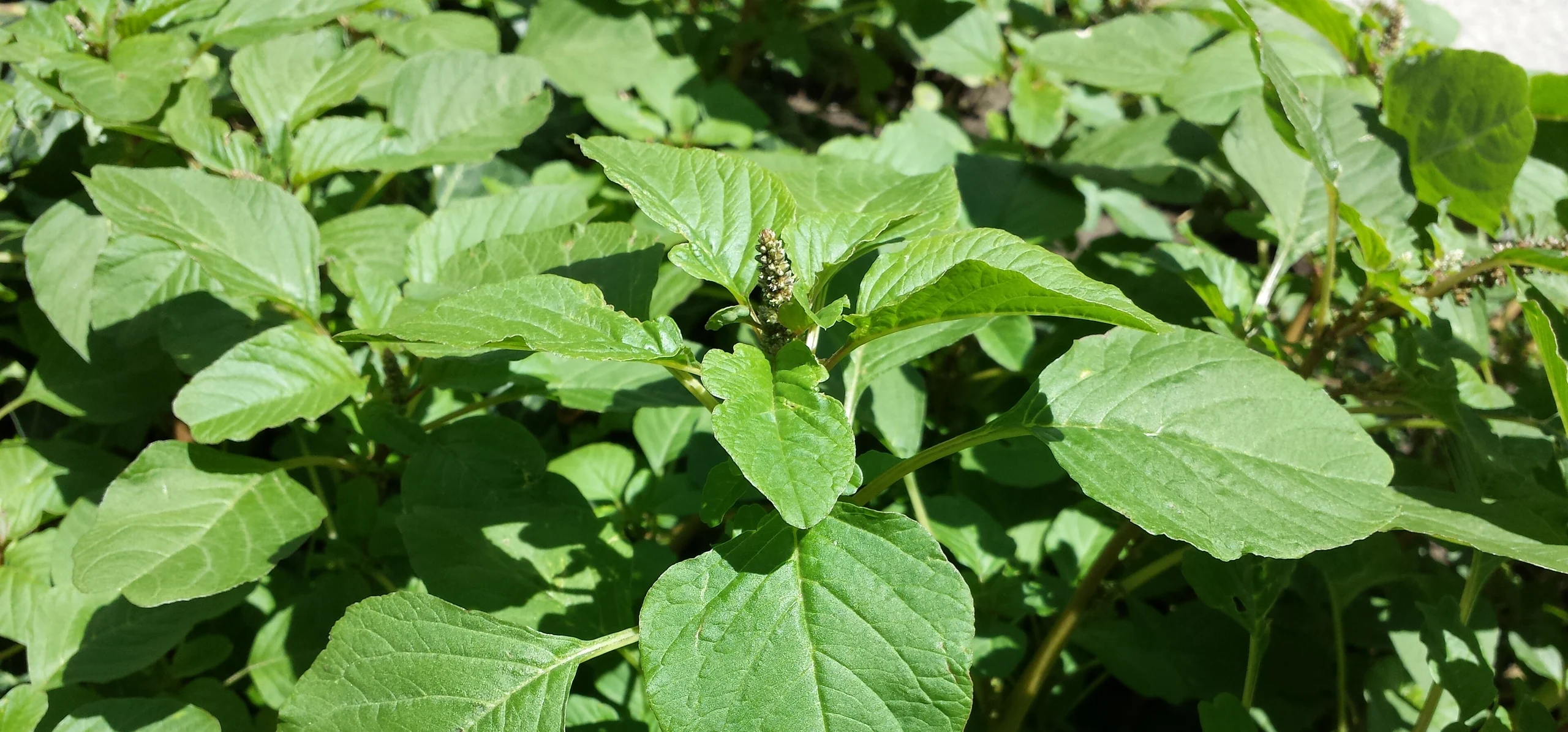
Purple amaranth (Amaranthus blitum) is a fast, warm-season leaf vegetable that most gardeners meet twice: once as a crop they sowed on purpose, and once as a volunteer weed filling in bare soil on its own. Both plants are the same species. It germinates in about a week in warm soil, produces its first cut of tender leaves in roughly a month, and keeps regrowing from the same rootstock for several more cuts if you never let it flower. The low, spreading habit and notched leaf tips that make it easy to identify in the vegetable bed are the same features that separate it, at a glance, from the upright, hairy-stemmed pigweeds it is often confused with.
Origin and How a Weed Became a Vegetable
Plants of the World Online lists the native range of Amaranthus blitum as Peru to Brazil and northern Argentina, but the species has been cultivated and naturalized so widely, across the Mediterranean, Africa and Asia, for so long that most gardeners encounter it as a regional garden plant rather than an exotic. In parts of southern Europe, West Africa and South and Southeast Asia it is grown deliberately as a leafy pot herb under names like bledo, blette or callaloo-type greens, harvested the same way as spinach or amaranth greens generally. Everywhere else it turns up unplanted, seeded in from birds or old garden soil, which is why the same plant appears in weed identification guides and vegetable production guides at once.
Sowing and Starting the Bed
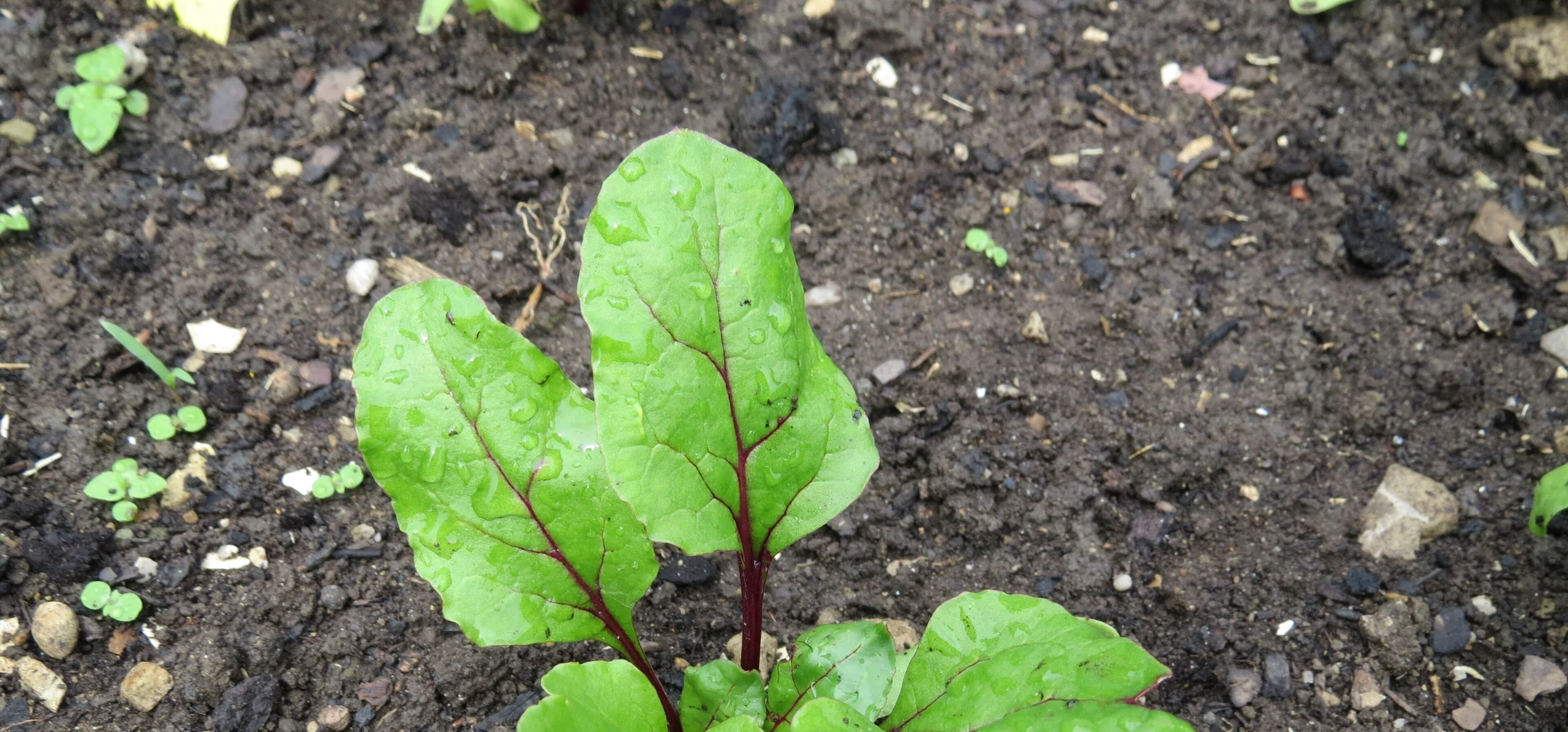
Direct-sow after the soil has warmed, since germination needs roughly 70 to 75 degrees Fahrenheit (21 to 24 degrees Celsius) and stalls badly once soil drops below 50 degrees Fahrenheit (10 degrees Celsius); there is no frost tolerance at any stage. Sow seed shallow, about one-eighth to one-quarter inch (3 to 6 mm) deep in a fine, firm, well-drained bed, spacing seeds roughly an inch apart in rows 12 to 18 inches apart. Thin seedlings to about 6 inches once they have a few true leaves. The seed is tiny and the seedlings look like ordinary pigweed at first, so mark the row rather than relying on memory to weed around it later.
Cut-and-Come-Again Harvest
The first harvest comes about 30 days after sowing. Take only a portion of the leaves and shoot tips at each cut rather than stripping the plant bare, and leave the lower growing points intact; the plant regrows enough for another cut within about two weeks. Morning harvest, while leaves are still turgid from overnight moisture, gives the crispest greens. A bed sown in successive batches two to three weeks apart keeps a steady supply through the warm season instead of one large flush followed by a gap.


Watering, Soil and Feeding
Purple amaranth grows in clay, loam or sandy soil as long as drainage is good, tolerating a neutral to mildly alkaline pH from about 6.0 to above 8.0. Keep the soil evenly moist through the growing period; because the roots are shallow and the leaves are the harvested part, letting the bed dry out between waterings toughens the leaves and pushes the plant toward flowering sooner than you want. A light, balanced feed after each cut supports the next flush of leaf growth, since every harvest removes nutrients along with the foliage. Full sun, six or more hours of direct light a day, gives the densest, most compact leaf growth; in partial shade the plant stretches and produces fewer leaves per cutting.
Bolting and Extending the Harvest
Once the plant begins flowering, sending up the small green axillary flower clusters that form a loose spike near the growing tip, leaf production drops off and the remaining leaves toughen and lose their mild flavor. Heat, long days, crowding and any check to growth such as a late transplant push flowering earlier. There is no reversing a plant that has bolted; the practical response is to keep harvesting the youngest leaves for as long as they stay tender, then pull the plant and resow rather than nursing it along. Succession sowing every few weeks is a more reliable way to keep a continuous harvest than trying to delay bolting on any one planting.
Distinguishing Purple Amaranth from Redroot Pigweed
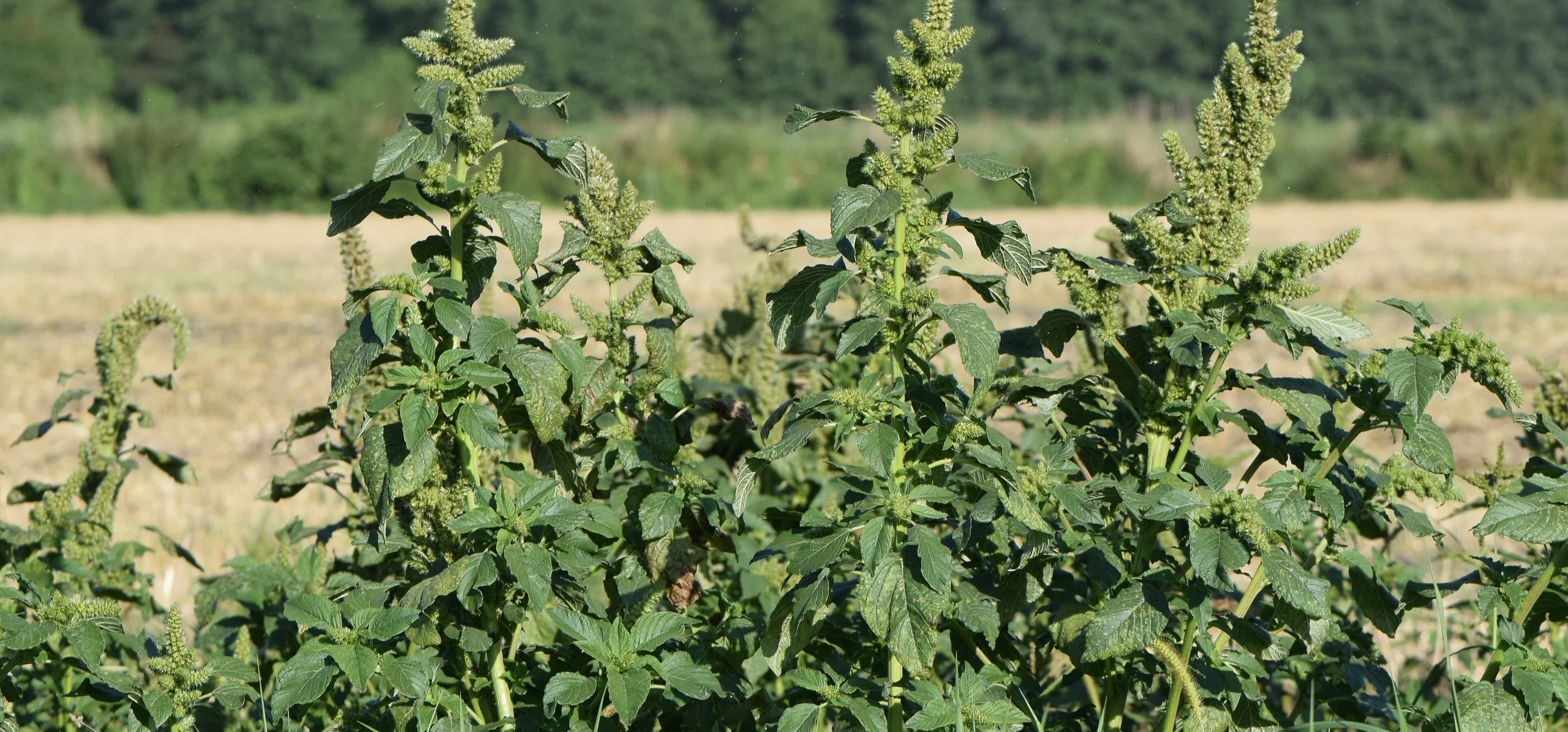
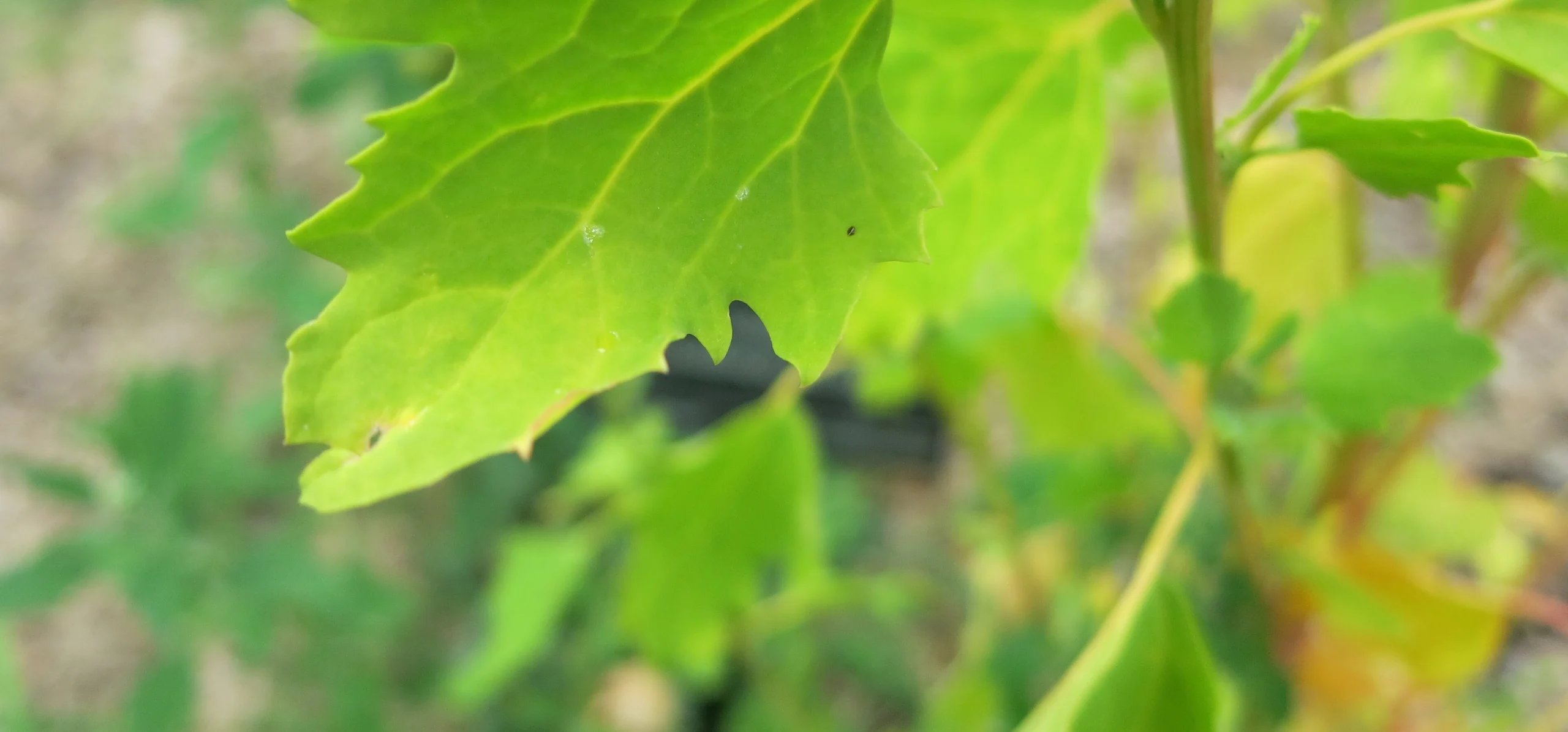
Purple amaranth is easy to mistake for its more aggressive relative, redroot pigweed (Amaranthus retroflexus), when both turn up as volunteers. Purple amaranth grows prostrate to ascending, spreading low across the ground rather than standing upright, with smooth, hairless stems and leaves that carry a distinct notch or cleft at the tip. Redroot pigweed grows upright, sometimes past head height, on a stout, densely hairy stem, with leaves that lack that notched tip and a dense, bristly terminal flower spike rather than purple amaranth's loose axillary clusters. Running a finger down the stem is the fastest field check: fuzzy and upright points to redroot pigweed, smooth and low-growing points to purple amaranth.
Cooking and Using the Leaves
Cook purple amaranth leaves the way you would spinach or chard: a quick saute, a wilt into soups and stews, or a steam, since the raw leaves carry oxalates that cooking reduces. The tender shoot tips cook along with the leaves and need no separate treatment. Because the crop is harvested continuously rather than all at once, plan to cook it within a day or two of cutting; the leaves do not hold in the refrigerator as well as sturdier greens like kale.
Pests, Self-Seeding and Common Mistakes
Stem rot and damping-off are the main disease risks, both tied to soil that stays too wet, particularly around germination; a well-drained bed avoids most of it. Caterpillars and stem weevils are the recurring insect pests, and hand-removing infested leaves or pulling badly damaged plants keeps small outbreaks from spreading through a dense planting. The most common mistake is letting a few plants flower and set seed at the edge of the bed: purple amaranth self-seeds readily, and a single flowering plant left standing can reseed the surrounding soil for the following season, which is exactly how it becomes a volunteer weed in beds where no one meant to grow it.
Test your plant knowledge
Tap a card to flip it and reveal the answer.
Purple amaranth can be harvested repeatedly by cutting only part of the leaves and letting the plant regrow. Tap to reveal ✓ True
Amaranthus blitum is native to the Mediterranean region. Tap to reveal ✕ False
Leaves are still ideal for harvest once the plant has started flowering. Tap to reveal ✕ False
A notched leaf tip and smooth, hairless stems help separate purple amaranth from upright, hairy-stemmed redroot pigweed. Tap to reveal ✓ True
Purple amaranth seed germinates well in cold soil below 50 degrees Fahrenheit (10 degrees Celsius). Tap to reveal ✕ False
Sources
References consulted for this guide
- GBIF: Amaranthus blitum L.gbif.org
- Plants of the World Online (Kew): Amaranthus blitum L.powo.science.kew.org
- NC State Extension Gardener Plant Toolbox: Amaranthus blitumplants.ces.ncsu.edu
- NC State Extension Gardener Plant Toolbox: Amaranthus retroflexusplants.ces.ncsu.edu
- UF/IFAS EDIS HS1407: Production Guide of Vegetable Amaranth for Floridaask.ifas.ufl.edu
- Reference entity : Wikipédiaen.wikipedia.org