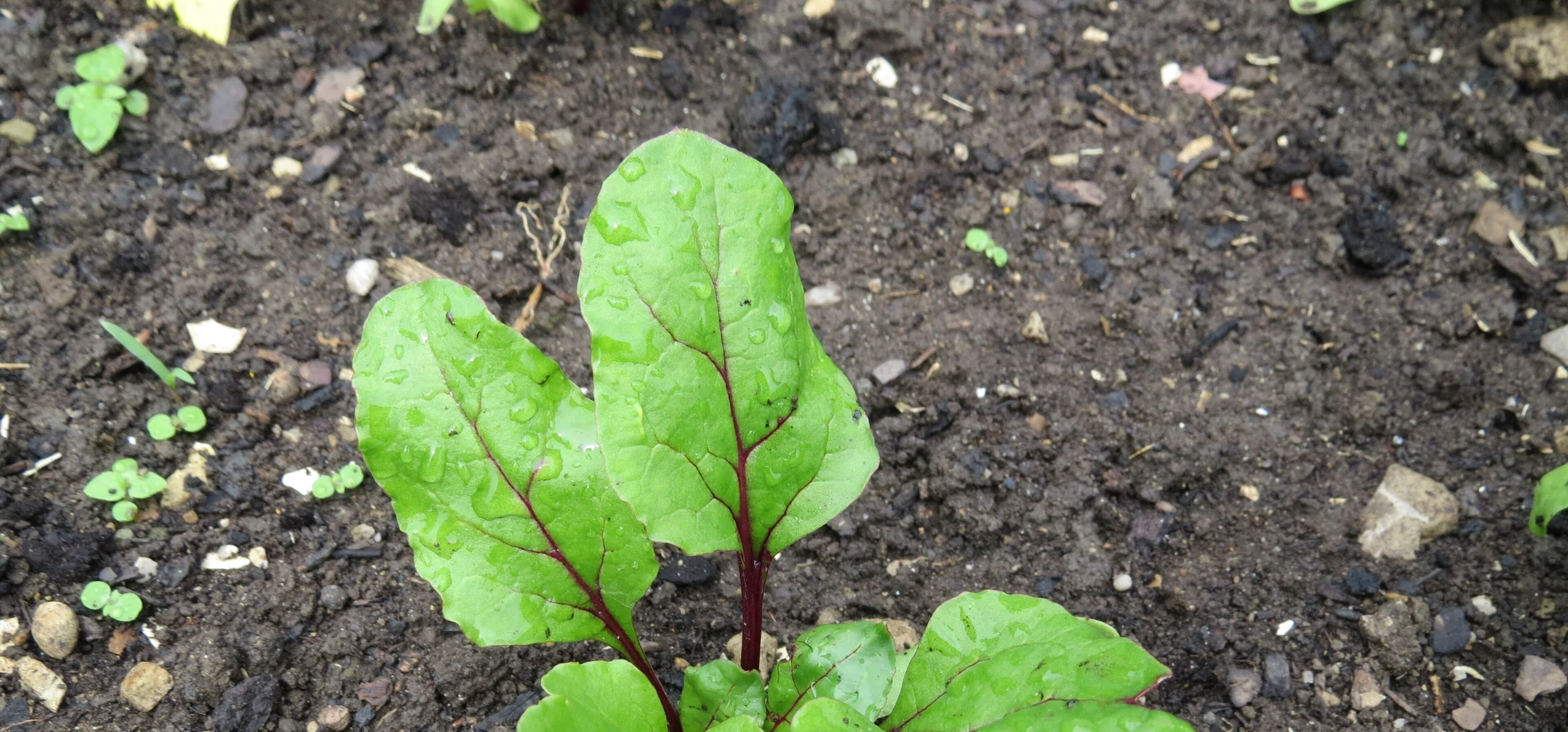
Beetroot
Beta vulgaris
Family · Amaranthaceae
Beet and chard seed comes in fused clusters that need thinning, and both bolt if a cold snap hits young plants; here is how to avoid a wasted season.
Beta vulgaris
Plant profile
- WateringModerateWater every 6 days
- Light exposurePartial sun
Growth
- Family
- Amaranthaceae
- Life cycle
- Biennial
- Growth speed
- 6/10
- Mature size
- Root 1-3in wide at harvest
- Flowering
- Bolts to greenish flower spikes if vernalized
- Propagation
- Seed
DormancyOverwinters as dormant root
Time to maturity50-60 days to root harvest
Soil & climate
- Soil pH
- pH 6–7
- Soil types
- well-drained, loose, fertile
- Drought tolerance
- No
Light & Placement
- Origin
- Azores, W. Europe to Mediterranean and India
- Where to place it
- open vegetable bed
- raised bed
- part-shade bed for chard
- 10+ inch container with drainage
Safety
- Toxicity
- CatsSafe
- DogsSafe
- HorsesSafe
Invasive speciesNot invasive; a cultivated garden vegetable that does not persist or spread outside beds.
Data fromGBIF: Beta vulgaris L.University of Maryland Extension: GrowinSDSU Extension: Beets, How to Grow ItUniversity of Maryland Extension: Beet aUtah State University Extension: PhysiolASPCA: Toxic and Non-Toxic Plants, Beets
Where it grows
World distribution
Beetroot is native to 34 countries: Albania, Algeria, Belgium, Bulgaria, Croatia, Cyprus, Egypt, and France….GBIF records 167,496 documented identifications across 133 countries, with the largest concentrations in United Kingdom, France, and Afghanistan.
- Albania
- Algeria
- Belgium
- Bulgaria
- Croatia
- Cyprus
- Egypt
- France
- Georgia
- Germany
- Greece
- India
Show 22 more countriesShow fewer countries
- Iran
- Iraq
- Ireland
- Italy
- Kuwait
- Lebanon
- Libya
- Morocco
- Netherlands
- Oman
- Pakistan
- Palestinian Territories
- Portugal
- Russia
- Saudi Arabia
- Spain
- Tunisia
- Türkiye
- Ukraine
- United Arab Emirates
- United Kingdom
- Yemen
Yellow to orange dots: concentration of documented identifications per country. Green countries: sourced native range. Source: GBIFNative range from POWO (Kew).
Beetroot and Swiss chard are both Beta vulgaris, the same species selected for opposite ends: beet cultivars push sugar and pigment into a swollen taproot, while chard cultivars are bred to resist bolting and keep throwing new leaves from a low crown instead of storing energy underground. If a seed packet says beet, expect a root harvest in seven to nine weeks; if it says chard, expect to cut leaves from the same plant for months instead. Both share the quirks that trip up new growers: the seed is a dried cluster of several true seeds rather than one, and both bolt to seed if a cold snap hits them while young. What differs is covered below.
Beetroot or Chard: One Species, Two Harvests
University of Maryland Extension grows both crops on the same cool-season calendar, direct-seeded from mid-spring or late summer and tolerant of a light frost, which is why the same guide covers both: the seed itself, the thinning, the bolting risk and the boron sensitivity below apply to whichever one is in the ground. Table beet varieties are pulled whole for the root; chard varieties are left in place and cut leaf by leaf, so treating a chard plant like a beet, pulling it early for a root, wastes most of what it was bred to do.
Sowing the Seed Clusters and Thinning
What looks like one beet or chard seed is actually a dried fruit fused around two to five true seeds, so a row sown at normal spacing still comes up in dense little clumps unless the packet is specifically labeled monogerm. University of Maryland Extension recommends sowing seed clusters about 2 inches apart in all directions, covered with half an inch of fine soil, then thinning by hand once seedlings reach about 2 inches tall down to a final spacing of 3 inches; the thinnings themselves are tender enough to eat in a salad rather than discarded. Skipping the thinning does not kill the row, it just means every root in a clump stays small and crowded, since only one seedling per cluster can develop a full-size root or a full head of chard leaves.
Bolting: What a Cold Snap Does to Young Plants
Beet and chard seedlings vernalize, meaning sustained cold primes them to flower, more easily than most vegetables: SDSU Extension notes that temperatures between 41°F and 48°F (5-9°C) held for one to five weeks are enough to trigger it, an exposure a seedling can pick up from nothing more dramatic than an unseasonably cool spring stretch, well before any frost is visible. Once vernalized, the plant starts pulling stored sugars back out of the root and pushing them into a flowering stalk, and the result is a bolted plant with a tough, bitter, woody root or leaf ribs that turn stringy, the season effectively over regardless of how much warm weather is left. The practical fix is timing: hold spring sowing until the coldest nights have passed, or use a floating row cover to buffer seedlings through the last cool snap.


Boron Deficiency and Black Heart
Black heart is what boron deficiency does to a beet or chard root: internal black, corky spots develop in the flesh, the youngest leaves in the crown turn brittle and die back into a stunted rosette, and Utah State University Extension notes the disorder shows up specifically in high-pH soils, where boron already present becomes less available to the roots rather than being genuinely absent. It rarely announces itself early; the outer leaves can look completely normal while the center of the root is already marked, which is why a beet that looks fine pulled whole sometimes reveals dark, corky streaks only once it is cut open. Testing soil before planting, and correcting pH toward the 6.0 to 7.0 range University of Maryland Extension recommends for the crop, does more to prevent it than extra watering once symptoms show.
Leaf Miner on the Leaves
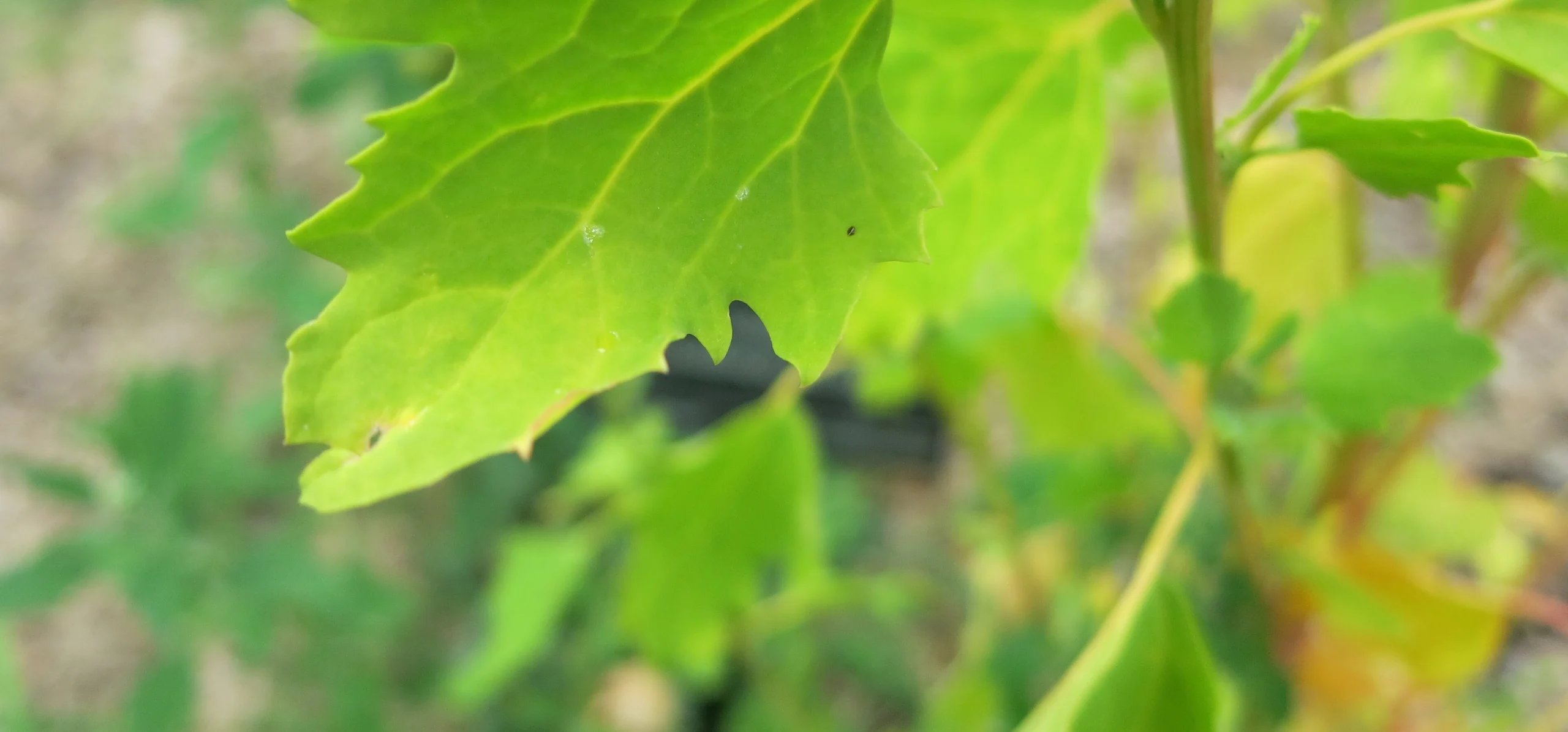
The beet leafminer, Pegomya hyoscyami, lays clusters of white eggs on the underside of beet and chard leaves, and University of Maryland Extension is specific about the timing problem this creates: once larvae hatch, they tunnel straight into the leaf tissue and feed between the upper and lower surfaces, so a spray applied after mining has started cannot reach them. What is left behind is a pale, winding blotch that can swallow most of a leaf if several larvae are working it at once. Checking the undersides of young leaves for egg clusters, then scraping or crushing them before they hatch, catches the problem while it is still preventable; a floating row cover placed before the flies are active keeps them off the leaves entirely, and heavily mined leaves are worth stripping off and destroying rather than left to feed a second generation.
Pulling and Storing Beetroot
Table beets are ready 50 to 60 days after direct seeding, per University of Maryland Extension, pulled once the shoulder of the root is 1 to 3 inches across; left longer, the root turns woody and can develop the same internal rings that come from stress rather than boron. Twist or cut the tops off an inch above the crown rather than pulling them, since a beet still trailing its leaves loses moisture through them in storage. UMD recommends keeping harvested roots at a cold, humid 32°F (0°C) and about 95 percent relative humidity, stored unwashed with dirt brushed off by hand, since water left on the skin invites rot; roots layered in slightly damp sand in a cool space, or bagged loosely in the crisper drawer, both hold for months under those conditions.
Chard: Cutting the Outer Leaves Without Stopping the Plant
Chard rewards a different harvest logic than beetroot, because the crop being taken is the leaf, not a root pulled once. University of Maryland Extension describes cutting the largest outer leaves close to the crown, an inch or so above the soil, while leaving the small inner leaves untouched to keep growing; done this way, a single planting keeps producing new leaves for months instead of being harvested all at once. Pulling or twisting a leaf instead of cutting it risks tearing into the crown itself, which is where all the new growth comes from, so a clean cut with a knife or shears is worth the extra few seconds. A chard plant harvested this way is usually still productive well after a same-season beet planting has already been pulled and eaten.
Test your plant knowledge
Tap a card to flip it and reveal the answer.
A beet or chard seed is really a dried fruit containing several true seeds, so most seed lines need thinning after they sprout. Tap to reveal ✓ True
Beet and chard seedlings are more likely to bolt after a week near freezing than after a longer stretch of cool, 45°F weather. Tap to reveal ✕ False
Black, corky spots inside a beet root usually point to a boron deficiency rather than a disease. Tap to reveal ✓ True
Spraying an insecticide on a chard leaf after it develops pale winding tunnels will usually kill the leaf miner larvae inside. Tap to reveal ✕ False
Chard is typically harvested by cutting only the largest outer leaves, which lets the plant keep producing from the center for months. Tap to reveal ✓ True
Sources
References consulted for this guide
- GBIF: Beta vulgaris L.gbif.org
- University of Maryland Extension: Growing Beets in a Home Gardenextension.umd.edu
- University of Maryland Extension: Growing Swiss Chard in a Home Gardenextension.umd.edu
- SDSU Extension: Beets, How to Grow Itextension.sdstate.edu
- University of Maryland Extension: Beet and Spinach Leafminersextension.umd.edu
- Utah State University Extension: Physiological Problems (Root Crops)extension.usu.edu
- ASPCA: Toxic and Non-Toxic Plants, Beetsaspca.org
- Reference entity : Wikipédiaen.wikipedia.org