Redroot Pigweed
Amaranthus retroflexus
Family · Amaranthaceae
Redroot pigweed is a fast summer annual eaten as a leaf vegetable and a livestock nitrate risk: how to spot it, tell it from Palmer amaranth, and remove it.
Amaranthus retroflexus
Plant profile
- WateringLittleWater every 10 days
- Light exposureFull sun
Growth
- Family
- Amaranthaceae
- Life cycle
- Annual
- Growth speed
- 8/10
- Mature size
- 30–200 cm
- Flowering
- Mid to late summer, in dense bristly terminal spikes
- Propagation
- Seed
DormancyNone; overwinters only as seed
Time to maturityOne growing season
Soil & climate
- Soil types
- disturbed soil, cultivated fields, fertile garden beds
- Drought tolerance
- Yes
Light & Placement
- Origin
- Mexico
- Where to place it
- Full sun field edge
- Vegetable garden row
- Freshly tilled or disturbed ground
Safety
- Pet safe
- No
ToxicityNot listed by name on ASPCA checklists; documented by NC State Extension as a nitrate and oxalate risk to livestock
Invasive speciesNaturalized worldwide as a major agricultural weed; herbicide-resistant biotypes are tracked in several regions
Data fromGBIF: Amaranthus retroflexus L.POWO (Kew): Amaranthus retroflexus L.NC State Extension Gardener Plant ToolboIowa State University Extension: RedrootWSU Hortsense: Redroot Pigweed (Amaranth
Where it grows
World distribution
Redroot Pigweed is native to a single country: Mexico.GBIF records 129,295 documented identifications across 112 countries, with the largest concentrations in France, Germany, and Russia.
- Mexico
Yellow to orange dots: concentration of documented identifications per country. Green countries: sourced native range. Source: GBIFNative range from POWO (Kew).
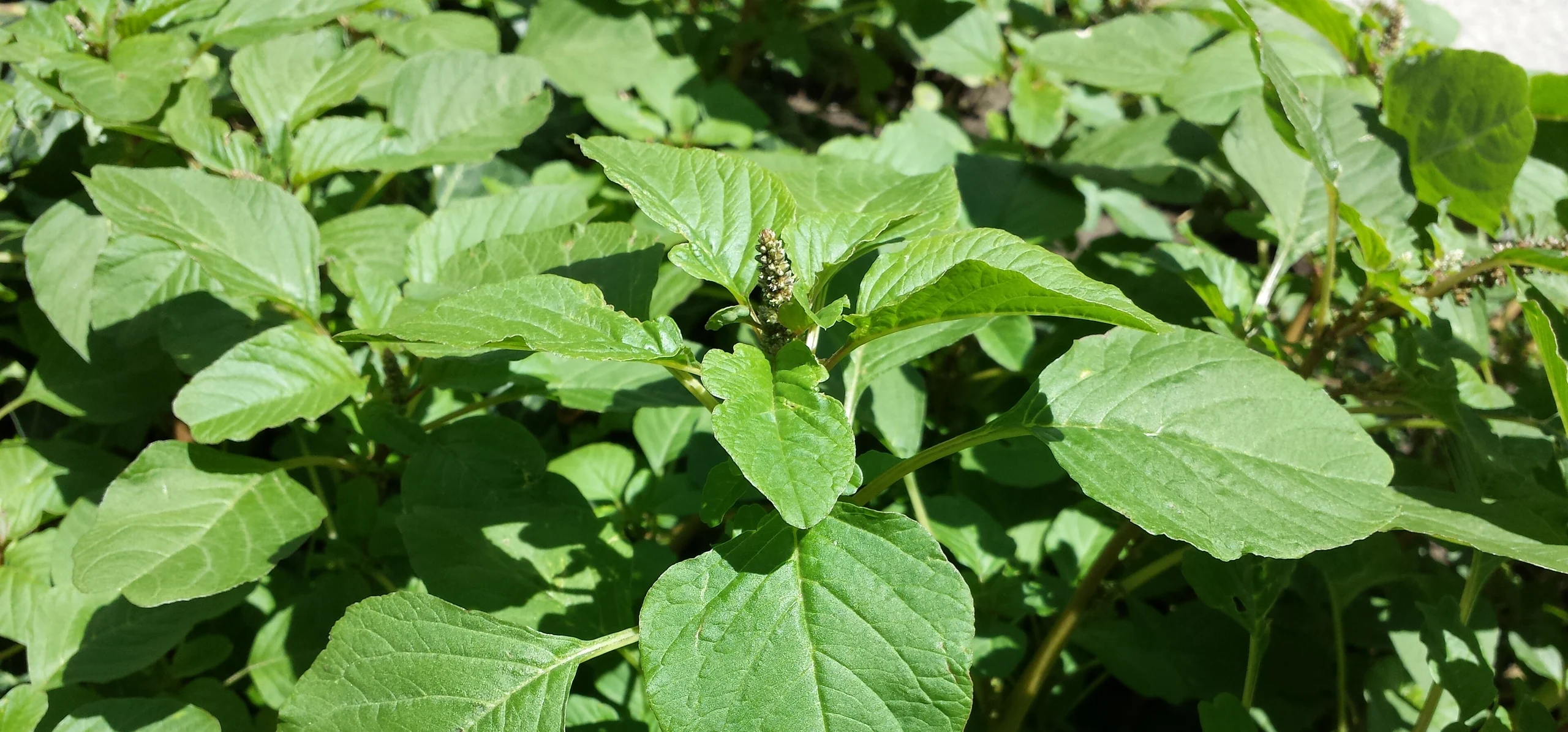
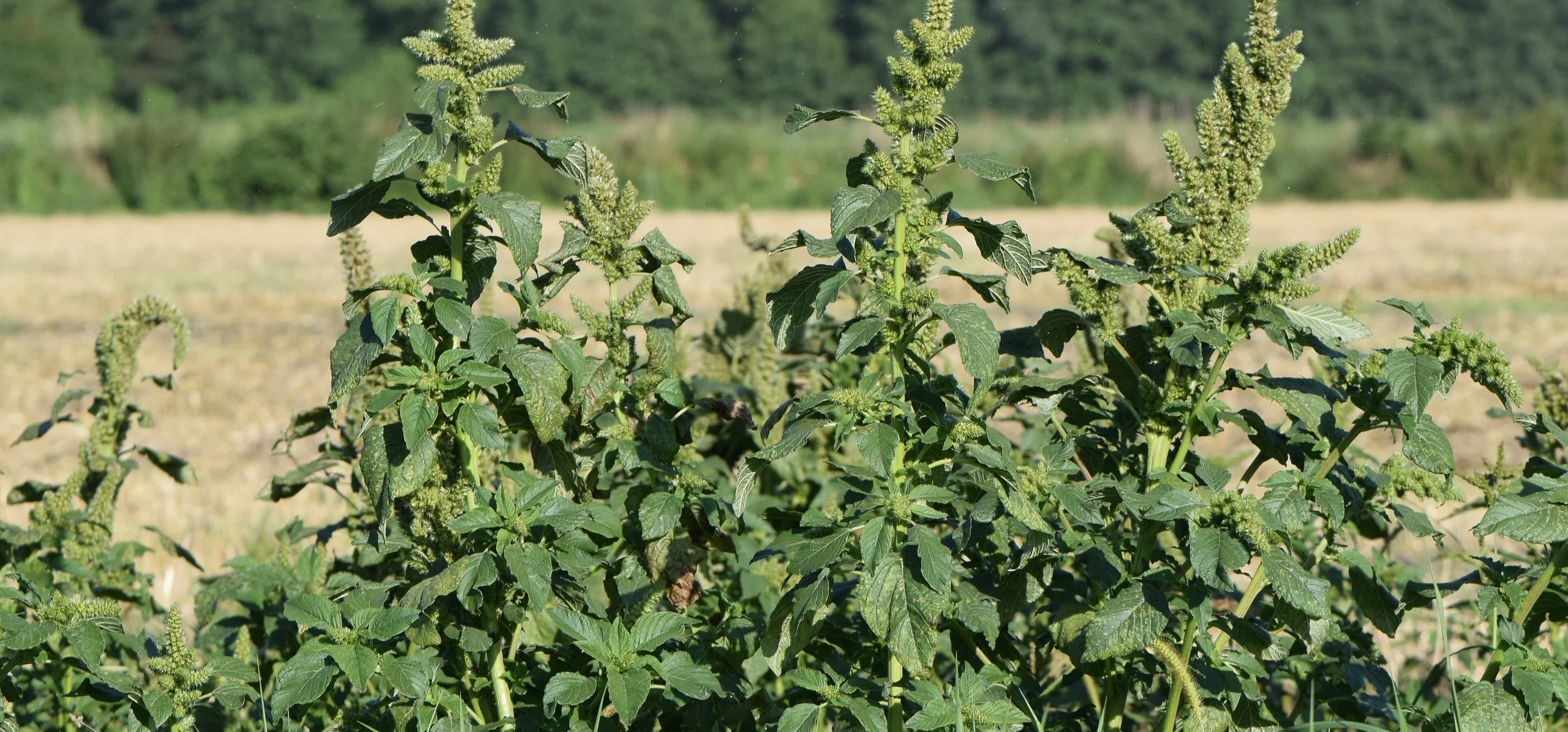
The coarse, upright plant with egg-shaped leaves, a rough hairy stem, and a stiff, bristly green seed spike on top is almost certainly redroot pigweed, Amaranthus retroflexus. It belongs to the amaranth family, Amaranthaceae, the same family as beets, spinach, and quinoa, and like most of its relatives it runs its whole life, seed to seed, in one summer. Most gardeners meet it as an uninvited volunteer between vegetable rows or along a field edge rather than as anything they planted, and that matters: pull the seedling early and it costs a minute, let one plant flower and it can seed the bed for years. The details below settle the identification in under a minute.
Identifying redroot pigweed
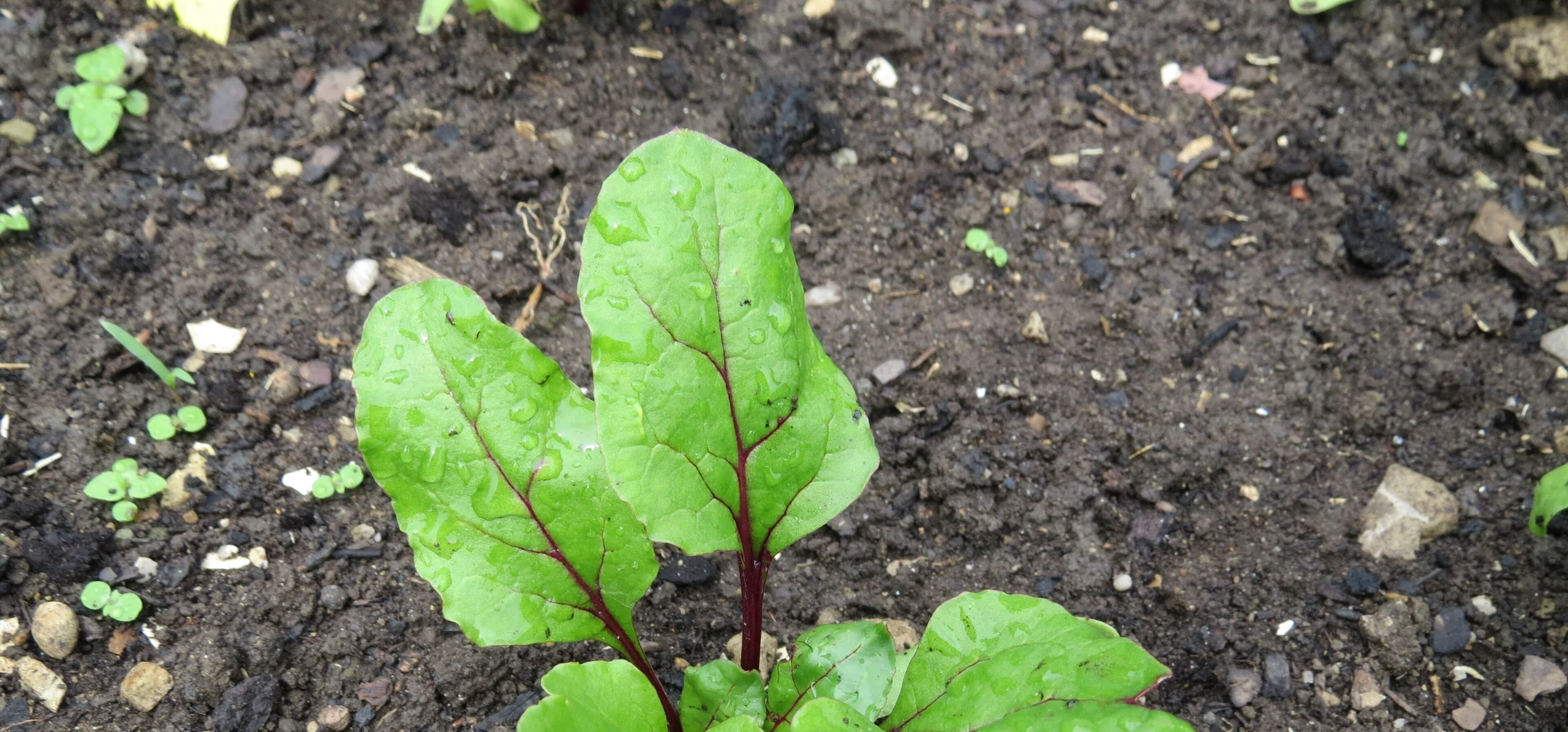
Look first at the base of the plant. The lower stem, the branches, and the upper part of the taproot are frequently red or streaked with red, which is exactly where the common name comes from; slice through a young taproot and the red tint often shows in cross-section too. Leaves are alternate, egg-shaped to diamond-shaped, dull green with prominent veins, wavy along the margin, and often reddish underneath, and the first true leaf usually carries a small notch at its tip. The stem is noticeably hairy, especially on new growth, a texture you can feel by running a finger up a young stalk. By late summer an uncrowded plant stands anywhere from about 30 cm to 2 m tall, coarse and lightly branched, topped by a dense, bristly, greenish flower spike that feels prickly to the touch.
Not Palmer amaranth or waterhemp
Redroot pigweed gets confused with its more aggressive relatives, Palmer amaranth and common waterhemp, and the mix-up matters because those two are dioecious, separate male and female plants, and have driven serious herbicide resistance across row crops. Redroot pigweed is monoecious: male and female flowers sit together on the same plant, in a comparatively compact, thick-branched spike with large bracts. Its stem is hairy where Palmer amaranth and waterhemp are smooth. Iowa State's Integrated Crop Management program notes that redroot pigweed was the dominant Amaranthus species in Midwestern fields before the 1980s, before ALS-inhibiting herbicides and spreading resistance let smooth-stemmed waterhemp take over that niche.


Native range and how it spread
Kew's Plants of the World Online lists the plant's native range as Mexico. From there it has naturalized very widely: North Carolina State University's extension database records it as now found nearly worldwide as an introduced plant, most conspicuous across the cultivated cropland of Central and Eastern North America, ground many gardeners assume, wrongly, that it has always grown on.
Where it thrives
Redroot pigweed asks for almost nothing special, which is precisely the problem for anyone trying to keep a bed weed-free. It grows fastest under the sunny, fertile conditions typical of a working vegetable garden or a cultivated field, exactly the ground gardeners keep loosest and richest. It uses the C4 photosynthetic pathway, the same efficient carbon chemistry as corn, so it accelerates in the hottest weeks of summer when many garden crops are just holding steady. It tolerates compacted, disturbed, or freshly tilled soil without complaint, is not fussy about pH, and needs no supplemental water once established beyond ordinary rainfall.
Life cycle, flowering, and the seed bank
This is a true summer annual: every plant dies with the first hard frost, and next year's population grows entirely fresh from seed. Cotyledons emerge narrow and reddish underneath, with true leaves following within days. Flower clusters open greenish and bristly from the leaf joints, thickening into the dense terminal spike as the plant matures, with small, shiny black seeds ripening inside thin papery capsules through late summer. Output is enormous: Iowa State's Integrated Crop Management program puts seed production as high as 117,000 seeds on a single unhindered plant, and buried seed stays viable in soil for years, so one flowering plant left standing in August can reseed a bed for several seasons after.
Eating redroot pigweed
Long before it was a field weed to most Americans, redroot pigweed was food. North Carolina State's extension plant database lists both the young leaves and the seeds as edible raw or cooked: leaves are gathered small and tender, before the plant flowers, and cook down close to a mild spinach. In Mexican markets the young shoots are sold as quelites, and the tiny black seeds, close kin to the amaranth grains grown commercially for cereal, can be ground into flour or sprouted. Harvest only from plants growing away from roadsides, treated turf, or a recently sprayed field margin.
Nitrate and oxalate toxicity to livestock
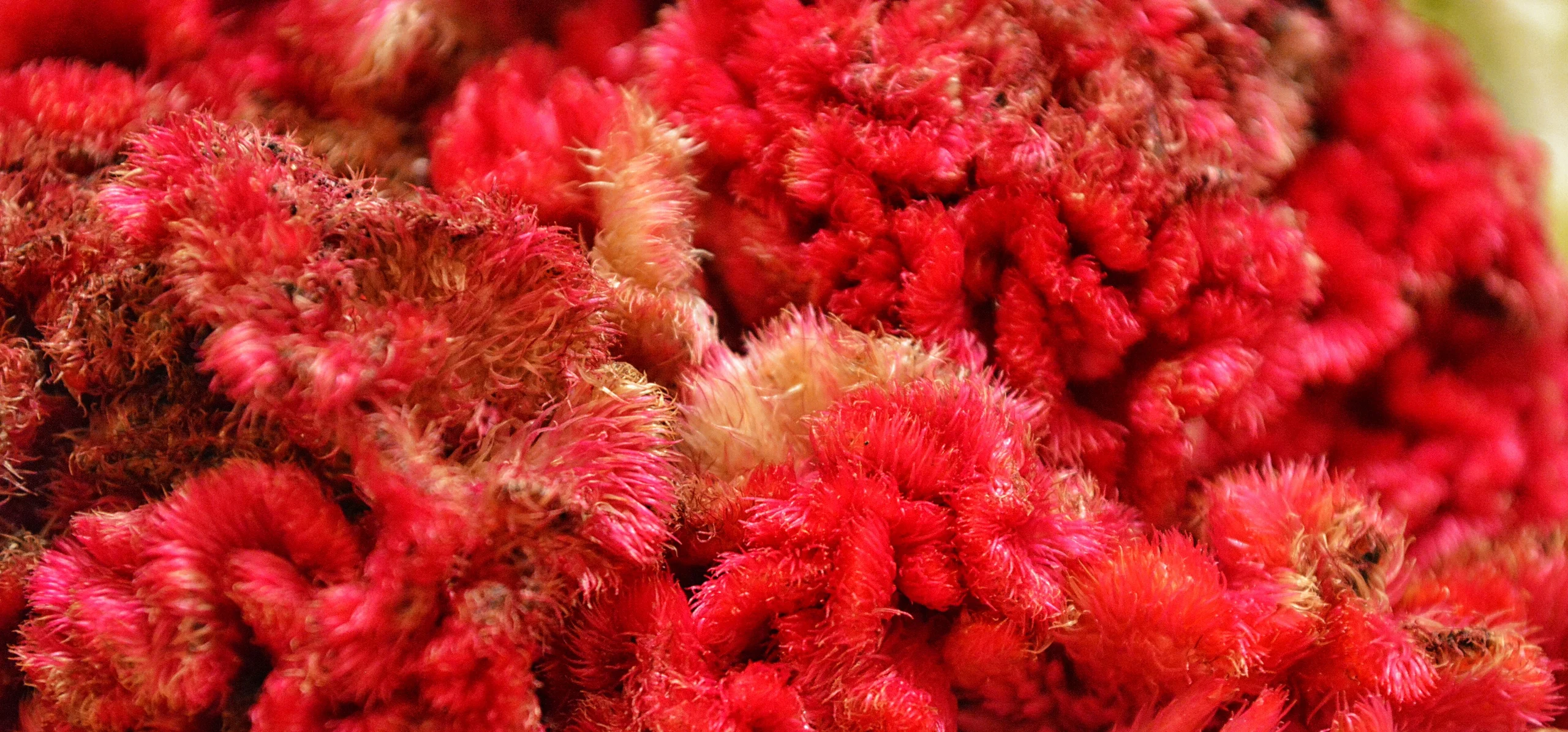
The same fast, nitrogen-hungry growth that lets redroot pigweed thrive in a fertilized field makes it dangerous baled into hay or grazed in a pasture. North Carolina State's plant database credits the species with accumulating nitrates to levels that poison grazing animals, producing a bluish cast to the mucous membranes, respiratory distress, weakness, and trembling, alongside high oxalate levels capable of causing kidney failure; pigs, cattle, sheep, goats, and horses are all named as susceptible. The ASPCA's own toxic plant checklists carry no dedicated page for Amaranthus retroflexus, though its horse plant list does flag a close relative, cockscomb (Amaranthus hypochondriacus), as toxic, the same genus-wide caution extension services apply to redroot pigweed itself. In practice, that means clearing pigweed from hay fields and grazed pasture before it accumulates biomass, not treating it as harmless because it looks like a garden nuisance rather than a named poisonous plant.
Controlling it before it sets seed
Timing beats effort, the same lesson that applies to most annual weeds with a long-lived seed bank. Shallow cultivation or hand-pulling while plants are small, before the taproot toughens, is far more reliable than fighting a mature plant later, and it needs to happen before the flower spike opens. Washington State University's Hortsense fact sheet recommends dense, healthy plantings to out-compete new seedlings, plus regular mowing or rototilling to prevent seed set where cultivation is not practical; where herbicide is warranted, it lists glyphosate as a spot treatment or a pre-emergent such as trifluralin, though decades of ALS-inhibitor use have already left many populations resistant. Clearing plants before the seed spike blackens is the one step that pays off for years, since every capsule left to ripen is another deposit into a seed bank that can outlast the bed itself.
Test your plant knowledge
Tap a card to flip it and reveal the answer.
Redroot pigweed's lower stem and the top of its taproot are often tinged or streaked red. Tap to reveal ✓ True
Redroot pigweed has separate male and female plants, like Palmer amaranth and waterhemp. Tap to reveal ✕ False
A single unhindered redroot pigweed plant can produce over 100,000 seeds. Tap to reveal ✓ True
The young leaves and seeds of redroot pigweed are edible. Tap to reveal ✓ True
Redroot pigweed poses no toxicity risk to grazing livestock. Tap to reveal ✕ False
Sources
References consulted for this guide
- GBIF: Amaranthus retroflexus L.gbif.org
- POWO (Kew): Amaranthus retroflexus L.powo.science.kew.org
- NC State Extension Gardener Plant Toolbox: Amaranthus retroflexusplants.ces.ncsu.edu
- Iowa State University Extension: Redroot pigweedcrops.extension.iastate.edu
- WSU Hortsense: Redroot Pigweed (Amaranthus retroflexus)hortsense.cahnrs.wsu.edu
- Reference entity : Wikipédiaen.wikipedia.org