Lamb's Quarters
Chenopodium album
Family · Amaranthaceae
Lamb's quarters coats its young leaves in a white mealy film, seeds a soil bank that outlives you, and cooks down like spinach if you hoe it before it flowers.
Chenopodium album
Plant profile
- WateringLittleWater every 6 days
- Light exposureFull sun
Growth
- Family
- Amaranthaceae
- Life cycle
- Annual
- Growth speed
- 8/10
- Mature size
- 30–180 cm
- Flowering
- Small green, petal-less flowers in leaf-axil clusters, summer
- Propagation
- Seed
DormancySeeds carry variable dormancy and persist in the soil seed bank between germination flushes
Time to maturityCan begin setting seed within about six weeks of germination
Soil & climate
- Soil types
- fertile, cultivated, disturbed, nitrogen-rich
- Drought tolerance
- Yes
Light & Placement
- Origin
- Temperate Eurasia to Indian Subcontinent (naturalized worldwide)
- Where to place it
- vegetable garden bed
- disturbed or newly tilled ground
- fertile, manured plots
Safety
- Toxicity
- HumansSafe
Invasive speciesIntroduced from Eurasia and naturalized as one of the world's most widespread agricultural weeds; Clemson Cooperative Extension's HGIC notes a single plant can produce up to 72,000 seeds that remain viable in the soil for over 30 years.
Data fromGBIF: Chenopodium album L.POWO: Chenopodium album var. albumClemson Cooperative Extension HGIC: WeedMissouri State University: Common LambsqUniversity of Nevada, Reno Extension: Id
Where it grows
World distribution
Lamb's Quarters is native to 60 countries: Afghanistan, Albania, Algeria, Austria, Bangladesh, Belarus, Belgium, and Bhutan….GBIF records 550,312 documented identifications across 150 countries, with the largest concentrations in France, Netherlands, and United Kingdom.
- Afghanistan
- Albania
- Algeria
- Austria
- Bangladesh
- Belarus
- Belgium
- Bhutan
- Bulgaria
- Cape Verde
- China
- Croatia
Show 48 more countriesShow fewer countries
- Cyprus
- Czechia
- Djibouti
- Egypt
- Estonia
- Ethiopia
- France
- Georgia
- Germany
- Greece
- Hungary
- India
- Iran
- Iraq
- Ireland
- Italy
- Japan
- Kazakhstan
- Kuwait
- Kyrgyzstan
- Lebanon
- Libya
- Mongolia
- Morocco
- Nepal
- Netherlands
- Oman
- Pakistan
- Palestinian Territories
- Poland
- Portugal
- Romania
- Russia
- Saudi Arabia
- South Korea
- Spain
- Switzerland
- Taiwan
- Tajikistan
- Tunisia
- Türkiye
- Turkmenistan
- Ukraine
- United Arab Emirates
- United Kingdom
- United States
- Uzbekistan
- Yemen
Yellow to orange dots: concentration of documented identifications per country. Green countries: sourced native range. Source: GBIFNative range from POWO (Kew).
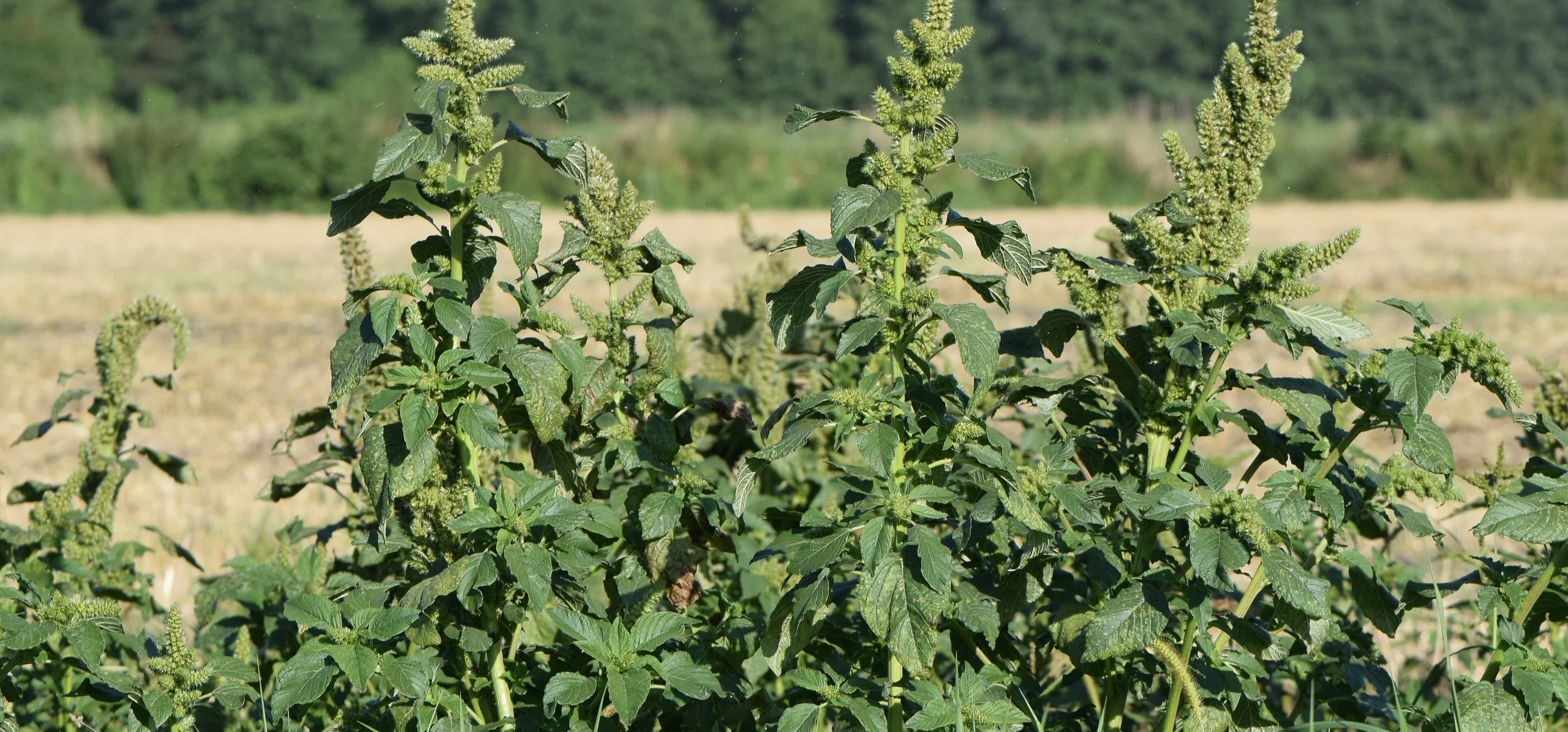
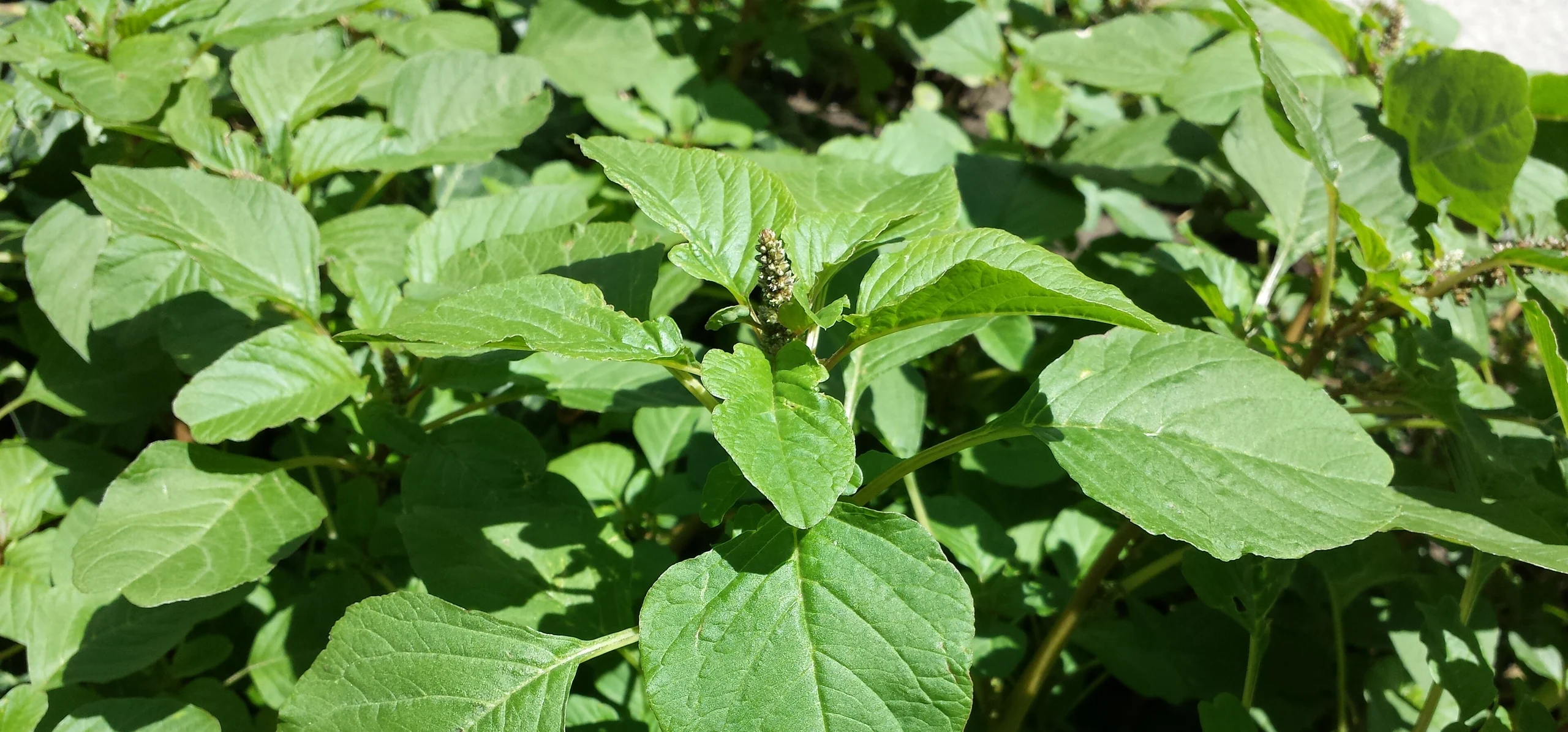
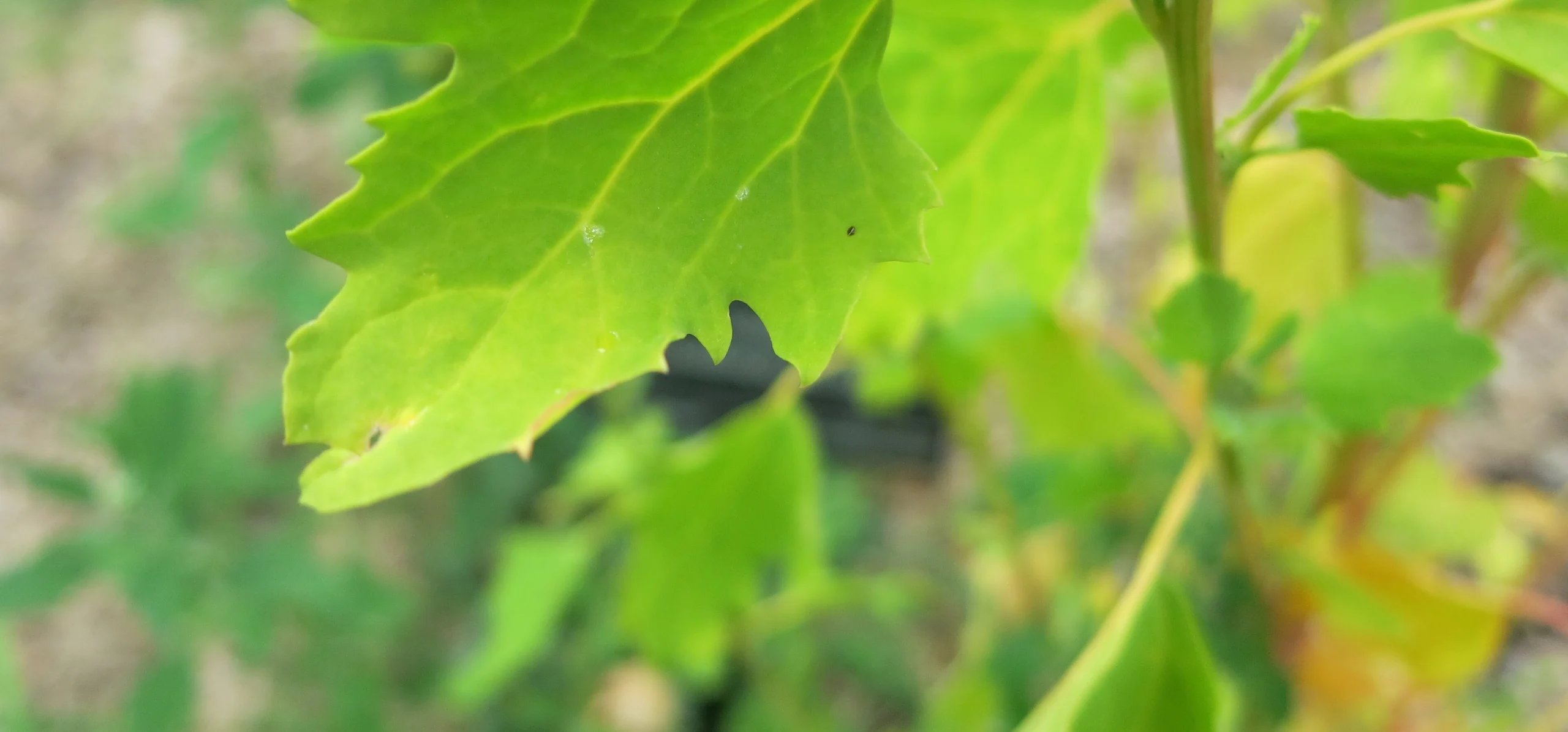
Chenopodium album shows up uninvited in almost every disturbed patch of ground on the planet, and the plant in front of you is doing two things at once: it is a fast-seeding weed that will outcompete a vegetable bed if ignored, and it is one of the most widely eaten wild greens in the world. The tell is the young growth: new leaves near the stem tip carry a whitish, mealy film that rubs off like flour under a thumb. That film, the toothed diamond-shaped leaf, and the plant's habit of showing up thickest in the richest soil in the garden are the three things worth learning before deciding whether to pull it or pick it.
A Weed With a History as a Vegetable
Lamb's quarters is a close relative of quinoa, and according to Clemson Cooperative Extension's Home & Garden Information Center, it was a popular cooked green in Europe before spinach was introduced there in the 16th century, after which it fell out of favor and was left to grow as a weed instead. That history is still visible in how the plant cooks: the leaves wilt down fast in a pan, taste closer to spinach than to any lettuce, and were a real vegetable long before they were a nuisance. Most home gardeners now meet it only as something to hoe out of the carrot row, without knowing it is the same plant their grandparents' grandparents might have eaten on purpose.
Identifying It: The Mealy Coating and the Goosefoot Leaf
The single fastest identification cue is the coating on new growth. Clemson HGIC describes it as a whitish film of epicuticular wax on the newest leaves and stem tips, and Missouri State University's plant identification guide calls it a whitish powdery coating visible on young leaves near the tips, present on both seedlings and the fresh growth of mature plants. Older leaves lose most of this coating and turn a plainer green. The leaf shape is the second cue: alternate, triangular to diamond-shaped with irregular, shallow teeth along the edge, sometimes narrowing toward a goosefoot outline that gives the plant its other common name, fat hen. Stems are grooved and often streaked red or purple, and University of Nevada, Reno Extension notes the plant starts as a ground-hugging rosette before bolting into a bushy, branching annual that can reach roughly 5 feet. None of this requires a hand lens: the coating and the toothed diamond leaf are visible from arm's length.
What This Weed Tells You About Your Soil
Lamb's quarters is not evenly distributed across a garden by accident. Missouri State University's plant identification notes describe it as preferring fertile, cultivated soils, calling a thick stand of it a good indicator of good growing soil, and Iowa State University Extension lists its habitat as crop fields, gardens, and other disturbed, regularly worked ground rather than untouched wild land. In practice this means the corner of a vegetable bed that grows the densest lamb's quarters is usually the same corner with the best structure and fertility for whatever you actually planted there, which is a useful, free soil read before you ever pull a single plant.


The Seed Bank: Why One Missed Plant Haunts You for Years
A single uncontrolled plant does lasting damage below ground, not just above it. Clemson Cooperative Extension's HGIC states that one lamb's quarters plant can produce up to 72,000 seeds, and that those seeds can remain viable in the soil for more than 30 years. That combination, a huge seed count and a multi-decade shelf life, means the seeds a plant drops this year do not have to sprout this year to matter; they can sit in the soil and germinate any season over the following three decades. The practical consequence is that a garden bed can keep producing lamb's quarters seedlings for years after the last mature plant was removed, simply because the seed bank built up in prior seasons is still there and still being turned up a little at a time.
Hoeing It Out Before It Sets Seed
Timing is the entire strategy, because a mature plant is much harder to remove cleanly than a seedling and a flowering plant is already too late. University of Nevada, Reno Extension recommends controlling lamb's quarters while it is still young, by hand-pulling or hoeing seedlings before they establish a taproot, and Michigan State University's Extension coverage of the species in Christmas tree production notes that late-emerging plants can begin setting seed within about six weeks of germination, even while still small, which leaves a narrow window before a hoed plant becomes a seed-source you missed. In an open bed the practical routine is a shallow hoe pass through the seedling stage every couple of weeks rather than one big weeding session once the weeds are already knee-high; by the time the mealy coating and diamond leaf are easy to spot from a distance, the plant is usually already close to flowering.
Harvesting Lamb's Quarters as a Spinach Substitute
The same young growth that carries the mealy coating is also the best eating: the top few inches of shoot and the newest leaves, picked before the plant flowers, wilt down in a hot pan almost exactly the way spinach does, losing most of their volume in under a minute. Older, lower leaves toughen and are better left on the plant to keep the roots feeding new growth at the top, which also happens to be the growth easiest to identify with confidence. Because the plant reseeds itself so readily, a patch that is cut back for the pot regrows new tender shoots within days rather than being finished for the season after one harvest.
Oxalates and Eating It in Moderation
Lamb's quarters is not a plant to eat by the panful on a daily basis. University of Nevada, Reno Extension notes that the plant can accumulate oxalates, compounds that can be harmful if enough is consumed, and Clemson HGIC similarly describes it as mildly toxic in large or frequent quantities, with cooking reducing that concern rather than eliminating the need for moderation. This is the same caution that applies to spinach and chard, both relatives that share the same oxalate chemistry, and the same people who are told to watch their spinach intake, particularly anyone prone to kidney stones, should apply the same limit here. Treated as an occasional cooked green rather than a staple, and always cooked rather than eaten raw in quantity, lamb's quarters carries none of the outright toxicity of a plant like rhubarb leaf.
Test your plant knowledge
Tap a card to flip it and reveal the answer.
The whitish, mealy film on young lamb's quarters leaves is a coating of epicuticular wax, not mildew or pest damage. Tap to reveal ✓ True
A dense patch of lamb's quarters in a garden usually signals poor, depleted soil. Tap to reveal ✕ False
Once you pull every mature lamb's quarters plant from a bed, the seed bank in the soil is exhausted and no more seedlings should appear. Tap to reveal ✕ False
Hoeing lamb's quarters seedlings early is more effective than waiting until the plants are tall and easy to spot. Tap to reveal ✓ True
Because lamb's quarters is edible, it can be eaten in large amounts every day with no downside. Tap to reveal ✕ False
Sources
References consulted for this guide
- GBIF: Chenopodium album L.gbif.org
- POWO: Chenopodium album var. albumpowo.science.kew.org
- Clemson Cooperative Extension HGIC: Weed of the Month, Lambsquartershgic.clemson.edu
- Missouri State University: Common Lambsquarters Plant Identificationag.missouristate.edu
- University of Nevada, Reno Extension: Identifying and Managing Common Lambsquartersextension.unr.edu
- Reference entity : Wikipédiaen.wikipedia.org