Lemon Tree
Citrus limon
Family · Rutaceae
A lemon tree needs full sun, soil at pH 5.5 to 6.5, and protection below 5°C: real numbers from UF/IFAS and the RHS on watering, feeding, and cold limits.
Citrus limon
Plant profile
- WateringModerateWater every 7 days
- Light exposureFull sun
- Hardiness zoneUSDA 9–11
Growth
- Family
- Rutaceae
- Life cycle
- Perennial
- Growth speed
- 6/10
- Mature size
- 250–400 cm
- Spread
- 100–150 cm
- Flowering
- Fragrant white blossom, fruit can appear almost year round in warmth
- Propagation
- Seed
- Cutting
- Grafting
- Layering
DormancyEvergreen with no true dormancy in warm climates; growth and flowering slow indoors over winter (RHS)
Time to maturityReaches ultimate height in 10 to 20 years (RHS)
Soil & climate
- Soil pH
- pH 5.5–6.5
- Soil types
- loam
- Drought tolerance
- No
Light & Placement
- Where to place it
- Brightest available window, south- or west-facing (RHS)
- Conservatory or heated greenhouse over winter (RHS)
- Sheltered, south- or west-facing spot in full sun (RHS)
- Terrace or patio the pot can be moved from before frost
- Pot only one size larger than the current rootball
OriginCultigen with no wild native range, hybrid of pomelo, citron and mandarin ancestors (POWO, GBIF)
Safety
- Toxicity
- CatsToxic
- DogsToxic
- HorsesToxic
- HumansToxic
Data fromCitrus x limon (L.) Osbeck, GBIF BackbonToxic and Non-Toxic Plants: Lemon, ASPCALemon Growing in the Florida Home LandscCitrus limon (lemon), RHSCitrus x limon (Lemon), NC State Extensi
Where it grows
World distribution
GBIF records 5,265 documented identifications across 142 countries, with the largest concentrations in Brazil, Colombia, and South Africa.
Yellow to orange dots: concentration of documented identifications per country. Green countries: sourced native range. Source: GBIF.
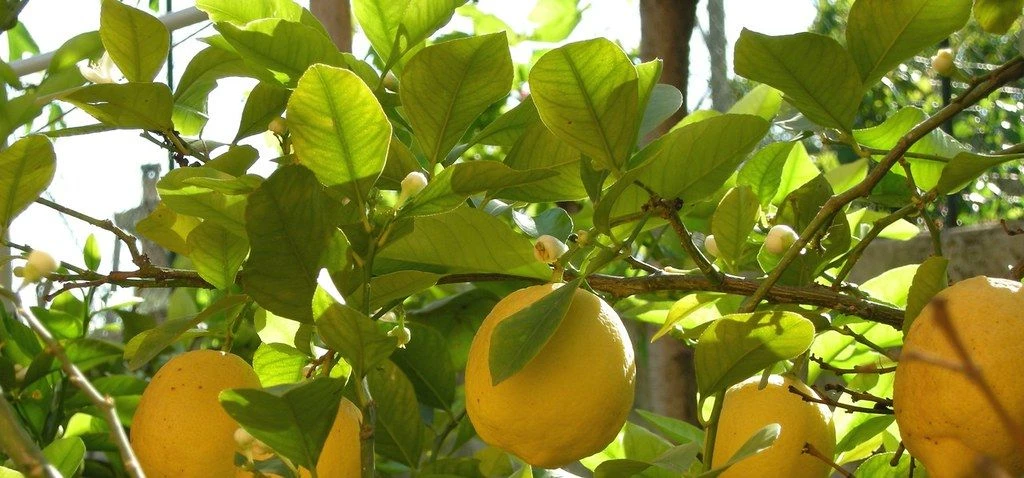
A lemon tree that has just come home from the nursery needs three things above everything else: as much direct sun as the spot allows, soil that drains fast, and shelter the moment temperatures drop toward 5°C (41°F). GBIF's accepted name for it is Citrus × limon (L.) Osbeck, and it behaves less like a wild plant than like the engineered hybrid it is: fruit and fragrant blossom can appear together almost year round given enough warmth, but the cold tolerance of hardier citrus relatives never made it into the cross. Get sun, drainage and feeding right and a potted lemon tree flowers and fruits for decades; get them wrong and pale, dropping leaves show up within weeks.
A Hybrid Citrus, Not a Wild Species
GBIF's backbone taxonomy places the species in the citrus family Rutaceae, order Sapindales, alongside oranges, limes and grapefruit. Kew's Plants of the World Online records Citrus × limon as a cultigen rather than a wild species, an ancient hybrid with the parentage C. maxima × C. medica × C. reticulata (pomelo, citron and mandarin), so there is no wild native range to point to on a map, only the regions across northeastern India and southern China where its citron and mandarin ancestors once grew. Every lemon tree sold today, under whichever variety name, traces back to that same original cross.
Choosing a Variety
UF/IFAS Extension names Lisbon and Eureka as the standard commercial lemons: Lisbon is the more cold-hardy and prolific of the two, and Eureka bears close to year round with fewer thorns. Bearss is grown where a thornless tree matters. The plant most often sold for a windowsill or terrace pot, though, is usually a Meyer, a naturally occurring lemon hybrid prized for its compact size, sweeter fruit and better tolerance of a spell indoors, and not, strictly, a true Citrus limon. Whatever the variety, buy a grafted tree rather than a seed-grown one. The RHS notes that citrus seedlings grown from pips "do not come true to type," so a grafted tree is the only reliable way to know what you are getting and to see fruit within a few years rather than a decade.
Light and Placement
The RHS and UF/IFAS Extension agree on the exposure a lemon tree needs: the RHS lists a south- or west-facing aspect with shelter from wind, and UF/IFAS specifies six or more hours of direct sunlight a day. Outdoors, the sunniest, most sheltered corner of a terrace or patio is the right spot for the growing season. Indoors or in a conservatory, the brightest south-facing window in the house is the minimum, and a tree that spends the warm months outside and only comes in for the coldest weeks will out-flower one kept indoors all year.
Soil and Potting Mix
UF/IFAS Extension puts the ideal soil pH between 5.5 and 6.5 in ground that drains well; the RHS describes the same preference more simply as loam that stays moist but well-drained. In a container that means a loam-based potting mix cut with grit or perlite rather than a moisture-retentive multipurpose compost, in a pot with generous drainage holes only one size larger than the current rootball. Standing water at the roots is the fastest way to lose a lemon tree, so never let a pot sit in a full saucer.
Watering Through the Seasons
Watering needs swing hard between seasons. UF/IFAS Extension recommends watering newly planted trees every other day for the first week, then once or twice a week for several months, while a tree of four years or more in the ground needs supplemental water only during prolonged drought. The RHS gives the container version of the same rule: water freely and mist daily while the tree is in active growth through spring and summer, then cut back sharply and water only sparingly over winter. Letting the mix dry slightly between waterings, then soaking it thoroughly, suits a lemon tree far better than a constant trickle.
How often to water your Lemon Tree
Feeding a Heavy Feeder
A potted lemon tree depends entirely on you for nutrients. UF/IFAS Extension's schedule for a young tree calls for 0.25 to 0.5 lb of a balanced young-citrus fertiliser, a 6-6-6-2 formula, every three to four months, rising to 3 to 4 lb applied two or three times a year by the fifth year, plus two to four foliar sprays of minor elements between April and September. The RHS version for a container tree is simpler: apply a citrus-specific fertiliser through the growing season at the rate on the label, reduced through winter. Skipping feeding shows up fast as pale, thin foliage even when watering is otherwise correct.
Cold Tolerance and Overwintering
Cold is the real ceiling on where a lemon tree can live outdoors. UF/IFAS Extension records defoliation starting at 22 to 24°F (about minus 5°C), severe wood damage at 20°F (minus 6.7°C), and flower or young-fruit loss at 29°F (minus 1.7°C), figures that explain why lemons are field-grown outdoors mainly in USDA zones 9 to 11. The RHS rates Citrus limon H2, hardy only down to 1 to 5°C, which is why almost anyone outside a frost-free climate grows it in a pot that comes under cover, a porch, conservatory, or cool bright room, before the first frost and stays there until the last one has passed.
Pests, Diseases and Common Mistakes
The RHS lists scale insects, mealybugs and glasshouse red spider mite as the main pests and otherwise rates the species as generally disease-free when grown well. UF/IFAS Extension's Florida list is longer for trees grown outdoors year round, including Asian citrus psyllid, citrus leafminer, citrus red mite, citrus canker and citrus greening, none of which are relevant to a tree kept mostly indoors or on a temperate terrace. The most common mistake is treating a lemon tree like a tougher Mediterranean shrub: skipping the citrus fertiliser, letting the pot dry out completely, or leaving it outside through the first frost of the year. The ASPCA lists lemon as toxic to cats, dogs and horses, so keep the pot out of a determined pet's reach, and the RHS notes the fruit's own oils can trigger a skin reaction in strong sunlight, worth remembering before handling a full harvest basket.


Test your plant knowledge
Tap a card to flip it and reveal the answer.
UF/IFAS Extension records lemon trees starting to lose leaves at temperatures as mild as 22 to 24°F (about minus 5°C). Tap to reveal ✓ True
A potted lemon tree needs very little fertiliser compared with other garden shrubs. Tap to reveal ✕ False
The RHS rates Citrus limon as hardy outdoors down to about minus 10°C. Tap to reveal ✕ False
The Meyer lemon commonly sold for pots is not, strictly, a true Citrus limon. Tap to reveal ✓ True
The ASPCA lists lemon as toxic to cats, dogs and horses. Tap to reveal ✓ True
Sources
References consulted for this guide
- Citrus x limon (L.) Osbeck, GBIF Backbone Taxonomygbif.org
- Toxic and Non-Toxic Plants: Lemon, ASPCAaspca.org
- Lemon Growing in the Florida Home Landscape, UF/IFAS Extension (EDIS HS402)ask.ifas.ufl.edu
- Citrus limon (lemon), RHSrhs.org.uk
- Citrus x limon (Lemon), NC State Extension Gardener Plant Toolboxplants.ces.ncsu.edu