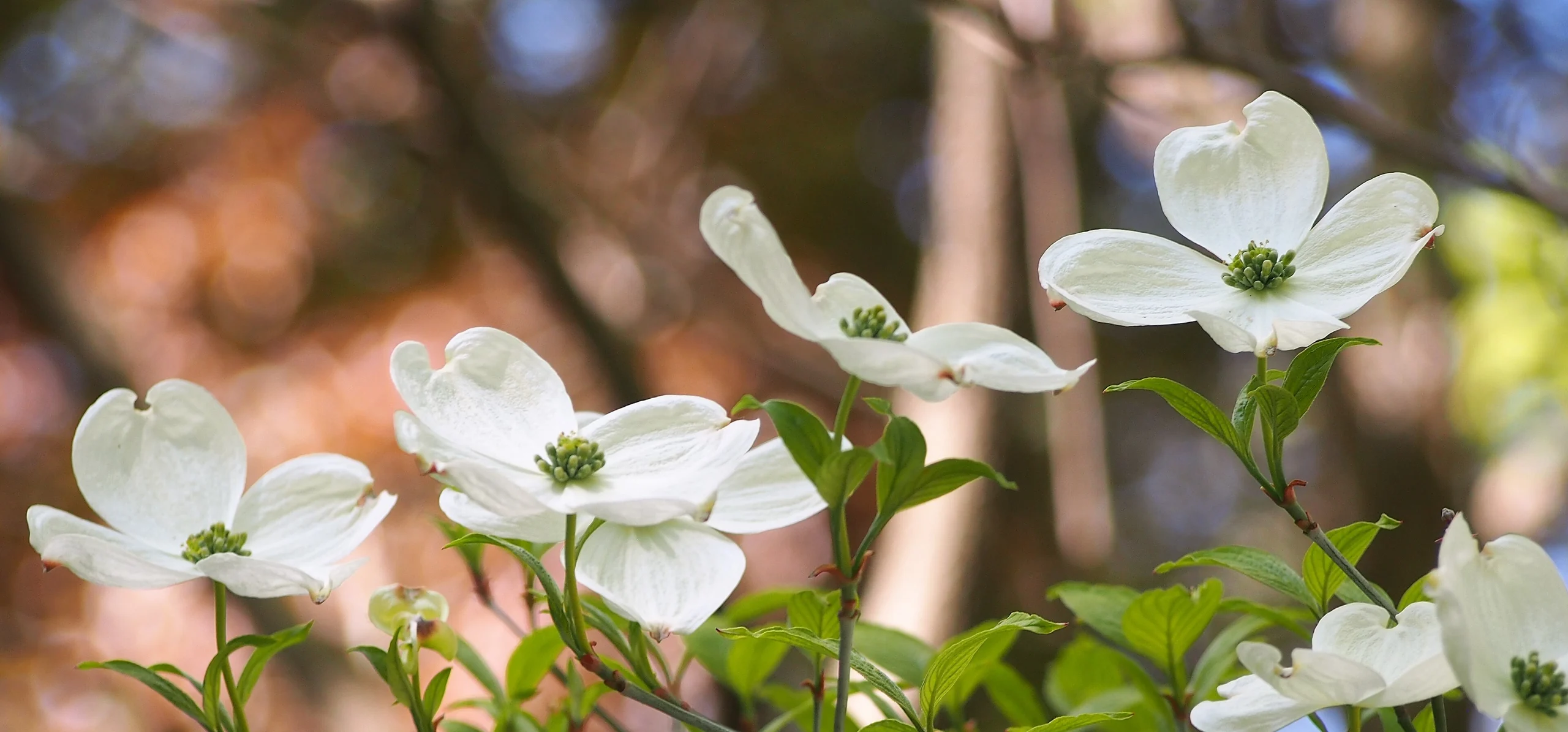
Flowering Dogwood
Cornus florida
Family · Cornaceae
Flowering dogwood needs afternoon shade, mulched shallow roots and a resistant cultivar to avoid the anthracnose, mildew and borer that stressed trees get.
Cornus florida
Plant profile
- WateringModerateWater every 7 days
- Light exposureIndirect light
- Hardiness zoneUSDA 5–9
Growth
- Family
- Cornaceae
- Life cycle
- Perennial
- Growth speed
- 3/10
- Mature size
- 457–762 cm
- Spread
- 457–914 cm
- Flowering
- White or pink bracts open on bare branches in spring, ahead of the leaves
- Propagation
- Seed
- Cutting
- Grafting
Dormancydeciduous, bare in winter
Time to maturityflowers within a few years of planting; reaches full size over 15-20 years
Soil & climate
- Soil pH
- pH 6–8
- Soil types
- loam, clay, sand
- Drought tolerance
- No
Light & Placement
- Where to place it
- understory position with afternoon shade in hot climates
- east-facing site with morning sun and afternoon shade
OriginSoutheastern Canada to eastern Mexico (POWO), understory tree of the eastern deciduous forest
Safety
- Toxicity
- CatsSafe
- DogsSafe
- HorsesSafe
Data fromGBIF Backbone Taxonomy: Cornus florida LPlants of the World Online (Kew): CornusNC State Extension Gardener Plant ToolboClemson HGIC: Dogwood Diseases and InsecASPCA: Toxic and Non-Toxic Plants, Dogwo
Where it grows
World distribution
Flowering Dogwood is native to 3 countries: Canada, Mexico, and United States.GBIF records 54,666 documented identifications across 32 countries, with the largest concentrations in United States, Canada, and Mexico.
- Canada
- Mexico
- United States
Yellow to orange dots: concentration of documented identifications per country. Green countries: sourced native range. Source: GBIFNative range from POWO (Kew).
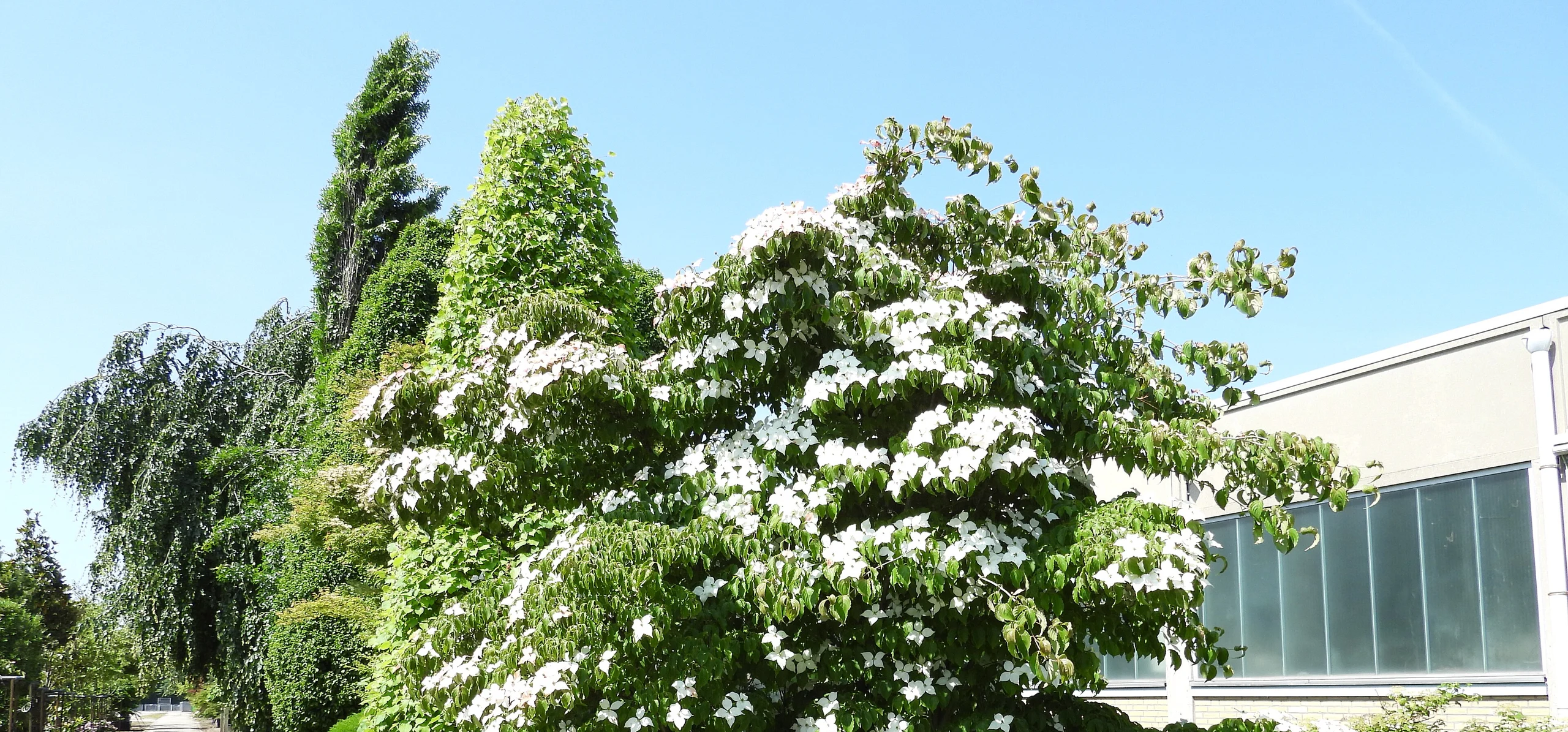
A flowering dogwood bought bare-root or in a container blooms before most people expect: four white or pink bracts open on bare wood in mid to late spring, weeks ahead of the leaves, on a small understory tree that tops out around 15 to 25 feet (4.6 to 7.6 m) with a spread of 15 to 30 feet (4.6 to 9 m), per NC State Extension. It is a native tree of the eastern forest edge, not a full-sun specimen, and most of the problems people run into, anthracnose, powdery mildew, borer, trace back to planting it somewhere hotter, sunnier or more compacted than the shaded, leaf-littered soil it evolved in. Get the site and the cultivar right and it is one of the most reliable four-season small trees for eastern North America; get either wrong and it declines slowly over several years rather than failing outright.
Origin and Native Range
Plants of the World Online (Kew) gives the native range of Cornus florida as southeastern Canada to eastern Mexico, spanning the eastern deciduous forest belt of North America. Within that range it grows as an understory tree beneath taller oaks and hickories, rooted in leaf-litter soil that stays cool, moist and loose, which is the condition every cultivated planting is really trying to recreate.
Bracts, Bloom Time and the True Flowers
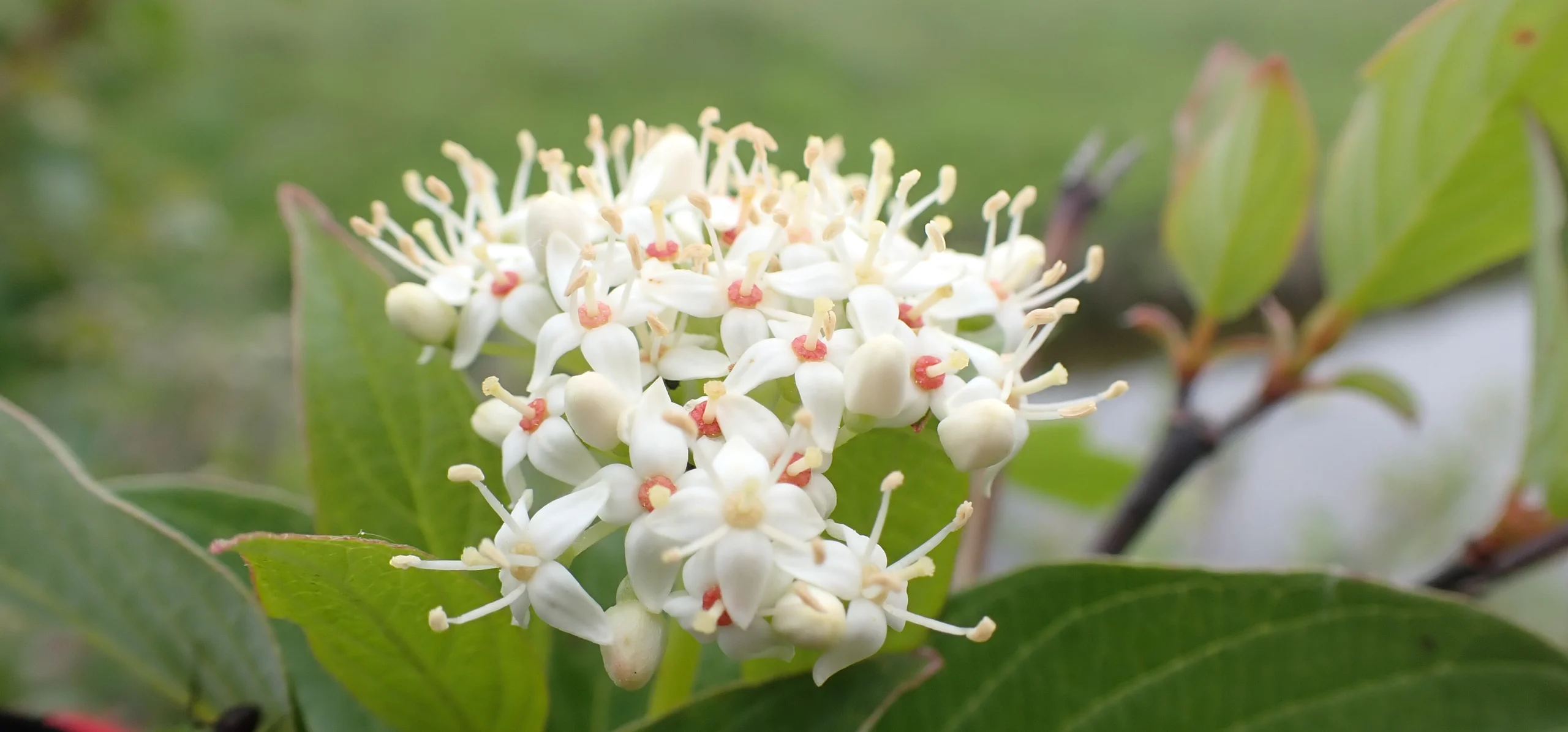
What reads as a single four-petaled flower is a cluster of small, greenish-yellow true flowers surrounded by four showy bracts, modified leaves rather than petals, each one notched at the tip where the bud scale used to be. The bracts expand and turn white (or pink to rose on colored selections) while the branches are still bare, and the small leaves only start to unfold as the bloom finishes, so a tree flowering into full leaf already has color on the wane. By late summer each flower cluster has set a small group of glossy red drupes.
Site, Light and Soil
NC State Extension lists flowering dogwood as tolerating full sun to partial shade, but adds that in the hotter Piedmont and coastal parts of its range it does better with more shade, especially in the afternoon: a tree baking in full western sun through a Southern summer is under more stress than the same tree with dappled or morning-only light. Soil should be well drained and high in organic matter, with a pH NC State puts at 6.0 to 8.0; it tolerates clay, loam and sandy soils as long as drainage is adequate, since standing water at the root zone is as damaging as drought.
Watering, Mulch and the Shallow Root System
The root system is shallow and fibrous, which is why NC State Extension recommends a 2 to 4 inch mulch layer out to the drip line: it keeps the roots cool and moist through summer heat and protects them from the soil compaction that comes with foot traffic, parked equipment or construction fill over the root zone. Keep mulch pulled back a few inches from the trunk rather than piled against the bark. Water deeply and regularly for the first two or three seasons while the root system establishes; a tree stressed by drought or compacted soil is measurably more prone to the borer and disease problems below, so consistent moisture is as much disease prevention as it is basic care.


Dogwood Anthracnose (Discula destructiva)
Dogwood anthracnose, caused by the fungus Discula destructiva, is the disease to plan around before you plant. Clemson HGIC describes tan leaf spots with purple edges and dry, browned leaf margins as the early sign, followed by sunken cankers on shoots, branches and eventually the trunk that can girdle and kill tissue outright; heavily infected trees often push out a mass of small water sprouts along the lower trunk as a stress response. Clemson notes the disease is most severe at elevations above 2,000 feet but can still take hold in cool, moist, shady sites at lower elevation, which again points back to airflow and site selection as much as chemical control. 'Appalachian Spring', released after a University of Tennessee breeding program found a single anthracnose-free tree surviving an outbreak, is the straight-species cultivar bred specifically for resistance and is worth asking for by name at a nursery in any region where the disease is established.
Powdery Mildew and Disease-Resistant Cultivars
Powdery mildew shows up as a white, powdery coating on the upper leaf surface, causing yellowing, leaf scorch and, in a bad year, early defoliation; Clemson HGIC names 'Appalachian Blush', 'Appalachian Joy' and 'Appalachian Mist' as highly resistant selections of the straight species. A separate option is the Rutgers hybrid group (sold under names like Aurora, Constellation and Stellar Pink), crosses between Cornus florida and the Asian Cornus kousa bred to combine the native species' flower with the Asian parent's toughness; Clemson lists these hybrids among the mildew-resistant choices, and NC State Extension credits them with resistance to both anthracnose and borer, the two problems that hit the straight species hardest. None of this makes site selection optional, since even a resistant cultivar performs best with the shade and airflow the species wants.
Dogwood Borer and Tree Stress
The dogwood borer (Synanthedon scitula), a clearwing moth whose larvae tunnel under the bark, is almost always a secondary problem: Clemson HGIC notes the larvae can only get established through an existing wound or opening in the bark, which in practice means lawnmower and string-trimmer damage at the trunk base, sunscald on a newly exposed trunk, or old graft-union scars on a grafted cultivar. Keeping the tree vigorous with steady watering, appropriate fertilizing and a mulch ring that keeps mowers away from the trunk removes most of the openings borers rely on; once a trunk is heavily tunneled, there is little to do beyond removing the tree.
Fall Color and Fruit for Wildlife
Foliage turns red to reddish-purple in autumn, per NC State Extension, one of the more reliable fall colors among small native trees. The glossy red drupes that ripen from August into October are bitter and inedible to people but are a documented food source for songbirds, grouse and small mammals heading into winter, and the species also hosts spring azure butterfly larvae. A tree grown for the spring bracts alone is only getting half the display; the berry crop is what makes it worth leaving unpruned and untidy through autumn rather than deadheading it like an ornamental shrub.
Common Mistakes
The most common mistake is planting a young dogwood in an open, full-sun lawn because that is where there is space, then watching it struggle through hot summers with scorched leaves and eventual anthracnose or mildew; an east-facing spot with afternoon shade, or the edge of an existing tree canopy, is closer to what the species actually wants. The second is skipping mulch and letting lawn or foot traffic compact the soil over the shallow root zone, which stresses the tree in exactly the way that invites borers. The third is buying whatever flowering dogwood is available locally in a region where anthracnose is already established, rather than asking specifically for 'Appalachian Spring' or a Rutgers hybrid; the straight species is not a safe default everywhere it is sold.
Test your plant knowledge
Tap a card to flip it and reveal the answer.
The showy white or pink parts of a flowering dogwood bloom are bracts, not true petals. Tap to reveal ✓ True
Dogwood anthracnose (Discula destructiva) is worst on trees planted in full sun at low elevation. Tap to reveal ✕ False
'Appalachian Spring' is a flowering dogwood cultivar bred for resistance to dogwood anthracnose. Tap to reveal ✓ True
The ASPCA lists flowering dogwood as toxic to dogs, cats and horses. Tap to reveal ✕ False
The dogwood borer can tunnel into completely undamaged, uninjured bark. Tap to reveal ✕ False
Sources
References consulted for this guide
- GBIF Backbone Taxonomy: Cornus florida L.gbif.org
- Plants of the World Online (Kew): Cornus florida L.powo.science.kew.org
- NC State Extension Gardener Plant Toolbox: Cornus floridaplants.ces.ncsu.edu
- Clemson HGIC: Dogwood Diseases and Insect Pestshgic.clemson.edu
- ASPCA: Toxic and Non-Toxic Plants, Dogwoodaspca.org
- Reference entity : Wikipédiaen.wikipedia.org