Bloodtwig Dogwood
Cornus sanguinea
Family · Cornaceae
Bloodtwig dogwood tolerates chalk and clay and suckers freely, but its best winter stem colour comes only from hard coppicing, not from hedge trimming.
Cornus sanguinea
Plant profile
- WateringModerateWater every 8 days
- Light exposurePartial sun
- Hardiness zoneUSDA 4–7
Growth
- Family
- Cornaceae
- Life cycle
- Perennial
- Growth speed
- 6/10
- Mature size
- 150–250 cm
- Spread
- 150–250 cm
- Propagation
- Seed
- Cutting
- Division
FloweringSmall white flowers in flat clusters from May into June, followed by blue-black berries in late summer
Dormancydeciduous, bare in winter
Time to maturityreaches full size in 5-10 years
Soil & climate
- Soil types
- chalk, clay, loam, sand
- Drought tolerance
- No
Light & Placement
- Origin
- Europe to Lebanon and N. Iraq
- Where to place it
- hedgerow
- wildlife hedge
- woodland edge
- winter border
Safety
- Pet safe
- No
ToxicityNot listed by the ASPCA on its dog, cat or horse plant lists; bitter black fruit not eaten by people
Data fromGBIF Backbone Taxonomy: Cornus sanguineaPlants of the World Online (Kew): CornusRHS: Cornus sanguinea (common dogwood)RHS: Pruning group 7, colourful stems anMissouri Botanical Garden Plant Finder:
Where it grows
World distribution
Bloodtwig Dogwood is native to 29 countries: Albania, Austria, Belarus, Belgium, Bulgaria, Croatia, Czechia, and Denmark….GBIF records 810,921 documented identifications across 66 countries, with the largest concentrations in France, United Kingdom, and Germany.
- Albania
- Austria
- Belarus
- Belgium
- Bulgaria
- Croatia
- Czechia
- Denmark
- Estonia
- France
- Georgia
- Germany
Show 17 more countriesShow fewer countries
- Greece
- Hungary
- Ireland
- Italy
- Lebanon
- Netherlands
- Norway
- Poland
- Portugal
- Romania
- Russia
- Spain
- Sweden
- Switzerland
- Türkiye
- Ukraine
- United Kingdom
Yellow to orange dots: concentration of documented identifications per country. Green countries: sourced native range. Source: GBIFNative range from POWO (Kew).
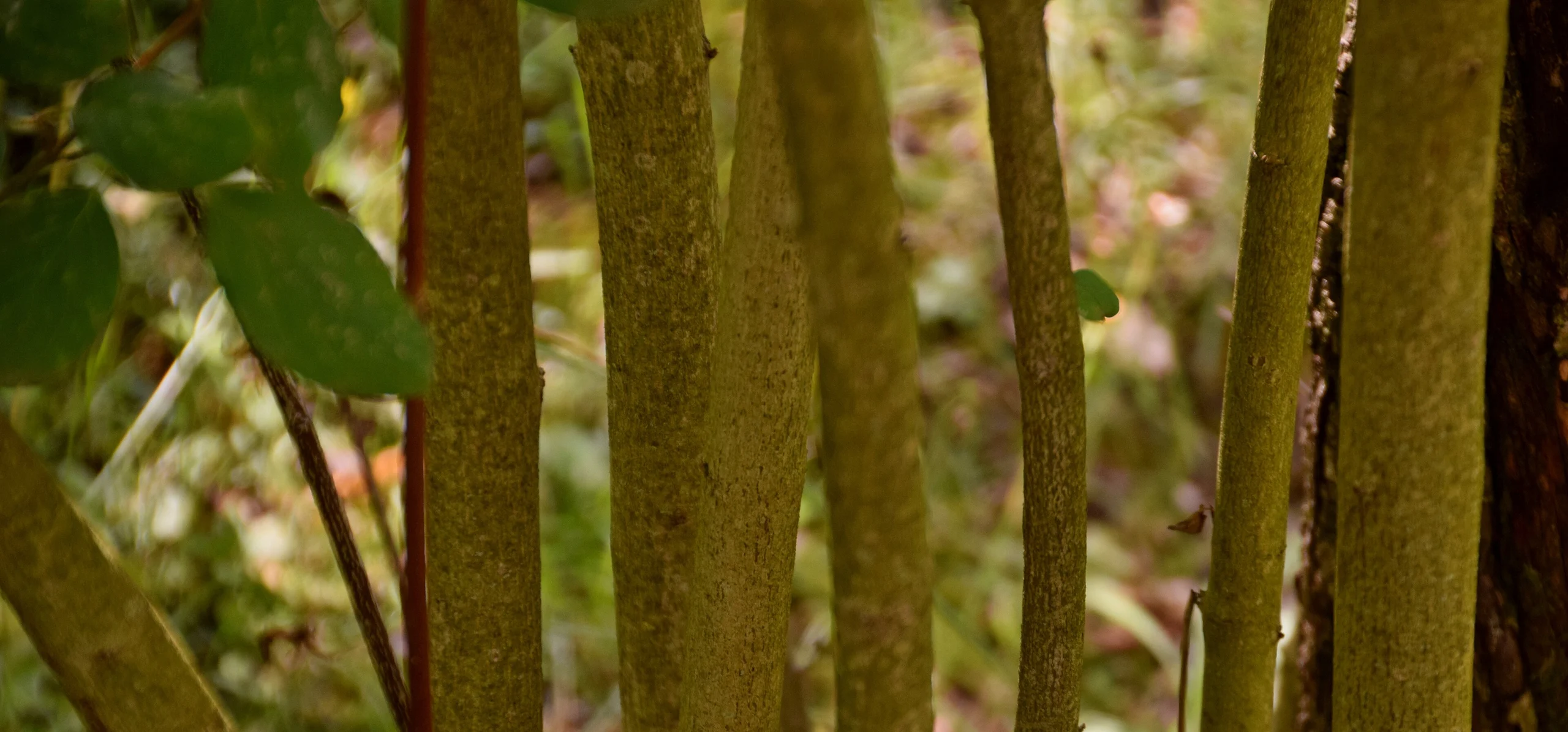
A multi-stemmed shrub whose bare winter stems shade from dull green through purple to deep blood-red, growing in a hedgerow or planted as a specimen for that colour, is almost certainly Cornus sanguinea, the bloodtwig dogwood of European hedgerows and woodland edges. The straight species carries muted, purplish-red stems that dull to greenish-grey with age; the named cultivars sold for winter gardens, 'Midwinter Fire' and 'Winter Beauty' among them, were selected specifically to keep that colour brighter and more uniform. Whichever form is in the ground, the colour comes from young wood, so how and when it gets cut back matters more for this plant than almost anything else. The black berries that follow the summer flowers are for birds, not for eating.
Origin and Where It Grows Wild
Plants of the World Online gives the native range of Cornus sanguinea as Europe to Lebanon and N. Iraq, and in the wild it turns up along hedgerows, scrub and open woodland edges, usually on base-rich soils. GBIF's accepted classification places it in the dogwood family Cornaceae, order Cornales, alongside the North American red-osier dogwood, Cornus sericea, which is often confused with it in catalogues but is a separate species with its own native range. Older texts sometimes list this plant under Swida sanguinea or Thelycrania sanguinea; both are synonyms folded back into Cornus sanguinea, so a nursery tag using either older name is describing the same shrub.
Choosing a Variety for Winter Colour
The wild species is worth planting for a native hedge or wildlife strip, but its winter stems are a modest purple-red on the sunlit side and greenish underneath, fading to grey-green bark as wood ages, so it is rarely the first choice for a dedicated winter border. RHS trials-listed cultivars go further: 'Midwinter Fire' produces yellow-based shoots that shade into orange and then a hot red at the tips, described by the RHS as brightest in midwinter, while 'Winter Beauty' gives a similar yellow-to-red gradient on its own young growth. Both are hardy to RHS rating H6, tolerating winter lows down to around -15 to -20°C, the same as the species itself, so the choice between them and the wild type is about how saturated a colour display is wanted, not about hardiness.


Siting, Soil and Planting
This is an unfussy shrub: the RHS lists it as tolerant of chalk, clay, loam and sand, in acid, neutral or alkaline soil, in sun or partial shade, though the strongest stem colour on the coloured cultivars needs reasonable light rather than deep shade. The Missouri Botanical Garden gives a USDA hardiness range of zone 4 to 7 and records wild, unpruned specimens reaching 2.4 to 4.5 metres (8 to 15 feet) tall and wide; the RHS figure for the species in ordinary garden conditions is a more modest 1.5 to 2.5 metres, reached over 5 to 10 years, because most gardeners keep it smaller by cutting it back regularly for colour rather than letting it grow to full size. Plant a bare-root or container specimen while it is dormant, from leaf fall through to before the buds break in spring, and water it through its first one or two growing seasons while roots establish; once settled it copes with the dry side of moist as well as the wetter end of well-drained ground.
Coppicing and Pruning for Stem Colour
Because the brightest bark grows on the current season's wood, the RHS places this shrub in pruning group 7 and recommends cutting back in late winter, around February, or delaying to March or into April to keep enjoying the colour for longer first. For an established plant, that means reducing it hard: either pollarding to 60 to 90 cm from the ground or coppicing, sometimes called stooling, right down to 5 to 7.5 cm of old wood, then mulching afterwards to fuel the regrowth. The Missouri Botanical Garden describes an alternative for the straight species: removing 20 to 25 percent of the oldest stems each spring rather than cutting the whole plant at once, or stooling everything to the ground every 2 to 3 years instead of annually. 'Midwinter Fire' tolerates the same lighter schedule; RHS notes it can simply be pruned every couple of years if a gardener prefers less frequent, less severe cutting, rather than needing it done every single season. A hedge trimmed lightly every year for shape, rather than cut hard for colour, will keep its outline but lose the vivid winter display, since it never produces the flush of new wood the colour depends on.
Suckering Habit and Propagation
Bloodtwig dogwood spreads by suckering from the base and roots as well as by seed; RHS notes the habit explicitly for 'Winter Beauty', and the Missouri Botanical Garden advises removing root suckers on the species if a gardener wants to stop it forming a wider colony than intended. That same habit makes propagation easy: suckers can be lifted with roots attached and replanted directly, and the species also grows from hardwood cuttings taken in the dormant season or from seed. A hedge or informal group planted from suckered divisions of one parent plant will be genetically identical, which matters less for the wild species than for a named coloured cultivar, where cuttings or division are the only ways to keep the exact clone true.
Flowers, Fruit and Wildlife Value
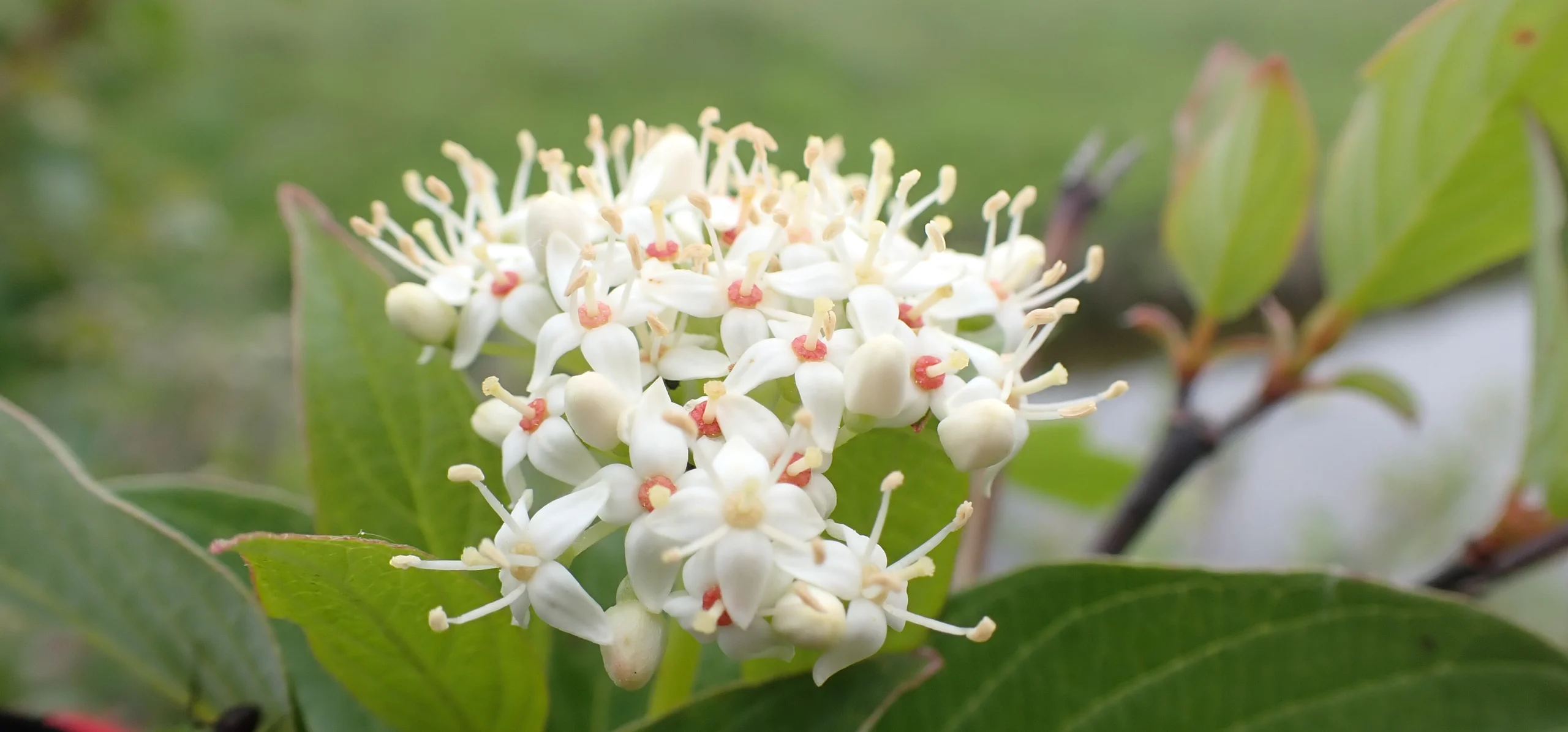
Small white flowers open in flat clusters in early summer, described by the Missouri Botanical Garden as carrying a faintly unpleasant scent up close, from roughly May into June. They are followed by berries that ripen through late summer to a blue-black or black, about the size of a small pea, and the Missouri Botanical Garden lists the species as attracting birds and butterflies; the RHS includes it among plants suited to wildlife gardens for the same reason. The fruit is not grown for the table: unlike the related Cornelian cherry, Cornus mas, whose fruit is edible, bloodtwig dogwood's bitter berries are left for birds rather than harvested. Autumn brings a final show before the stems take over: RHS describes the foliage turning deep red, though the Missouri Botanical Garden notes that in practice the colour often falls short of that and comes through as a more muted red-purple or greenish-purple.
Pests, Diseases and Common Mistakes
RHS rates the species as generally trouble-free, with occasional horse chestnut scale, cornus anthracnose on weak shoots, or honey fungus in a declining plant worth checking for. The most common mistake is treating a coloured cultivar like an ordinary hedge, giving it a light annual trim for shape instead of the hard coppice or pollard it actually needs, which leaves the colour muddy because it is showing on second- or third-year wood instead of the current season's growth. The second is planting it where the suckering habit is a problem, a narrow bed or a border shared with less vigorous neighbours, without a plan to remove the shoots it will send up beyond its original footprint. On pets and toxicity, neither the ASPCA's dog nor its cat and horse plant lists include Cornus sanguinea, so there is no ASPCA data either confirming or ruling out a reaction; treat the berries the same way as any unlisted ornamental fruit and keep them away from animals and children rather than assuming safety.
Test your plant knowledge
Tap a card to flip it and reveal the answer.
Cornus sanguinea shows its brightest stem colour on young wood produced after hard pruning or coppicing. Tap to reveal ✓ True
The ASPCA lists Cornus sanguinea as toxic to dogs and cats. Tap to reveal ✕ False
Bloodtwig dogwood spreads by suckering from its base and roots. Tap to reveal ✓ True
The black berries of Cornus sanguinea are commonly picked and eaten fresh by people. Tap to reveal ✕ False
Cornus sanguinea tolerates chalk, clay, loam and sandy soils. Tap to reveal ✓ True
Sources
References consulted for this guide
- GBIF Backbone Taxonomy: Cornus sanguinea L.gbif.org
- Plants of the World Online (Kew): Cornus sanguinea L.powo.science.kew.org
- RHS: Cornus sanguinea (common dogwood)rhs.org.uk
- RHS: Pruning group 7, colourful stems and large foliagerhs.org.uk
- Missouri Botanical Garden Plant Finder: Cornus sanguineamissouribotanicalgarden.org
- Reference entity : Wikipédiaen.wikipedia.org