Kousa Dogwood
Cornus kousa
Family · Cornaceae
Kousa dogwood blooms in June with white bracts, sets strawberry fruit, and resists the anthracnose that kills flowering dogwood; seedlings take years to bloom.
Cornus kousa
Plant profile
- WateringModerateWater every 7 days
- Light exposurePartial sun
- Hardiness zoneUSDA 5–8
Growth
- Family
- Cornaceae
- Life cycle
- Perennial
- Growth speed
- 3/10
- Mature size
- 610–914 cm
- Spread
- 457–914 cm
- Flowering
- White (or pink in cultivars like 'Satomi') bracts in June, after the leaves expand
- Propagation
- Seed
- Cutting
- Grafting
Dormancydeciduous, bare in winter
Time to maturityseed-grown trees can take years to first flower during a juvenile phase; grafted or cutting-grown cultivars flower much sooner; reaches full size over 10-20 years
Soil & climate
- Soil types
- loam, sand
- Drought tolerance
- No
Light & Placement
- Origin
- Sikkim and China to temperate East Asia (POWO)
- Where to place it
- open lawn or specimen site with full sun to light shade
- woodland edge with dappled shade
Safety
- Toxicity
- Not listed by the ASPCA for cats, dogs or horses
- Pet safe
- No
Data fromGBIF Backbone Taxonomy: Cornus kousa BürPlants of the World Online (Kew): CornusNorth Carolina Extension Gardener Plant RHS: Cornus kousa var. chinensis 'SatomiUniversity of Maryland Extension: Trees
Where it grows
World distribution
Kousa Dogwood is native to 5 countries: Bhutan, China, Japan, South Korea, and Taiwan.GBIF records 12,579 documented identifications across 33 countries, with the largest concentrations in Japan, South Korea, and United States.
- Bhutan
- China
- Japan
- South Korea
- Taiwan
Yellow to orange dots: concentration of documented identifications per country. Green countries: sourced native range. Source: GBIFNative range from POWO (Kew).
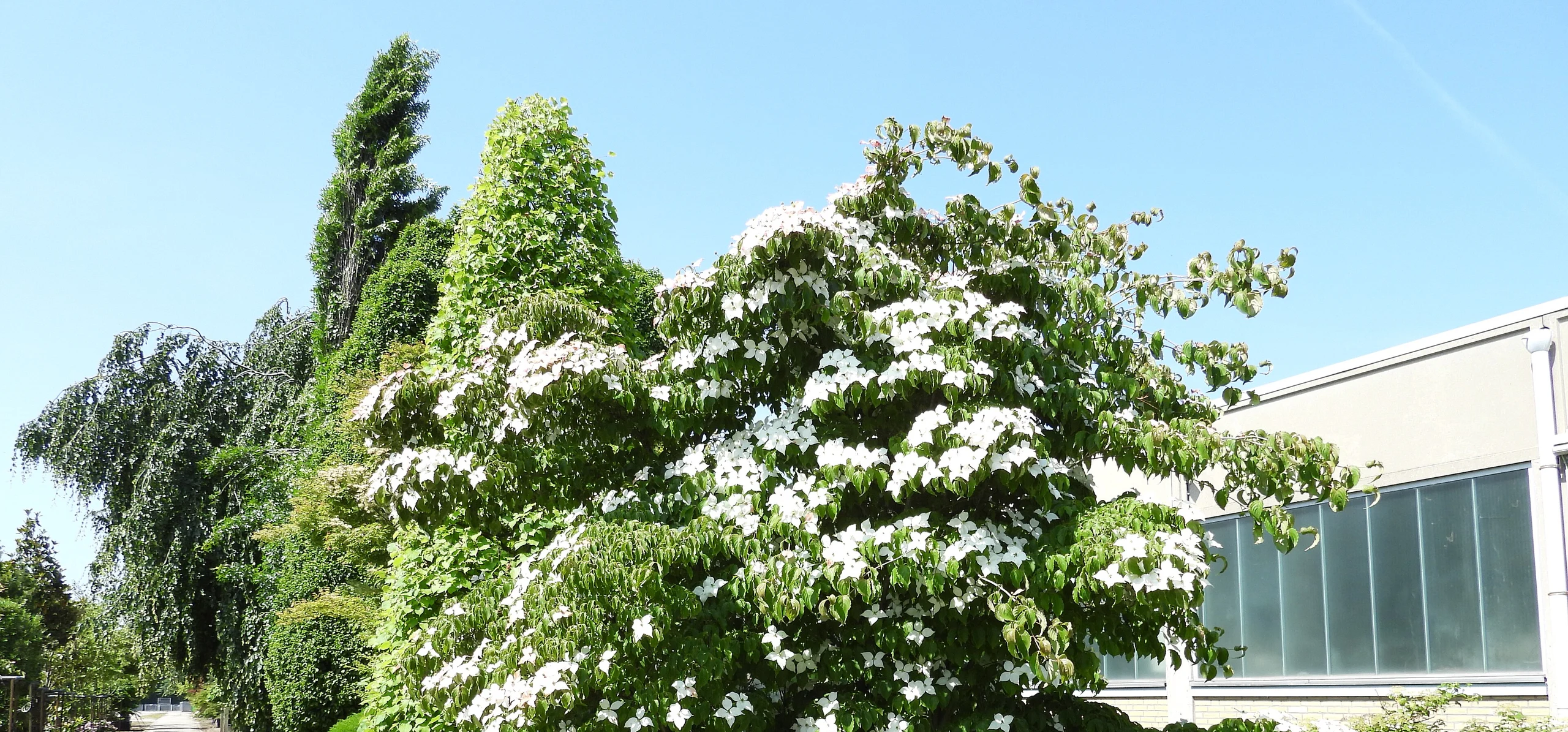
A kousa dogwood (Cornus kousa) bought young from a nursery will spend several seasons building roots and branch structure before it flowers heavily, so do not judge a small specimen by its first bare years. Left to mature, it becomes a small, layered, vase-shaped tree 20 to 30 feet (6 to 9 m) tall and 15 to 30 feet (4.5 to 9 m) wide, per North Carolina State Extension, opening four-pointed white bracts in June, once its leaves have already expanded, followed by pink, strawberry-like fruit in late summer and red-purple autumn colour. Its biggest selling point over the native flowering dogwood, Cornus florida, is disease resistance: North Carolina State Extension rates it markedly less susceptible to dogwood anthracnose, the fungal disease that has killed native dogwoods across much of the eastern United States since the 1970s.
Bloom Time: Bracts, Not Petals
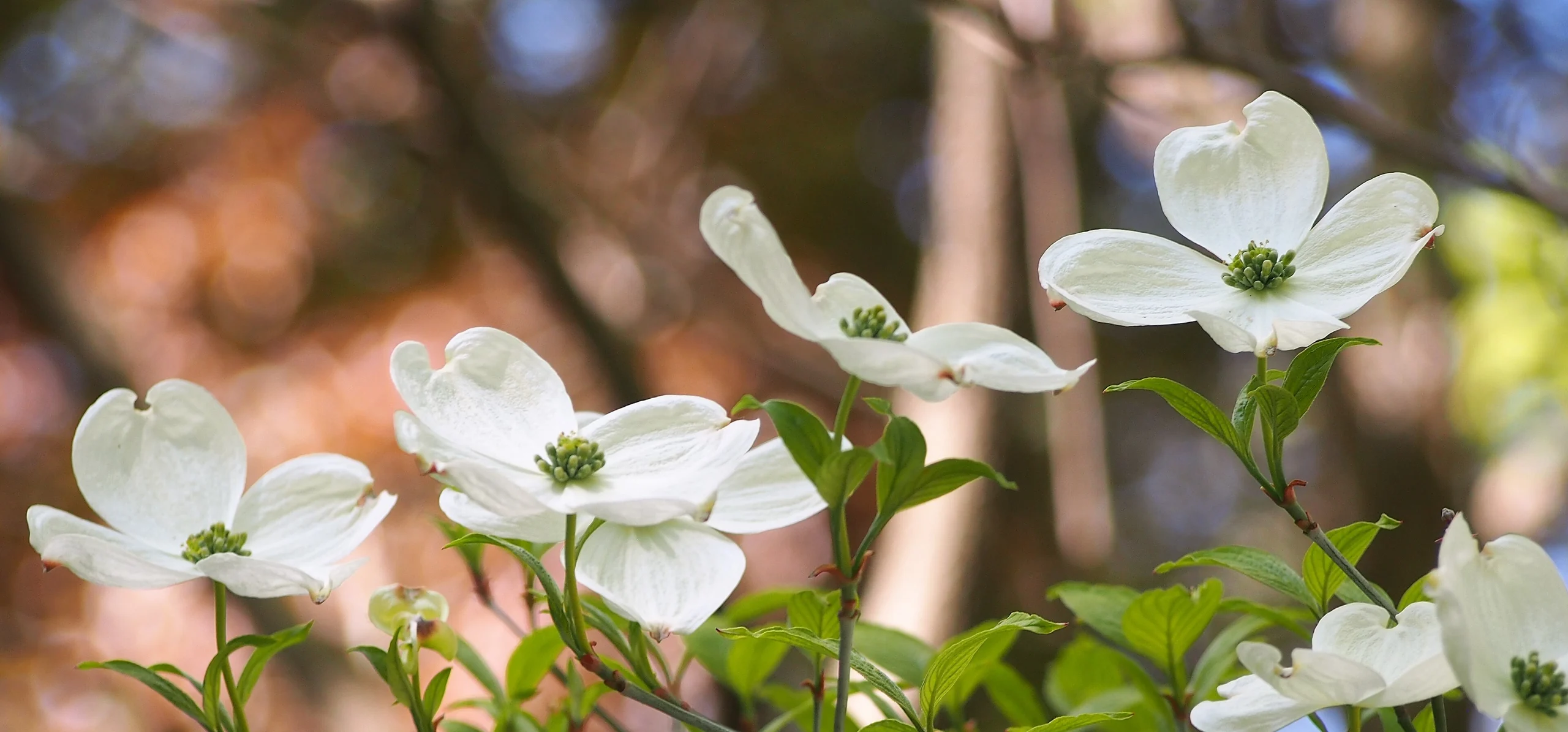
What reads as a four-petaled white flower is four bracts, modified leaves that surround a small central cluster of true flowers, greenish yellow and easy to overlook. North Carolina State Extension describes the bracts as 3 to 5 inches across at their showiest, opening in June after the leaves have fully expanded, weeks later in the season than Cornus florida, which flowers on bare wood in April. That later timing is one reason to grow both species if space allows: it stretches the dogwood season by roughly a month rather than duplicating it.
Kousa Dogwood vs Flowering Dogwood: Anthracnose Resistance
Dogwood anthracnose has killed Cornus florida across large parts of its native range since it was first identified in the 1970s, and North Carolina State Extension lists Cornus kousa as more disease-resistant overall and less susceptible to that specific pathogen, which is why nurseries and municipalities now plant it as a direct substitute where flowering dogwoods have already failed. It is not immune to everything: North Carolina State Extension also lists leaf and flower blight, crown canker, bacterial leaf scorch, powdery mildew and septoria leaf spot as occasional problems, alongside pests including calico scale, dogwood borer, dogwood sawfly, Japanese maple scale, leafhoppers and oyster shell scale. In practice, a kousa dogwood sited correctly stays close to trouble-free for most of its life, which is not something you can say about a flowering dogwood in anthracnose country.


Fruit: Edible and Strawberry-Like
Each flower head that is pollinated swells into a single compound fruit, a round drupe 1 to 1.5 inches across, ripening from green to light red or pink with a fleshy, yellowish-orange interior, according to North Carolina State Extension. The knobby pink skin and the way the fruit hangs singly on a long stalk give it its strawberry-like reputation, though the resemblance is closer to a raspberry aggregate under magnification than to an actual strawberry. It is edible off the tree, and it also means real cleanup: a mature, heavily fruiting specimen drops fruit through late summer and early autumn onto whatever lawn or paving sits beneath it.
Bark and Autumn Colour
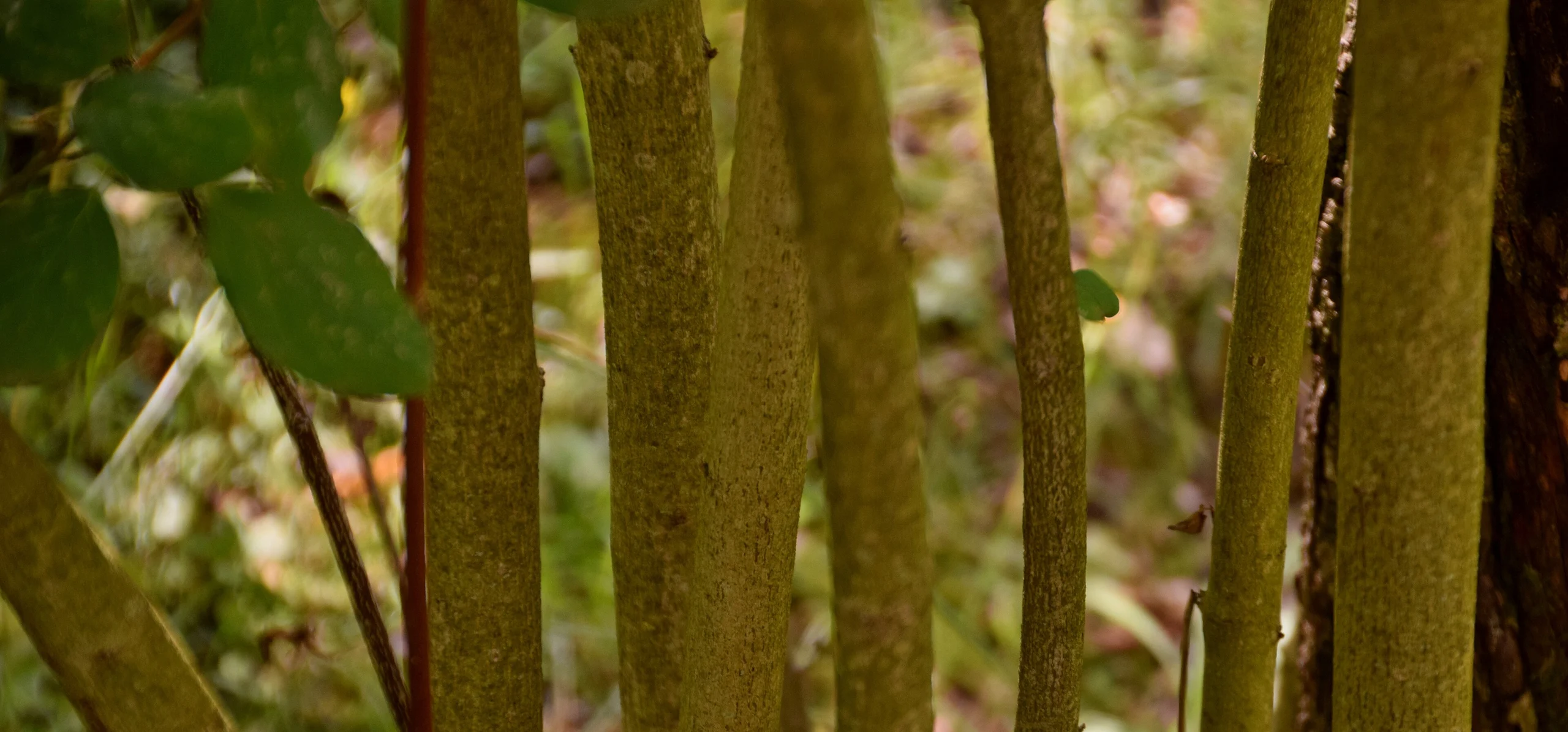
Bark is one of the reasons to keep a kousa dogwood as a multi-stem or low-branched specimen rather than limbing it up too hard. North Carolina State Extension describes young bark as smooth and light brown, changing with age into exfoliating patches of tan and brown that read almost like camouflage on a mature trunk in winter, when there is no foliage to compete for attention. Leaves turn a reddish purple with a scarlet cast in autumn, giving the tree a second strong season on top of the June bloom.
Soil and Site
North Carolina State Extension calls for acidic soil, giving a working ceiling of pH below 6.0, with good drainage; the RHS describes the closely related var. chinensis as tolerant of neutral to acid conditions in fertile, humus-rich ground. Both agree on the practical point: keep the root zone consistently moist without letting it sit wet, since North Carolina State Extension notes the species tolerates some dryness once established but will not survive waterlogged soil. Full sun to partial shade both work, six or more hours of direct sun for the heaviest bloom, two to six hours of shade tolerated without much loss of flowering.
Establishment: Why a Young Tree Will Not Flower
A tree grown from seed passes through a genuinely juvenile phase during which, as University of Maryland Extension explains for trees and shrubs generally, it does not set flower buds at all no matter how well it is watered or fed; that phase can run for years before the plant matures enough to bloom. This is part of why named kousa cultivars are propagated by cuttings or grafting rather than seed: a cutting taken from an already-flowering parent carries that mature growth stage with it and can bloom within a season or two of planting, while a seedling of unknown parentage has to grow through its own juvenile years first. If a young kousa dogwood in the ground for its first two or three years has not flowered, that is normal rather than a sign of a problem, provided the leaves look healthy and the tree is putting on new growth.
Choosing a Variety: 'Satomi' and var. chinensis
The wild species from Japan and Korea typically shows white bracts and moderate vigor. Var. chinensis, the form native to China and Taiwan, is generally the more garden-worthy of the two, growing more vigorously and staying productive longer before the species-typical decline into senility sets in. The RHS-listed 'Satomi' (also sold as 'Miss Satomi'), classified as Cornus kousa var. chinensis 'Satomi', is the standard pink-bracted selection: deep pink bracts instead of white, ovate leaves that turn purple and deep red in autumn, and strawberry-like, rosy-pink fruit, all on a plant the RHS rates hardy throughout the UK and holding its Award of Garden Merit. It reaches roughly 4 to 8 metres in height and spread over 10 to 20 years, in line with the species, so plan the same eventual footprint regardless of bract colour.
Pruning and Common Mistakes
The RHS places kousa dogwood in its lowest pruning category, meaning it needs only the removal of dead, damaged or crossing wood, ideally right after flowering so next year's buds are not cut away; heavy structural pruning is rarely necessary and tends to spoil the naturally layered, tiered branching that makes a mature specimen distinctive. The most common mistake is planting a young, still-juvenile tree in deep shade and then assuming it is unhealthy when it fails to bloom for several years, when the real issues are usually insufficient light or simple juvenility. The second is skipping soil preparation: dropping a kousa dogwood into alkaline, compacted or poorly drained ground and then fighting chlorotic foliage and stalled growth for the rest of its life, when testing and amending the pH before planting would have avoided it. The ASPCA does not list Cornus kousa on its toxic or non-toxic plant database for cats, dogs or horses, so treat that silence as unverified rather than a guarantee of safety around pets.
Test your plant knowledge
Tap a card to flip it and reveal the answer.
Cornus kousa opens its bracts in June, after its leaves have already expanded, later in the season than the native flowering dogwood. Tap to reveal ✓ True
Cornus kousa is more susceptible to dogwood anthracnose than Cornus florida. Tap to reveal ✕ False
The bark of a mature kousa dogwood exfoliates into patches of tan and brown, unlike the smooth bark of a young tree. Tap to reveal ✓ True
A kousa dogwood grown from seed typically flowers in its first year in the ground, just like a grafted or cutting-grown cultivar. Tap to reveal ✕ False
The ASPCA specifically lists Cornus kousa on its toxic or non-toxic plant database. Tap to reveal ✕ False
Sources
References consulted for this guide
- GBIF Backbone Taxonomy: Cornus kousa Bürger ex Hancegbif.org
- Plants of the World Online (Kew): Cornus kousa Bürger ex Hancepowo.science.kew.org
- North Carolina Extension Gardener Plant Toolbox: Cornus kousaplants.ces.ncsu.edu
- RHS: Cornus kousa var. chinensis 'Satomi' (Miss Satomi)rhs.org.uk
- University of Maryland Extension: Trees and Shrubs Failing to Flowerextension.umd.edu
- Reference entity : Wikipédiaen.wikipedia.org