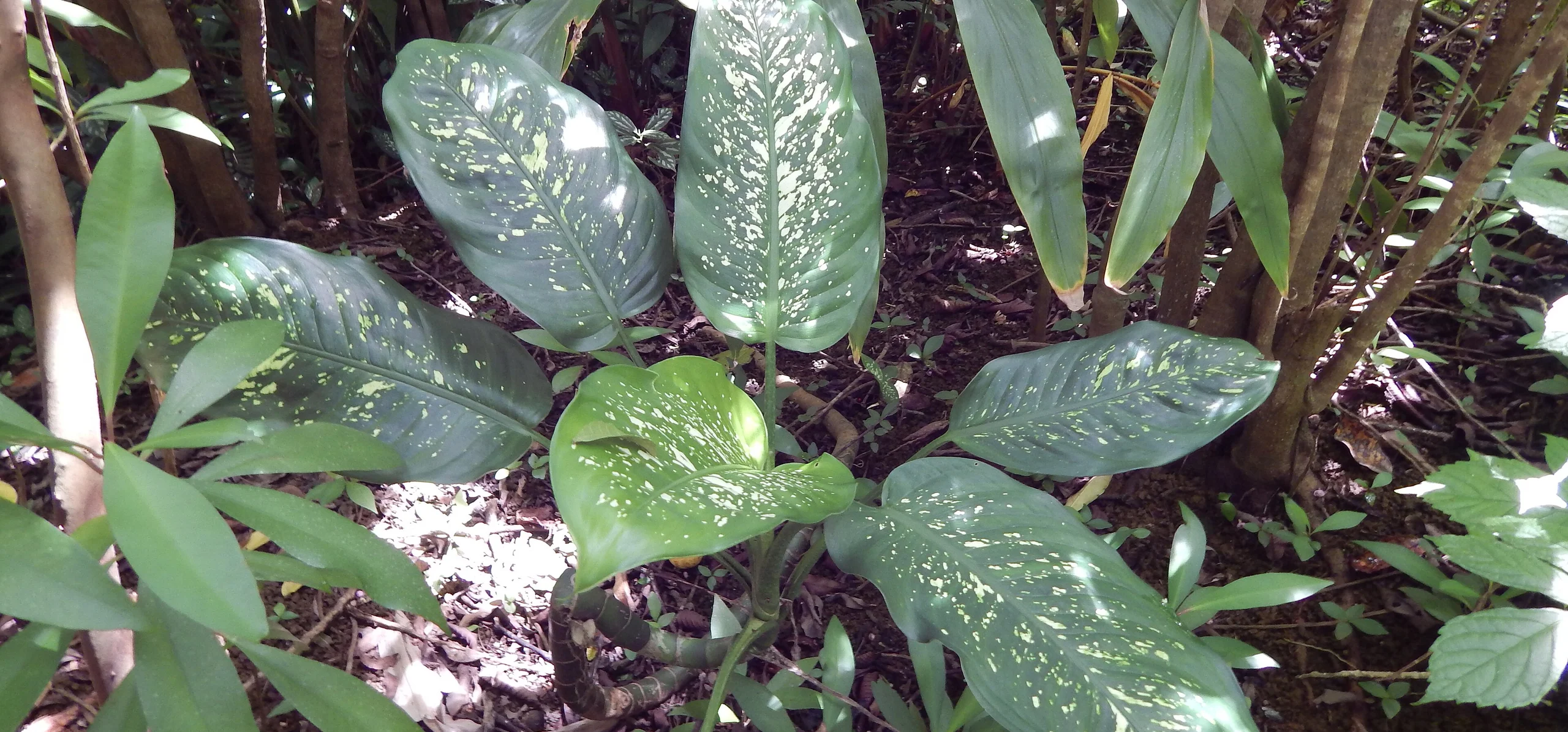
Dumb Cane
Dieffenbachia seguine
Family · Araceae
Dieffenbachia seguine, the Caribbean dumb cane, needs bright indirect light and regular watering, plus careful handling of its serious calcium oxalate toxicity.
Dieffenbachia seguine
Plant profile
- WateringModerateWater every 7 days
- Light exposurePartial shade
- Ideal temperature16–24 °C
- Hardiness zoneUSDA 10–12
Growth
- Family
- Araceae
- Life cycle
- Perennial
- Growth speed
- 6/10
- Mature size
- 91–305 cm
- Spread
- 61–91 cm
- Flowering
- Rare indoors, white calla-type spathe followed by red berries
- Propagation
- Cutting
DormancyGrowth slows from fall to late winter; water less and let soil dry between waterings
Time to maturitySeveral growing seasons to form a mature clustering cane indoors
Soil & climate
- Soil types
- Loamy, peaty, well-drained potting mix
- Drought tolerance
- Yes
Light & Placement
- Origin
- Caribbean and northern to tropical South America
- Where to place it
- A few feet back from an east or north facing window
- Bright bathroom or hallway out of direct sun
- Shaded understory position in USDA zones 10 to 12
- Container with drainage holes to avoid a waterlogged base
Safety
- Toxicity
- CatsToxic
- DogsToxic
- HumansToxic
Invasive speciesUF/IFAS assessed it as a potential invasive risk in Florida's natural areas and no longer recommends planting it there
Data fromDieffenbachia seguine (Jacq.) Schott, GBDieffenbachia seguine (Jacq.) Schott, PlDieffenbachia seguine, Missouri BotanicaDumbcane, ASPCA Animal Poison ControlDieffenbachia, UF/IFAS Gardening Solutio
Where it grows
World distribution
Dumb Cane is native to 18 countries: Antigua & Barbuda, Bolivia, Brazil, Cayman Islands, Colombia, Cuba, Dominican Republic, and Ecuador….GBIF records 4,757 documented identifications across 109 countries, with the largest concentrations in Brazil, Colombia, and Puerto Rico.
- Antigua & Barbuda
- Bolivia
- Brazil
- Cayman Islands
- Colombia
- Cuba
- Dominican Republic
- Ecuador
- French Guiana
- Guyana
- Haiti
- Jamaica
Show 6 more countriesShow fewer countries
- Peru
- Puerto Rico
- St. Lucia
- Suriname
- Trinidad & Tobago
- Venezuela
Yellow to orange dots: concentration of documented identifications per country. Green countries: sourced native range. Source: GBIFNative range from POWO (Kew).
A Caribbean aroid whose sap once silenced people
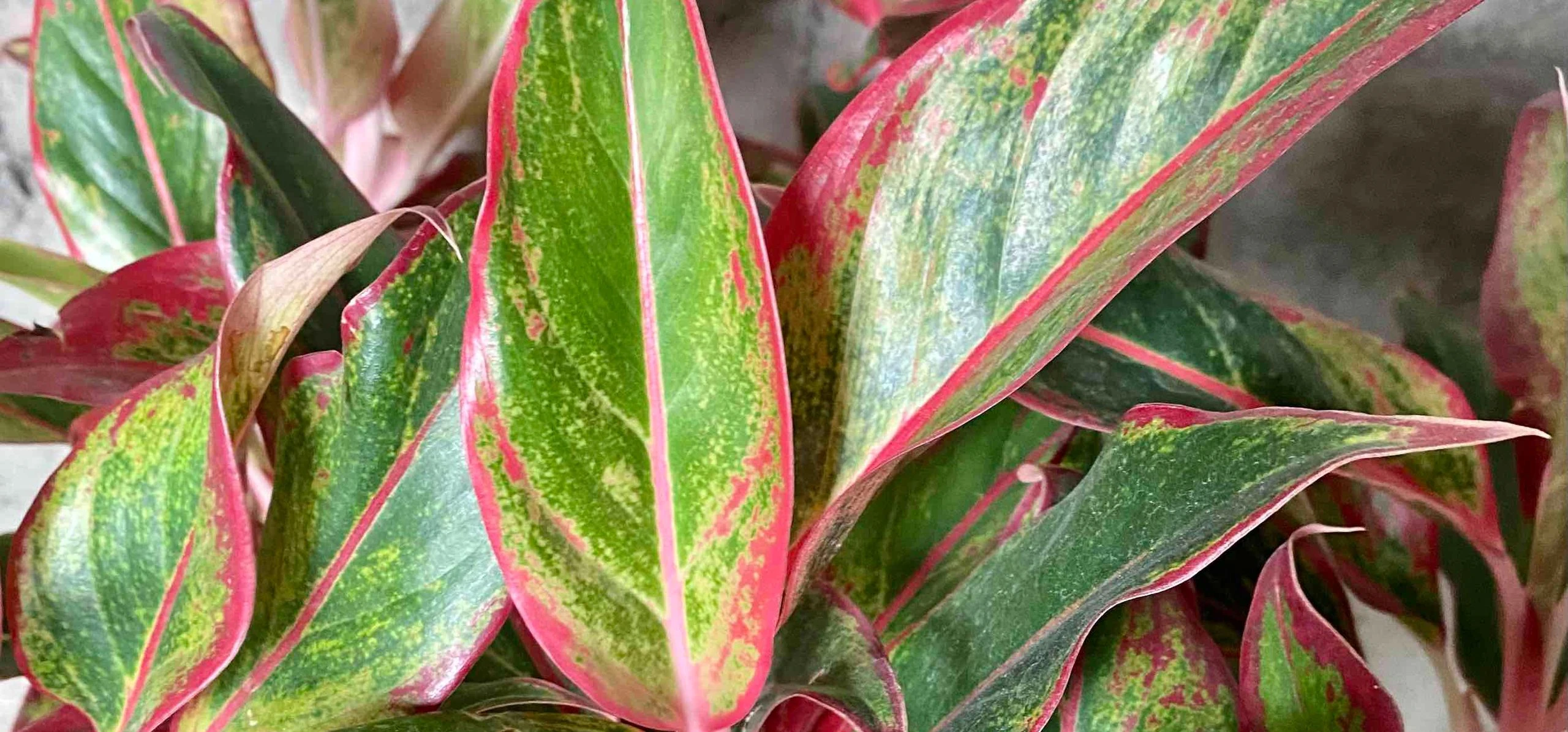
Dieffenbachia seguine is native to the Caribbean and northern to tropical South America, where it grows as an understory shrub in wet forest, according to Plants of the World Online and the Missouri Botanical Garden. Indoors it is grown for its glossy, ovate leaves, up to about 30 cm long, marked with cream or white patches on green. As the lower leaves age and drop, a pale, cane-like stem is left behind, which is where the common name comes from. The other half of the name is grimmer: chewing the sap causes burning and swelling in the mouth and throat severe enough to make speech difficult, historically used as a punishment on Caribbean plantations. Treat it as an easy, shade-tolerant houseplant that still deserves careful handling.
Light and placement
Give it bright, indirect light with protection from direct sun; the Missouri Botanical Garden's Plant Finder lists part shade to full shade as suitable exposure, and direct midday sun through unfiltered glass will scorch the leaf tissue. A spot a few feet back from an east or north facing window works well. Unlike many variegated houseplants, dumb cane genuinely tolerates low light and heavy shade, but the trade off is a plainer, less patterned leaf and a plant that stretches faster toward whatever light it can find, one of the main reasons canes end up leggy.


Watering and humidity
Water regularly through the growing season, letting the soil surface dry before watering again, then cut back from fall to late winter and let the pot dry more between waterings, following the Missouri Botanical Garden's culture notes. Missouri Botanical Garden also lists Dieffenbachia seguine as tolerant of drought and heavy shade, so an occasional missed watering is far less damaging than a pot left sitting wet, which invites root and stem rot. It prefers relatively high humidity but tolerates drier indoor air better than most aroids; standing the pot on a tray of wet pebbles, without letting the pot itself sit in water, raises humidity around the foliage.
Soil and feeding
Pot it in a loamy, peaty, well drained mix, the Missouri Botanical Garden's stated preference, and choose a container with drainage holes so the roots never sit in standing water. University of Florida IFAS Extension notes the plant thrives between roughly 16 and 24 degrees Celsius (60 to 75 degrees Fahrenheit), so keep it away from cold drafts and single pane glass in winter. Feed a balanced liquid houseplant fertiliser through the spring and summer growing season at label strength, and stop over the slower, cooler months when the plant is not actively using the nutrients.
Pruning a leggy cane and taking cane cuttings
Because dumb cane naturally sheds its lower leaves as it grows, older plants end up as a bare, top heavy cane with a tuft of foliage only at the crown. Wearing gloves against the sap, cut the cane back to 10 to 15 cm above the soil in spring or early summer; new shoots typically break from dormant nodes along the remaining stump within a few weeks, producing a bushier, shorter plant. Do not discard the cut top: it roots readily as a cane cutting, matching the stem or root cuttings the Missouri Botanical Garden lists as the standard propagation method for this species. Trim the removed section into pieces a few centimetres long, each with at least one node, let the cut ends callus for a day, then lay them horizontally half buried in moist, well draining mix, or stand a longer top cutting upright in water. Keep cuttings warm and out of direct sun until roots and a new shoot appear.
Pests and common mistakes
Watch for spider mites, scale, aphids and mealybugs, and for fungal leaf spot, rot and blight in consistently wet conditions, all noted by the Missouri Botanical Garden as problems on this species. The most common mistake is treating a shade tolerant plant like a thirsty one: constantly damp soil, rather than pests, is the usual cause of a collapsing stem base. The second is ignoring the cane until it topples under its own weight; cutting it back earlier, before it is entirely bare, keeps the plant compact and gives more usable material for cuttings.
Toxicity: calcium oxalate raphides and handling precautions
Every part of Dieffenbachia seguine contains insoluble calcium oxalate raphides, needle shaped crystal bundles, together with a proteolytic enzyme that the ASPCA lists as this plant's toxic principles. Chewing or biting the stem or leaves drives the raphides into soft tissue, producing immediate, intense burning of the mouth, tongue and lips, drooling, vomiting and difficulty swallowing in cats and dogs, per ASPCA's plant database. In people, the same mechanism can cause painful swelling of the mouth and throat and, in severe cases, enough restriction to affect speech and breathing; the Missouri Botanical Garden also notes the sap irritates skin and eyes on contact. Wear gloves whenever you prune, divide or take cuttings, avoid touching your face until you have washed your hands, and rinse skin or eyes promptly with water if sap gets on them. Keep the plant, and any trimmed cane sections, out of reach of pets and small children, and seek medical or veterinary advice immediately after any suspected ingestion.
Test your plant knowledge
Tap a card to flip it and reveal the answer.
Dumb cane tolerates part shade to full shade better than most variegated houseplants. Tap to reveal ✓ True
The safest routine is to keep the potting mix constantly moist at all times. Tap to reveal ✕ False
A leggy, bare cane can be cut back hard, and the removed top can be rooted as a cutting. Tap to reveal ✓ True
Chewing the stem or leaves is harmless to pets because the plant is not on the ASPCA toxic list. Tap to reveal ✕ False
Gloves are recommended when pruning or taking cuttings because the sap can irritate skin and eyes. Tap to reveal ✓ True
Sources
References consulted for this guide
- Dieffenbachia seguine (Jacq.) Schott, GBIF Backbone Taxonomygbif.org
- Dieffenbachia seguine (Jacq.) Schott, Plants of the World Online (Kew)powo.science.kew.org
- Dieffenbachia seguine, Missouri Botanical Garden Plant Findermissouribotanicalgarden.org
- Dumbcane, ASPCA Animal Poison Controlaspca.org
- Dieffenbachia, UF/IFAS Gardening Solutionsgardeningsolutions.ifas.ufl.edu
- Reference entity : Wikipédiaen.wikipedia.org