Flamingo Flower
Anthurium andraeanum
Family · Araceae
Anthurium andraeanum spathes fade to green under weak light, need steady humidity, and grow aerial roots that should be left alone, not buried in the pot.
Anthurium andraeanum
Plant profile
- WateringHighWater every 7 days
- Light exposureIndirect light
- Ideal temperature18–29 °C
- Hardiness zoneUSDA 11–12
Growth
- Family
- Araceae
- Life cycle
- Perennial
- Growth speed
- 5/10
- Mature size
- 30–90 cm
- Spread
- 23–30 cm
- Flowering
- Spathes appear almost year-round on a mature plant
- Propagation
- Cutting
- Seed
DormancyLittle true dormancy; growth and flowering slow in winter
Soil & climate
- Soil pH
- pH 5.5–6
- Drought tolerance
- No
Soil typesEricaceous, peat-free compost with perlite and orchid bark, Chunky, well-drained aroid or orchid-style mix
Light & Placement
- Origin
- Colombia to Ecuador
- Where to place it
- East-facing window at the sill
- South or west window screened by a sheer curtain
- Shaded, humid patio or greenhouse in frost-free USDA zones 11 to 12
- Terracotta or plastic pot with generous drainage holes
Safety
- Toxicity
- Contains calcium oxalate crystals; keep away from pets
- Pet safe
- No
Data fromAnthurium andraeanum Linden ex André, GBAnthurium andraeanum Linden ex André, PlAnthurium andraeanum, flamingo flower, RAnthurium, NC State Extension Gardener PFlamingo Flower (Anthurium scherzeranum)
Where it grows
World distribution
Flamingo Flower is native to 2 countries: Colombia and Ecuador.GBIF records 1,348 documented identifications across 75 countries, with the largest concentrations in Colombia, Brazil, and Ecuador.
- Colombia
- Ecuador
Yellow to orange dots: concentration of documented identifications per country. Green countries: sourced native range. Source: GBIFNative range from POWO (Kew).
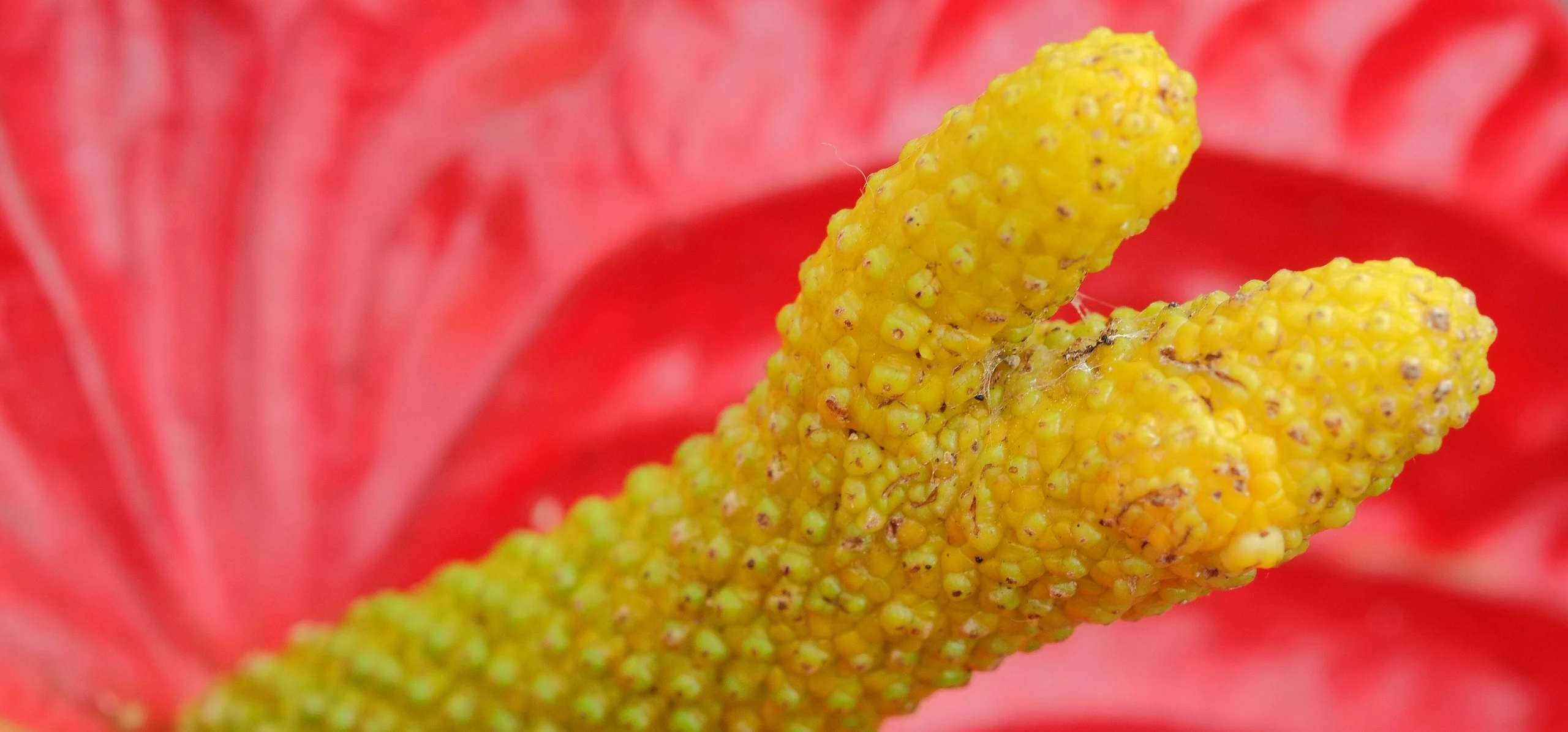
The glossy red "flower" on an Anthurium andraeanum is not a petal at all: it is a spathe, a modified leaf, wrapped around a slim yellow spadix packed with hundreds of tiny true flowers. Wild plants grow as epiphytes on tree trunks from Colombia to Ecuador, wedging their roots into bark crevices rather than soil, which is why a potted specimen still pushes thick aerial roots up the stem long after it has settled into a container. Sold almost everywhere as flamingo flower, it keeps producing new spathes for most of the year under the right light, and most of the complaints growers bring to it, spathes fading to dull green, crispy leaf tips, roots that will not stay buried, trace back to treating it like an ordinary soil plant instead of the climbing forest epiphyte it actually is.
A Colombian epiphyte, not a swamp plant
Plants of the World Online lists the native range of Anthurium andraeanum as Colombia to Ecuador, where it grows as an epiphytic subshrub in wet tropical forest, roots draped over bark rather than dug into leaf litter. That habitat explains two things collectors puzzle over: the tolerance for slightly cramped, chunky pots, and the fat aerial roots that appear along the lower stem no matter how well the plant is potted. Unlike some houseplants sold under an outdated label, the commercial name matches the accepted science here; GBIF's taxonomy backbone confirms Anthurium andraeanum, family Araceae, as the accepted name, so there is no hidden reclassification to explain to a curious buyer.
Light, and why the spathes turn green
Indoors this plant wants bright, indirect light rather than a dim corner or an unfiltered south window. A little gentle morning sun is tolerated, but hours of direct afternoon sun scorch the thin leaves and wash out the spathe color, while too little light does the opposite: new spathes emerge pale, undersized, or stay green instead of ripening to red, and flowering slows to a stop. The fix for a greening spathe is almost always more light, not more fertiliser; move the plant closer to an east-facing sill, or a south or west window screened by a sheer curtain, and judge the next spathe rather than the current one, since a spathe already open will not recolor.


Watering and humidity
Water once the top of the potting mix feels dry to the touch rather than on a fixed schedule, and use rainwater or purified water when possible; RHS growing notes describe watering freely with a diluted orchid fertiliser every two weeks from spring through autumn, then cutting back to sparing waterings in winter while keeping the plant above 18°C. Humidity matters as much as watering technique: this species wants noticeably humid air, and leaf tips and spathe edges brown when it stays too dry for too long. A pebble tray topped up with water, a steamy bathroom, or a humidifier running nearby all help; a plant kept on a dry windowsill beside a radiator shows damage that careful watering alone will not fix.
Aerial roots: leave them alone
The thick, greyish roots that push out of the stem above the soil line are not a sign of a struggling plant. They are the same aerial roots the species uses to grip bark in the wild, and cutting them off or forcing them down into the pot does more harm than leaving them exposed. Some growers wrap a strip of damp sphagnum moss around them to encourage extra moisture uptake, others simply let them dangle; both are fine. What does not help is burying the whole root mass in dense, waterlogged soil, which suffocates the finer roots underneath. A chunky mix, built more like an orchid blend than standard potting compost, gives both the buried and the aerial roots the air pockets this epiphyte expects.
Feeding and the near-constant bloom cycle
RHS growing notes describe Anthurium andraeanum spathes appearing throughout the year rather than in one defined season, so a mature, well-lit plant can carry an open spathe more months than not. Feed with a balanced or orchid-specific liquid fertiliser diluted to the label's half strength every two weeks during active growth, and stop through the darker winter months when growth and flowering both slow. Snip a spent spathe off at the base once it has faded and dried rather than leaving it to rot against the stem, so the plant puts its energy into the next bud instead of holding onto a dead one.
Potting mix and repotting
RHS guidance calls for a specifically acidic, chunky mix: two parts ericaceous, peat-free compost to one part perlite and one part orchid bark, and separate advice from NC State Extension puts the tolerated soil pH below 6.0. Repot every year or two into a pot only one size up, since a container that is too roomy holds excess moisture around roots that expect fast drainage. Propagation is most reliably done from stem cuttings that include at least one node and its aerial root, or from seed collected off a pollinated spadix, a slower route most home growers skip in favour of a rooted cutting.
Pests, and a toxicity note worth getting right
Mealybugs, spider mites, whitefly, scale and aphids are the pests most likely to turn up, usually on a plant already stressed by low humidity or poor light, and thrips can rasp pale streaks into new spathes. Root rot from a mix that stays wet is a bigger risk than any insect, and it is the main reason to prioritise drainage over generosity with the watering can. On toxicity, it is worth being precise about which Anthurium is which: the ASPCA's own database lists "Flamingo Flower," along with the common names Flamingo Lily, Tail Flower, Oilcloth Flower and Pigtail Plant, under the scientific name Anthurium scherzeranum, a related but distinct species, not Anthurium andraeanum. That does not make andraeanum safe to chew: every Anthurium contains the insoluble calcium oxalate crystals typical of the arum family, and university extension guidance treats the whole genus as capable of causing oral irritation, drooling and vomiting in a pet that bites into it. Keep it out of reach of chewing cats and dogs regardless of which exact label sits on the ASPCA page.
Test your plant knowledge
Tap a card to flip it and reveal the answer.
Anthurium andraeanum flowers best with several hours of direct sun each day. Tap to reveal ✕ False
The colourful part people call the flower is actually a modified leaf called a spathe. Tap to reveal ✓ True
A spathe that opens green instead of red is usually a sign the plant needs more light. Tap to reveal ✓ True
The thick aerial roots on the stem should always be cut off or buried in the pot. Tap to reveal ✕ False
The ASPCA's "Flamingo Flower" database entry names Anthurium andraeanum specifically. Tap to reveal ✕ False
Sources
References consulted for this guide
- Anthurium andraeanum Linden ex André, GBIF Backbone Taxonomygbif.org
- Anthurium andraeanum Linden ex André, Plants of the World Online (Kew)powo.science.kew.org
- Anthurium andraeanum, flamingo flower, RHS Plantsrhs.org.uk
- Anthurium, NC State Extension Gardener Plant Toolboxplants.ces.ncsu.edu
- Flamingo Flower (Anthurium scherzeranum), ASPCA Animal Poison Controlaspca.org
- Reference entity : Wikipédiaen.wikipedia.org