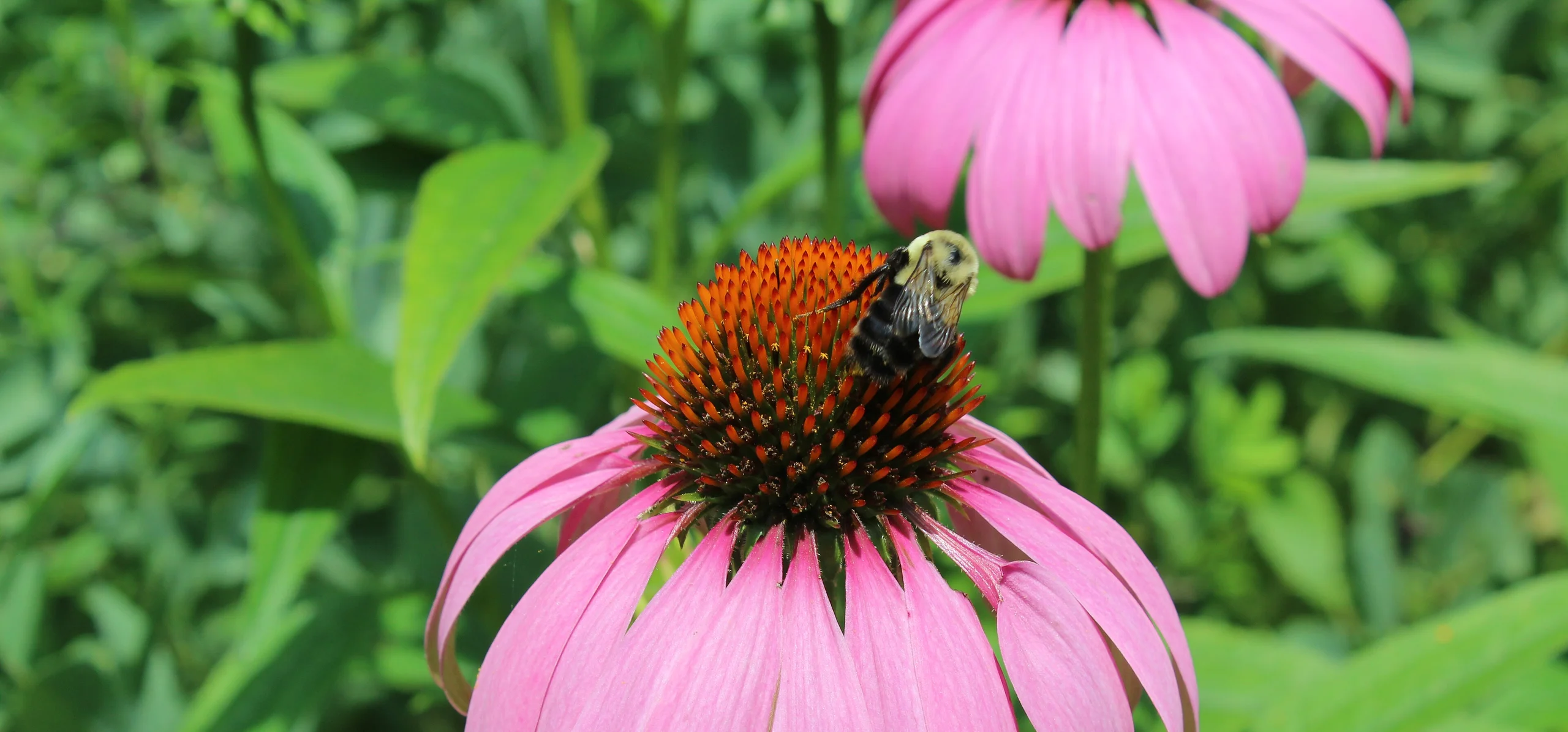
Purple Coneflower
Echinacea purpurea
Family · Asteraceae
Purple coneflower thrives in lean, well-drained soil and full sun, tolerates drought, and rewards leaving the winter seed heads for goldfinches.
Echinacea purpurea
Plant profile
- WateringLittleWater every 10 days
- Light exposurePartial sun
- Hardiness zoneUSDA 3–8
Growth
- Family
- Asteraceae
- Life cycle
- Perennial
- Growth speed
- 5/10
- Mature size
- 61–152 cm
- Spread
- 46–61 cm
- Flowering
- Midsummer to early autumn
- Propagation
- Seed
- Division
Dormancydies back to the crown in winter
Time to maturity2 to 5 years to full size
Soil & climate
- Soil types
- clay, loam, sand, chalk
- Drought tolerance
- Yes
Light & Placement
- Origin
- Central and eastern United States
- Where to place it
- sunny perennial border
- pollinator and wildlife garden
- prairie-style or naturalized planting
- cut-flower garden row
- large container on a sunny patio
Safety
- Toxicity
- CatsSafe
- DogsSafe
- HorsesSafe
Data fromGBIF Backbone Taxonomy: Echinacea purpurPlants of the World Online (Kew): EchinaASPCA: Toxic and Non-Toxic Plants, EchinMissouri Botanical Garden Plant Finder: USDA NRCS Plant Guide: Eastern Purple Co
Where it grows
World distribution
Purple Coneflower is native to a single country: United States.GBIF records 18,576 documented identifications across 41 countries, with the largest concentrations in United States, Canada, and Germany.
- United States
Yellow to orange dots: concentration of documented identifications per country. Green countries: sourced native range. Source: GBIFNative range from POWO (Kew).
A young purple coneflower straight from the nursery looks unremarkable: a low rosette of rough, hairy leaves with none of the tall flower stalks it will send up once established. What you are holding is one of the most forgiving perennials in American gardens, a prairie native built for thin, dry, rocky ground rather than rich beds, so treat it like a tough grassland plant rather than a delicate ornamental. It rewards neglect more than fussing: overwatering and overly rich soil cause more problems for Echinacea purpurea than drought or poor ground ever will.
A Prairie Native, Built for Tough Ground
Plants of the World Online places the native range of Echinacea purpurea across the central and eastern United States. The USDA's plant guide narrows that further: it grows through the Great Plains from northeast Texas and Missouri to Michigan, typically in rocky prairie sites and open, wooded ground, and sparsely along waterways rather than in the dense stands a garden bed produces. That scarcity in the wild, combined with historical over-harvesting for its roots, has made some Echinacea species a conservation concern, though E. purpurea is considered the least threatened and the most widely cultivated of the genus. The raised, spiny, orange-brown cone of disk florets that gives the plant its name, from the Greek echinos for hedgehog or sea urchin, belongs to the sunflower family, Asteraceae.
Siting: Full Sun and Lean, Well-Drained Ground
Give it full sun for the sturdiest stems and heaviest bloom; part shade is tolerated but plants stretch and flop more as light drops. Soil texture matters far more than fertility: Missouri Botanical Garden lists Echinacea purpurea as tolerant of clay, shallow-rocky and dry soils alike, provided the ground drains reasonably well. The one condition it resents is heavy, waterlogged ground that stays wet through winter, which rots the crown. Space new plants 30 to 45 cm apart; a mature clump reaches 60 to 150 cm tall and 45 to 60 cm across, usually within two to five years.


Watering: Less Is More Once Established
Water new transplants regularly through their first season while roots spread out, then step back. Missouri Botanical Garden rates its water need as dry to medium, and mature clumps shrug off summer dry spells, heat and humidity that would stress most perennials. A deep soak every 10 to 14 days during extended drought is plenty; frequent shallow watering encourages the shallow, rot-prone roots that cause more losses than underwatering ever does.
Deadhead for Rebloom, or Leave the Cones for Winter Birds
Purple coneflower reblooms through summer without any help, but snipping spent flowerheads back to a leaf node keeps the display tidier and can extend flowering into early autumn. Leave some cones standing after the last flush, though: the blackened, spiky seed heads persist upright well into winter, and Missouri Botanical Garden notes that goldfinches in particular visit them once they dry, stripping a stand clean of seed within days. Deadhead everything and self-seeding stops too, along with the free extra plants it usually produces around the parent clump.
Dividing Clumps and Starting New Plants from Seed
Missouri Botanical Garden recommends dividing overcrowded clumps about every four years. The USDA's propagation guide describes the technique: lift the crown once leaves brown off in autumn dormancy, wash the roots, and split the crown by hand into one to five rooted sections, keeping them damp and replanting the same day so the fine roots don't dry out. From seed, no cold stratification is required: Echinacea purpurea germinates readily when sown in flats left outdoors over winter, with germination accelerating once the cold-conditioned seed is brought into warmth in spring. Seedlings raised this way typically need a full second growing season before they flower.
Pests, Diseases and Common Mistakes
Missouri Botanical Garden flags Japanese beetle and leaf spot as occasional, mostly cosmetic problems, and names aster yellows, a phytoplasma disease, as the more serious risk: infected plants produce distorted, greenish, tufted flowers instead of normal blooms, and there is no cure, so pull and destroy affected plants rather than composting them. Oddly for a garden plant, deer and most foliage-feeding insects leave it alone, according to the USDA's plant guide, though gophers and moles will chew through the roots underground. The most common mistake is planting Echinacea purpurea in rich, regularly irrigated beds meant for thirstier perennials: grown that way it turns floppy and short-lived instead of the sturdy, long-blooming plant it is on leaner ground.
Toxicity and Pet Safety
The ASPCA lists purple coneflower as non-toxic to dogs, cats and horses, which fits its long history as a human herbal remedy and its standing today as one of the most widely sold immune-support herbs. That record means a dog nosing through the bed or a cat chewing a leaf is not a poisoning risk, though eating any amount of plant material can still cause mild, temporary stomach upset in either species.
Test your plant knowledge
Tap a card to flip it and reveal the answer.
Purple coneflower flowers best in rich, regularly watered garden soil. Tap to reveal ✕ False
Echinacea purpurea seed needs no cold stratification to germinate. Tap to reveal ✓ True
Leaving spent flower cones standing in winter provides seed for goldfinches. Tap to reveal ✓ True
The ASPCA lists purple coneflower as toxic to dogs and cats. Tap to reveal ✕ False
Overcrowded coneflower clumps should be divided about every three to four years. Tap to reveal ✓ True
Sources
References consulted for this guide
- GBIF Backbone Taxonomy: Echinacea purpurea (L.) Moenchgbif.org
- Plants of the World Online (Kew): Echinacea purpurea (L.) Moenchpowo.science.kew.org
- ASPCA: Toxic and Non-Toxic Plants, Echinaceaaspca.org
- Missouri Botanical Garden Plant Finder: Echinacea purpureamissouribotanicalgarden.org
- USDA NRCS Plant Guide: Eastern Purple Coneflower (Echinacea purpurea)plants.usda.gov
- Reference entity : Wikipédiaen.wikipedia.org