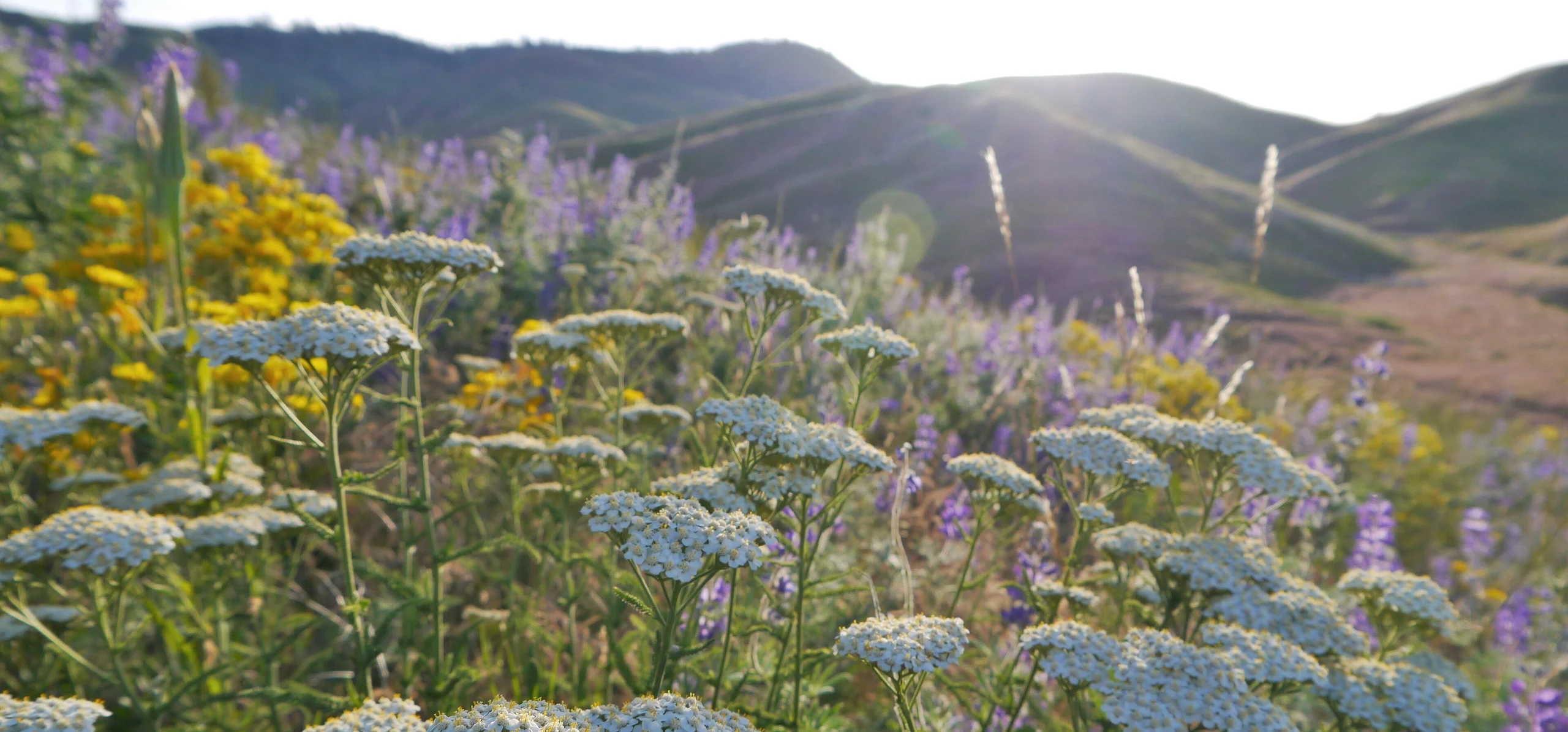
Common Yarrow
Achillea millefolium
Family · Asteraceae
Common yarrow wants full sun, lean well-drained soil and little water once established. Covers siting, deadheading, division and toxicity to pets and horses.
Achillea millefolium
Plant profile
- WateringLittleWater every 12 days
- Light exposureFull sun
- Hardiness zoneUSDA 3–9
Growth
- Family
- Asteraceae
- Life cycle
- Perennial
- Growth speed
- 7/10
- Mature size
- 50–100 cm
- Spread
- 10–50 cm
- Flowering
- Summer, June to August
- Propagation
- Seed
- Division
Dormancydies back to a basal rosette in cold winters
Time to maturity2-5 years
Soil & climate
- Soil types
- chalk, clay, loam, sand
- Drought tolerance
- Yes
Light & Placement
- Origin
- Greenland, subarctic and temperate Eurasia, now naturalized worldwide
- Where to place it
- sunny border
- gravel garden
- meadow planting
- pollinator bed
- large container with a well-drained, gritty mix
Safety
- Toxicity
- CatsToxic
- DogsToxic
- HorsesToxic
Invasive speciesspreads by rhizomes and can become weedy in rich, moist soil
Data fromRHS: Achillea millefolium (common yarrowAchillea millefolium, GBIF Backbone TaxoASPCA: Yarrow toxicity to pets and horseMissouri Botanical Garden: Achillea mill
Where it grows
World distribution
Common Yarrow is native to 45 countries: Afghanistan, Albania, Austria, Belarus, Belgium, Bhutan, Bulgaria, and Croatia….GBIF records 1,828,769 documented identifications across 118 countries, with the largest concentrations in United Kingdom, France, and Netherlands.
- Afghanistan
- Albania
- Austria
- Belarus
- Belgium
- Bhutan
- Bulgaria
- Croatia
- Czechia
- Denmark
- Estonia
- Faroe Islands
Show 33 more countriesShow fewer countries
- Finland
- France
- Georgia
- Germany
- Greece
- Greenland
- Hungary
- Iceland
- India
- Iran
- Iraq
- Ireland
- Italy
- Kazakhstan
- Kyrgyzstan
- Lebanon
- Mongolia
- Netherlands
- Norway
- Pakistan
- Poland
- Portugal
- Romania
- Russia
- Spain
- Sweden
- Switzerland
- Tajikistan
- Türkiye
- Turkmenistan
- Ukraine
- United Kingdom
- Uzbekistan
Yellow to orange dots: concentration of documented identifications per country. Green countries: sourced native range. Source: GBIFNative range from POWO (Kew).
Origin, Growth Habit and What You're Growing
Common yarrow, Achillea millefolium, is a rhizomatous perennial native to Europe and western Asia that has naturalized across most of the temperate world, including much of North America. Whether you inherited a patch in a lawn or bought a named cultivar in a nursery pot, you are dealing with the same tough, aromatic plant: a low mat of feathery, almost fern-like grey-green leaves that stays close to the ground through winter, then sends up wiry flowering stems 50 to 100 cm tall from early summer. The wild species blooms white; garden cultivars extend the palette to pink, yellow, salmon and deep red, but the growth habit underneath is identical. Crush a leaf and it releases a sharp, medicinal scent, a quick way to confirm you have yarrow rather than a look-alike umbellifer.
Sun and Site Selection
Yarrow needs full sun, at least six hours of direct light, to hold its stems upright and flower well. In partial shade the foliage stays lush but the flowering stems stretch, thin out and flop within a few weeks of opening, a problem gardeners often blame on rich soil when the real cause is insufficient light. Good air movement around the base matters almost as much as sun: a spot pressed against a solid wall or squeezed between dense shrubs traps humidity in the foliage mat, and that is where powdery mildew shows up first. Open borders, gravel gardens and the edges of a meadow planting all suit it well.
Soil and Planting
This is a plant of poor, thin ground rather than fertile beds; it grows on roadside verges and chalk downland with no help from anyone. It tolerates chalk, clay, loam and sand, and grows equally well in acid, neutral or alkaline soil, but drainage has to be sharp, standing winter wet rots the rhizomes faster than cold ever will. On heavy clay, plant on a slight mound or work coarse grit into the top 20 cm before setting plants out. Space plants 30 to 45 cm apart, they fill in within a season. Skip the compost and fertiliser at planting time: yarrow grown in rich soil produces soft, floppy stems that need staking, while yarrow grown lean stays compact and self-supporting.
Watering and Drought Tolerance
Water new plants every few days for the first three to four weeks while roots establish, then step back. Established yarrow is genuinely drought tolerant and, once rooted in, needs supplemental water only every 10 to 14 days during a dry summer, less in cooler or wetter climates. The most common way to lose a mature clump is not underwatering but the opposite: irrigating on a fixed schedule through a wet spring turns the crown mushy at the base. Check the soil with a finger before watering, if the top 5 cm is still damp, wait.


Deadheading, Cutting Back and Rebloom
Removing spent flower heads as they turn brown keeps the plant tidy and pushes out a second, lighter flush of bloom through late summer. Once the main flowering period ends, by around August in most temperate climates, cut the whole plant back to 5 to 8 cm above ground. This single cut does two things: it removes the woody, seed-laden stems that flop over neighbouring plants in autumn rain, and it triggers fresh basal foliage that carries the clump through winter looking better than if it had been left standing. Plants left uncut for several years tend to open up in the centre, with flowering stems only around the rim of an increasingly bare mat.
Propagation by Division and Seed
Division is the fastest and most reliable way to increase yarrow and to keep a named cultivar true, since seed-grown plants of hybrid cultivars often revert toward the white species. Lift a clump in early spring or autumn, pull or cut it into sections with several shoots and a portion of rhizome each, and replant immediately at the same depth. Divide every two to three years regardless of whether you want more plants, it keeps the clump vigorous and delays the hollow-centre problem described above. Species yarrow also grows readily from seed sown on the soil surface in spring, the seed needs light to germinate and should not be buried.
Keeping Its Spread in Check
The trait that makes yarrow effortless in a meadow can be a liability in a mixed border: its rhizomes travel outward each season, and a single unchecked clump will crowd out shallow-rooted neighbours within two or three years. In beds, sink a barrier such as a bottomless pot or an edging strip 15 to 20 cm into the soil around the planting, or simply plan to lift and divide annually to keep it in bounds. In naturalistic or wildlife plantings this same spreading habit is the point, yarrow's flat flower heads draw hoverflies, ladybirds and other beneficial insects, and a looser colony reads as a feature rather than a problem.
Pests, Disease and Toxicity to Pets
Yarrow is rarely bothered by pests; aphids occasionally cluster on flower stems but seldom need treatment beyond a strong jet of water. The main disease risk is powdery mildew, a grey-white coating on leaves brought on by crowding, shade or still air, thin the clump and improve airflow rather than reaching for a fungicide. Root and crown rot in waterlogged soil is the more serious threat and is usually fatal to the affected section of the clump.
Keep yarrow away from pets and grazing animals: the ASPCA lists common yarrow as toxic to dogs, cats and horses, with glycoalkaloids, monoterpenes and sesquiterpene lactones as the toxic principles, and reports vomiting, diarrhoea, colic, drooling, loss of appetite, dermatitis and depression as signs of ingestion. A cat or dog that nibbles a leaf in passing is unlikely to come to serious harm, but a bed grazed regularly, or a horse pasture where yarrow has spread, is worth fencing off or clearing.
Test your plant knowledge
Tap a card to flip it and reveal the answer.
Yarrow needs full sun to keep its flowering stems from flopping. Tap to reveal ✓ True
Yarrow performs best in rich, heavily fertilised soil. Tap to reveal ✕ False
Established yarrow needs watering every day through summer. Tap to reveal ✕ False
Dividing a clump every two to three years keeps it vigorous. Tap to reveal ✓ True
Yarrow is safe for cats and dogs to eat. Tap to reveal ✕ False
Sources
References consulted for this guide
- RHS: Achillea millefolium (common yarrow)rhs.org.uk
- Achillea millefolium, GBIF Backbone Taxonomygbif.org
- ASPCA: Yarrow toxicity to pets and horsesaspca.org
- Missouri Botanical Garden: Achillea millefolium Plant Findermissouribotanicalgarden.org
- Reference entity : Wikipédiaen.wikipedia.org