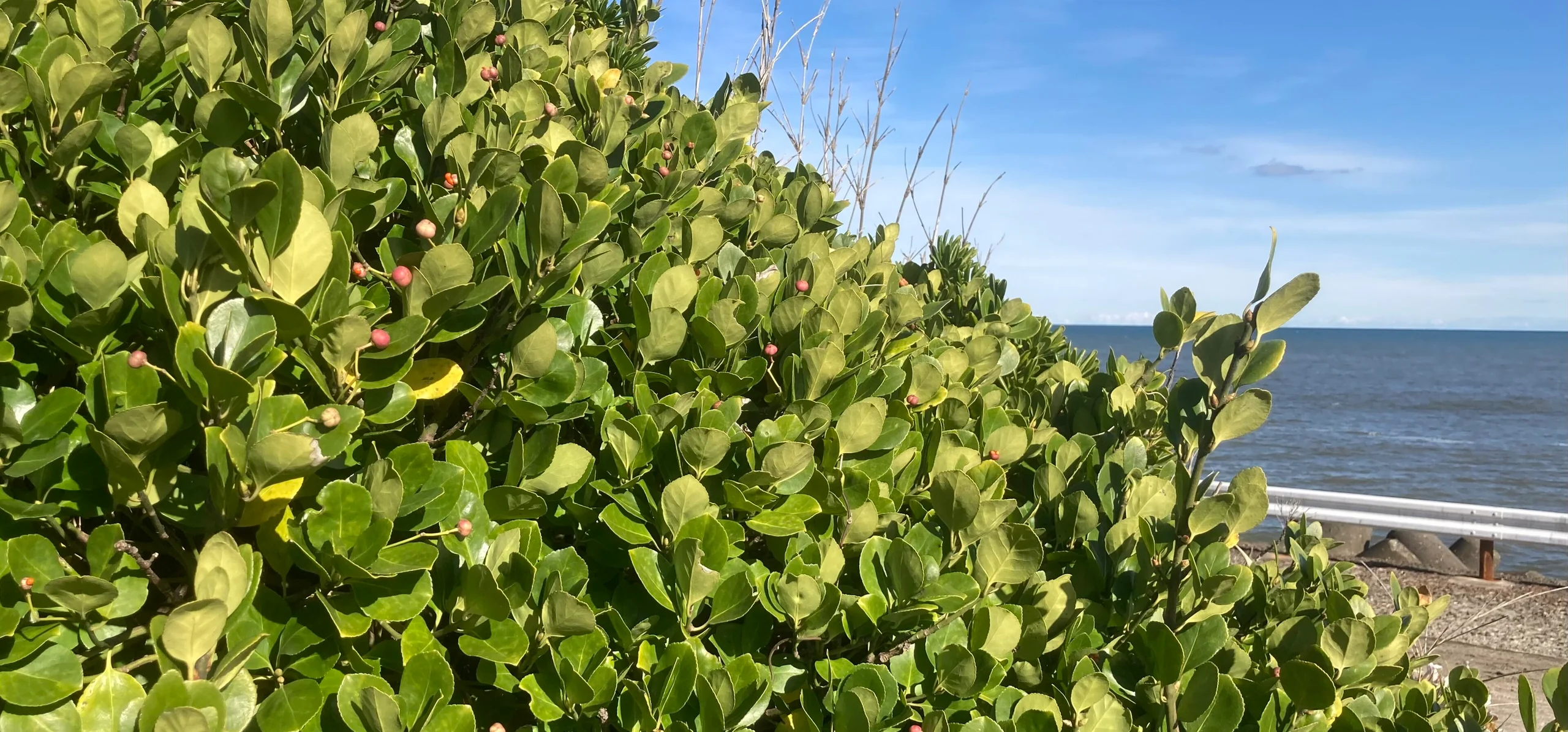
Japanese Spindle
Euonymus japonicus
Family · Celastraceae
Japanese spindle shrugs off salt wind and pollution as a coastal hedge, but shade and still air bring on powdery mildew and euonymus scale fast.
Euonymus japonicus
Plant profile
- WateringLittleWater every 10 days
- Light exposurePartial sun
- Hardiness zoneUSDA 6–9
Growth
- Family
- Celastraceae
- Life cycle
- Perennial
- Growth speed
- 5/10
- Mature size
- 250–400 cm
- Spread
- 150–250 cm
- Flowering
- Small greenish flowers, infrequent and grown for foliage rather than bloom
- Propagation
- Cutting
Dormancyevergreen, no true winter dormancy
Time to maturityfull size in 5-10 years
Soil & climate
- Soil types
- chalk, clay, loam, sand
- Saline soil
- Partially tolerated
- Drought tolerance
- Yes
Light & Placement
- Origin
- Korea, Japan to the Nansei-shoto islands (Plants of the World Online)
- Where to place it
- coastal hedge
- roadside screening
- low box-substitute edging
- topiary
- wall-trained specimen
- large terracotta planter
Safety
- Pet safe
- No
ToxicityNo dedicated ASPCA listing; related spindle species are ASPCA-toxic and RHS marks variegated cultivars harmful if eaten
Data fromGBIF Backbone Taxonomy: Euonymus japonicPlants of the World Online (Kew): EuonymRHS: Euonymus japonicus (evergreen spindRHS: How to grow euonymusNC State Extension Gardener Plant Toolbo
Where it grows
World distribution
Japanese Spindle is native to 2 countries: Japan and South Korea.GBIF records 14,657 documented identifications across 78 countries, with the largest concentrations in United Kingdom, South Korea, and Japan.
- Japan
- South Korea
Yellow to orange dots: concentration of documented identifications per country. Green countries: sourced native range. Source: GBIFNative range from POWO (Kew).
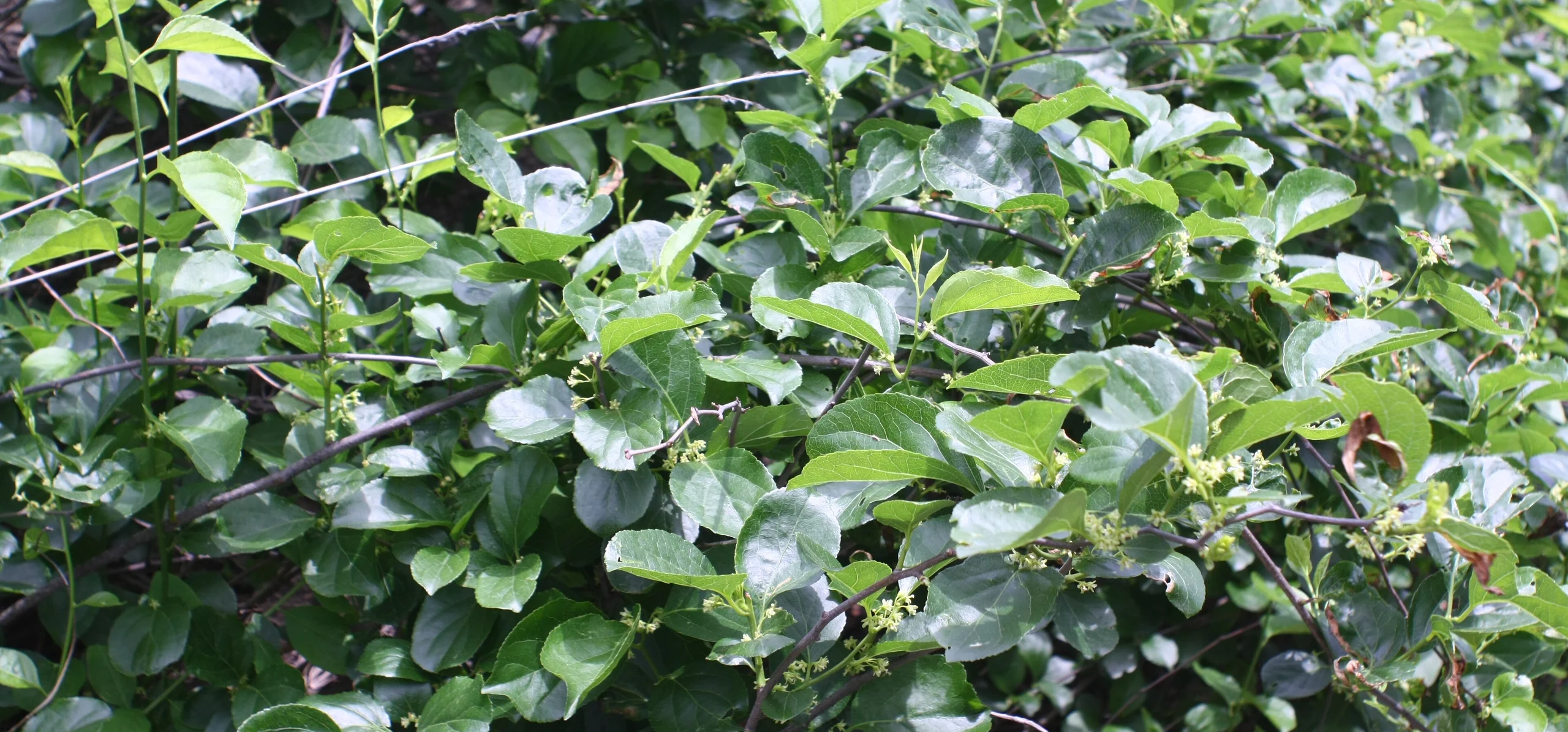
Japanese spindle earns its place on exposed boundaries because it shrugs off salt-laden wind and traffic pollution that scorch most broad-leaved hedging within a season. It is a glossy evergreen native to Korea, Japan and the Nansei-shoto islands, clipped in Western gardens into formal hedges, windbreaks or, in the dwarf cultivar Microphyllus, a low box-substitute edging. Its real weakness only shows up once it is planted somewhere still and damp: powdery mildew and euonymus scale both take hold fastest in sheltered corners with poor airflow, which is close to the opposite of the open, breezy coastal sites where the species performs best.
Origin and a Hedge Built for Coastal Exposure
GBIF accepts the name Euonymus japonicus Thunb., placing it in the family Celastraceae, and Plants of the World Online (Kew) gives its native range as Korea, Japan to the Nansei-shoto islands. The RHS rates it hardy to H5 (-15C to -10C) and lists it as tolerant of exposed as well as sheltered aspects, in full sun or partial shade, on chalk, clay, loam or sand at acid, neutral or alkaline pH, provided the soil is not waterlogged. North Carolina State Extension notes it as slightly salt tolerant and drought tolerant once established, which is why it turns up so often on seafront boundaries and roadside screening, sites where wind-blown grit and de-icing salt kill less tolerant shrubs within a couple of winters. Left unclipped, NC State records it reaching 10 to 15 feet, occasionally to 26 feet, though the RHS's own ultimate figures for a shrub kept as a specimen are closer to 2.5 to 4 metres high and 1.5 to 2.5 metres wide over 5 to 10 years; a hedge is clipped well short of either.
Choosing a Variety: Aureomarginatus, Ovatus Aureus and Dwarf Microphyllus
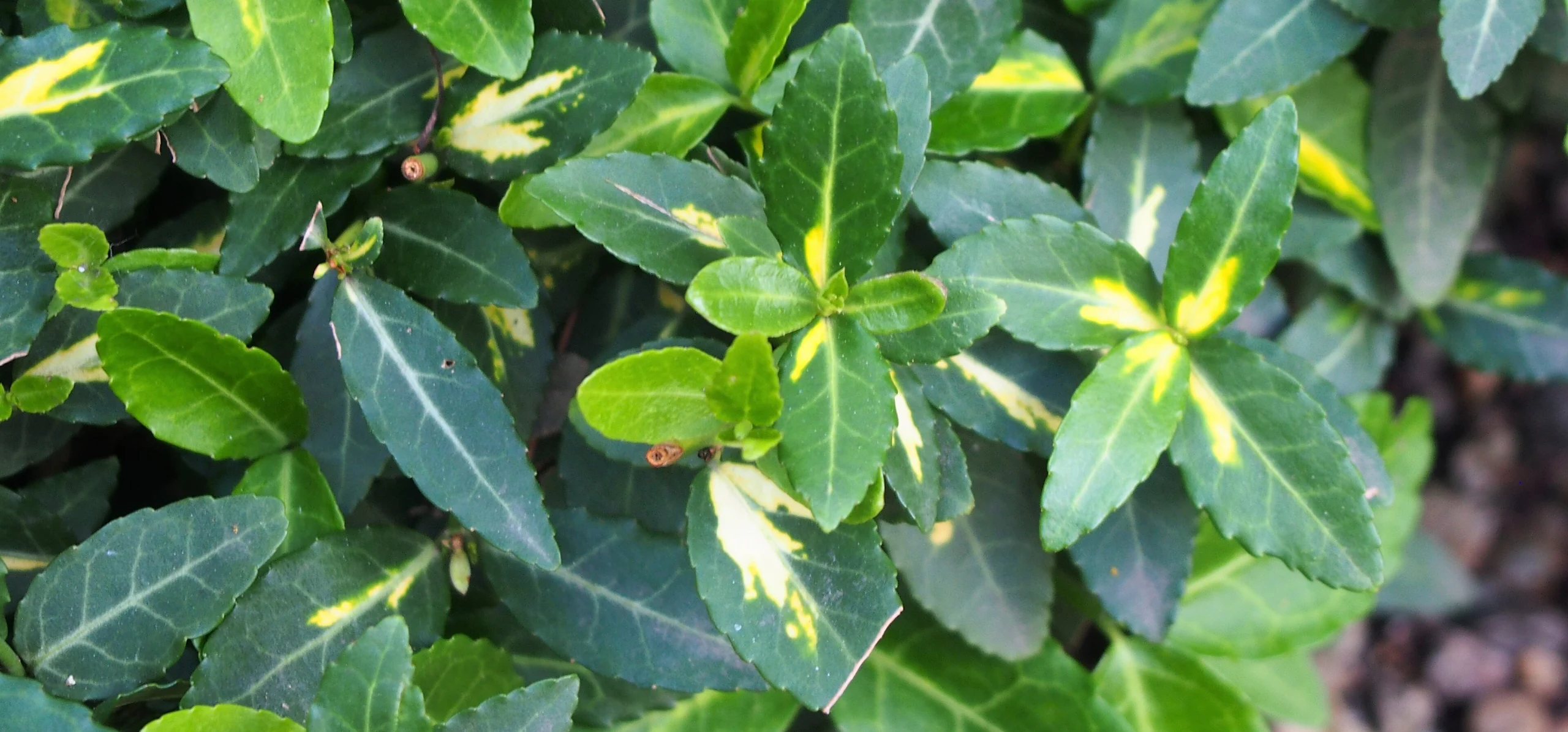
The plain green species is rarely what a nursery actually sells today. 'Aureomarginatus' is a small, upright shrub with dark green leaves edged in yellow. 'Ovatus Aureus' carries oval leaves that open bright golden yellow and mature to yellow-green with a broad yellow margin, occasionally followed by small greenish flowers and pink fruit, though the RHS notes both flowering and fruiting are infrequent on this cultivar. For a low, tight edge, 'Microphyllus' is the one to plant: narrow, lance-shaped dark green leaves on a compact, upright habit reaching only 0.5 to 1 metre high with a 0.1 to 0.5 metre spread over 2 to 5 years, and the RHS lists it explicitly as an alternative to box, a genuinely useful substitute anywhere box blight or box tree moth has forced a rethink on a parterre or path edge.
Planting, Soil and Light
Space hedging plants roughly 40 to 60 cm apart depending on how quickly a dense screen is wanted, and work organic matter into the top of the planting hole rather than digging deep, since the roots spread wide rather than deep. Full sun brings out the strongest colour on golden and white-margined cultivars; a shadier spot keeps the plain green form perfectly healthy but is where the disease risk below starts to build. Good drainage matters more than soil type, since the species tolerates a wide pH range and most textures but sits badly in ground that stays wet through winter.


Clipping: Timing and Technique
Euonymus japonicus sits in RHS pruning group 8, clipped repeatedly through the growing season rather than cut back hard once. The main shaping cut falls in mid to late spring, with light trims through summer to keep a hedge or topiary crisp. One detail matters more here than on most hedging shrubs: the RHS specifically recommends secateurs over a powered hedge trimmer, because the leaves are broad enough that trimmer blades shred rather than slice them, leaving cut edges that brown and blacken within days on a large-leaved hedge. On a small specimen or topiary shape that is a manageable trade of time for a cleaner finish; on a long boundary hedge it is the reason many gardeners accept a slightly softer outline in exchange for not hand-shearing every metre.
Powdery Mildew: The Sheltered, Damp-Spot Weakness
Both the RHS and NC State Extension list powdery mildew among the main problems on this species, and it is the one most likely to appear on a hedge planted in a shaded, crowded or still corner of a garden, exactly the conditions a salt-tolerant coastal shrub rarely meets on an open seafront but often does once used inland as a screening hedge. It shows as a flat, whitish coating on the leaf surface that rubs off between fingers, worse where plants are packed tightly or watered overhead. Sun, spacing that lets air move between plants, watering at the base rather than over the foliage, and pruning out and binning (not composting) badly affected growth keep it in check; a hedge already struggling with mildew rarely improves without addressing at least one of those conditions first.
Euonymus Scale
The RHS names Euonymus japonicus as the most susceptible host for euonymus scale of any spindle grown in gardens. Males form narrow white scales on the leaves; females form blackish-brown, pear-shaped scales mostly on the stems. There are two generations a year, with vulnerable young nymphs hatching in June and again in autumn. A light infestation causes yellow mottling on the leaves that a healthy plant tolerates; a heavy one leads to dieback and thin, patchy growth. The RHS suggests letting natural predators such as the kidney spot ladybird do some of the work, scraping visible scale off by hand on a light infestation, and accepting that a badly infested plant may need replacing rather than fully recovering.
Variegation Reverting to Plain Green
Golden and white-margined cultivars regularly throw shoots of plain green growth, which carry more chlorophyll and grow faster than the variegated wood around them. Left alone, the RHS growing guide is clear that these green shoots outcompete the rest of the plant, and a hedge or specimen grown for its colour can revert to solid green within a couple of seasons. Trace each reverted shoot back to where it joins older wood and cut it out completely rather than just tipping it back; checking for reversion at every clip is far less work than trying to correct a hedge that has already gone half green.
Toxicity, Pots and Common Mistakes
The ASPCA has no dedicated listing for Euonymus japonicus itself. Two related species do appear in its database, spindle tree (Euonymus atropurpurea) and burning bush (Euonymus alatus), both listed as toxic to dogs, cats and horses, and the RHS separately marks several golden-variegated Euonymus japonicus cultivars as harmful if eaten. Without a specific ASPCA record for this species, the sensible approach is to treat it with the same caution as its listed relatives rather than assume it is safe. In a container it works well as a clipped ball or short standard given a large pot with sharp drainage and a loam-based compost, watered more often than a hedge in open ground since pots dry out faster. The most common mistakes are running a power trimmer over a hedge instead of secateurs, tucking a plant into a shaded, airless corner where mildew is almost guaranteed, and leaving a single vigorous green reversion shoot to grow unchecked for a season before noticing the whole plant has changed colour.
Test your plant knowledge
Tap a card to flip it and reveal the answer.
Euonymus japonicus tolerates salt-laden coastal wind better than most broad-leaved hedging shrubs. Tap to reveal ✓ True
The dwarf cultivar 'Microphyllus' grows too large and loose to work as a low box-substitute hedge. Tap to reveal ✕ False
Powdery mildew on Japanese spindle is worst in shaded, crowded spots with still air. Tap to reveal ✓ True
Green shoots on a variegated Euonymus japonicus can be left alone since the plant returns to its gold or white margins on its own. Tap to reveal ✕ False
The ASPCA has published a dedicated toxicity listing specifically for Euonymus japonicus. Tap to reveal ✕ False
Sources
References consulted for this guide
- GBIF Backbone Taxonomy: Euonymus japonicus Thunb.gbif.org
- Plants of the World Online (Kew): Euonymus japonicus Thunb.powo.science.kew.org
- RHS: Euonymus japonicus (evergreen spindle)rhs.org.uk
- RHS: How to grow euonymusrhs.org.uk
- NC State Extension Gardener Plant Toolbox: Euonymus japonicusplants.ces.ncsu.edu
- Reference entity : Wikipédiaen.wikipedia.org