Burning Bush
Euonymus alatus
Family · Celastraceae
Corky winged stems, fiery red fall color, 'Compactus' pruning needs, and why Euonymus alatus is banned in parts of the northeastern US.
Euonymus alatus
Plant profile
- WateringLittleWater every 10 days
- Light exposurePartial sun
- Hardiness zoneUSDA 4–8
Growth
- Family
- Celastraceae
- Life cycle
- Perennial
- Growth speed
- 6/10
- Mature size
- 244–610 cm
- Spread
- 244–610 cm
- Propagation
- Seed
- Cutting
FloweringSmall, inconspicuous greenish-maroon flowers in May, followed by red-purple capsules splitting to orange-red arils in fall
Dormancydeciduous, bare in winter
Time to maturity'Compactus' reaches typical hedge size in five to seven years; the species form continues filling out toward its full 15-20 ft size over a decade or more
Soil & climate
- Soil types
- clay, loam, sand
- Drought tolerance
- Yes
Light & Placement
- Origin
- S. Siberia to Japan and China
- Where to place it
- full-sun specimen shrub
- screening hedge
- shrub border
Safety
- Toxicity
- HumansToxic
Invasive speciesbanned for sale and propagation in Massachusetts and New Hampshire, and on an invasive watch list in Connecticut, due to bird-spread seed into woodland understory; sterile cultivars such as 'EcoFire' are in development
Data fromGBIF Backbone Taxonomy: Euonymus alatus Plants of the World Online (Kew): EuonymNC State Extension Gardener Plant ToolboMissouri Botanical Garden Plant Finder: UConn Today: UConn Scientist Develops St
Where it grows
World distribution
Burning Bush is native to 4 countries: China, Japan, Russia, and South Korea.GBIF records 54,120 documented identifications across 34 countries, with the largest concentrations in United States, Japan, and South Korea.
- China
- Japan
- Russia
- South Korea
Yellow to orange dots: concentration of documented identifications per country. Green countries: sourced native range. Source: GBIFNative range from POWO (Kew).
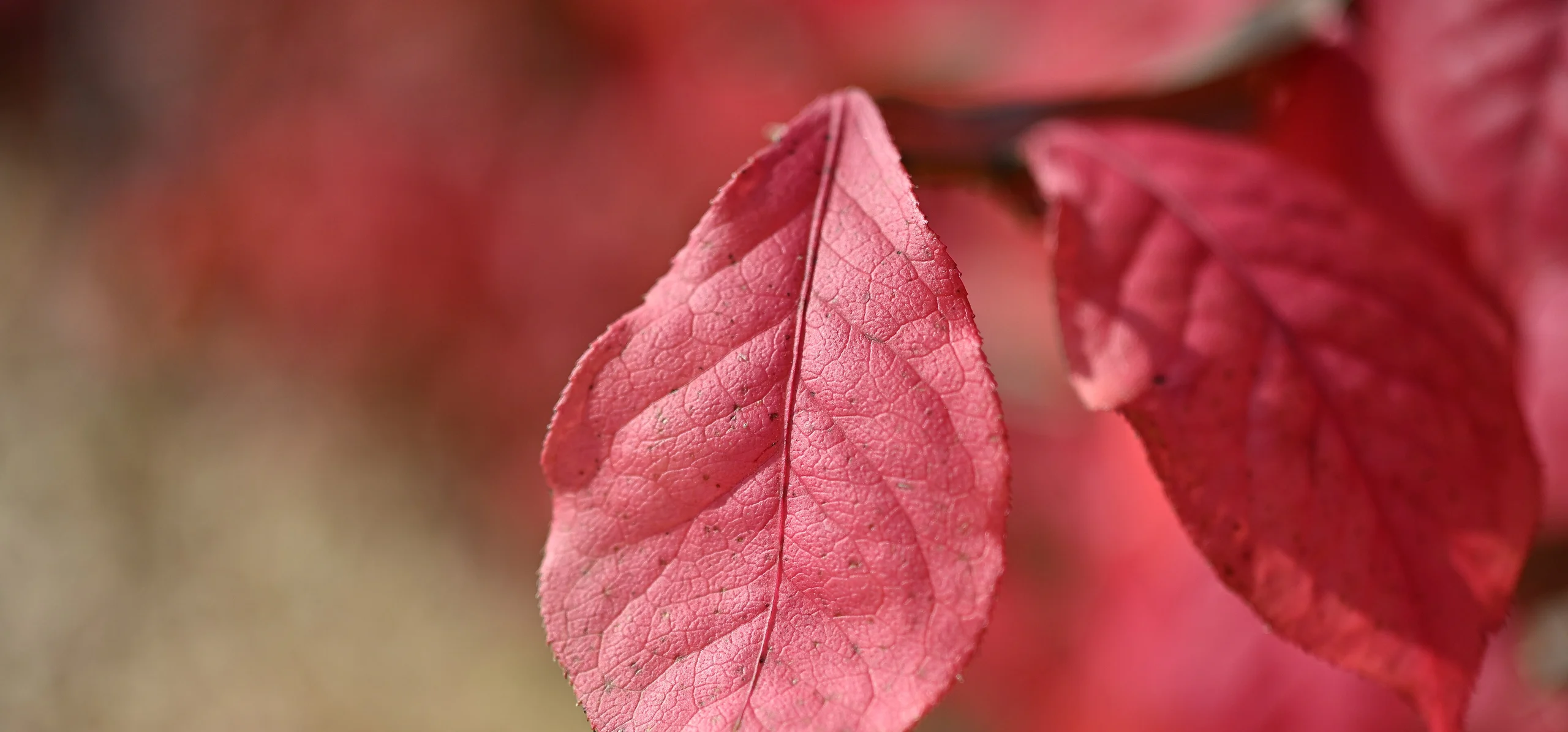
Euonymus alatus earns its common name every October, when its plain green summer foliage turns some of the most reliably saturated red of any deciduous shrub, no particular soil or hard frost needed to trigger it. The stems carry a second, quieter identification feature year round: flat, corky ridges running like wings along two or four sides of each young branch, visible even in January once the leaves are down. It asks for very little, full sun, almost any soil that drains, and pruning only when it has outgrown its spot. That same toughness, paired with a berry that birds carry into nearby woodland, has also made it one of the more heavily regulated landscape shrubs in the northeastern United States.
Identifying Burning Bush: Winged Stems and Fall Color
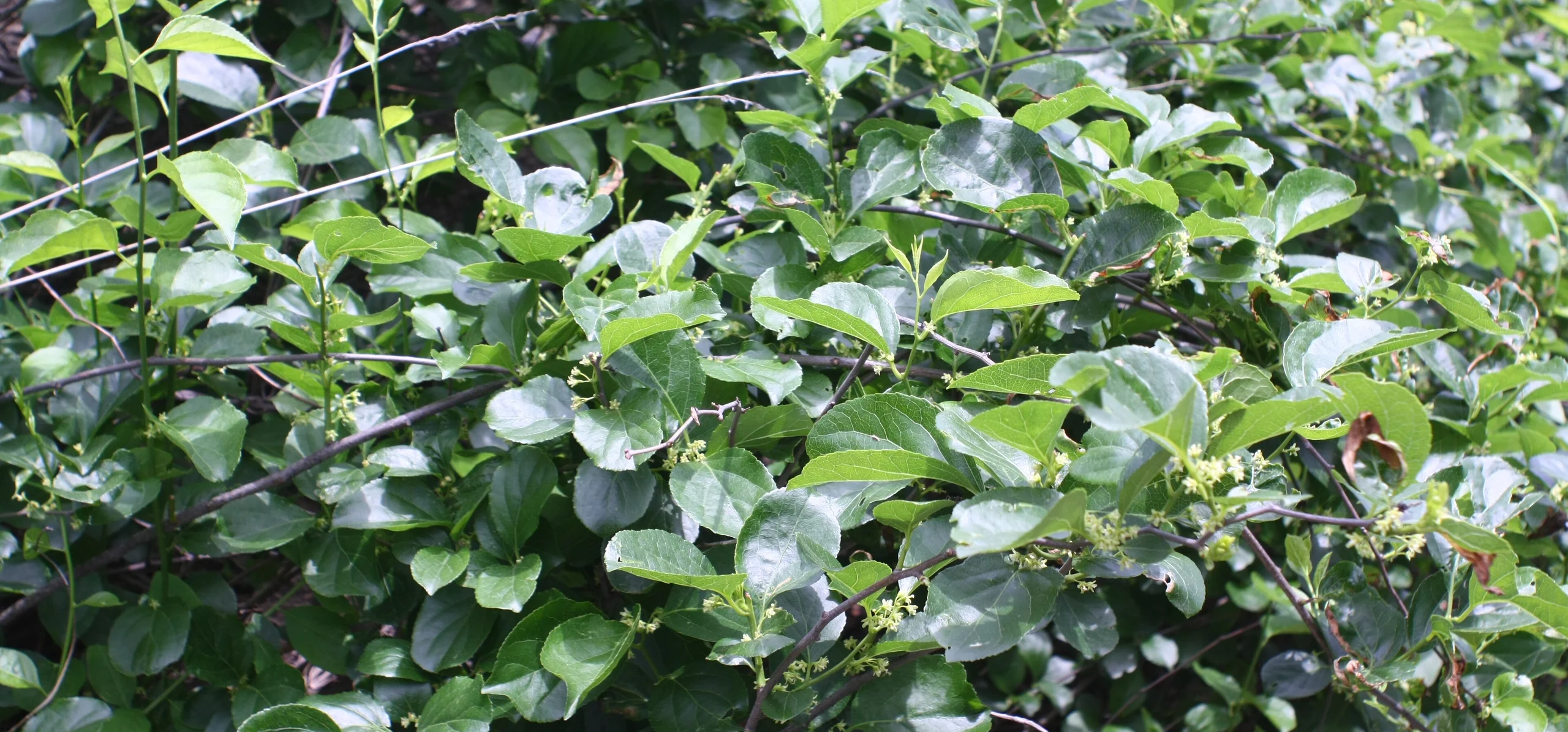
The opposite, finely toothed leaves are unremarkable in summer, a dull mid-green oval one to three inches long, easy to mistake for any number of hedge shrubs. The corky wings on the stems are the giveaway at any time of year, two to four flat ridges up to half an inch wide that thicken with age and give a bare winter branch a distinctly angular silhouette in cross-section. Small four-petaled greenish-maroon flowers open in May, so inconspicuous most gardeners never notice them, followed by reddish-purple capsules that split open in fall to expose orange-red arils. Birds strip these quickly, which is both the plant's main means of ornamental fruit display and the mechanism behind its spread into wild areas. Fall color runs from a soft pink through crimson to a nearly fluorescent scarlet, and unlike many shrubs it colors evenly from the outer canopy inward rather than starting with a few isolated branches.
Choosing 'Compactus' and Other Cultivars
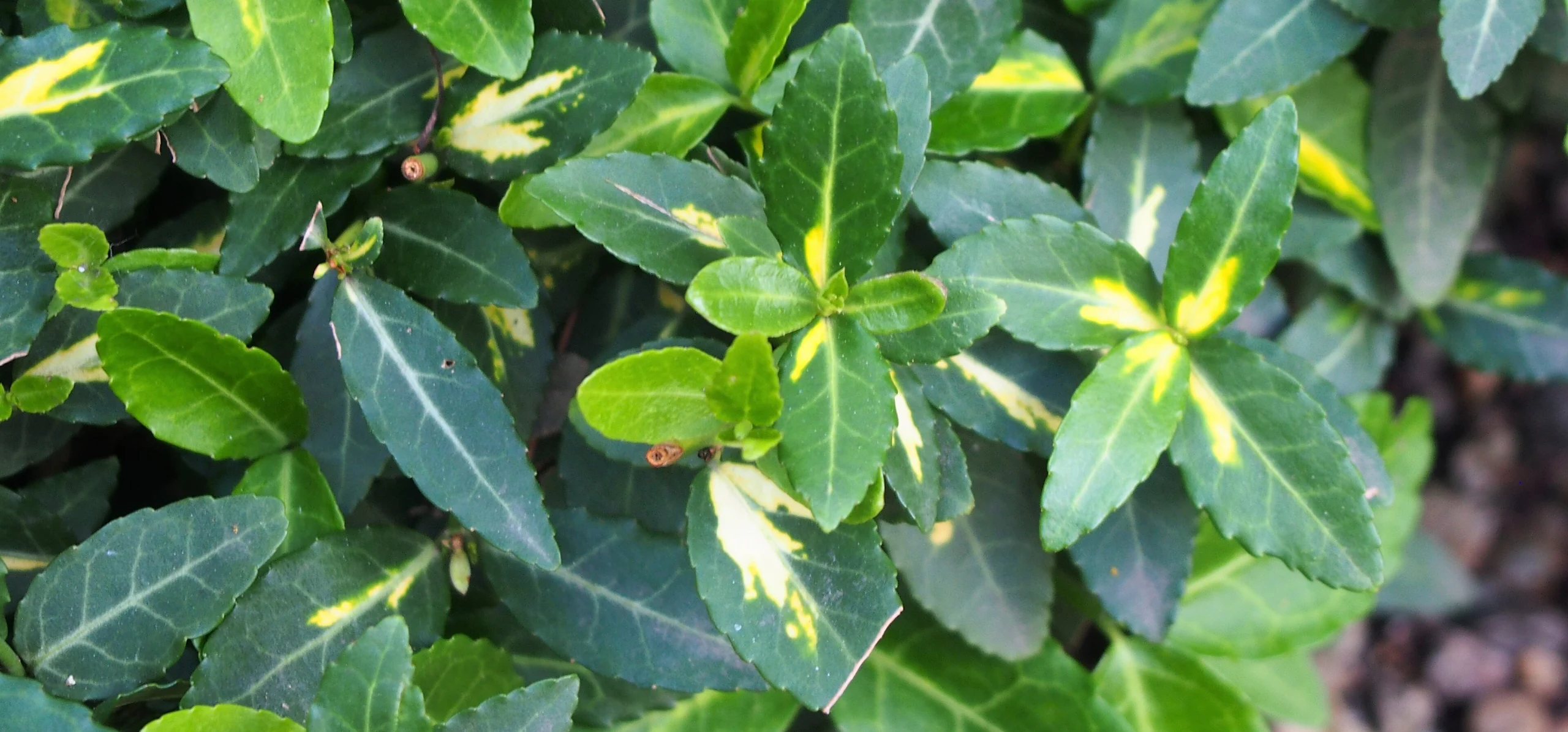
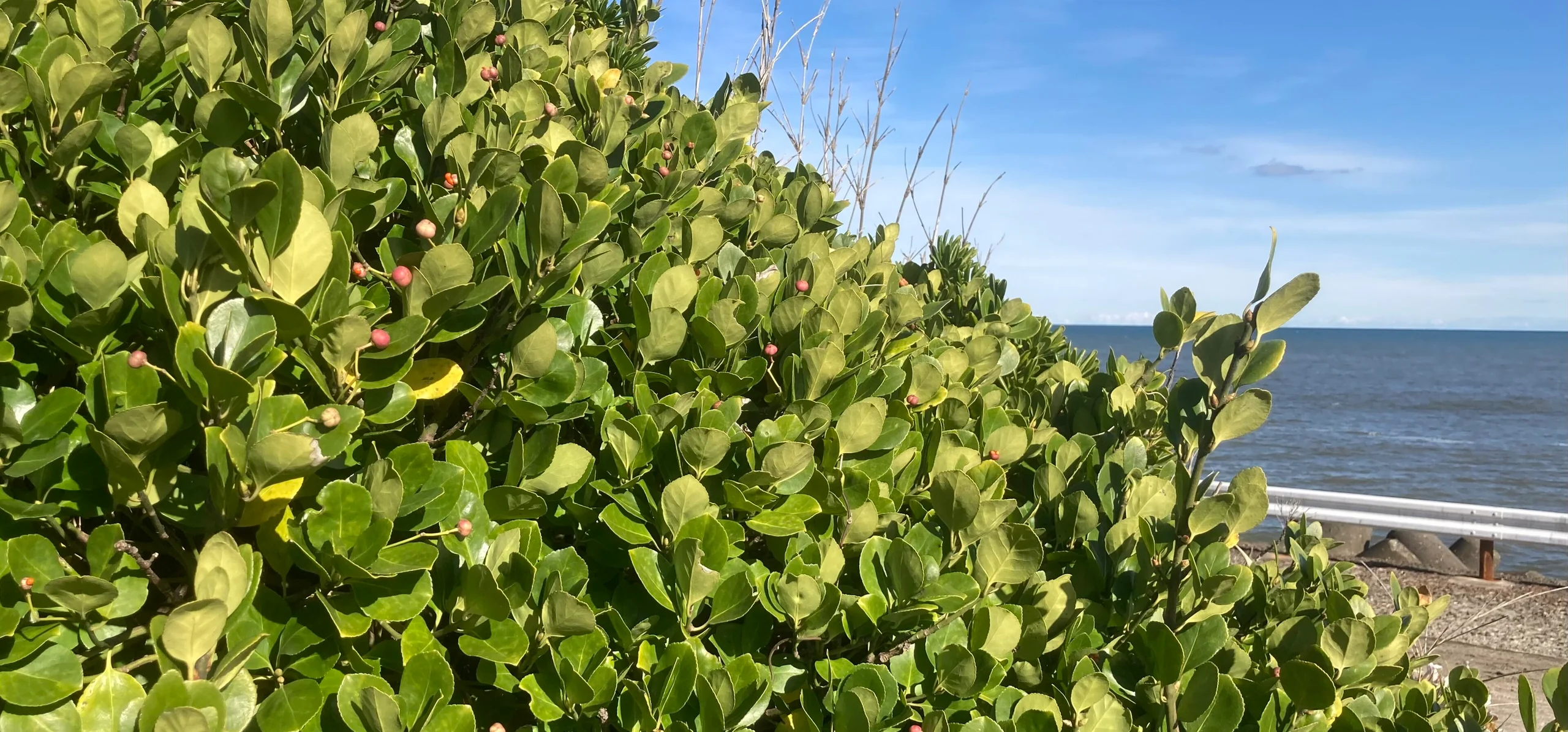
The species form reaches 15 to 20 feet tall and wide over time, too large for most foundation plantings, which is why 'Compactus' accounts for the great majority of plants actually sold. It mounds to roughly 8 to 10 feet with a denser branching habit and the same corky wings and fall color, and it is slower to reach that size, making it far easier to hold at 5 or 6 feet with routine trimming. Dwarf selections such as 'Rudy Haag' stay smaller still, closer to 4 to 5 feet, useful where even 'Compactus' would eventually crowd a bed. Whichever cultivar goes in the ground, check the tag: several nurseries now sell it specifically as a named, seed-reduced or sterile selection rather than the unmodified wild-type species, for reasons covered further down.
Full Sun for the Best Color
Light is the one variable that changes the plant's appearance more than any other. In full sun the fall display runs to deep, almost glowing red; in part shade it fades toward pink or a muddier rose; in the two to three hours of light typical of a shaded foundation bed, some plants barely color at all and simply drop green-going-brown leaves. The shrub tolerates shade structurally, it will not thin out or decline the way a sun-loving perennial might, but a burning bush planted for its namesake color and then shaded by a maturing tree overhead is a common, avoidable disappointment.


Soil and Planting: Tolerant of Almost Everything but Wet Feet
This is an adaptable shrub by design: it grows in clay, loam, or sandy soil across an acidic-to-alkaline pH range, and once established it shrugs off summer dry spells without supplemental water. The one condition it does not forgive is a low spot that stays soggy through winter; poor drainage, not drought, is what actually kills a struggling specimen. Plant at the same depth it sat in the nursery pot, water in deeply, and expect it to need regular watering only through its first one to two seasons while roots extend beyond the original root ball.
Pruning: Why This Shrub Needs Almost None
Because the flowers are ornamentally irrelevant, there is no bloom time to prune around, and the shrub can be cut back in late winter, midsummer, or almost any point outside a hard freeze without sacrificing next year's display. Left alone it holds a naturally dense, rounded shape and rarely needs more than removing a crossing branch or two. An overgrown specimen tolerates a hard rejuvenation cut to within a foot of the ground in late winter and resprouts densely by midsummer, though a plant maintained as a clipped hedge is better served by light shearing two or three times a season than by one severe annual cut.
Euonymus Scale and Other Pests
Euonymus scale, the armored insect that regularly disfigures and kills evergreen Euonymus japonicus and Euonymus fortunei, is far less of a problem here: university extension trials list 'Compactus' among the cultivars that resist it. Spider mites and occasional twig blight are the more likely complaints, both worse on stressed plants in hot, dry, poorly ventilated spots. Check the undersides of leaves for fine stippling and webbing in a hot summer, and prune out any dead or blighted twigs as they appear rather than waiting for a dormant-season cleanup.
Invasive Status: Bans, Bird-Spread Seed, and Sterile Cultivars in Development
Massachusetts and New Hampshire ban the sale, propagation, and distribution of Euonymus alatus outright, and Connecticut lists it on an invasive plant watch list. The problem is not how it behaves in a border, it is what happens after birds eat the fall arils and deposit seed along woodland edges and forest understories, where dense burning bush thickets can crowd out native seedlings and wildflowers. Because the ornamental appeal is real and the regulatory pressure has grown, breeders have worked to keep one and drop the other: a University of Connecticut research program led by Yi Li produced triploid, largely seedless lines, and a named cultivar, 'EcoFire', has tested male- and female-sterile across multiple growing seasons of field trials. Checking for one of these seed-reduced selections is the practical way to keep the fall color in a region where the straight species is restricted.
Native Alternatives and a Toxicity Note
Where a red-fall-color shrub is wanted without the invasive history, extension programs most often point to black chokeberry (Aronia melanocarpa) and Virginia sweetspire (Itea virginica), both of which color as strongly in full sun and add spring flowers and wildlife value that burning bush does not. On toxicity, it is worth untangling a naming overlap: the ASPCA's "Burning Bush" toxic-plant page describes Euonymus atropurpureus, the native eastern wahoo, not this Asian species, so Euonymus alatus does not currently appear by name in the ASPCA database. That is not the same as a clean bill of health. University extension sources note that all parts of the plant, including the seed arils birds strip so readily, cause vomiting and digestive upset if eaten in quantity by pets or people, so it is sensible to treat it with the same caution as its listed relatives.
Test your plant knowledge
Tap a card to flip it and reveal the answer.
The corky, wing-like ridges on Euonymus alatus stems are visible on bare winter branches, not just in leaf. Tap to reveal ✓ True
Burning bush develops its most intense red fall color when grown in deep shade. Tap to reveal ✕ False
Massachusetts and New Hampshire ban the sale and propagation of Euonymus alatus because birds spread its seed into wild woodland. Tap to reveal ✓ True
The ASPCA's 'Burning Bush' toxic-plant listing refers specifically to Euonymus alatus, the winged shrub sold in nurseries. Tap to reveal ✕ False
Researchers have developed sterile, largely seedless burning bush selections, such as 'EcoFire', that keep the fall color without spreading by seed. Tap to reveal ✓ True
Sources
References consulted for this guide
- GBIF Backbone Taxonomy: Euonymus alatus (Thunb.) Sieboldgbif.org
- Plants of the World Online (Kew): Euonymus alatus (Thunb.) Sieboldpowo.science.kew.org
- NC State Extension Gardener Plant Toolbox: Euonymus alatusplants.ces.ncsu.edu
- Missouri Botanical Garden Plant Finder: Euonymus alatusmissouribotanicalgarden.org
- UConn Today: UConn Scientist Develops Sterile Variety of Invasive Planttoday.uconn.edu
- Reference entity : Wikipédiaen.wikipedia.org