Zebra Haworthia
Haworthiopsis fasciata
Family · Asphodelaceae
Zebra haworthia care: tell true Haworthiopsis fasciata from the similar H. attenuata, why indoor sun scorches it, and how its shallow roots change watering.
Haworthiopsis fasciata
Plant profile
- WateringLittleWater every 14 days
- Light exposurePartial sun
- Ideal temperature1–27 °C
- Hardiness zoneUSDA 10–11
Growth
- Family
- Asphodelaceae
- Life cycle
- Perennial
- Growth speed
- 2/10
- Mature size
- 10–50 cm
- Spread
- 10–50 cm
- Flowering
- Small white tubular flowers on thin stalks in summer
- Propagation
- Offsets
- Cutting
- Seed
Dormancysemi-dormant in winter, kept almost dry
Time to maturity2-5 years to full rosette size (RHS)
Soil & climate
- Soil types
- well-drained loam or sand, gritty cactus/succulent mix
- Drought tolerance
- Yes
Light & Placement
- Origin
- South Cape Province, South Africa
- Where to place it
- bright east-facing sill
- south or west window a step back from the glass
- bright spot with afternoon shade
- wide, shallow pot with drainage hole
Safety
- Toxicity
- CatsSafe
- DogsSafe
- HorsesSafe
Data fromGBIFPlants of the World Online (Kew)RHSASPCANC State Extension
Where it grows
World distribution
Zebra Haworthia is native to a single country: South Africa.GBIF records 293 documented identifications across 8 countries, with the largest concentrations in South Africa, United States, and China.
- South Africa
Yellow to orange dots: concentration of documented identifications per country. Green countries: sourced native range. Source: GBIFNative range from POWO (Kew).
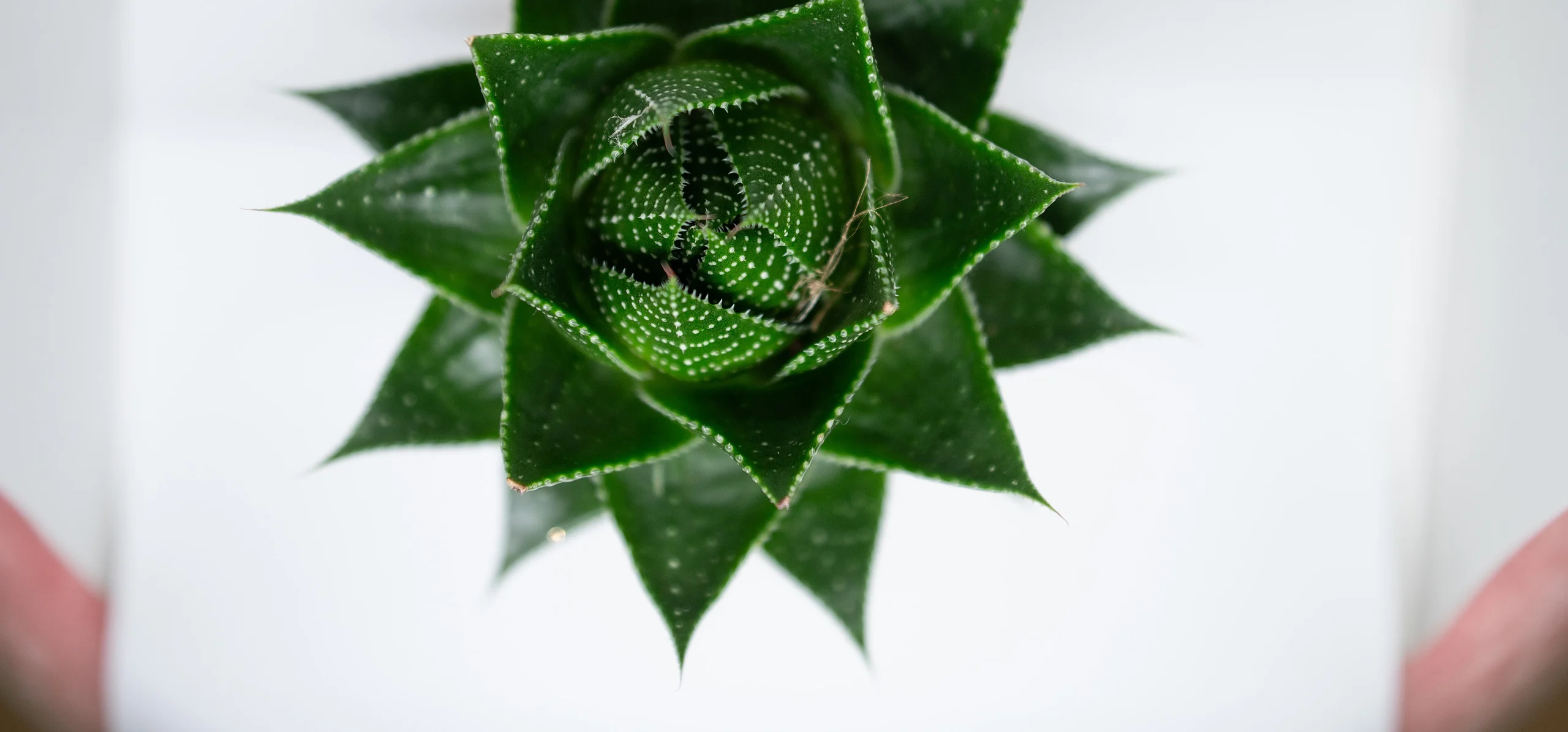
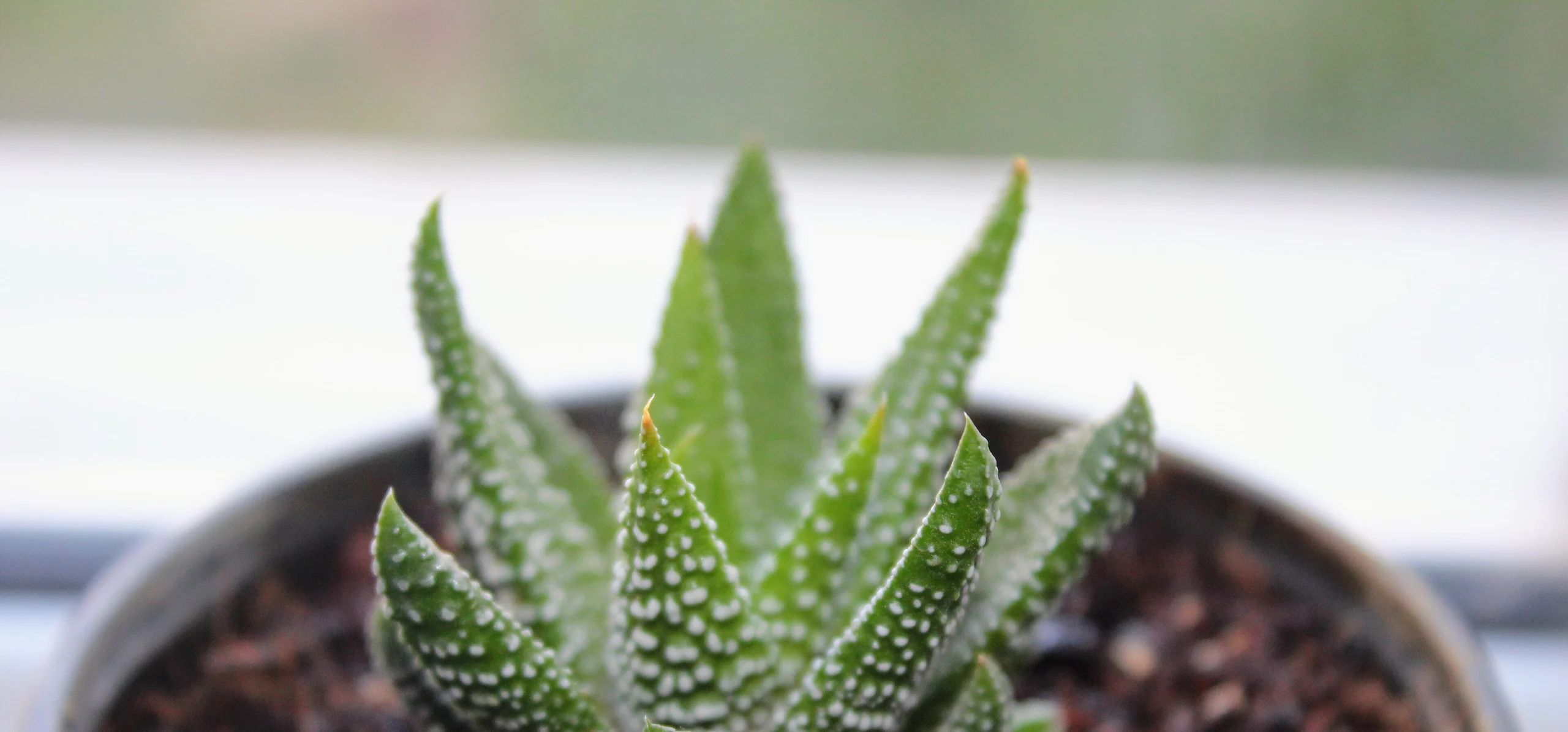
Haworthiopsis fasciata forms a tight, stemless rosette of dark green, blade-shaped leaves banded with raised white tubercles, the pattern behind both its old name, Haworthia fasciata, and its common name, zebra haworthia. A single rosette stays small, usually 8 to 15 cm tall and wide, and it offsets into a dense clump within two or three years. Two things decide whether it stays compact and clearly banded or turns pale and stretched: light bright enough to hold the markings without scorching the leaves, and soil dry enough between waterings that the shallow, fibrous roots never sit wet.
Zebra haworthia or Haworthiopsis attenuata: check the inner leaf face
Most plants sold generically as a zebra plant are actually Haworthiopsis attenuata, which is tuberculate and rough on both sides of every leaf. True Haworthiopsis fasciata carries its raised white bands only on the outer, convex face; turn a leaf over and the inner, concave face is smooth, glossy dark green with no bumps at all. Fasciata leaves are also shorter and plumper, packed with internal fibres that make them stiff, and they curve inward into a tighter, more closed rosette than the looser, longer-leaved attenuata. Genetic work moved both species out of Haworthia and into the segregate genus Haworthiopsis, which is why older tags and books still say Haworthia fasciata even though it is the same plant under its currently accepted name.
Light and placement
Outdoors in a mild climate the RHS lists full sun as the position this species prefers, but qualifies it with protection from hot sun, and that caveat matters most indoors. Behind glass, a few hours of unfiltered midday or afternoon sun through an unshaded south-facing window is enough to bleach the leaves white or push them toward a stressed reddish-orange, a look that can take months of gentler light to grow out. Extension horticulturists class it instead as a partial-shade plant indoors, doing best with two to six hours of direct sun rather than a full baking day. A bright east-facing sill, or a south or west window a step back from the glass, keeps the white banding crisp without the sunburn. Too little light produces the opposite fault: the rosette loosens, leaves elongate and lose their contrast, reaching toward the window instead of staying tight.


Watering and soil
Water thoroughly, then let the mix dry out completely, checked by feel through the drainage hole rather than the surface, before watering again. In an actively growing pot that is roughly every two to three weeks through spring and summer, stretching out further once temperatures drop. Overwatering, not cold, is what kills this plant: soggy mix around the shallow root system brings on root rot and the fungal leaf spotting that extension pathology notes list as its main disease risk. The RHS recommends a well-drained loam or sand mix, and in practice a gritty cactus and succulent compost, or ordinary potting soil cut with coarse sand, pumice or perlite, does the job. Skip a container without a drainage hole entirely; it removes the one safety margin this species has against a missed dry-out period.
Pot choice and repotting the shallow root system
Zebra haworthia roots are shallow and fibrous, built to spread wide through the top layer of stony ground rather than dive deep, so a wide, shallow pot suits it far better than a tall one, where the lower third of the mix simply stays wet and unused. It also does noticeably better slightly pot-bound, so repot only every two to three years, or sooner if offsets have crowded the rim or pushed themselves partway out of the mix. Ease the clump out, tease the roots apart along their natural divisions, and settle it into fresh gritty mix at the same depth it was growing before; hold off watering for two or three days to let any nicked roots callus over first.
Winter care and hardiness
The RHS rates Haworthiopsis fasciata H2, tolerant of low temperatures but not surviving being frozen, broadly the 1 to 5 degrees Celsius range as its lower safety margin. Outdoors that maps to USDA hardiness zones 10a to 11b per NC State Extension; everywhere colder it is a container and houseplant subject, brought under cover before the first frost. Indoors, room temperatures of about 15 to 27 degrees Celsius (60 to 80 degrees Fahrenheit) suit it well year-round. The one change worth making each winter is watering: cut back to a trickle and let the mix run almost dry, since it is cold and wet together, not cold on its own, that rots the crown.
Propagation by offsets
A healthy clump produces its own new plants without any real effort: small pups form around the base of the parent rosette and can be separated once they carry a few leaves of their own and a short root or two. Cut or twist the offset free, set it somewhere shaded and dry for two or three days so the wound calluses over, then pot it into its own small container of gritty mix and wait several days before the first watering. Leaf cuttings are possible but far less reliable here than with thinner-leaved succulents, the plump, fibre-packed leaves tend to rot before they root, so separating an existing pup is the method worth relying on. Seed is viable but slow and rarely used outside breeding work.
Flowering
Once a rosette has reached maturity, typically two to five years by the RHS estimate, it sends up a thin, wiry flower stalk well clear of the foliage in summer, carrying small tubular white flowers with faint greenish veining. Extension sources record the flowers giving way to small capsule fruit holding winged seed. Flowering does not weaken or end the rosette the way it does in some other succulents, so there is no need to cut the spent stalk back for the plant's sake, only for tidiness once the flowers fade.
Common mistakes and pests
The single most common failure is moving a windowsill plant outdoors, or into an unshaded south window, for a stretch of full summer sun; the bleached white or reddened patches that follow are sunburn, not a nutrient problem, and they do not reverse on the damaged leaf. The second is watering on a fixed calendar instead of checking that the mix has actually dried through, which in a cold or low-light spell is enough to rot the shallow roots even though the plant would have tolerated the cold alone without issue. The RHS also flags mealybugs as the main pest to watch for, they hide deep in the tight leaf axils at the base of the rosette rather than sitting in the open, so check there first; a cotton swab dipped in isopropyl alcohol clears small colonies, with insecticidal soap for anything more established.
Test your plant knowledge
Tap a card to flip it and reveal the answer.
True Haworthiopsis fasciata has raised white tubercles on both sides of every leaf. Tap to reveal ✕ False
The RHS rates zebra haworthia H2, meaning it tolerates low temperatures but not being frozen solid. Tap to reveal ✓ True
Zebra haworthia should be watered on a fixed weekly schedule all year. Tap to reveal ✕ False
According to the ASPCA, zebra haworthia is non-toxic to cats, dogs and horses. Tap to reveal ✓ True
Zebra haworthia spreads mainly by producing offsets, or pups, around its base. Tap to reveal ✓ True
Sources
References consulted for this guide
- GBIF - Haworthiopsis fasciatagbif.org
- Plants of the World Online (Kew) - Haworthiopsis fasciatapowo.science.kew.org
- RHS - Haworthiopsis fasciata (zebra haworthia)rhs.org.uk
- ASPCA - Zebra Haworthiaaspca.org
- NC State Extension - Haworthiopsis fasciataplants.ces.ncsu.edu
- Reference entity : Wikidatawikidata.org